Farmers Home Furnishings
Ronnie James Taylor
Quantitative Analysis for Management
Professor Ray
04/24/2017
Table of Contents
Executive Summary…………3
Introduction……………………4
Problem Identification……5
Research Method……………6
Data Collection……………….7
Data Analysis………………….8
Results……………………………9
Recommendation………….13
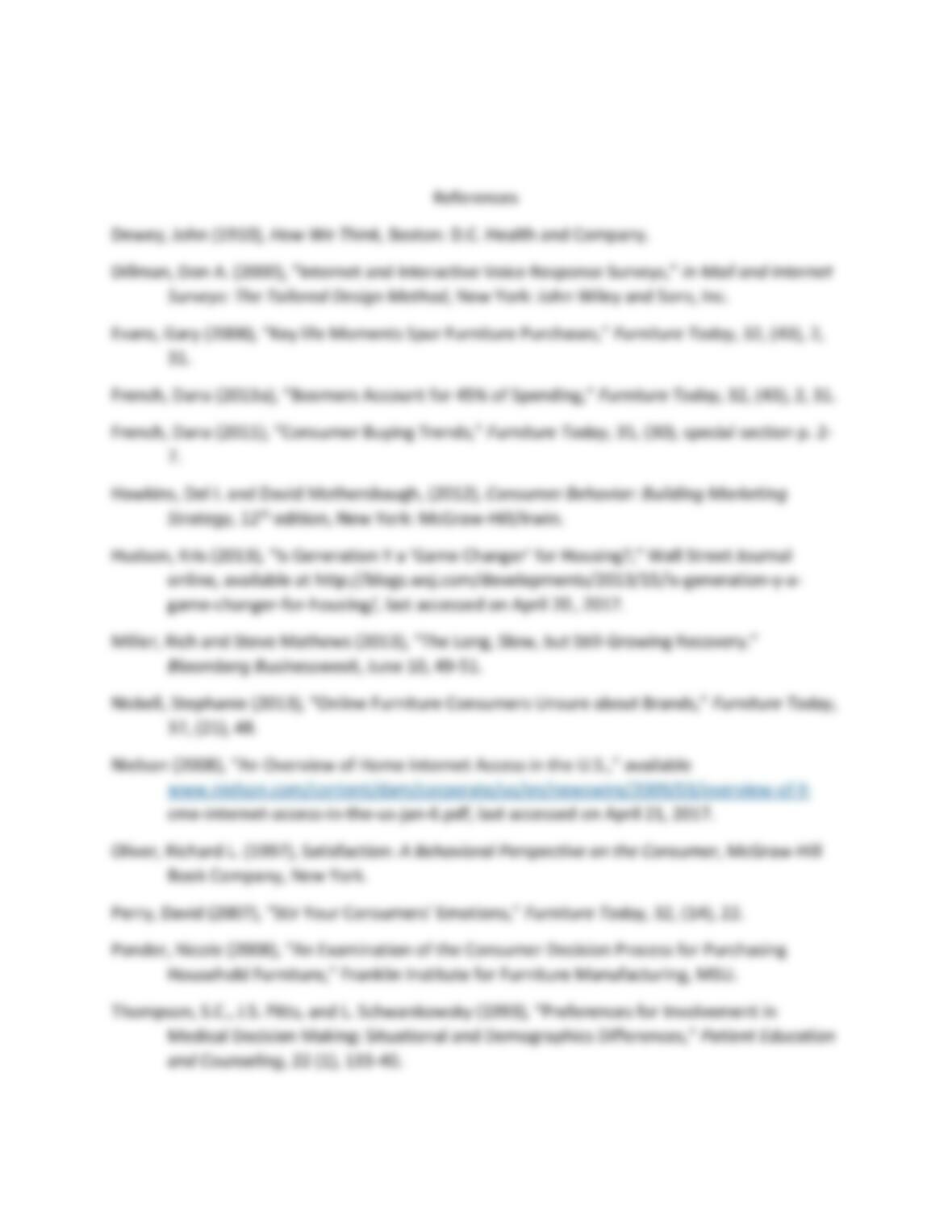
References…………………….20
Executive Summary
This report for Farmers provides a very detailed information concerning consumers
appeal and attitude for buying behavior for home furniture. For fundamental purposes,
information in this report was categorized by the five stages of consumer decision processes:
(1) are there a problem or need for recognition, (2) informational search, (3) alternative
solutions, (4) purchase, (5) post-purchase evaluation (Dewey 1910). Specifically, the topics
themselves will help recognize the need for contemporary furniture, influencing their decisions,
extensive evaluations, informational feedback, brand loyalty, shopping online, and selection
decisions. Results and recommendations are based on a survey in-house at Farmers Home
Furnishings in Dayton, Tennessee. There were 101 participating adults.
One can see that furniture is not purchased that much. Furniture is viewed to be close
to one’s self; therefore, furniture selections is a paramount decision. Furniture is an emotional
investment for most people because it makes people feel togetherness among family and
friends inside one’s home.
For most people, quality ranks number one and most important when furniture is being
purchased. People look for furniture that is made in the United States as high criteria also. This
is not the case for Generation Y consumers. They tend to look for which furniture is more
environmentally feasible. Most furniture stores do not have much of a presence in brand
loyalty. Furniture customers like to do most of their research online. Today, social media plays a
leading role in finding out additional information on particular furniture sets. But fortunately,
most consumers appear very confident in their decision-making process and do not get buyer’s
remorse after their purchase.
Introduction
Today, the furnishing business has changed tremendously. One could look at society as a
changer in the furniture business. As technology changes through the years, the role of social
media and the superior role of women in the household are a few factors that Farmers must
look at in their business structure. As the economy continues to show recovery going forward,
Farmers will be trying to determine the best way to adapt to consumer demands (Miller and
Mathews 2013; Coy 2012).
In this process to implement a successful business/marketing strategy, a vast knowledge
of customers is needed. This is about how the consumer shops for furniture is of ad most
consequence looking forward. As noted previously, consumers constantly move through five
stages as they make their decisions: (1) problem or want recognition, (2) informational search,
(3) alternative decision, (4) purchase selection, (5) after purchase (Dewey 1910). There are a lot
of everyday purchases that are often (i.e., hygiene or cleaning supplies), the process of deciding
is very short, and often people do not think about those considerations. Going forward is not
the norm, however, for Farmers Home Furnishings is a product that requires vast knowledge
due to how durable, expensive, and a low purchase rate. Further, a lot of people view their
furnishings as a part of themselves, which would make furniture an emotional investment
(Perry 2007). Thus, most consumers lack the buying knowledge. People move through the
decision process a lot more thoroughly, to try to make sure the right furniture is selected.
Problem Identification
The goal moving forward is to look at the many factors that are involved with customer
decision making for Farmers Home Furnishings. There was a similar survey that was conducted
for Farmers Home Furniture in 2008 (Ponder 2008), so the project itself will look at
comparisons to show the magnitude to which people’s behaviors toward furniture has changed
over the years. The project will use primary and secondary data to access:
• When people realize their need or want for furniture
• How people view furniture as being important to one’s self
• People’s preferences for environmental furniture or made in the USA furniture
• The extent of informational change in how people search for purchases, including social
media and the world-wide web
• Factors that make people spend more on furniture
• Behaviors of the buyer, including store loyalty and online shopping
• Buyer’s remorse that some people will experience
A keynote is how furniture producers and retailers thought the process had crossed
multiple generations. Today the baby boomers make up the biggest buyers of furniture.
Currently, the baby boomers are represented with the buying power of 45% per market (French
2013a) Not far behind is the Generation Y market. This generation is growing in the furniture
market. With life changes under way for this age group, they are now experiencing marriage,
having a baby, and buying furniture for the first time (French 2011; Evans 2008). This
generation, unlike the baby boomers, is choosing to stay with their parents longer after college,
but there is proof that some not all are fleeing the nest (Hudson 2013). Generation Y cannot be
looked over by Farmers Home Furniture. There are approximately 74 million people in this
category; this generation is second in size compared to the 85 million baby boomers. This
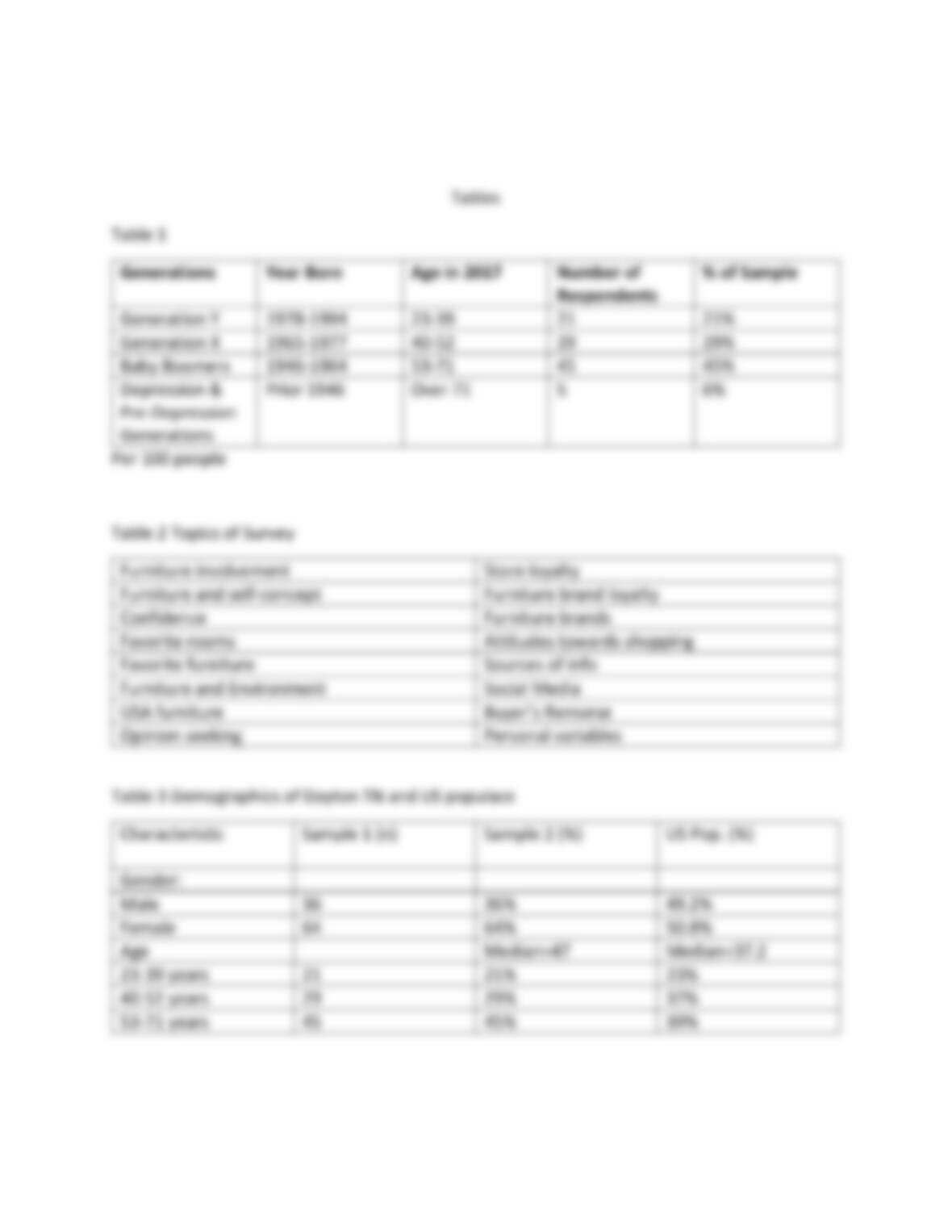
report will lay out the behaviors of generational groups, comparing their attitudes. (see Table 1)
Looking at Table 1, the depression and pre-depression classes are two separate groups, pre-
depression is born before 1930 and depression era is between 1930 and 1945. However, the
information provided only had four people who fell in those categories. Therefore, in this
report, the two was combined.
To make sure that the report from Table 1 was objectified, a written review was
performed to compile more data for consumer’s behaviors for Farmers Home Furniture.
Additionally, the primary data in Table 1 came from quantitative research from an online
survey. In the next section, the method will be explained further.
Research Method
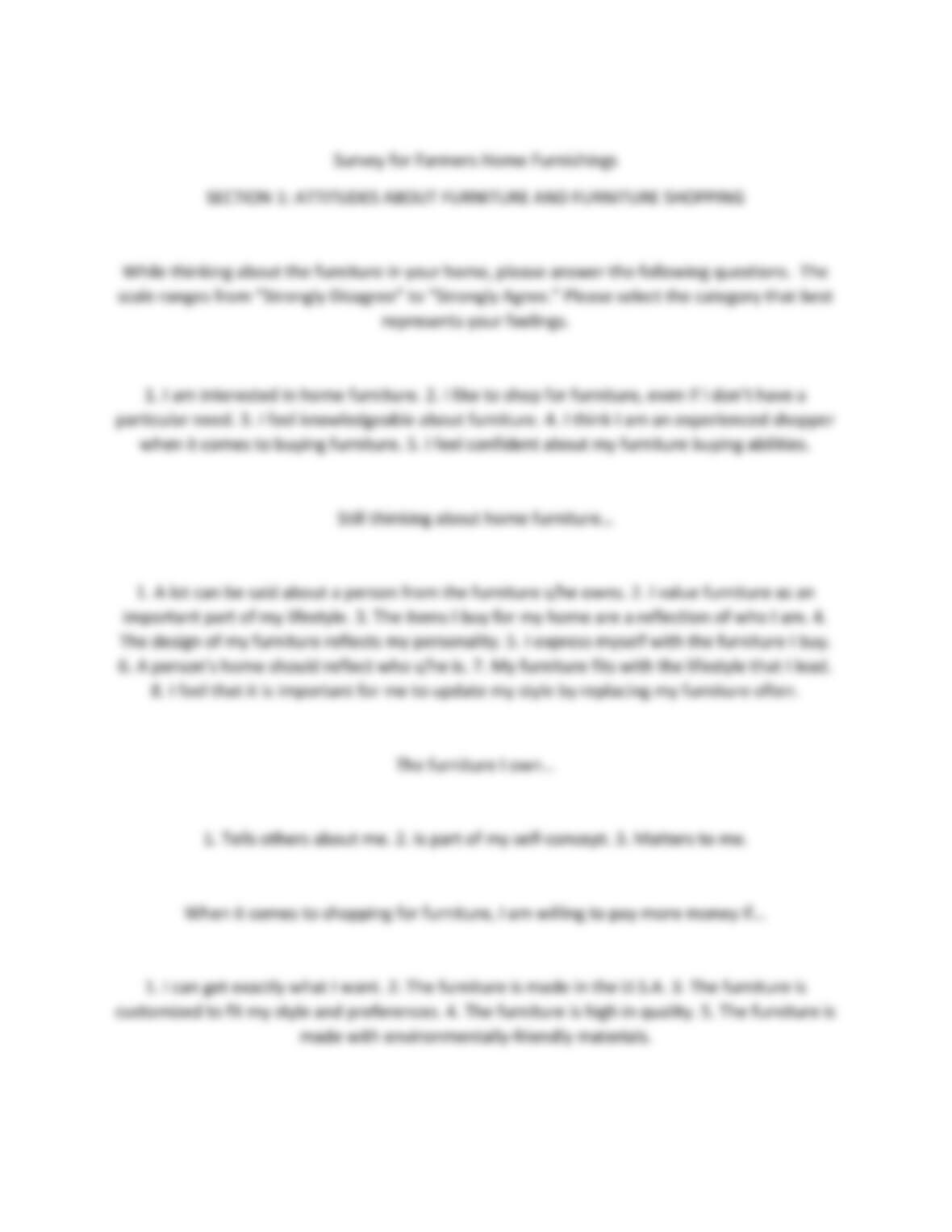
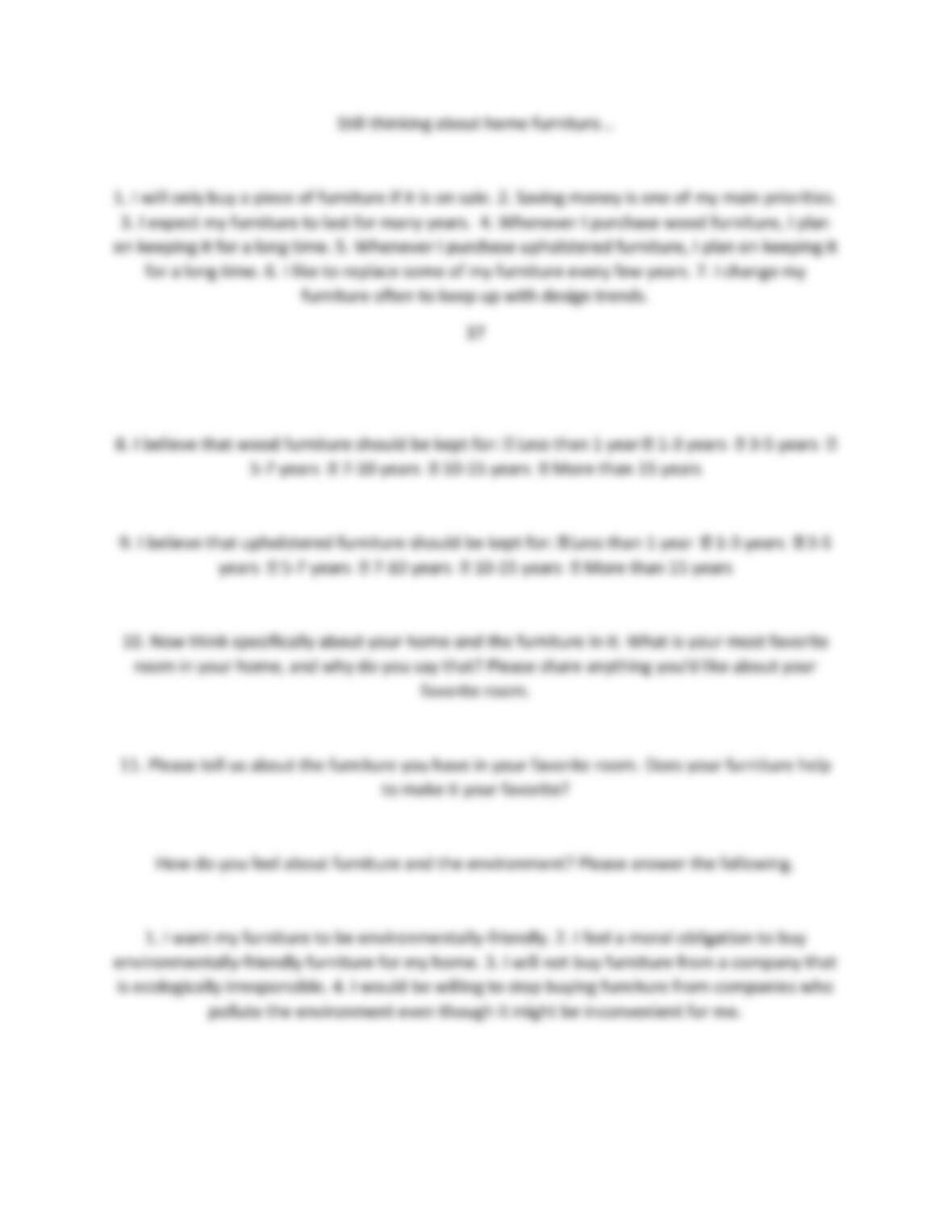
Table 2 contains all the topics covered by the online survey. A lot of the survey
questions was compared to the 2008 study to allow comparable results. Before the data
collection, expert professionals consisted of only marketing doctors with extensive knowledge
of survey development and people who had knowledge of the furniture industry itself. In the
old days, the furniture industry would study the questionnaires and suggest change inside the
industry.
The present survey, statements were given, and people indicated their level of
agreement by selecting their responses. They had in front of them a seven-point scale to grade