PREPARE
PREPARE to maximize disaster health and well-being for yourself
and your family during disasters.
Organize your family disaster plan around
the SAFETY FUNCTION ACTION framework.
Individualize your family disaster plan for each family member.
Identify the types of hazards that may affect your family.
SUSTAIN
SUSTAIN yourself and your family
with vital supplies and equipment.
SAFEGUARD
SAFEGUARD and protect yourself, your
family, and your home from harm.
STRATEGIES TACTICS
KEYS
TO DISASTER
HEALTH
Protect, secure, and fortify your home.
Respond to disaster warnings.
Shelter safely at home.
Evacuate safely when necessary.
Stock emergency supplies for your home.
Create emergency GO-KITS for each family member.
Inventory and restock supplies regularly.
Maintain medical records, medications, and First Aid supplies.
SAFETY
CONNECT
CONNECT family members to each
other and to emergency services during
and after a disaster with a family
communications plan.
COMFORT
COMFORT, support, manage disaster
stress, and diminish distress for
yourself and family members.
Learn about disaster stress.
Practice stress management techniques.
Identify ways to comfort each family member.
Create a family communications plan for disasters.
Keep your family together and identify ways to reunite if separated.
Generate an emergency services contact list.
FUNCTIONACTION
Identify reliable disaster information sources and receive timely information.
Balance the amount of exposure to disaster information.
Be informed about positive coping strategies.
ACTIVATE
ACTIVATE family members to
respond effectively and maintain
disaster health during each
phase of a disaster.
BEFORE DISASTER STRIKES:
Practice your family disaster plan.
Respond to disaster warnings.
Make decision to shelter-at-home or evacuate.
AFTER DISASTER STRIKES:
Check for post-disaster hazards.
Participate in community disaster response.
Review and revise your family disaster plan.
ADVISE
ADVISE yourself and your family
about the disaster and review
positive coping strategies.
1

PREPARE
PREPARE to maximize disaster health and well-being for yourself and your family during disasters.
• Organize your family disaster plan around the SAFETY FUNCTION ACTION framework.
• Individualize your family disaster plan for each family member.
• Identify the types of hazards that may affect your family.
ORGANIZE YOUR FAMILY DISASTER PLAN AROUND THE SAFETY FUNCTION ACTION FRAMEWORK
Creating a family disaster plan is the foundation for disaster preparedness. A family disaster plan provides the blueprint
for safeguarding and sustaining your family during a disaster, keeping family members connected and informed, handling
disaster stress, and taking effective action to respond and recover. The SAFETY FUNCTION ACTION FAMILY
DISASTER PLAN GUIDEBOOK streamlines the process of designing your family disaster plan. Consider the benefits
of creating a family disaster plan:
• Promote “disaster health” and well-being for your family.
• Reduce the impact of a disaster on your family.
• Reduce the risk for death, injury, psychological distress, and property damage during a disaster.
• Increase your family’s self-sufficiency during disaster impact and after disaster strikes.
• Speed the process of recovering from a disaster.
SAFETY FUNCTION ACTION presents a unified, six-strategy framework for training “disaster health” to professionals and
volunteers who respond to disasters. The framework used for SAFETY FUNCTION ACTION training is also ideally suited
for organizing your family disaster plan.
In brief, SAFETY FUNCTION ACTION focuses on achieving and maintaining a high level of “disaster health” and well-being.
Disaster health is defined as “maximal SAFETY, optimal FUNCTION, and effective ACTION in response to emergencies,
disasters, and extreme events.” From this definition, it is clear that the Three Keys to Disaster Health are SAFETY,
FUNCTION, and ACTION. Two strategies are employed to achieve each of the Three Keys, for a total of six strategies:
• To achieve maximal SAFETY, the strategies are SAFEGUARD and SUSTAIN.
• To achieve optimal FUNCTION, the strategies are COMFORT and CONNECT.
• To achieve effective ACTION, the strategies are ADVISE and ACTIVATE.
Your family disaster plan is organized around the six SAFETY FUNCTION ACTION strategies. In this SAFETY FUNCTION
ACTION FAMILY DISASTER PLAN GUIDEBOOK, each section presents one of the six strategies and has a corresponding
exercise for your family to complete. As you complete each section, you and your family will be taking the essential steps to
prepare for a variety of crises, emergencies, and disasters.
INDIVIDUALIZE YOUR FAMILY DISASTER PLAN FOR EACH FAMILY MEMBER
A well-developed family disaster plan should be accepted by the whole family and meet everyone’s needs. Be sure to
involve the entire family in your planning process and incorporate the particular needs of each household member and
pet. Give special attention to each child, older adult, person with a disability, or individual with a temporary health-related
condition. Children may require extra care during an emergency. Older adults may be less able to perform daily activities and
may have more difficulty preparing for and responding to a disaster. People with disabilities may be less able to respond to
warnings and take preventive actions, possibly making them more vulnerable to injury or harm. Individuals who are pregnant,
nursing, caring for a newborn, or recovering from an injury or illness may require additional attention while they
are experiencing their temporary health situation.
2
LIKELY IN
YOUR COMMUNITY?
Circle Yes or No Circle Yes or No
LIKELY IN
YOUR COMMUNITY?
TYPE OF
EMERGENCY / DISASTER
TYPE OF
EMERGENCY / DISASTER
Family Emergencies
Automobile crash
House fire
Power outage
Other________________________
Job-related Emergency Events
Severe injury
Severe illness
Line of duty death
Exposure to traumatic scenes
Other________________________
Other________________________
Technological Disasters
Transportation emergency
Hazardous materials release
Nuclear power plant accident
Other________________________
Natural Disasters
Drought
Earthquake
Epidemic of new disease
Extreme cold
Extreme heat
Flood
Hurricane
Landslide
Mudslide
Pandemic inuenza
Thunderstorm
Tornado
Tsunami
Wildfire
Winter storm
Volcano
Other________________________
Other________________________
YES NO
YES NO
YES NO
YES NO
YES NO
YES NO
YES NO
YES NO
YES NO
YES NO
YES NO
YES NO
YES NO
YES NO
Act of Terrorism
Explosion/fire
Biological attack
Chemical/gas attack
Radiation/nuclear event
Warfare/terrorist assault
Other________________________
YES NO
YES NO
YES NO
YES NO
YES NO
YES NO
YES NO
YES NO
YES NO
YES NO
YES NO
YES NO
YES NO
YES NO
YES NO
YES NO
YES NO
YES NO
YES NO
YES NO
YES NO
YES NO
YES NO
YES NO
HAZARDS REVIEW
PREPARE
PREPARE to maximize disaster health and well-being for yourself and your family during disasters.
IDENTIFY THE TYPES OF HAZARDS THAT MAY AFFECT YOUR FAMILY
Consider the full spectrum of potential family emergencies and community-wide disasters that could occur.
Design a exible, “all-hazards” family disaster plan that adapts to a range of disaster situations.
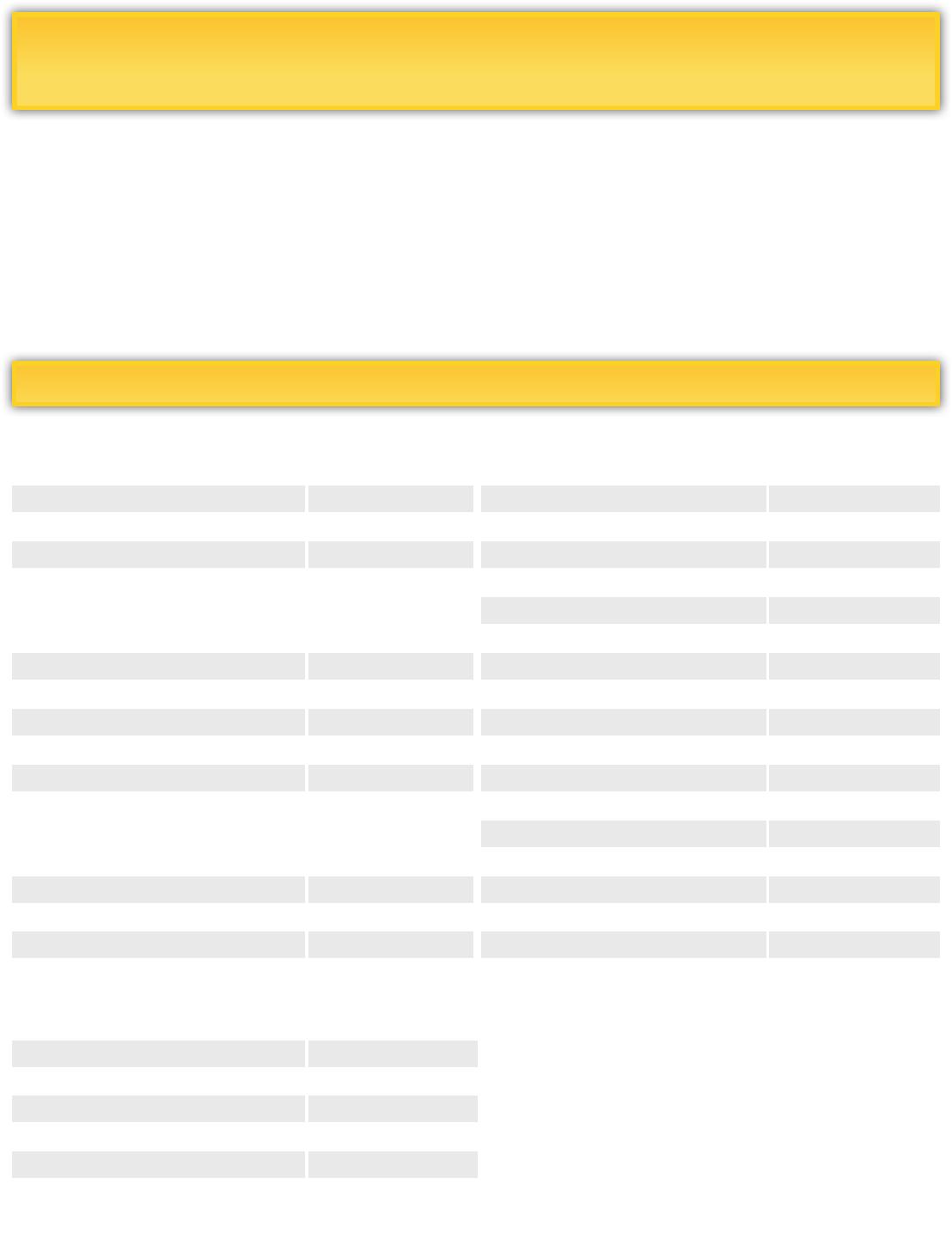
PREPARE: SAFETY FUNCTION ACTION FAMILY DISASTER PLAN EXERCISE.
The exercise in this section is for you to complete the following HAZARDS REVIEW. For each type of emergency
or disaster listed, consider whether this event is one that could affect your family or impact your community. If so,
circle “YES.” Keep these possible disaster events in mind as you complete your family disaster plan.
3
SAFEGUARD
SAFEGUARD and protect yourself, your family, and your home from harm.
• Protect, secure, and fortify your home.
• Respond to disaster warnings.
• Shelter safely at home.
• Evacuate safely when necessary.
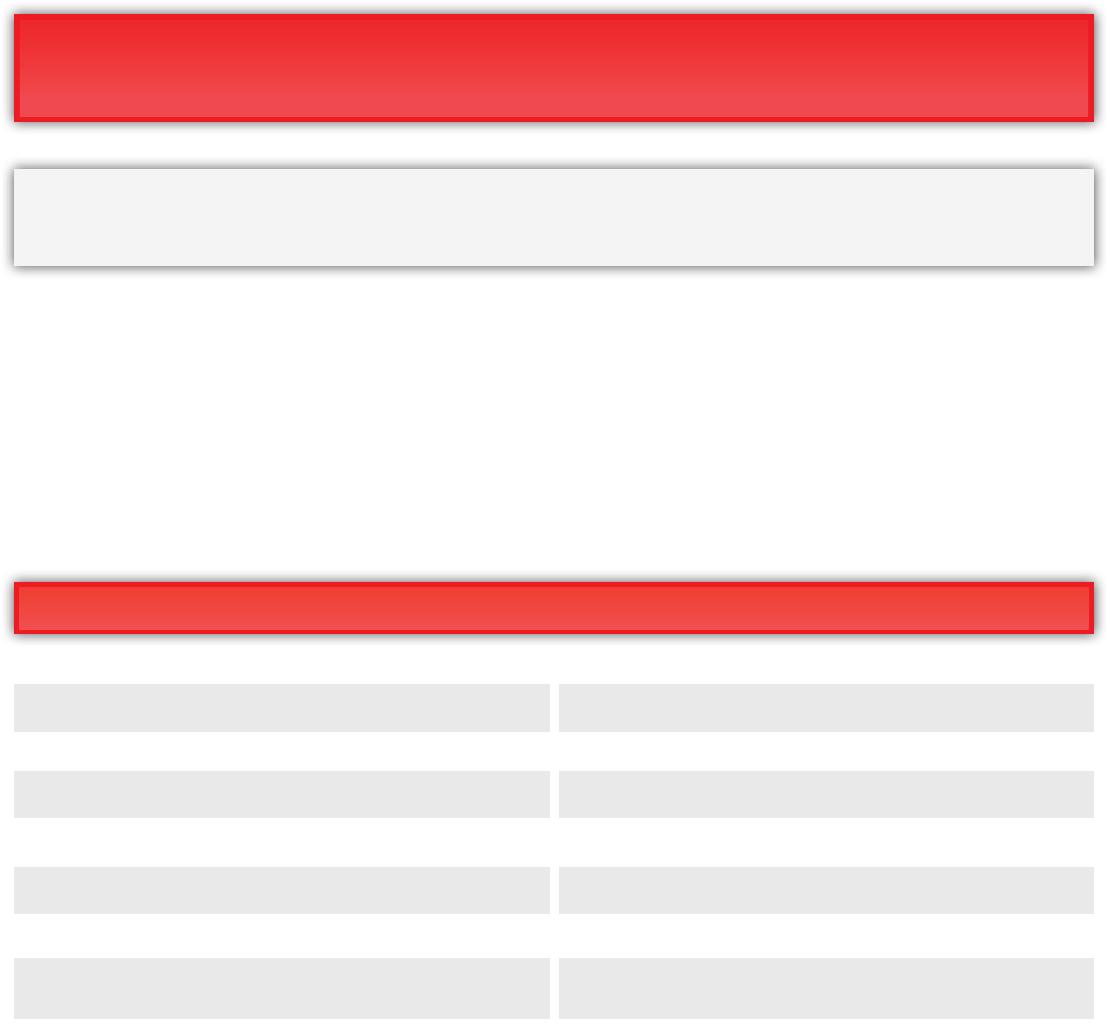
Building Fortification Protection Systems and Equipment
HOME PROTECTION MEASURES
Inspect/repair your home’s structure, including the roof.
Clear the yard, patio, or balcony of loose objects
that may become projectiles.
Secure fixtures and tall furniture inside the home.
Place heavy objects on/near the oor.
Trim trees and shrubs around your home.
Ensure your home meets current building codes. Make sure family members know how to turn off utilities.
Install and maintain smoke detectors.
Locate safety shut-offs for gas and power.
Protect windows/doors with shutters/barriers.
Stock water protection supplies (tarps, coverings).
Maintain home alarm and disaster warning systems.
Distribute and maintain fire extinguishers throughout the home.
RESPOND TO DISASTER WARNINGS
Warning systems exist for many types of disasters to alert citizens and communities of impending danger. By identifying
warning systems for the major hazards or disaster events that may affect your family, you will be better equipped to
react quickly and safeguard your family effectively.
Warning systems for disasters that may affect your family:
• Consider the major disasters that may occur in your community (consult your HAZARDS REVIEW).
• Identify peak seasons and climate conditions when these disasters are most likely to occur.
• Know your community, regional, or national warning systems for these disasters.
• Learn what each warning means and how to respond to that warning.
• Plan to follow the emergency alert system instructions when warnings are issued.
SHELTER SAFELY AT HOME
Plan to use your home as the primary sheltering location for a range of disasters. For disasters with little or no warning period, family
members who are at home will need to remain there for shelter. Depending on the type of impending disaster, you will need to
select specific sheltering locations within your home. By identifying safe spaces prior to a disaster, you can decrease the amount
of time your family needs to move to safety within the home when a disaster threatens.
INTRODUCTION
When preparing for a disaster, safety is the primary concern. One of the first steps in creating your family disaster plan is
determining how to protect your home and your family. Through this process you can increase your ability to remain safe
and decrease stress and uncertainty surrounding the disaster. The SAFEGUARD strategy focuses on fortifying your home,
responding to disaster warnings, sheltering safely at home, and evacuating safely to alternative shelter sites when necessary.
PROTECT, SECURE, AND FORTIFY YOUR HOME
Preparing your home for potential disasters is important to minimize damage and to increase your family’s safety when
your home is used as a shelter. Prepare your home to mitigate damage to personal property and protect your family when
sheltering within. Start by reviewing the following list of HOME PROTECTION MEASURES.
4
SAFEGUARD
SAFEGUARD and protect yourself, your family, and your home from harm.
EVACUATE SAFELY WHEN NECESSARY
The decision to evacuate requires prior planning. This includes determining when to evacuate and the specifics
of evacuation (when to leave, how to leave, and where to go). Your family needs to identify one or more alternative
sheltering locations and plan transportation routes to these sites.
Evacuation is advised in these situations:
• There is sufficient time to evacuate safely.
• You live in an evacuation zone and have been asked or ordered to evacuate.
• The disaster threat is severe.
• You believe that the structure of your home may be unable to withstand the disaster and therefore
would not be able to protect you and your family.
• You do not have appropriate protection for your home for the anticipated disaster.
• You live in a high-rise building and your building’s systems will not be operating.
Secure your home and personal property prior to evacuation:
• Shut off gas and power.
• Clear your yard and the exterior of your home of loose objects that may become projectiles.