Semester 1, 2018/2019
GROUP 1
MGM 3113 ORGANIZATIONAL BEHAVIOUR
Title: Factors that Contribute Successful to Microsoft
No.
Name
Matric. No
1
ANG YEE HUI
183260
2
LOW YEE TING
184889
3
XU MINGLU
185212
4
NUR AMALEEN BINTI ZAKARIA
186945
5
NURAIZATTY BINTI SHAFIEN
188499
6
ANTONELLA ELVERA GEORGE A/P
JEFFERY SELVARAJ GEORGE
188634
7
RUAN ZHANGNI
195434
8
PENG JINGJING
195605
9
YAU CHING SHI
195829
Lecturer: DR. AMER HAMZAH BIN JANTAN
1.0 COMPANY BACKGROUND
Figure 1: Microsoft’s Logo since 2012
Microsoft Corporation (MS) is an American multinational technology company
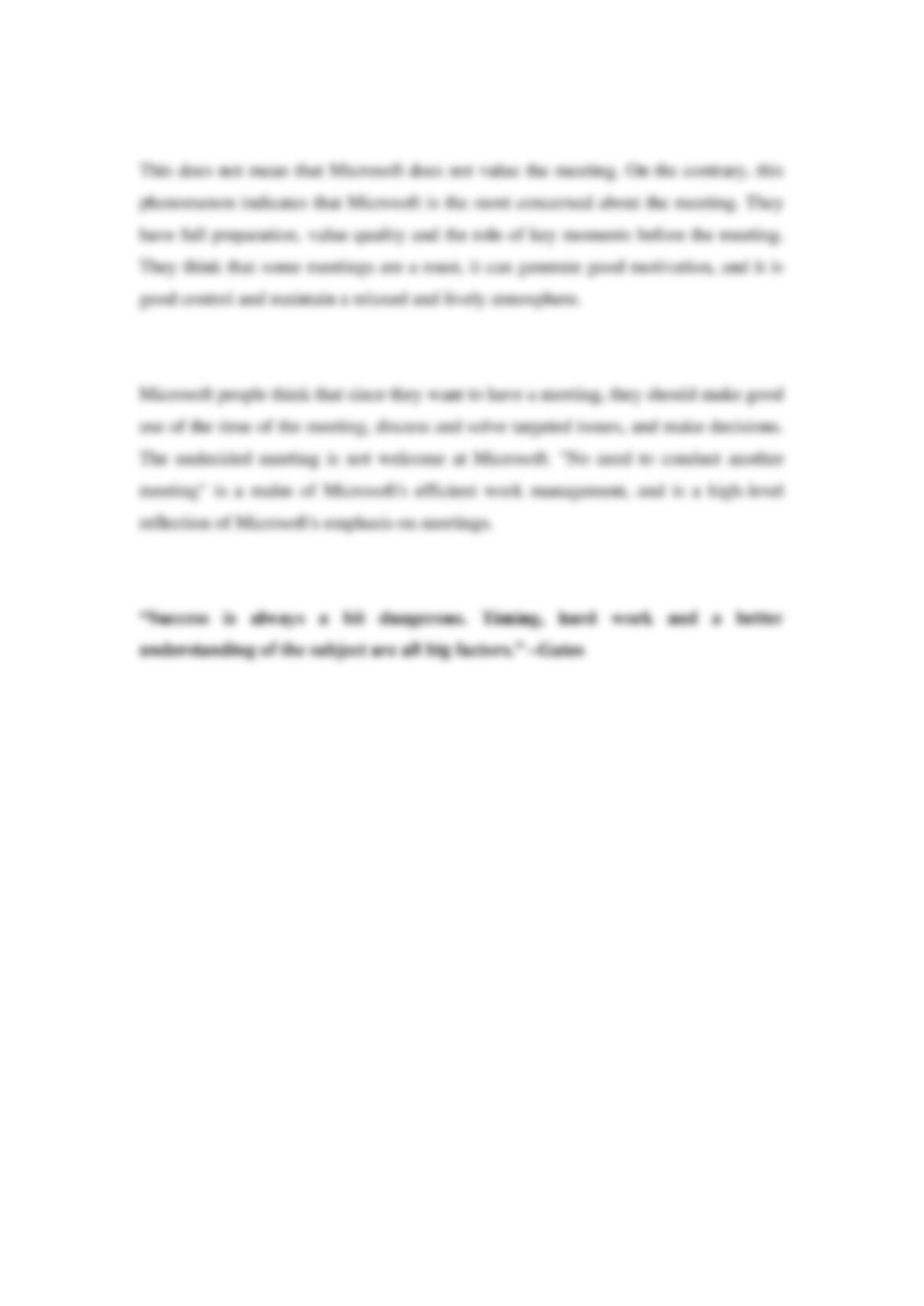
whose history started 4th April 1975. Formed by Harvard College dropout, Bill Gates
and his childhood friend Paul Allen, Microsoft has now become the biggest software
company and also one of the most valuable companies in the world. The word
“Microsoft” is a combination word of “microcomputer” and “software”.
Microsoft is engaged in develops, manufactures, licenses, supports and sells
computer software, consumer electronics, personal computers, and related services.
Its best known software products are the Microsoft Windows line of operating
systems, the Microsoft Office suite, the Internet Explorer and Edge web browsers. Its
flagship hardware products are the Xbox video game consoles and the Microsoft
Surface lineup of touchscreen personal computers. As of 2016, it is the world’s largest
software maker by revenue. Microsoft is ranked No. 30 in the 2018 Fortune 500
rankings of the largest United States corporations by total revenue.
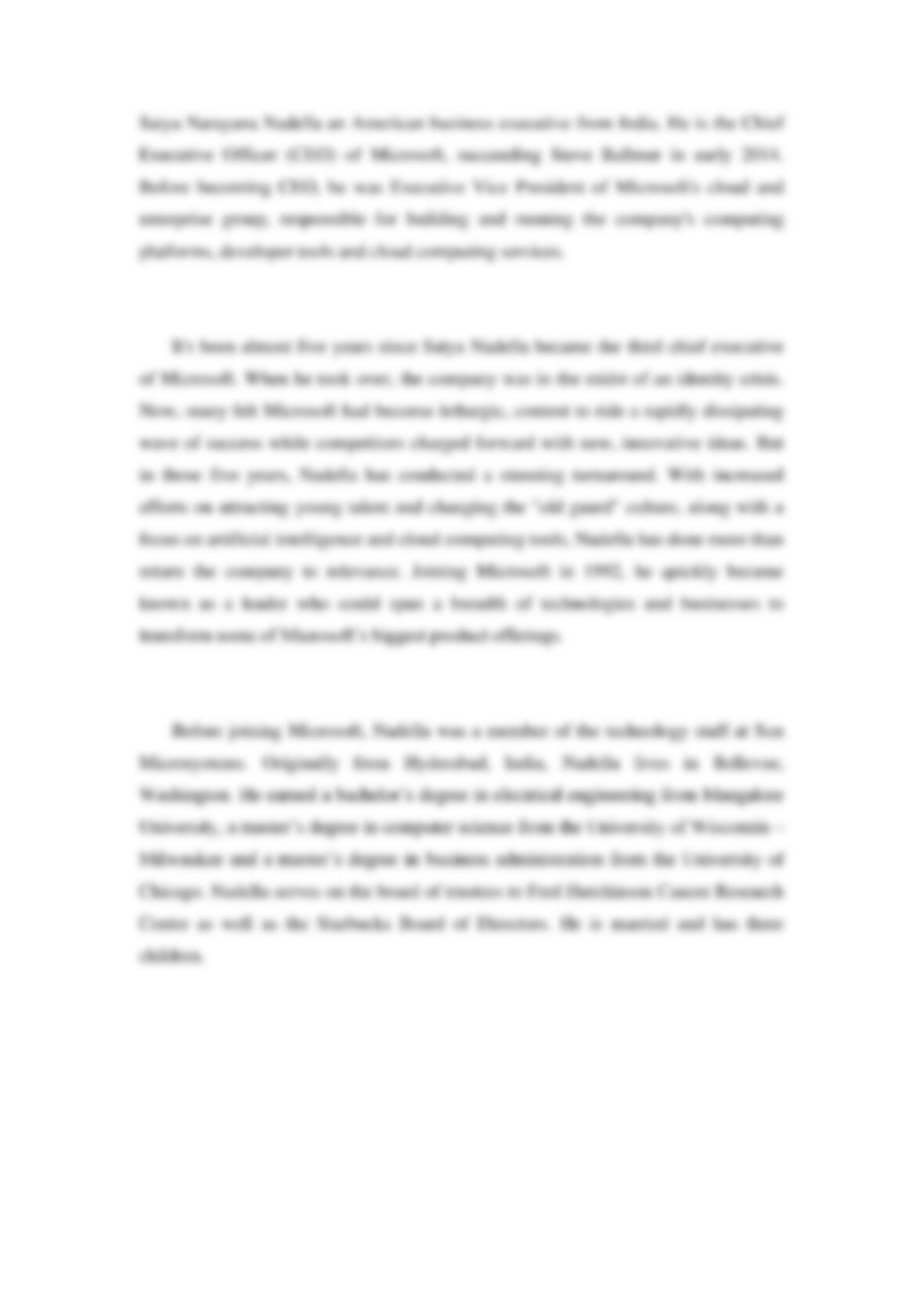
Steve Ballmer whom Bill Gates had met during his brief tenure at Harvard
University in the 1970s replaced Gates as CEO in 2000, and later envisioned a
“devices and services” strategy. This began with the acquisition of Danger Inc. in
2008, entering the personal computer production market for the first time in June
2012 with the launch of the Microsoft Surface line of tablet computers; and later
forming Microsoft Mobile through the acquisition of Nokia’s devices and services
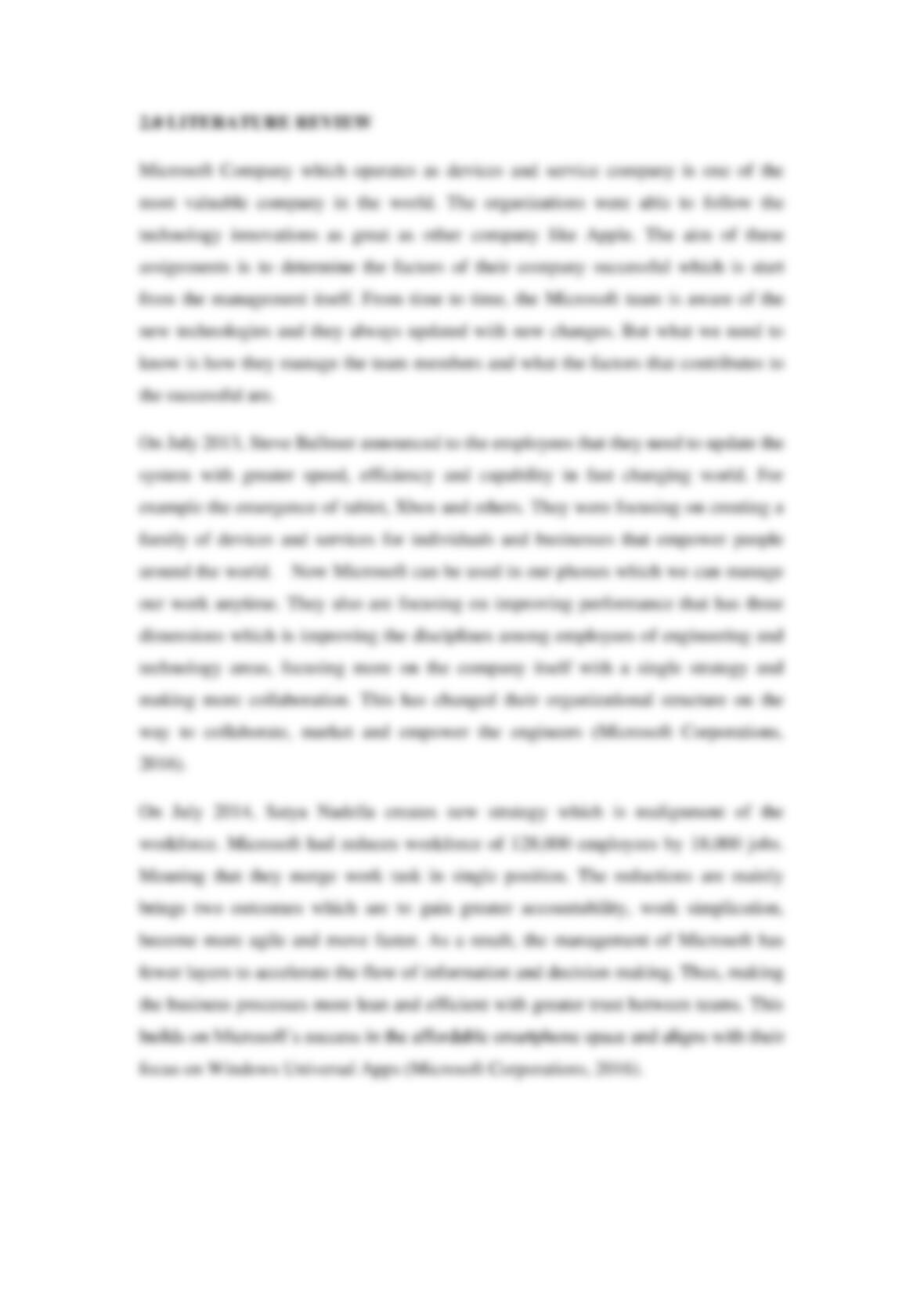
division. Since longtime Microsoft executive, Satya Nadella took over as CEO in
2014, the company has scaled back on hardware and has instead focused on cloud
computing, a move that helped the company’s shares reach its highest value since
December 1999.

1.1 VISION AND MISSION
Vision
Microsoft’s corporate vision is “to help people and businesses throughout the
world realize their full potential.” This vision statement shows that the company
presents its business and computing products as tools that people and business
organizations can use for their development.
Mission
Microsoft’s corporate mission is “to empower every person and every organization
on the planet to achieve more.” This mission statement shows that the business is all
about empowerment of people and organizations. Such empowerment is achieved
through the utility of the company’s computing products.
1.2 MICROSOFT EXECUTIVES
Satya Nadella
Chief Executive Officer
Judson Althoff
Executive Vice President, Worldwide
Commercial Business
Chris Capossela
Chief Marketing Officer and
Executive Vice President, Marketing and
Consumer Business
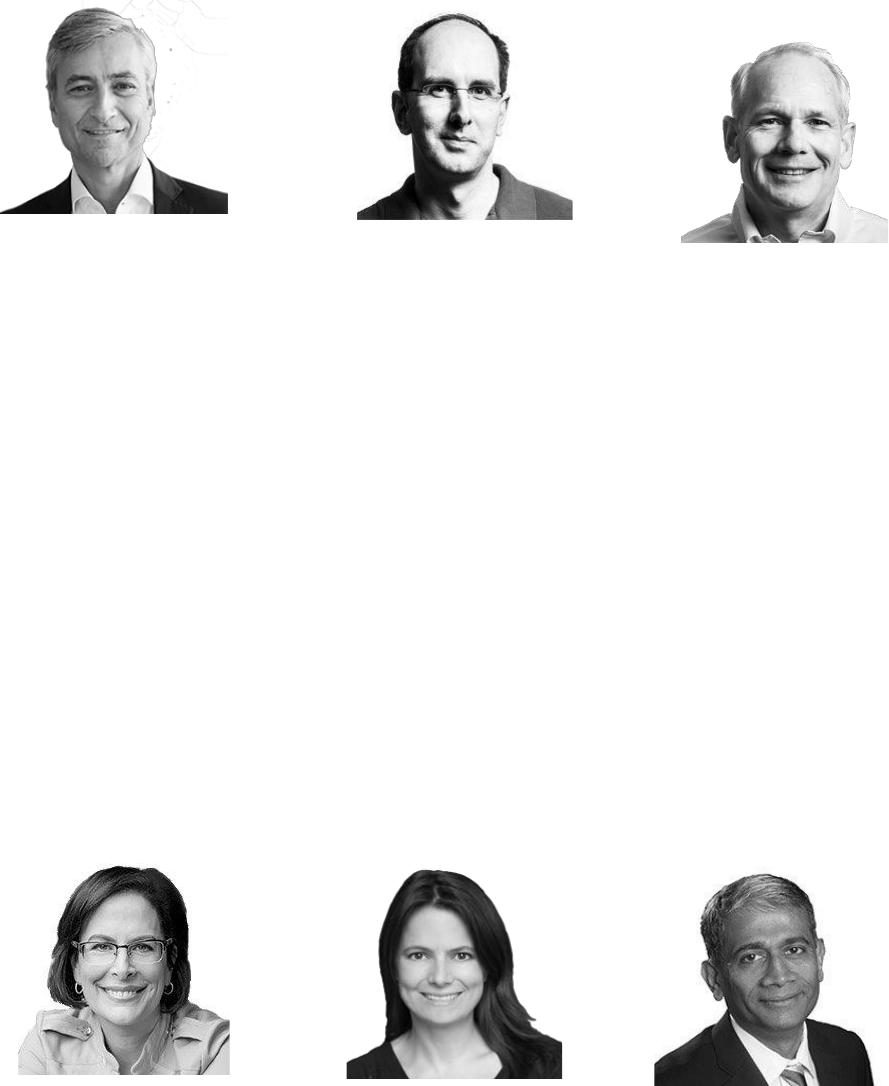
Jean-Philippe Courtois
Executive Vice President and President,
Microsoft Global Sales, Marketing and
Operations
Scott Guthrie
Executive Vice President, Microsoft
Cloud + AI Group
Kurt DelBene
Chief Digital Officer and Executive
Vice President, Corporate Strategy,
Core Services Engineering and
Operations
Kathleen Hogan
Executive Vice President,
Human Resources
Amy Hood
Executive Vice President
and Chief Financial Officer
Rajesh Jha
Executive Vice President,
Experiences and Devices
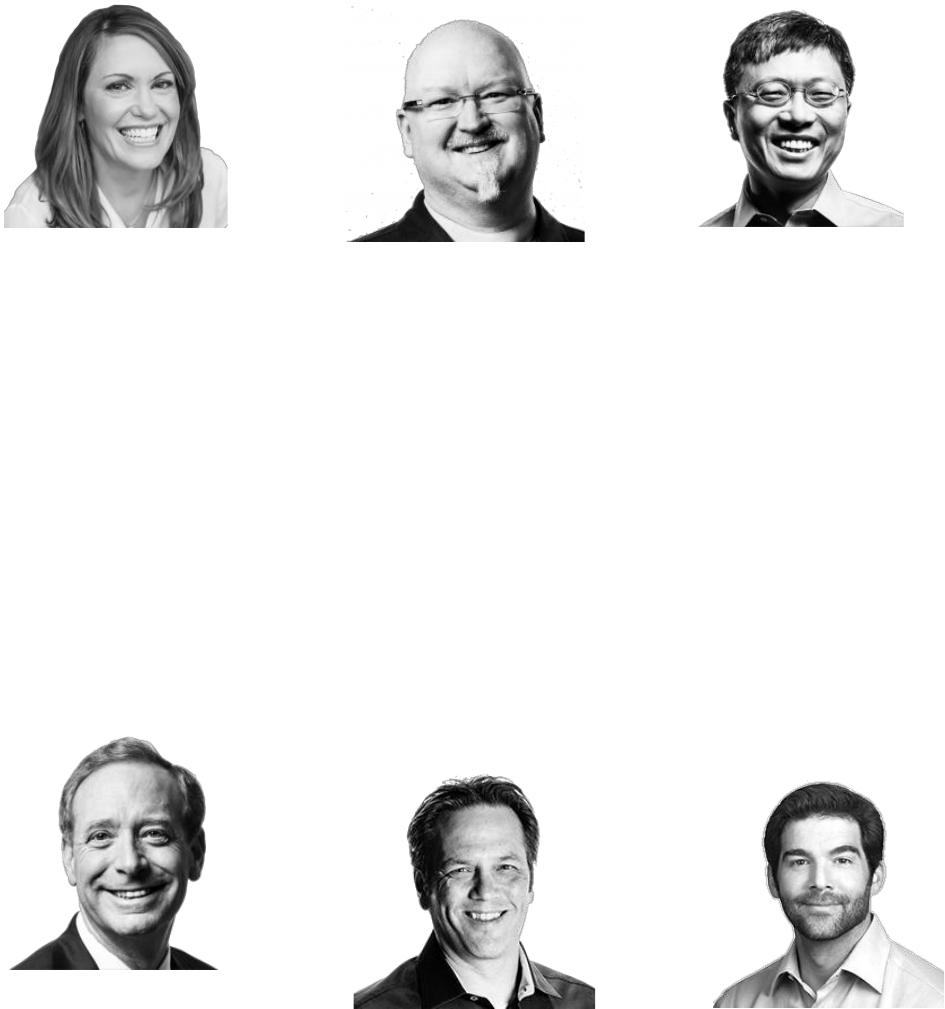
Peggy Johnson
Executive Vice President,
Business Development
Kevin Scott
Chief Technology Officer
Harry Shum
Executive Vice President,
Artificial Intelligence and
Research Group
1.3 CEOs OF MICROSOFT
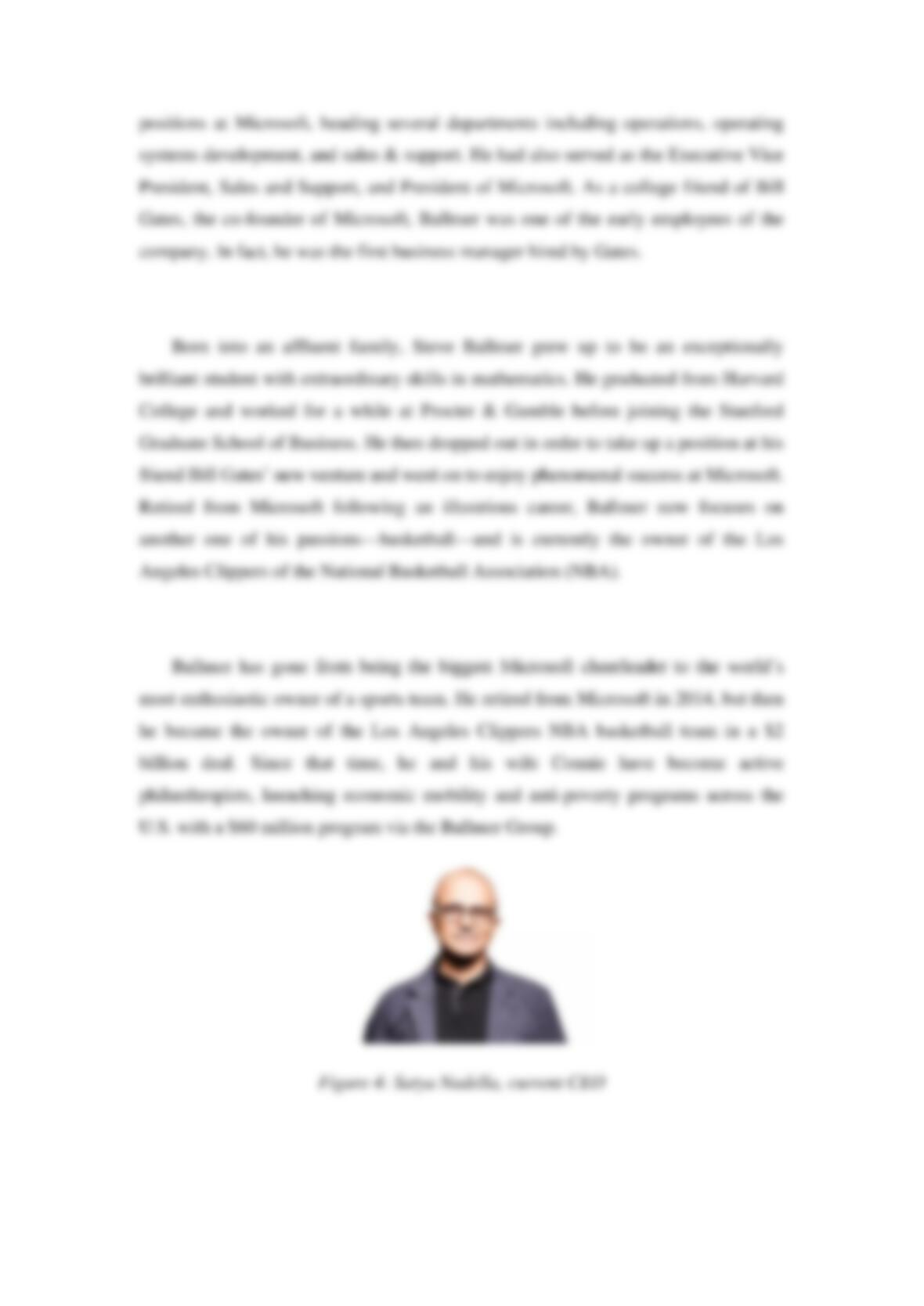
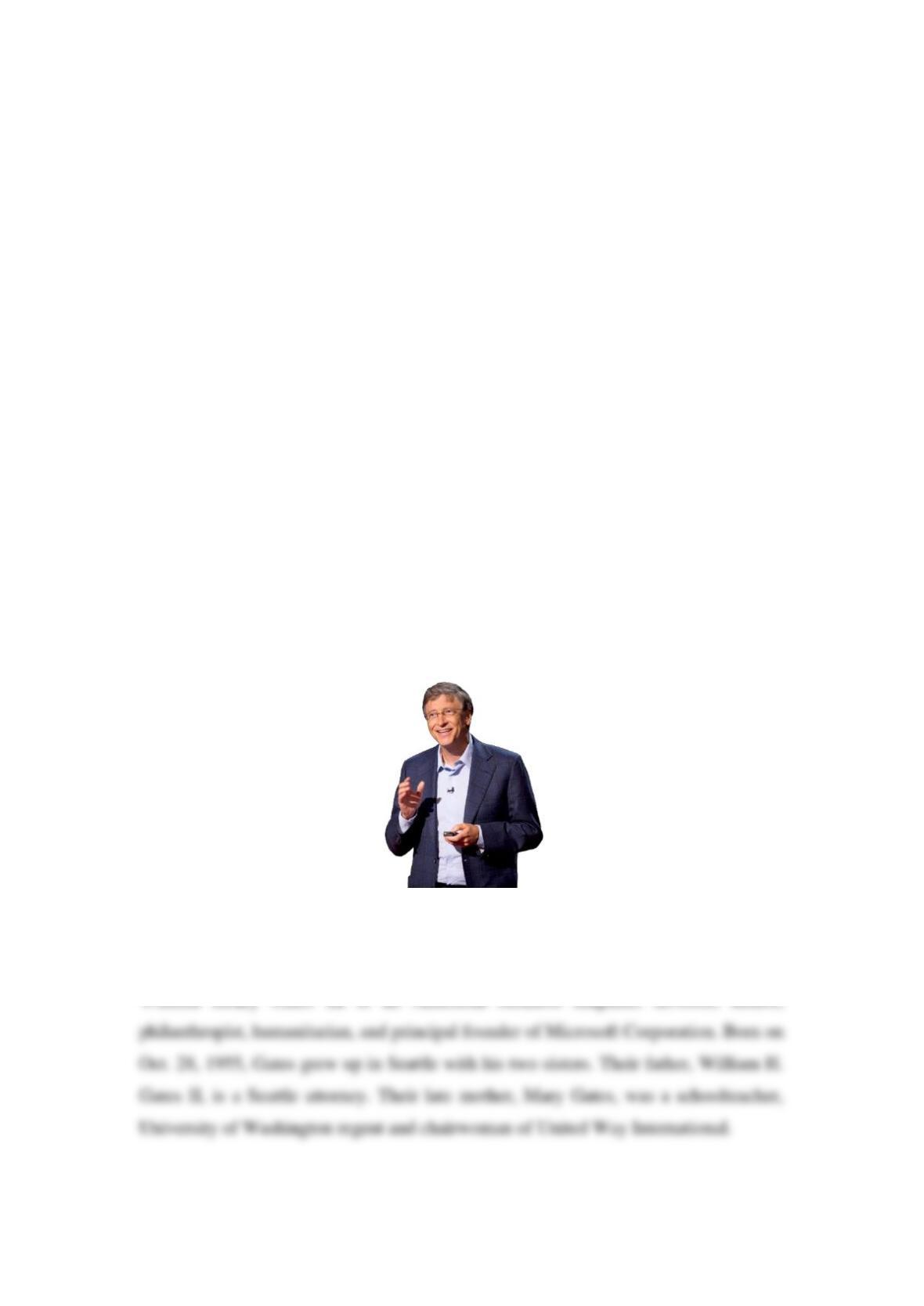
Figure 2: Bill Gates, Founder and First CEO
Brad Smith
President and Chief Legal Officer
Phil Spencer
Executive Vice President, Gaming
Jeff Weiner
CEO of LinkedIn