SCHOOL OF BUSINESS, ECONOMICS AND MANAGEMENT
STUDENT SAVINGS
FACTORS INFLUENCING SAVING BEHAVIOR AMONG
FULL-TIME UNILUS STUDENTS
BY:
NGENDA LITEBELE BFIN17210036
MWANSA CHUTU BFIN17211124
KNOX MUKANZU BFIN17210882
ISAAC
TAONGA NAMFUKWE BFIN17210412
CHIPO MUTEMBO BBA17210905
IDAH BINDABINDA BBA17210905
KAMWILIZYE SIMPUNGWE ECF1611003
LUCKSON TEMBO BFIN17210037
Table of Contents
CHAPTER 1: INTRODUCTION AND BACKGROUND ………………………………………. iv
1.0 INTRODUCTION ………………………………………………………………………………………. iv
1.1 BACKGROUND TO THE STUDY ……………………………………………………………….. iv
1.2 STATEMENT OF THE PROBLEM ………………………………………………………………. v
1.3 RESEARCH OBJECTIVES ………………………………………………………………………….. v
1.3.1 GENERAL OBJECTIVE …………………………………………………………………………………… v
1.3.2 SPECIFIC OBJECTIVE ……………………………………………………………………………………. v
1.4 RESEARCH QUESTIONS ……………………………………………………………………………. v
1.5 SIGNIFICANCE OF STUDY ……………………………………………………………………….. vi
1.6 SCOPE OF STUDY …………………………………………………………………………………….. vi
1.7 LIMITATIONS ………………………………………………………………………………………….. vi
1.8 OPERATIONAL DEFINITION ……………………………………………………………………. vi
CHAPTER 2: LITERATURE REVIEW ……………………………………………………………. vii
2.0 INTRODUCTION ………………………………………………………………………………….. vii
2.1 EMPIRICAL REVIEW …………………………………………………………………………… vii
2.1.0 LITERACY LEVELS …………………………………………………………………………………. vii
2.1.1 PEER PRESSURE …………………………………………………………………………………………. viii
2.1.2 SEIF-CONTROL. ……………………………………………………………………………………………. ix
2.1.3 PARENTAL SOCIALISATION. ………………………………………………………………… ix
2.2 THEORETICAL REVIEW …………………………………………………………………………… x
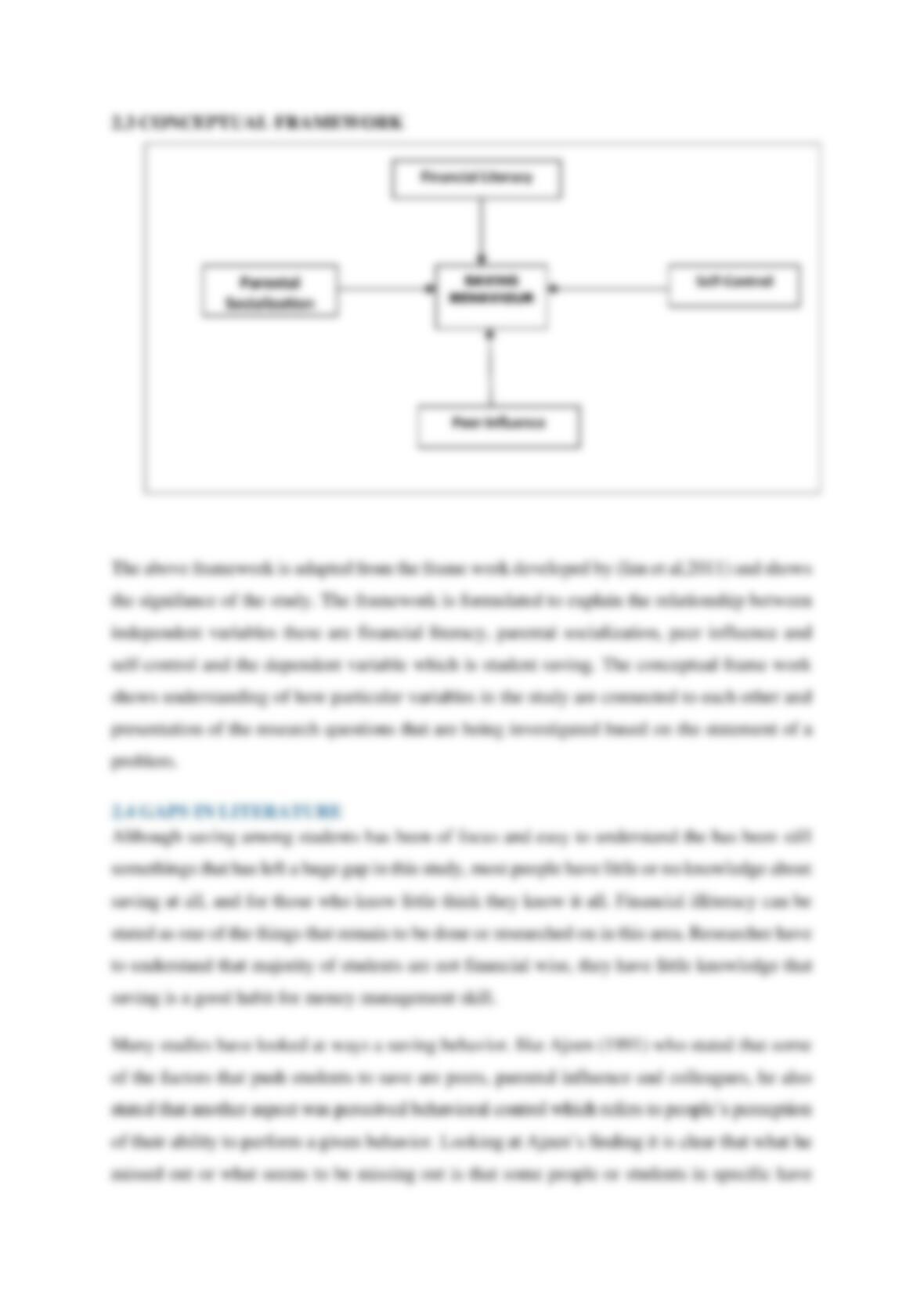
2.3 CONCEPTUAL FRAMEWORK ………………………………………………………………….. xi
2.4 GAPS IN LITERATURE ………………………………………………………………………….. xi
CHAPTER 3 METHODOLOGY ………………………………………………………………………. xii
3.0 INTRODUCTION ……………………………………………………………………………………… xii
3.1 RESEARCH APPROACH ………………………………………………………………………. xiii
3.2 RESEARCH DESIGN ……………………………………………………………………………. xiii
3.3 SAMPLING ………………………………………………………………………………………….. xiii
3.3.1 STUDY POPULATION ………………………………………………………………………………….. xiii
3.3.2 SAMPLE SIZE & TECHNIQUE ……………………………………………………….…………….. xiii
3.4 DATA COLLECTION ………………………………………………………………………………. xiv
3.5 DATA ANALYSIS …………………………………………………………………………………….. xiv
3.7 VALIDITY AND REALIABILITY ……………………………………………………………… xiv
3.8 ETHICAL CONSIDERATION …………………………………………………………………… xiv
CHAPTER 1: INTRODUCTION AND BACKGROUND
1.0 INTRODUCTION
This study is done to analysis the factors that influence saving behavior among unilus students
at both campuses. Four independent variables have been established which are financial
literacy, parent socialization, peer influence and self-control.100 respondents have participated
in this study. The main goal of this study is to examine the relationship between financial
literacy, parental socialization, peer pressure and self-control with saving behavior and to
identify the factors that can contribute to saving among students at the university of Lusaka.
According to statistics savings among students is very low thus this research will be focused
on a group of unilus students from different degree programs
1.1 BACKGROUND TO THE STUDY
Over the past few decades saving among students has been of main interest in such a way that
it enhances savings methods of all kinds. The aim for carrying out this research is to understand
the behavior and management of students who have been involved in saving as a means of