National Cheng Kung University
Institute of International Management
MANAGERIAL ACCOUNTING
Term project
Facebook & Twitter
Youngwoung Kim [RA6037256]
Carl Mitchell [RA6037565]
Claudia Jiashin Deponti [RA6047201]
Suvd Baasandorj /Nikki/ [RA6047015]
Simon Hou [RA7031025]
Sep. 6th. 2015

TABLE OF CONTENTS
TABLE OF CONTENTS………………………………………………………………..…….….….…...1
I. INTRODUCTION……………………………………………………………………………....3
Social Networking Service…………………………………………………………………….…...3
What is Social Networking Service?………………………………………………………….…4
How can the SNS companies such as Facebook and Twitter earn money?...........4
What about the market share of SNS industry?…………………………….…….….….….5
Ⅱ. BUSINESS ANALYSIS FOR TARGET COMPANY FACEBOOK, INC...............8
Company overview……………………………………………………………..….….…….….…...8
Company mission……………………………………………………………………………….….….9
Corporate Governance………………………………………………………………………………..9
Board of Directors…………………………………………………………………………….……..10
Products and services………………………………………………………………….….….….…11
Business and revenue………………………………………………………………..…….….…...13
Technology………………………………………………………………………………….….….…..15
Sales and operations……………………………………………………………………….….….…16
Employees…………………………………………………………………………………….….….…17
Competition in the market………………………………………………………………………...17
SWOT ANALYSIS OF FACEBOOK INC………………………………….….….….……18
PEST ANALYSIS OF FACEBOOK INC……………………………………….….….……19
Facebook, Inc and IPO……………………………………………………………………….….…21
Ⅲ. BUSINESS ANALYSIS FOR COMPARING COMPANY TWITTER…….…….…22
1

Corporate Governance………………………………………………………………………………23
Products and Services……………………………………………………………………………….24
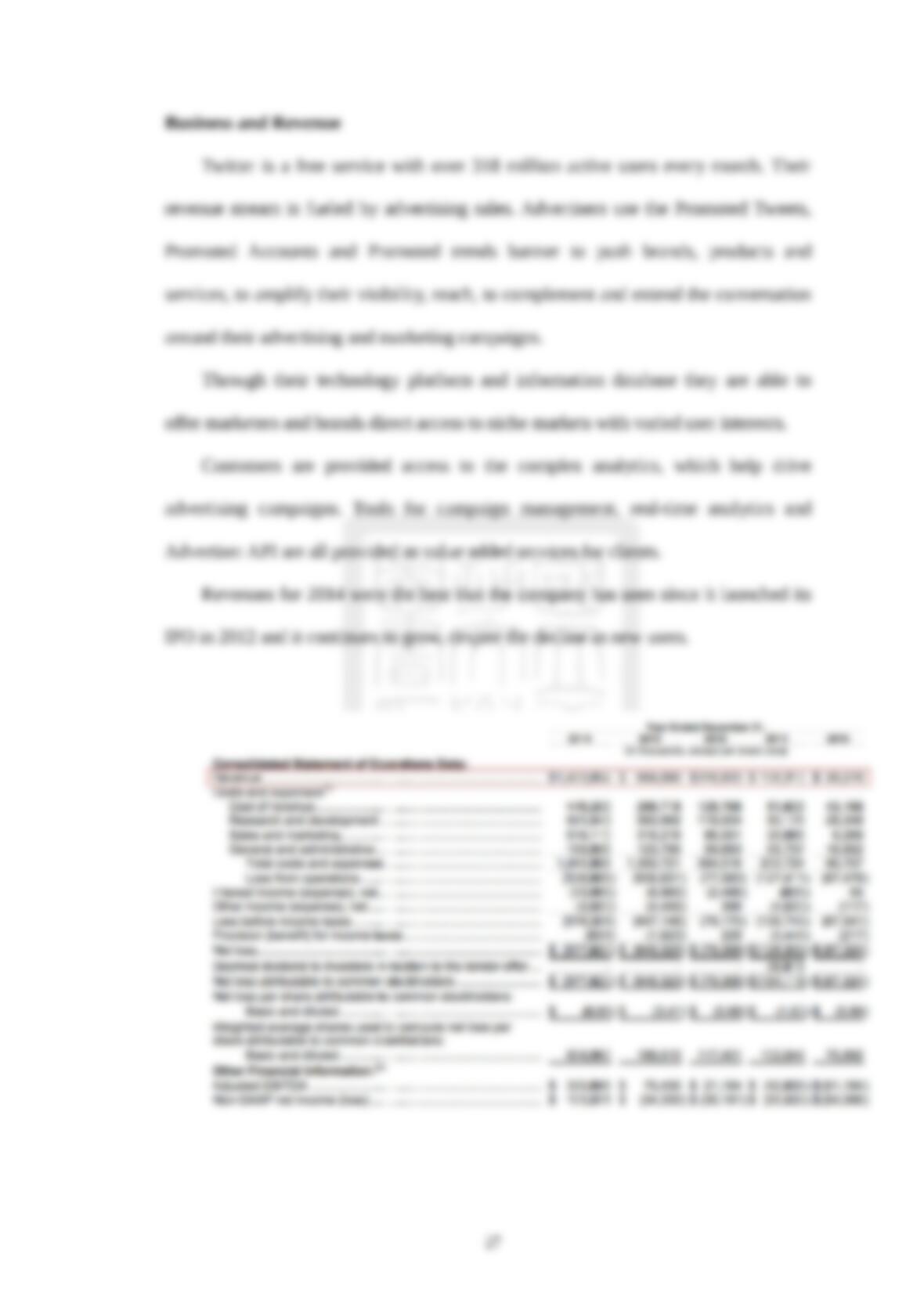
Business and Revenue………………………………………………………………………..…….26
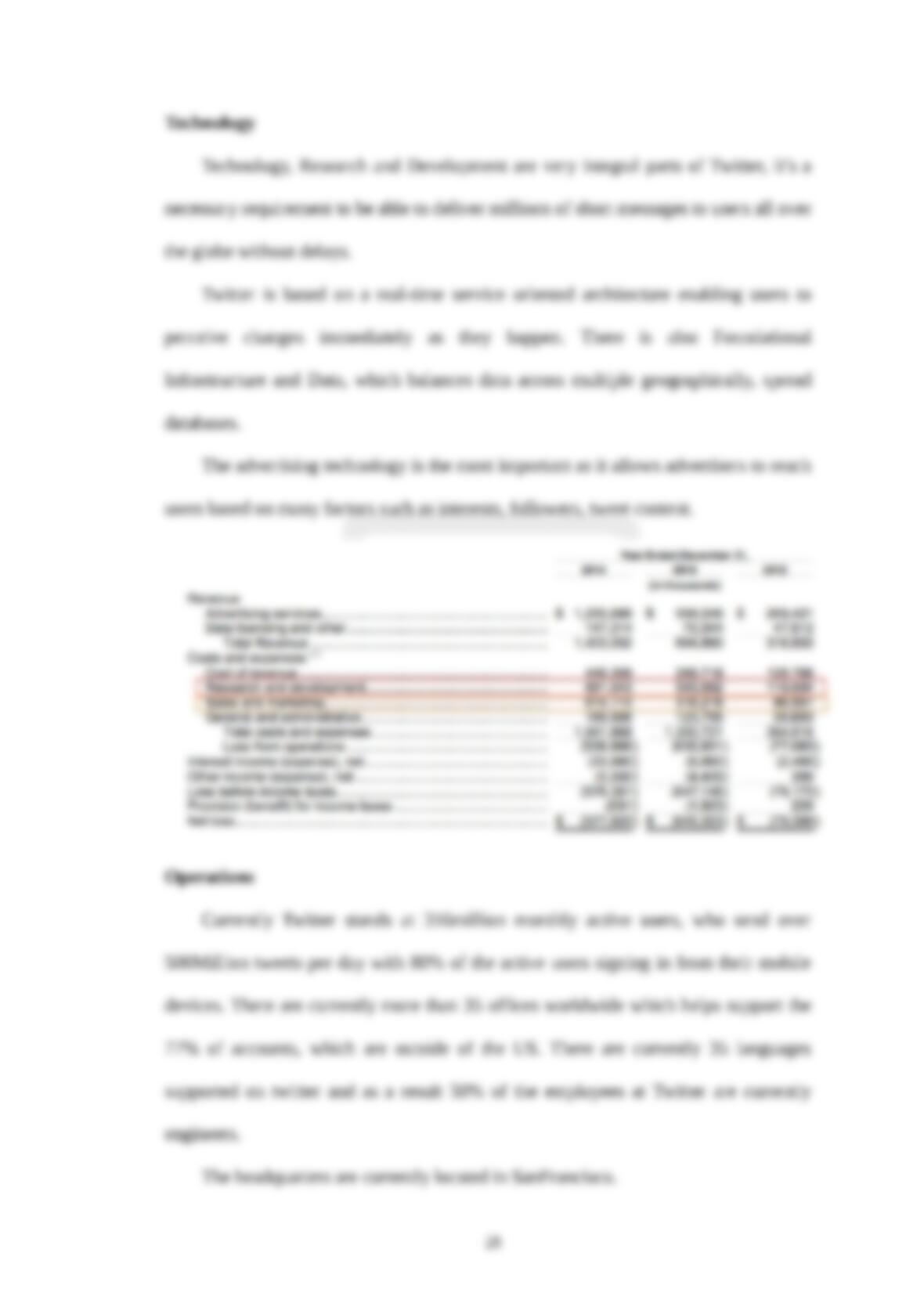
Technology………………………………………………………………………………….….….…..27
Operations…………………………………………………………………………….….…….….…..27
SWOT ANALYSIS…………………………………………………………..….…….….….….…28
Ⅳ. FACEBOOK FINANCIAL ANALYSIS…………………………………………………..…..30
HORIZONTAL ANALYSIS…………………………………………………….….…….….….30
Goodwill…………………………………………………………………………………………………31
Additional paid in capital……………………………………………………………….….……..31
Retained earnings……………………………………………………………………….…….….….31
VERTICAL ANALYSIS………………………………………………………..….….…….…...33
RATIO ANALYSIS……………………………………………………………………….….….….38
LIQUIDITY RATIO………………………………………………………….…….….….…38
PROFITABILITY RATIO……………………………………………….…….….….…...39
SOLVENCY RATIO……………………………………………………………………….…40
Ⅴ. TWITTER FINANCIAL ANALYSIS……………………………………….….….…….….…41
HORIZONTAL ANALYSIS…………………………………………………….….….….…….41
VERTICAL ANALYSIS………………………………………………………..….….…….…...43
RATIO ANALYSIS……………………………………………………………………….….….….45
LIQUIDITY RATIO…………………………………………………………………………………45
PROFITABILITY RATIO…………………………………………………………………..….…46
Ⅵ. CONCLUSION…………………………………………………………………………….….….…...47
Ⅶ. REFERENCE…………………………………………………………………….….….….….……...48
2

I. INTRODUCTION
Social networking has evolved rapidly over the last few years from a mere
platform to bring together people who share activities, interests, real-life connection,
or backgrounds. Today, it plays an important role for its 2,44 billions of users
worldwide. Moreover, it is becoming an interesting new arena for marketers as sites
such as Facebook and Twitter helps them to build brand images, expand client base,
recruit potential employees and engage with customers. Social networking sites have
opened up a whole new set of opportunities for both enterprises and consumers.
In this social networking websites industry, companies operate in a rapidly
innovating, emerging field that is subject to significant investment and technological
change. The size of a network’s user base, integration with other websites and
innovative product features are crucial for competition in the market. Industry itself is
an attractive topic for research. The dominating players in industry include Facebook,
LinkedIn, Twitter, Youtube, Instagram, WhatsApp, Renren, Tumblr.
This report provides information obtained through business and financial
analysis, regarding the operations, profitability, and financial stability of Facebook,
Inc and Twitter, which are target and comparing companies of this research.
Social Networking Service
Nowadays lots of people use social networking service such as Facebook and
Twitter. Even though individuals use it every day and spend pretty much time for it,
they do not really pay for using it. Then how the social networking sites can operate it
and how they can earn money through the social networking site?
3

What is Social Networking Service?
A social networking service (also social networking site or SNS) is a platform to
build social networks or social relations among people who share similar interests,
activities, backgrounds or real-life connections. A social network service consists of a
representation of each user, his or her social links, and a variety of additional services.
Social network sites are web-based services that allow individuals to create a public
profile, create a list of users with whom to share connections, and view and cross the
connections within the system. Most social network services are web-based and
provide means for users to interact over the Internet, such as e-mail and instant
messaging. Social network sites are varied and they incorporate new information and
communication tools such as mobile connectivity, photo/video/sharing and blogging.
Online community services are sometimes considered a social network service, though
in a broader sense, social network service usually means an individual-centered
service whereas online community services are group-centered. Social networking
sites allow users to share ideas, pictures, posts, activities, events, and interests with
people in their network.
How can the SNS companies such as Facebook and Twitter earn money?
As I mentioned above, social network service is used by individuals, but the
individuals are not willing to pay to use the network service such as Facebook and
Twitter. Then how they operate the company and how can earn money? Few social
networks charge money for membership. In part, this may be because social
networking is a relatively new service, and the value of using them has not been
firmly established in customers’ minds. Companies such as Myspace and Facebook
sell online advertising on their site. Their business model is based upon large
4

membership count, and charging for membership would be counterproductive. Some
believe that the deeper information that the sites have on each user will allow much
better targeted advertising than any other site can currently provide. In recent times,
Apple has been critical of the Google and Facebook model, in which users are defined
as product and a commodity, and their data being sold for marketing revenue. Social
networks operate under an autonomous business model, in which a social network’s
members serve dual roles as both the suppliers and the consumers of content. This is
in contrast to a traditional business model, where the suppliers and consumers are
distinct agents. Revenue is typically gained in the autonomous business model via
advertisements, but subscription-based revenue is possible when membership and
content levels are sufficiently high. SNS companies charge their customers for the
advertising fee by several ways such as Click-through rate (CTR), Cost per click
(CPC), Cost per thousand (CPM) and so on.
What about the market share of SNS industry?
There are many social networking sites in the world. According to the market
share data, however, just top three of the sites have most of market share.
5
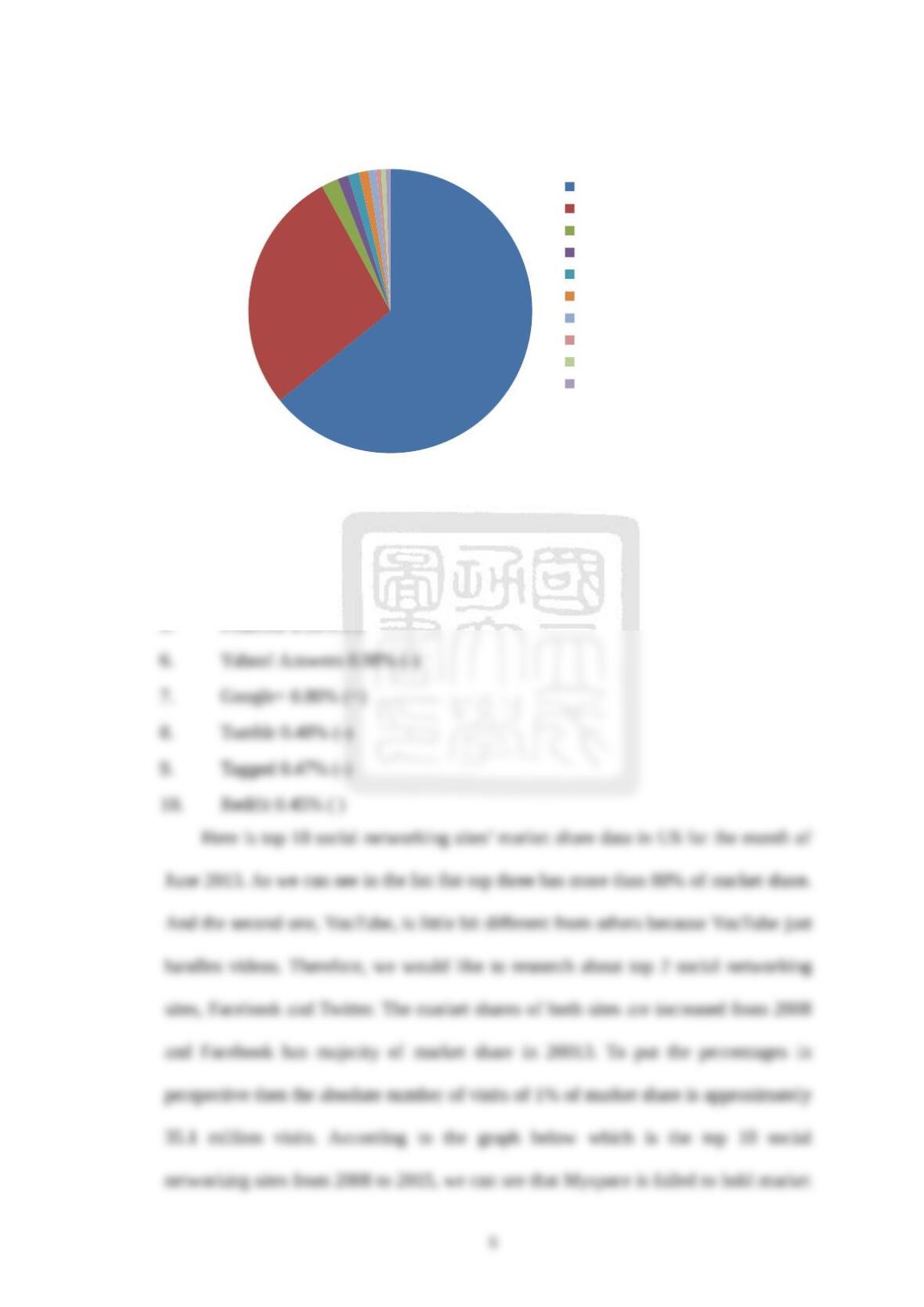
1.
Market Share of Visit s
Facebook
YouTube
Twitter
LinkedIn
Pinterest
Yahoo! Answers
Google+
Tumblr
Tagged
Reddit
Facebook
57.13% (-)
2. YouTube 24.80% (+)
3. Twitter 1.72% (+)
4. LinkedIn 1.10% (-)