Financial Statements
Fall 2020
Lecture 1
Chiyoung Cheong

2
Financial Statements and Cash Flow
(Chapter 2)
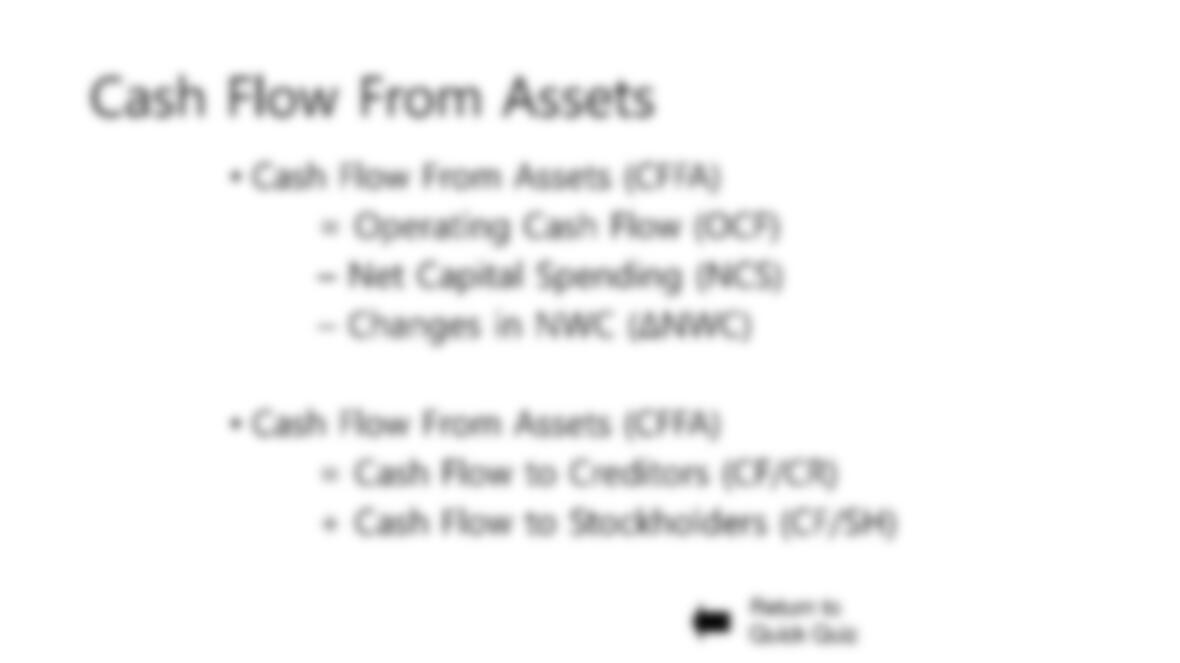
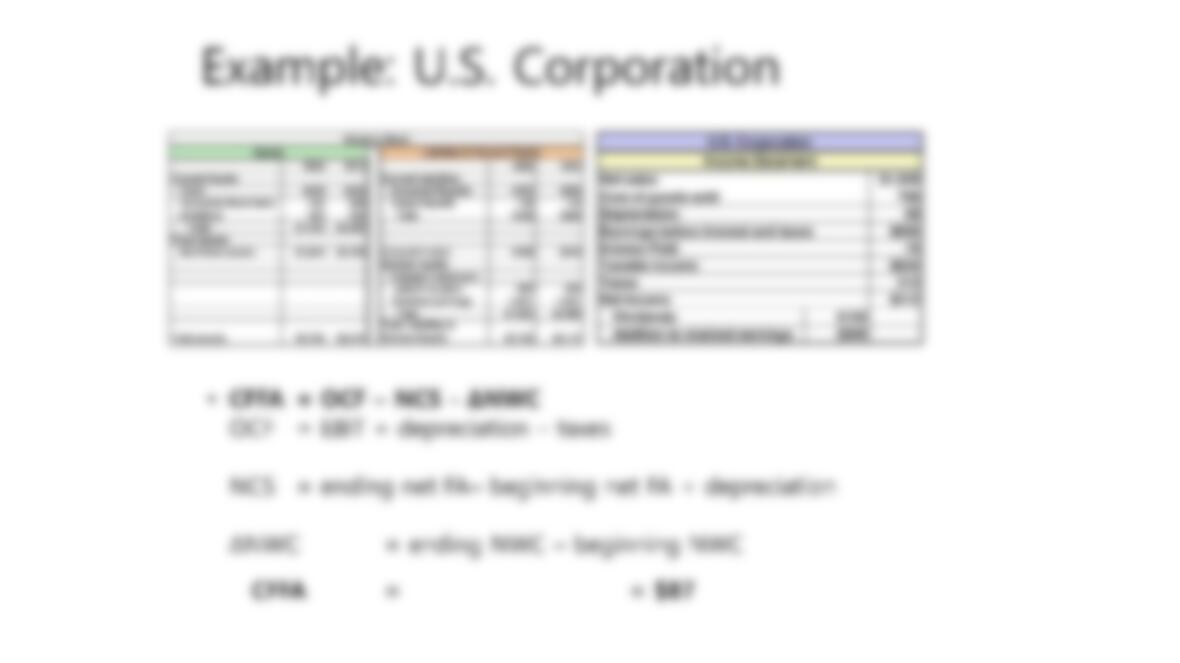
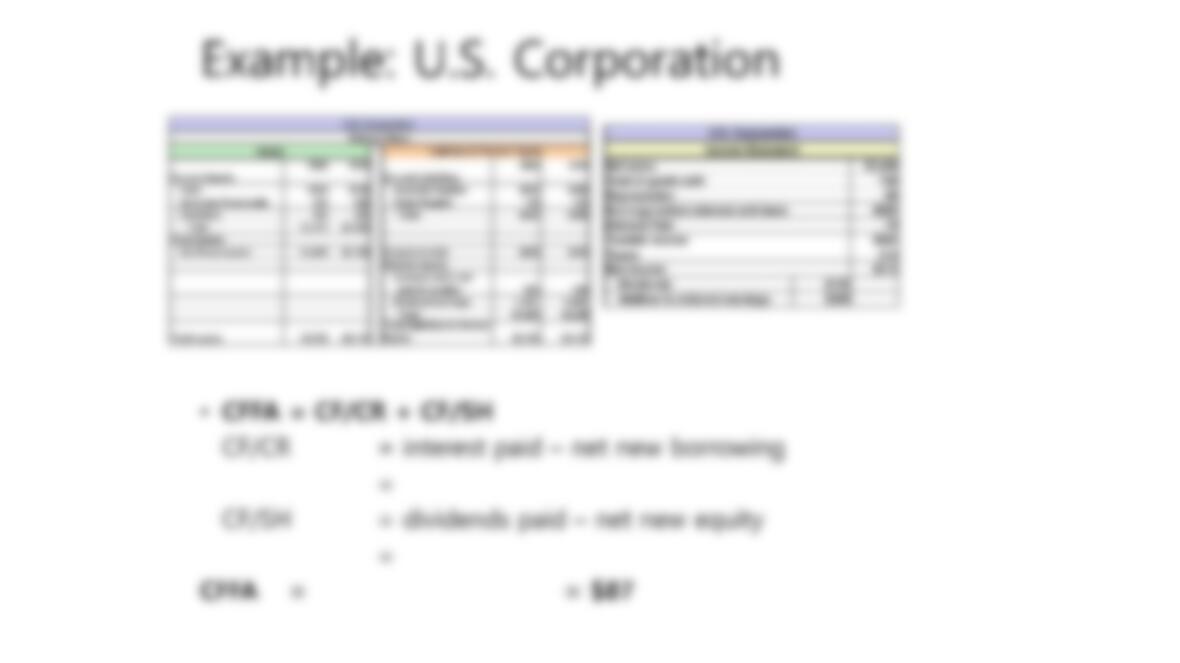
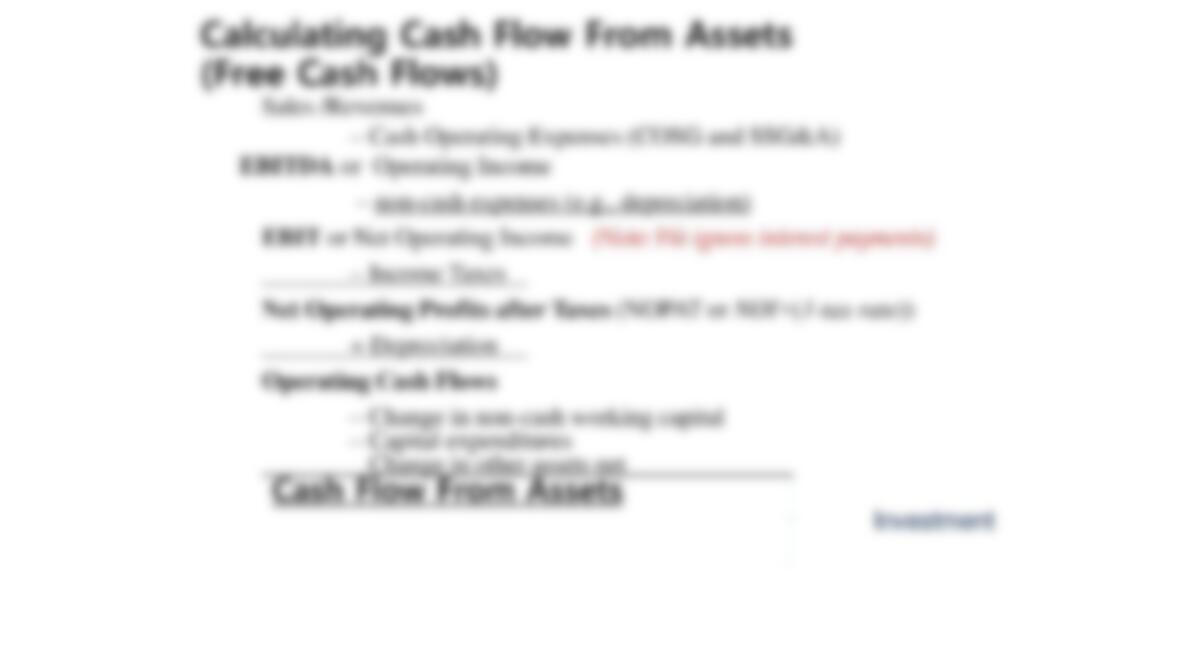
Our emphasis is on determining a firm’s cash flow from its
financial statements (not on preparing financial statements)
Keep in mind: Cash flow is a company’s lifeblood .
Other objectives:
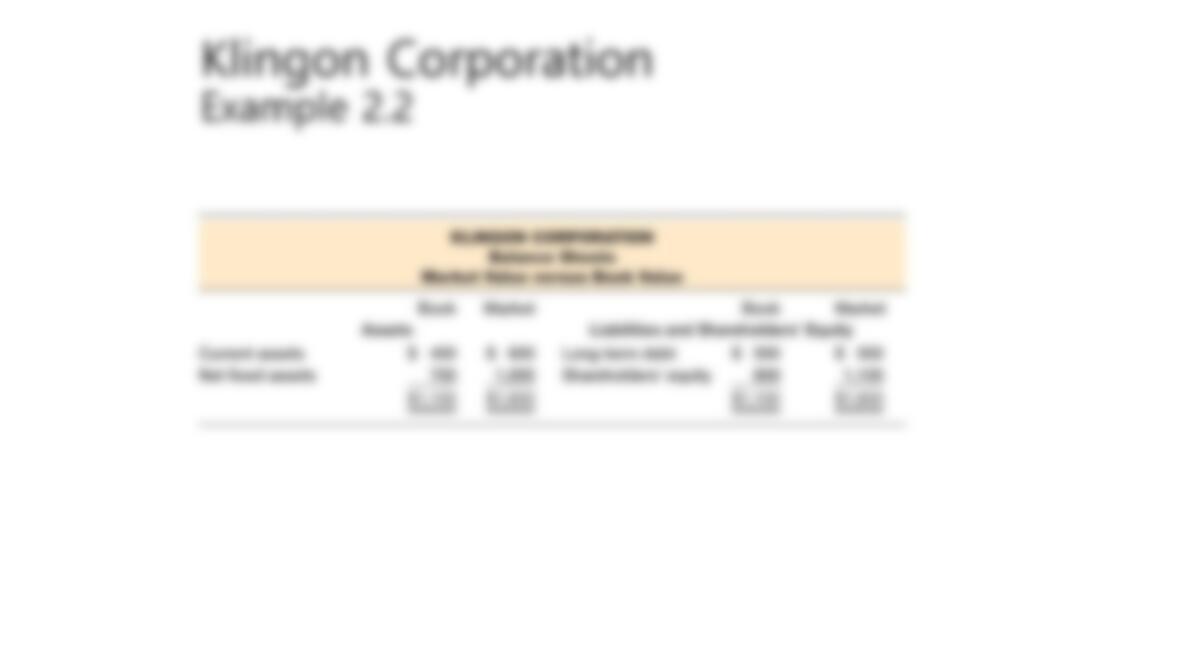
Know the difference between book value and market value
Know the difference between accounting income and cash flow

Why care about financial statements
•To have intelligent business conversations:
•Profit margins, net income
•Earnings and cash flows
•To understand financials of your own company.
•All investors use them to estimate the value of
companies.
•The government uses them to assess income
tax.
•Managers’ compensation is linked to financial
reports.

4
Who uses Financial Statement Analysis?
•Almost Everyone in the Business World
•Bankers –analyze loans and cash flow
•Portfolio Managers –projections of stock prices
•Marketing Managers –market penetration and
impacts to profitability
•Human Resources –compensation analysis
•Senior Management –corporate strategy
•Sales Managers –commission rates on sales
•Internal Financial Analysts –profitability analysis
•Customer Service Managers –efficiency ratios

2-5
Financial Statements
•There are four main financial reports:
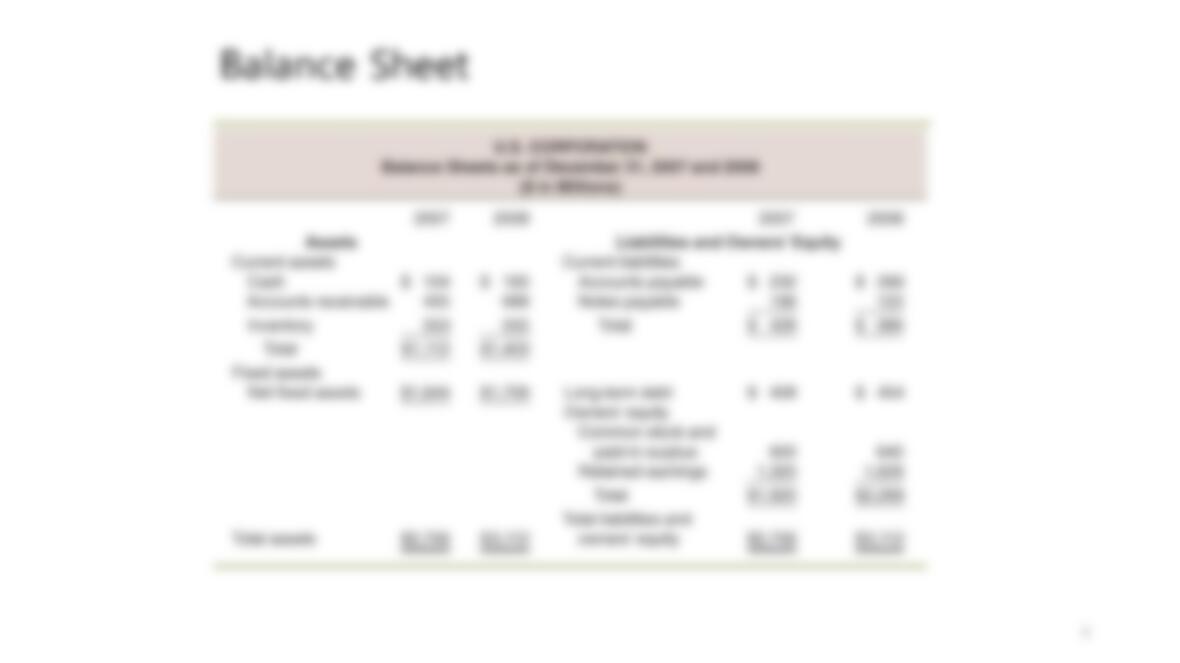
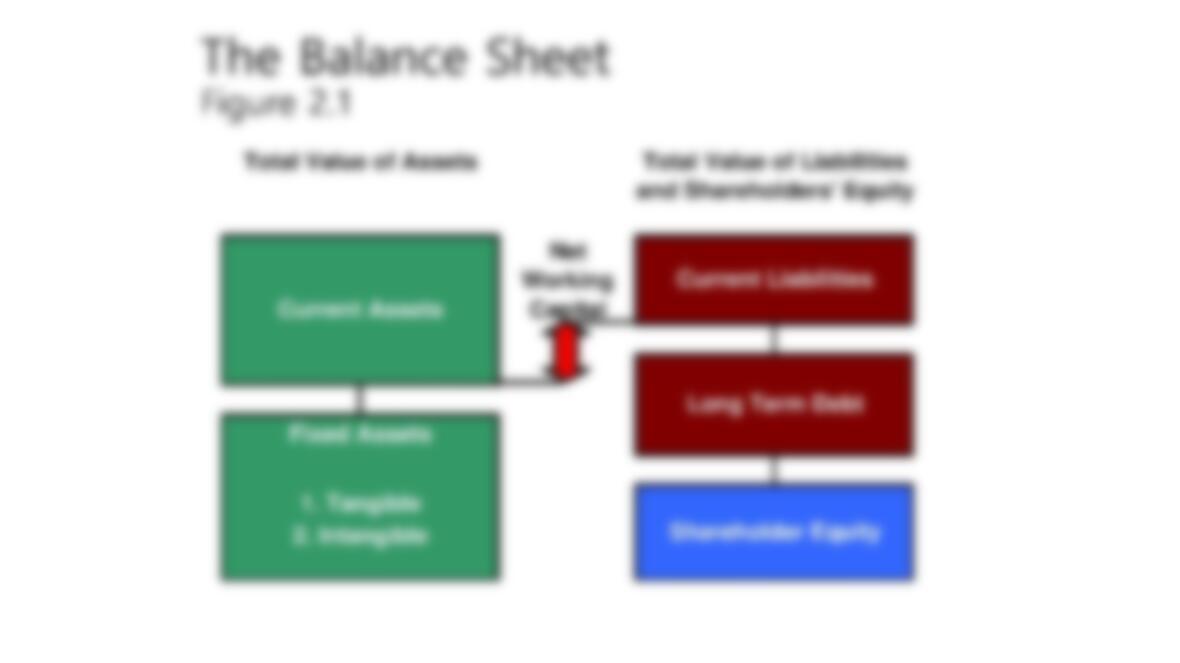
•Balance Sheet
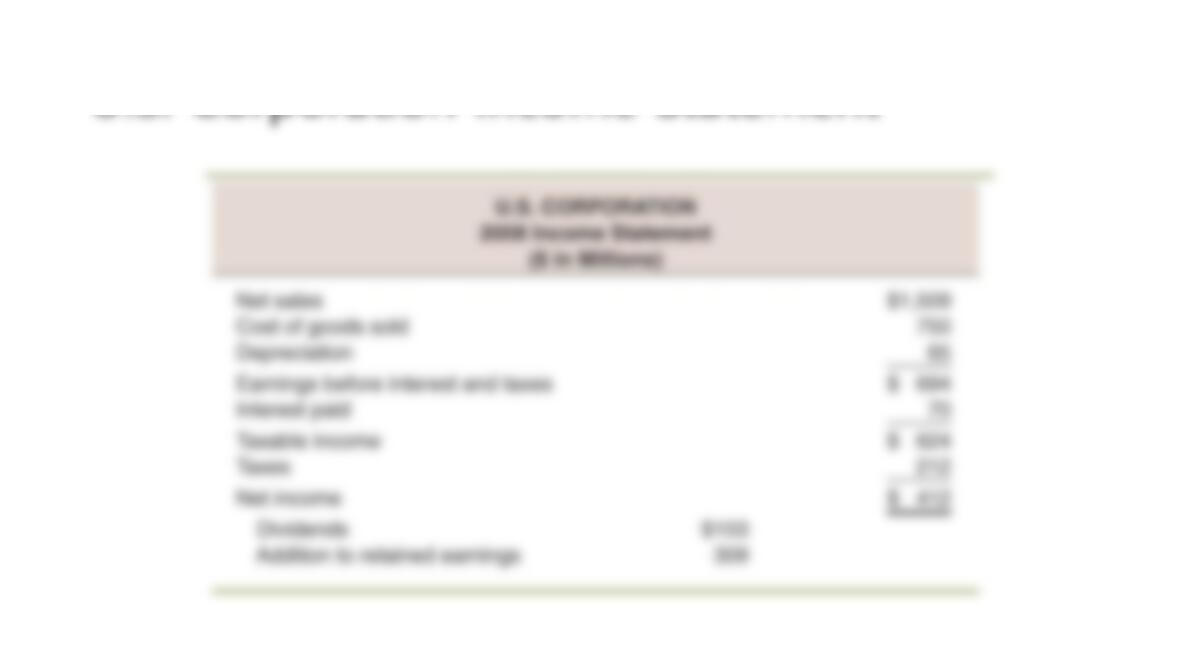
•Income Statement
•Cash Flow Statement
•Owners’ Equity (Ignored by us)
We use information in these statements to estimate
Operating and Free Cash Flows

Difference between
Accounting and finance perspectives
•Accounting is transactions based, not cash flow based.
•Very simple example: You invest $1,000 today in some safe investment. You know for sure that
you will receive $3,000 in one year.
Accounting Perspective: You have earned $2,000 today. You are earning nothing next year.
Accounting entry: +$2,000 today.
Finance Perspective: You are losing $1,000 today. You are gaining $3,000 tomorrow.
Finance entry: –$1,000 today
+$3,000 next year. (Note: future payments will be reduced for possible
non-payment risk, time value of money, etc.)