Looking globally in the world there is a lot of well-developed market such as the
US and UK, but also there is a lot of rising star what we call emerging market. An
emerging market according to the business dic onary it mean “New market
structures arising from digitaliza on, deregula on, globaliza on, and open-standards
that are shi$ing the balance of economic power from the sellers to the buyers. In
such markets informa on is freely and widely available, and is almost instantly
accessible1” in order word which mean undeveloped country with high growth
poten al. The country I have chosen is India, India locates in South Asia and it is the
seventh-largest country by area and the second-most populous country with over 1.2
billion peoples. India is the 10th largest economy in the world in terms of GDP and 3rd
largest in term of PPP. In industrial term India have some major industries such as
Tex le, Food Processing, Chemical, Steel, So$ware, Mining and Petroleum Industry.
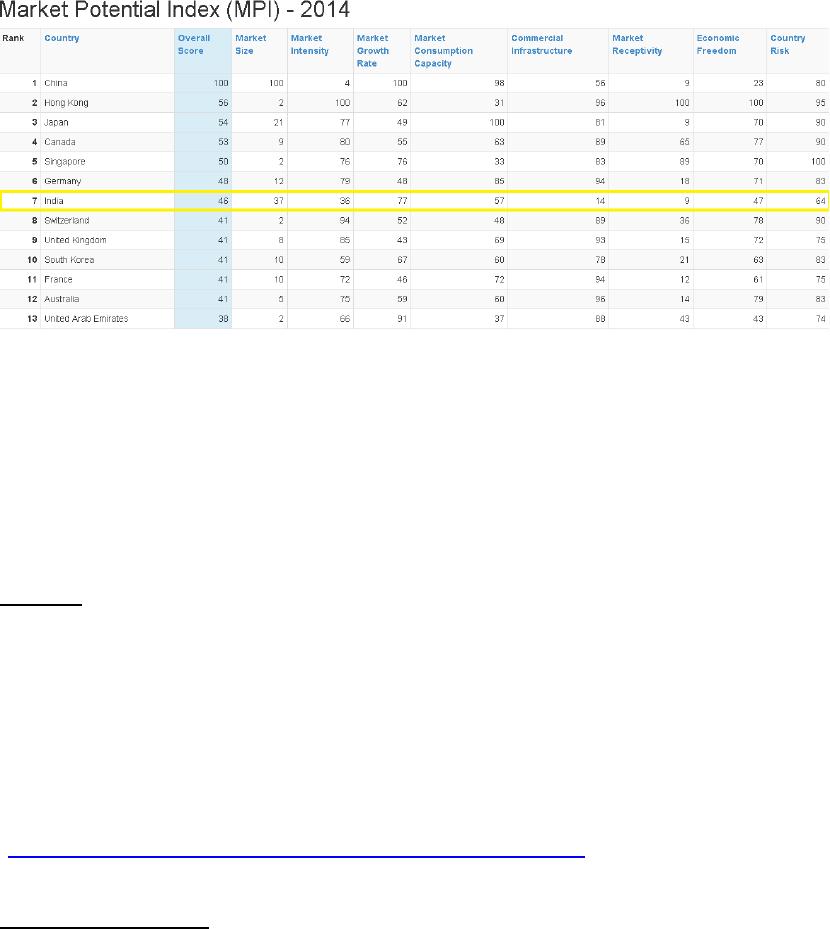
According to the MPI India in overall scored 7 highest ranks in the world. Which is the
reason made me chosen India, AS India is a very poten al emerging market we
should look into deeply and see what India can develop in the future. I will use PEST
to analysis the major factor of India and to see the advantage and disadvantage of
India.
Poli cal
In Poli cal terms India has 4 types of import tax which is used to protect local
produc on and control import. Import tax also referred as import duty in India, the
regula on is imposed by the ‘Central Board of Excise & Customs Department of
Revenue of the Union Finance Ministry in India.’ There are 4 major types of import
du es – basic import taxes, true countervailing taxes, addi onal customs taxes, and
an -dumping duty. Firstly is the basic import tax
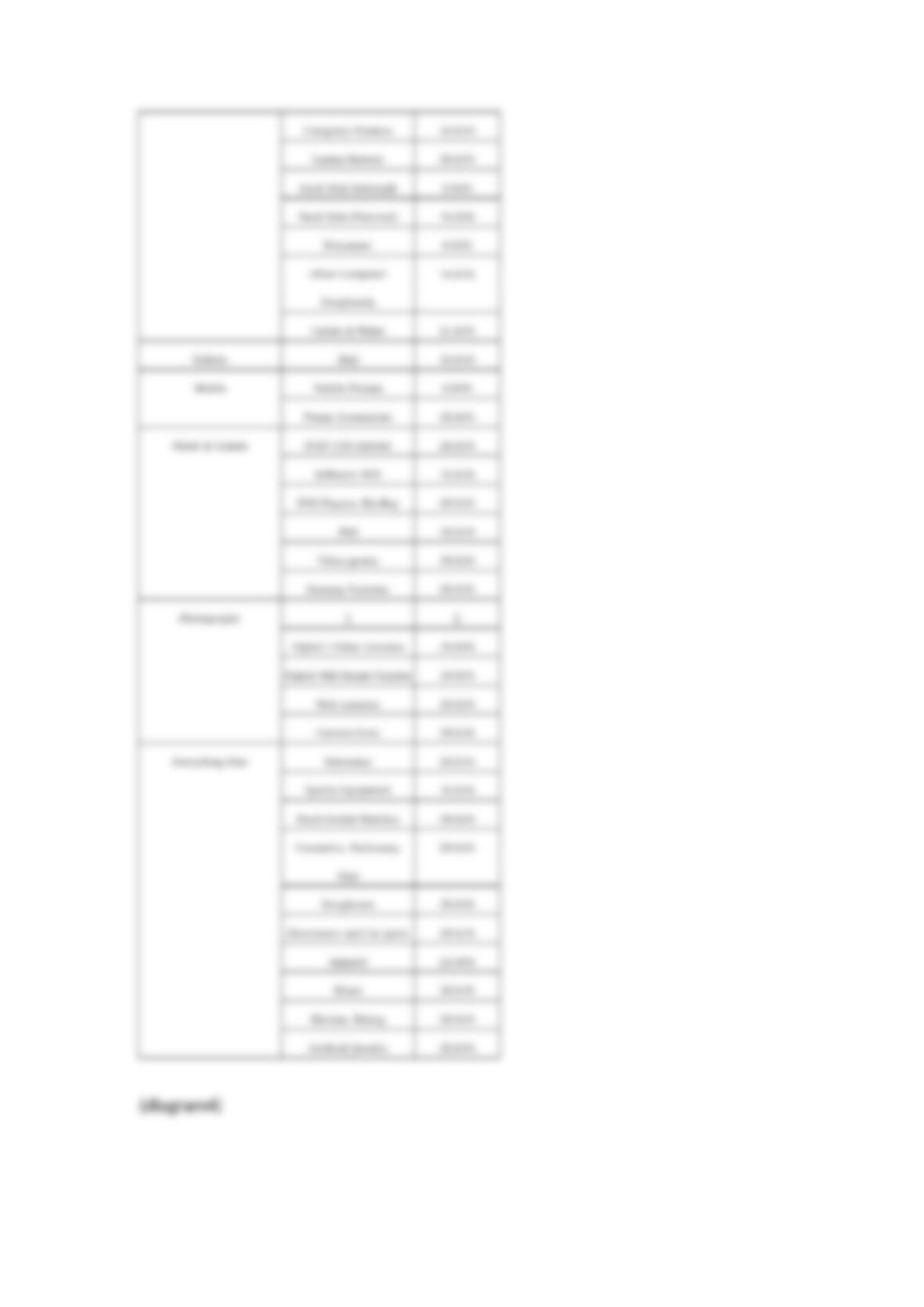
(h>p://www.labnol.org/india/custom-import-du es/19306/) from the link on the le$
(also from data sec on at the end of the assignment) we can see an chart showing
1 h>p://www.businessdic onary.com/deDni on/emerging-markets.html
the diEerent import du es which people will have to pay for the import product,
from a range from 5%rto 45% depend on the on the basis of quan ty and type of the
product. For example an import camera you will have to pay 28.85% extra of the
original price of the product. Apart from the import duty there is an addi onal
customs taxes for this only apply to product that is regarded as its manufacture
men oned in the Central Excise Act 1944 of India, it will be subjected to these taxes.
There are also countervailing taxes which are also imposed on import product so that
domes c product will have an advantage on import product. Finally is the An –
Dumping duty. For Drms want to invest in India, will need to take think about the cost
from taxa on.
Economics
In Economic point of view India is one of the largest countries in Asia and also
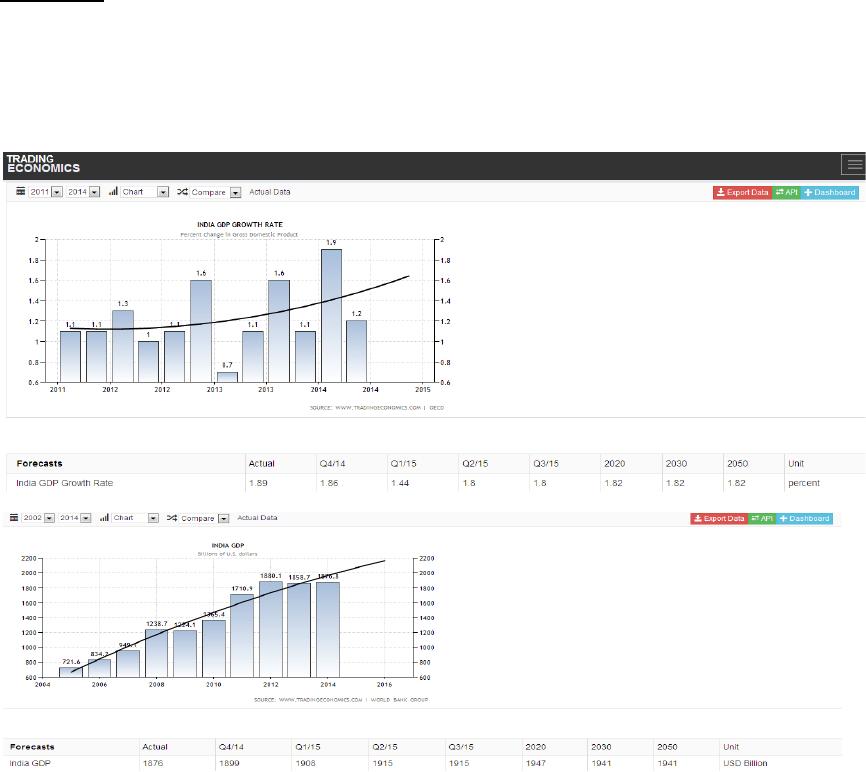
one of the fastest growing country, at the moment India is having a GDP growth rate
of 1.89% and the GDP of India is $1876 billion USD.
(Diagram 1 and 2)
Above is diagram 1 and 2 they shows the forecast of GDP and GDP growth rate of
India and the predic on to the year 2050. We can see from the predic on GDP and
GDP growth rate will con nuously increase, this mean the economics of India is
growing. Also from diagram 3 below is the inKa on rate of India even the GDP is
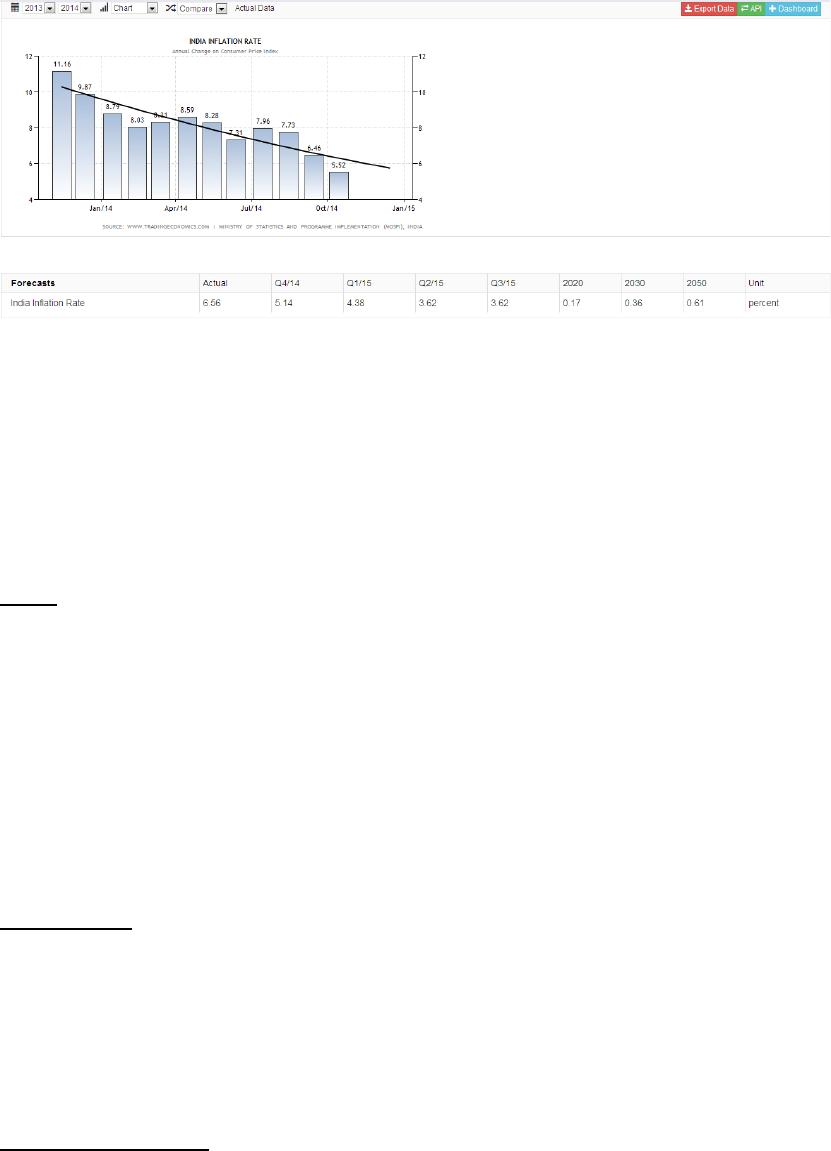
growing we can see that from diagram 3 that the predic on of inKa on rate is
oppositely currently the inKa on rate is at a high point at 6.56 but from the forecast
we can see that the predic on of the economy inKa on will rapidly decrease. Which
mean India is a posi ve and stable economy.
(Diagram 3)
India currently has signed Free Trade Agreements (FTAs) with several country such as
country in Asia like Singapore, Thailand, Korea, Japan, the ASEAN (South East Asian
Na on) and also country like Chile. India government is also nego a ng with more
country and region for FTAs so that it will help the country to improve such as the EU,
Australia, Egypt and etc…2 This agreement is hopefully will be signed within 2014 or
2015.
Social
In Social side Indian in average has an very high level of educa on this is due to the
government policy in the 2004 they encourage more university and allow students to
have an higher educa on, be on that especially in Deld of medicine, science and
technology there is a drama c increase of expert in this Deld in India at the moment.
Un l now there are over 600universi es in India and awarding over 16,000
doctorates degree annually, and because of this social life a>racted company like
scien Dc research, medical research and IT Drms going into India to look for expert.
Technological
In technological term India recently have drama c improvement in the technological
Deld in the century. For recent year India has become superpower in the Deld of IT
and so$ware such as Microso$ and other interna onal brand have setup
headquarter in India to a>ract those experts to work for them. “India’s share in world
in gross expenditure on research & development (GERD) has increased from 1.9 per
2H>p://emerging-markets-research.hktdc.com/business-news/subindex/en/Asia/1X4UWAQG/1/0.htm
cent in 2004-05 to 2.4 per cent in 2009-10. It has the third-largest scien Dc and
technical manpower in the world with 634 universi es awarding over 16,000
doctorates degrees annually. India ranks ninth globally in terms of the number of
scien Dc publica ons.”3 From the tax quoted in the text we can see that in
technological term India is improving not only technology but also the manpower
and on inves ga on ability, India at the moment technology might not be as good as
developed country like the EU and US but we can see the improvement progress of
the country.
Now I will also use SWOT to analysis further analysis the compe veness India.
Strength
Firstly In term of strength, India is the second populated country in the world which
made it an strength this is because India as an country it can provided huge
manpower, and as we have talk about in social the culture mainly have high educated
ci zen which mean there is a lot of availability of skilled, capable and dynamic
human resources for the country, also with most of the manpower have a huge
English speaking popula on which is a>rac ve for interna onal Drm to invest in the
country as the communica on barrier is low in India. Secondly the rich natural and
resource of the country, India is the 7th largest countries by area in the world it has