1
Master of Business Administration (Advanced)
Managerial Skills and Concepts
MGNT900
Assignment 1
Evidence Based Business Report – Goal Setting, Goal Achievement Plan & Success Criteria
24-FEBURARY-2017
Tarun Joseph
5672600
2
Executive Summary
This report argues about the three goals related to our program of study and how to develop a
criterion to succeed in these goals. These goals were adopted and developed using the SMART
model (Lee 2010, pp. 744-746). The goals are:
1. Reduce stress and have a better study-life balance.
2. Pass with a score of 75 -80 in all subjects in trimester 1.
3. Improve business connections to acquire a part time job or an internship after trimester 1.
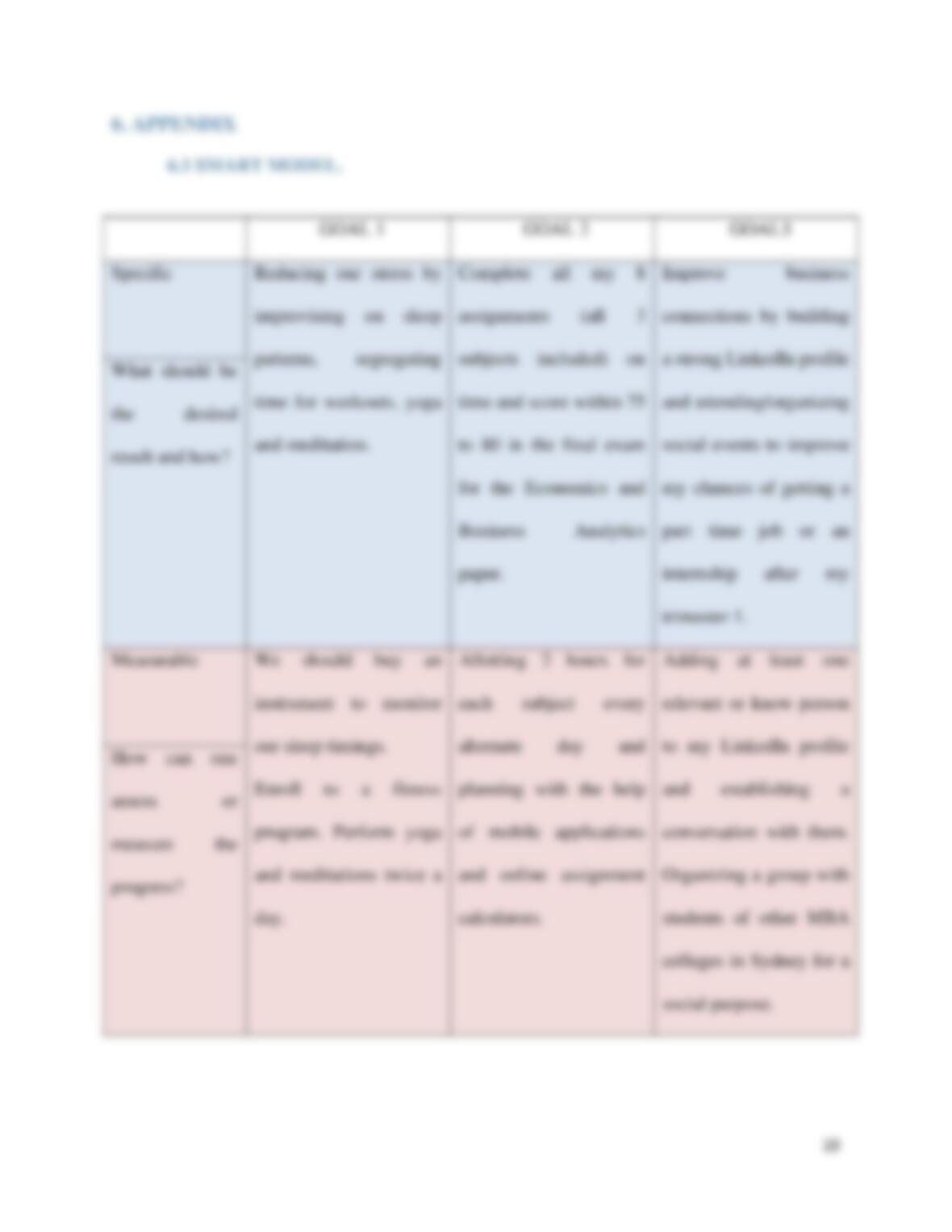
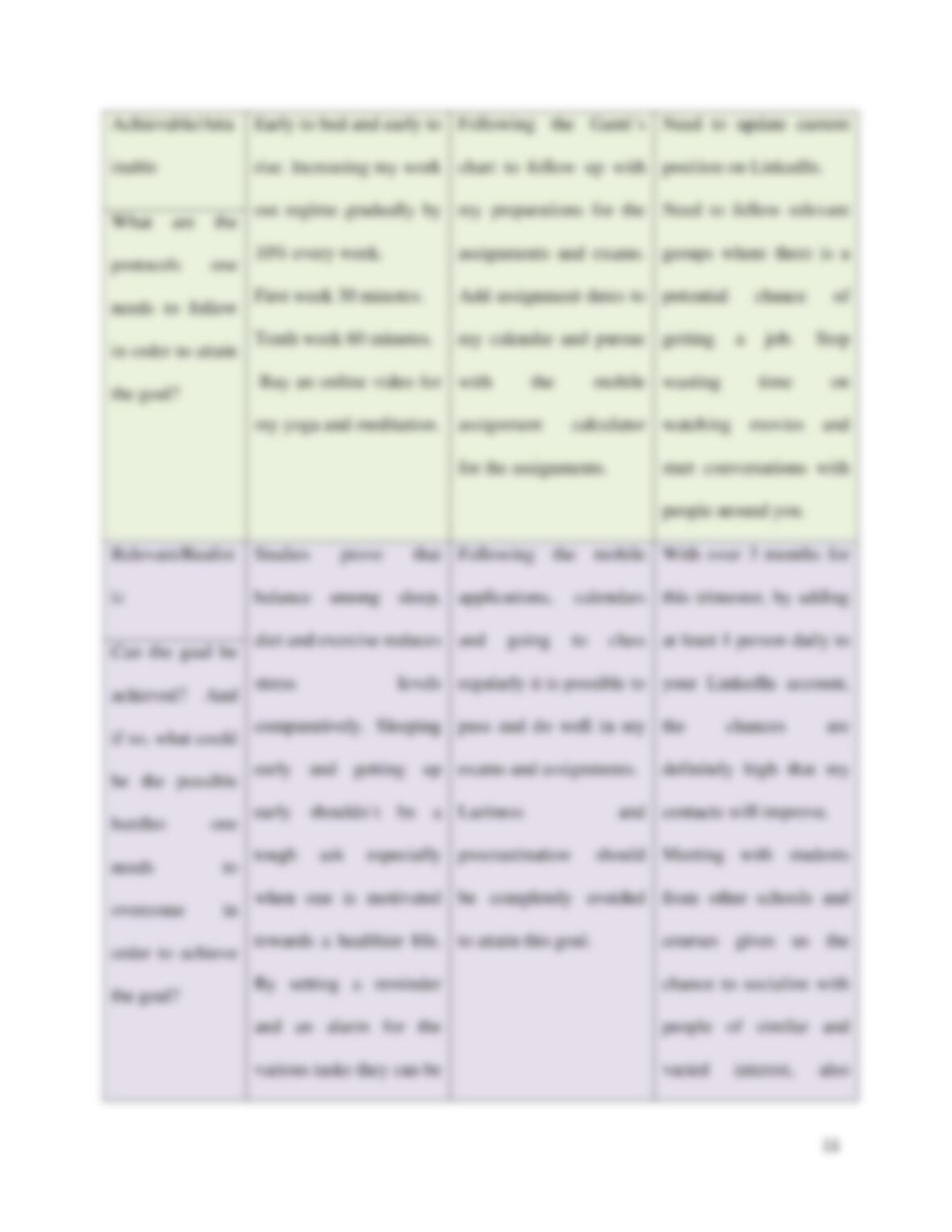
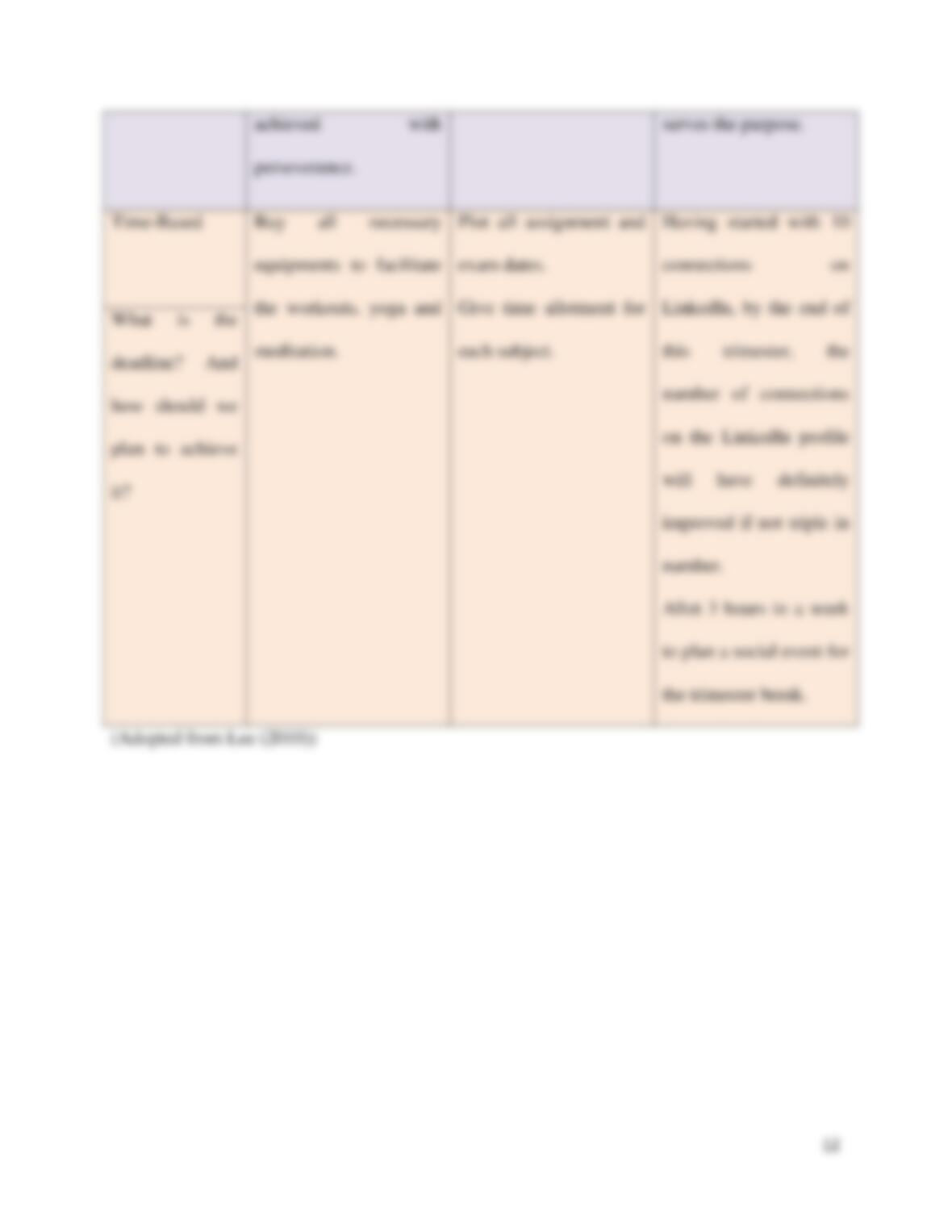
The adopted SMART model has been added to the appendix. Further this report elaborates on the
above stated 3 goals and subsequently the appendix includes various models and criterion for the
success for the same. This report also includes how the 3 goals fit the over-all study schedule.
(See appendix 6.3)
3
Contents.
1. Introduction………………………………………………………………………………………………………………….4
2. Criteria for success………………………………………………………………………………………………………..4
3. The 3 SMART goals……………………………………………………………………………………………………..5
4. Conclusion…………………………………………………………………………………………………………………..7
5. References……………………………………………………………………………………………………………………8
6. Appendix……………………………………………………………………………………………………………………10
6.1 SMART model……………………………………………………………………………………………….10
6.2 Assignment calculator……………………………………………………………………………………..13
6.3 Calendar plan…………………………………………………………………………………………………14
6.4 Gantt chart……………………………………………………………………………………………………..16

4
1. Introduction.
This business report takes a position of a personal goal development plan with a focus on
SMART goal setting. It is much easier to reach a goal if the student is connected personally and
invested in it (Johnson, Moore & Thornton 2014, p.43). The positive of setting a goal is that one
can strive for longer periods of time with lesser distractions in way. A goal can be described as
“that which one wants to accomplish; it concerns a valued, future end state” (Johnson, Moore &
Thornton 2014, p.42). By setting a goal, it helps you develop as a unique individual and
motivates you to go further and try harder (Johnson, Moore & Thornton 2014, p.42).
2. Criteria for Success.
Different goals can be viewed differently. A goal is a matter of perspective and 2 different
individuals could have the same goal and still have a different level of success or different
criteria towards the same goal. As a matter of fact the same criteria could work towards failure
for one student; when it helps the other to succeed. Therefore, success cannot be defined in the
same manner for two different individuals or the extent of success may not be the same always.
Sometimes formulation of a goal may just give you direction and not the end result. The extent
of the end result depends on the individuals. This extent also depends on many factors such as
motivation and plans (Cheung 2004, p.7).
3. The 3 SMART goals.
Goal 1: Reduce stress and have a better study-life balance.
Hindman (2015, p.873) mentions that students from various levels of education are constantly
facing high levels of stress that is affecting their academic performances often. These higher
stress levels adversely affect our physical and mental health (Tripathi & Bano S 2014). Poor
physical health makes us prone to illness and various diseases. Once the mental health is affected
it becomes difficult for us to concentrate on various tasks including personal and social
(Hindman 2015, p.873). An important aspect to increased stress in international students is due
to their unfamiliarity to new academic procedures (Pavlakis & Kaitelidou 2012).
Mindful interventions and short meditations have proven to be very useful in decreasing