Essays on Transportation Policies and Their Effects in Beijing
Nan Zhong
Submitted in partial fulfillment of the
requirements for the degree of
Doctor of Philosophy
in the Graduate School of Arts and Sciences
COLUMBIA UNIVERSITY
2015
c
2015
Nan Zhong
All Rights Reserved
ABSTRACT
Essays on Transportation Policies and Their Effects in Beijing
Nan Zhong
Transportation problems such as traffic congestion and traffic emission draw growing atten-
tion along with rapid urbanization and growth of urban transportation sector in developing
countries. This dissertation focuses on a series of transportation policies implemented by the
government of Beijing and explores their potential effects in the aspect of reducing traffic
congestion, improving air quality, and saving energy. This dissertation is composed by three
essays. The first essay exploits an idiosyncratic feature of a driving restriction policy and
examines the effects of having more vehicles on the road on traffic congestion, ambient air
pollution, and contemporaneous health. The findings suggest that traffic congestion has
substantial environmental and health externalities in Beijing but that they are also respon-
sive to policy. The second essay explores the effects of opening new subway lines on traffic
congestion and ambient air pollution in Beijing. Results show that the expansion of subway
networks significantly decreases traffic congestion, and is associated with improvements in
air quality in areas located close to the newly opened subway lines. The third essay estimates
the price and income elasticities of vehicular gasoline demand to explore the potential effect
of fuel tax on transportation gasoline consumption in Beijing.
Table of Contents
List of Figures iv
List of Tables vi
Acknowledgements viii
1 Introduction 1
2 Superstitious Driving Restriction: Traffic Congestion, Ambient Air Pollu-
tion, and Health in Beijing 5
2.1 Introduction ……………………………… 7
2.2 Background ……………………………… 11
2.2.1 Air Pollution and Health ……………………. 11
2.2.2 Transportation Problem and Air Pollution in Beijing ……… 12
2.2.3 Driving Restriction in Beijing …………………. 14
2.3 Data …………………………………. 17
2.3.1 Measure of Traffic Congestion …………………. 17
2.3.2 Measure of Air Quality …………………….. 18
2.3.3 Measure of Health ………………………. 21
2.3.4 Weather Data …………………………. 22
i
2.4 Empirical Strategy and Results ……………………. 23
2.4.1 Effects of the Number 4 Day on Traffic Congestion ………. 24
2.4.2 Effects of the Number 4 Day on Ambient Air Pollution …….. 26
2.4.3 The Number 4 Day, Ambient Air Pollution, and Health …….. 30
2.5 Economic Cost of the Number 4 Day …………………. 35
2.6 Conclusion ………………………………. 36
3 Subway Network Expansion, Traffic Congestion, and Ambient Air Pollu-
tion in Beijing 60
3.1 Introduction ……………………………… 62
3.2 Background ……………………………… 63
3.3 Data …………………………………. 65
3.4 Empirical Results …………………………… 67
3.4.1 Effects of Opening New Subway Lines on Traffic Congestion ….. 67
3.4.2 Effects of Opening New Subway Lines on Air Pollution …….. 70
3.5 Discussion ………………………………. 73
3.6 Conclusion ………………………………. 75
4 Elasticities of Vehicular Gasoline Demand in Beijing 97
4.1 Introduction ……………………………… 99
4.2 Background ……………………………… 100
4.3 Data …………………………………. 103
4.4 Empirical Strategy and Results ……………………. 104
4.4.1 Basic Model ………………………….. 104
4.4.2 IV Approach …………………………. 105
4.4.3 Partial Adjustment Model …………………… 107
ii
4.4.4 Changes in Gasoline Demand Elasticities over Time ………. 109
4.5 Conclusion ………………………………. 110
Bibliography 124
iii
List of Figures
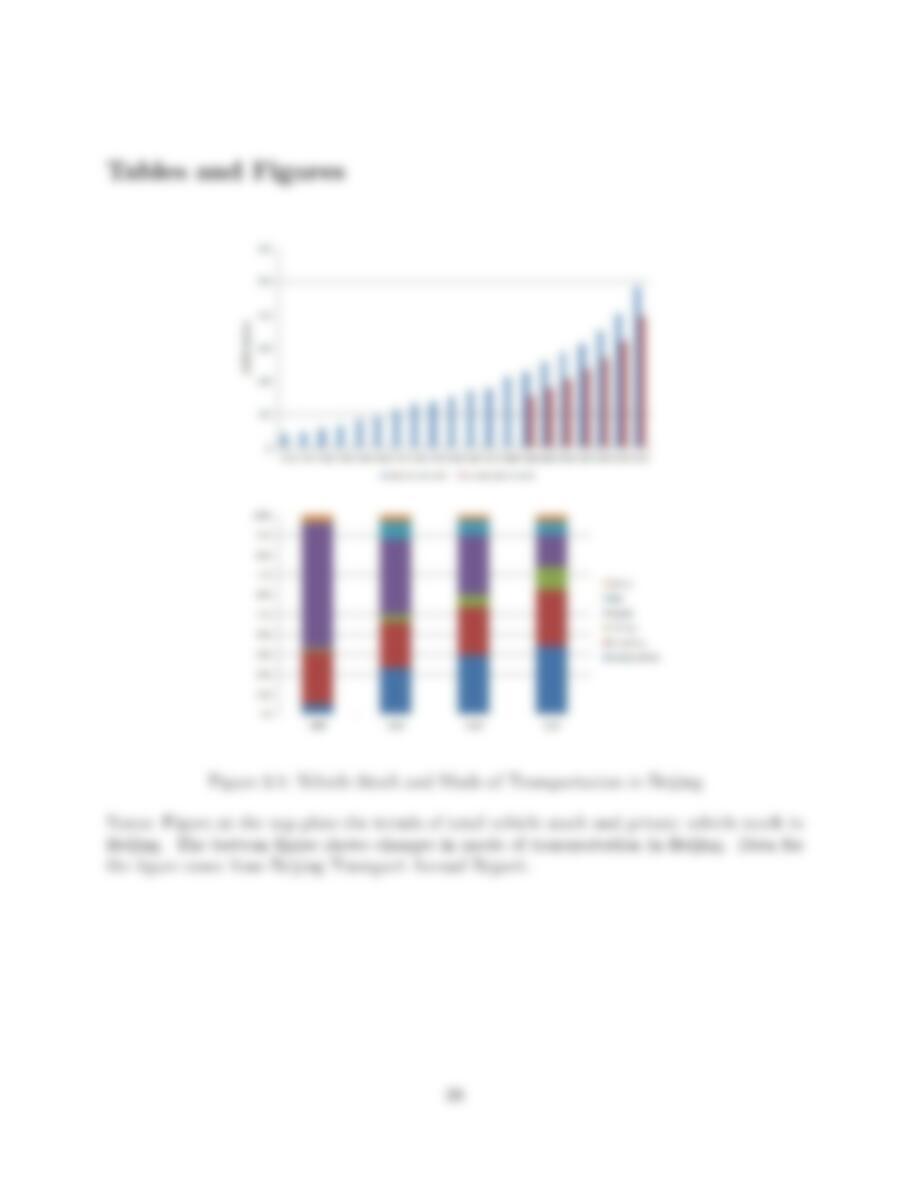
2.1 Vehicle Stock and Mode of Transportation in Beijing …………. 38
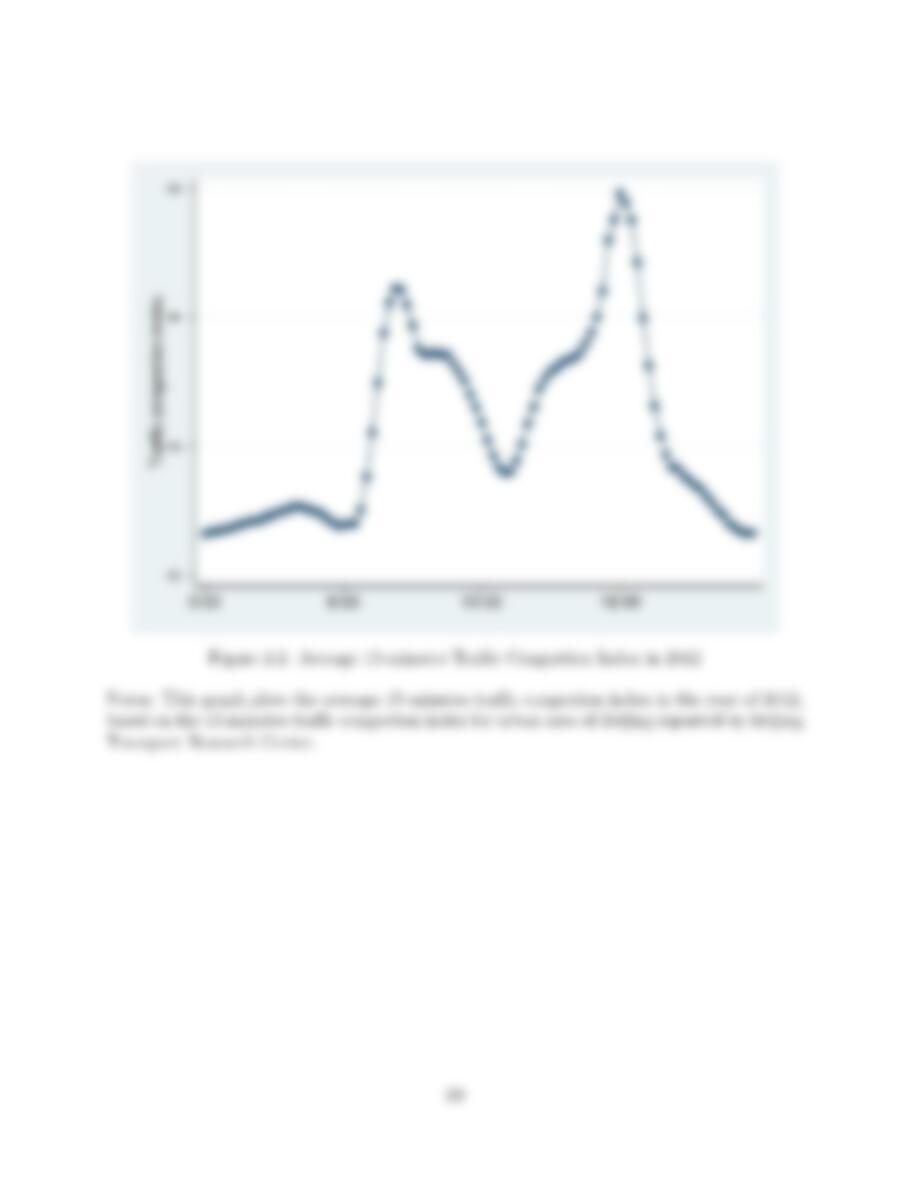
2.2 Average 15-minutes Traffic Congestion Index in 2012 …………. 39
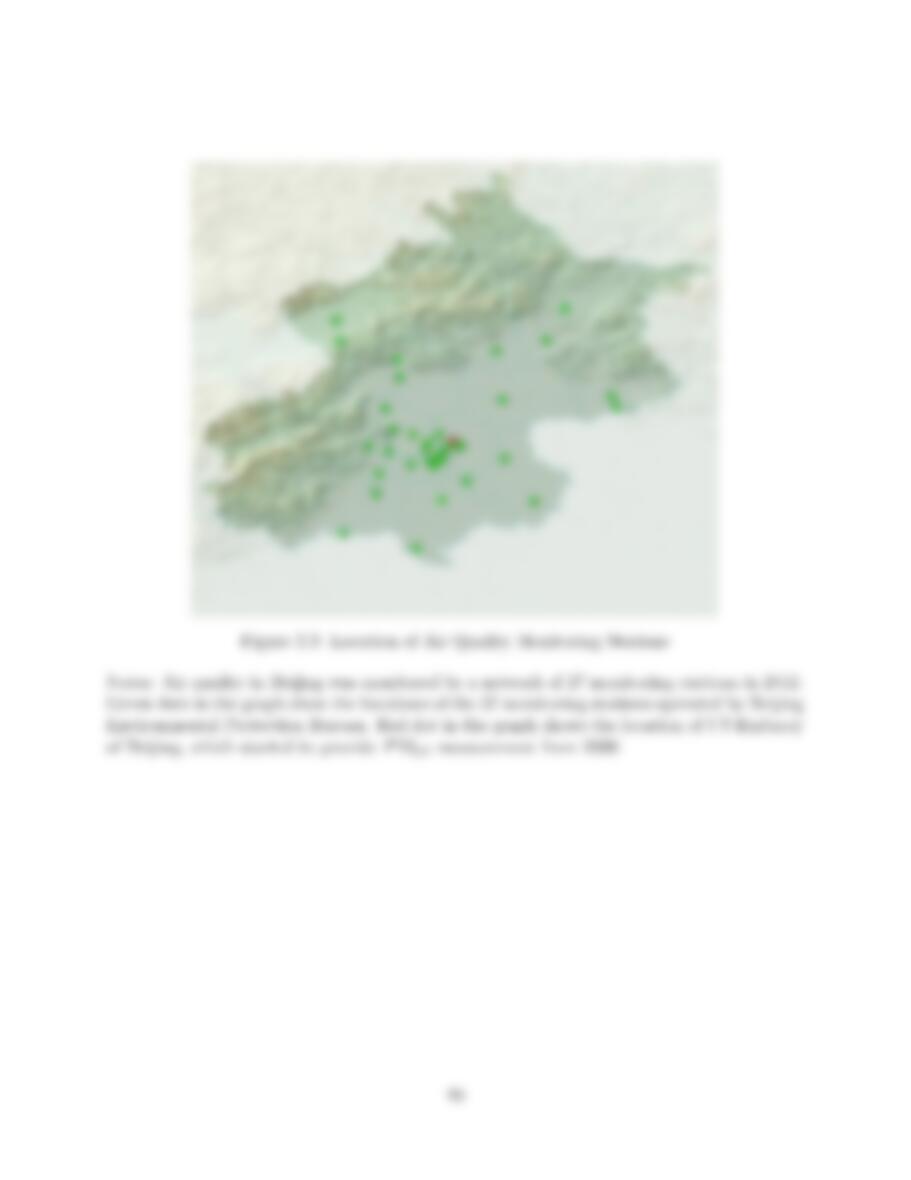
2.3 Location of Air Quality Monitoring Stations ……………… 40
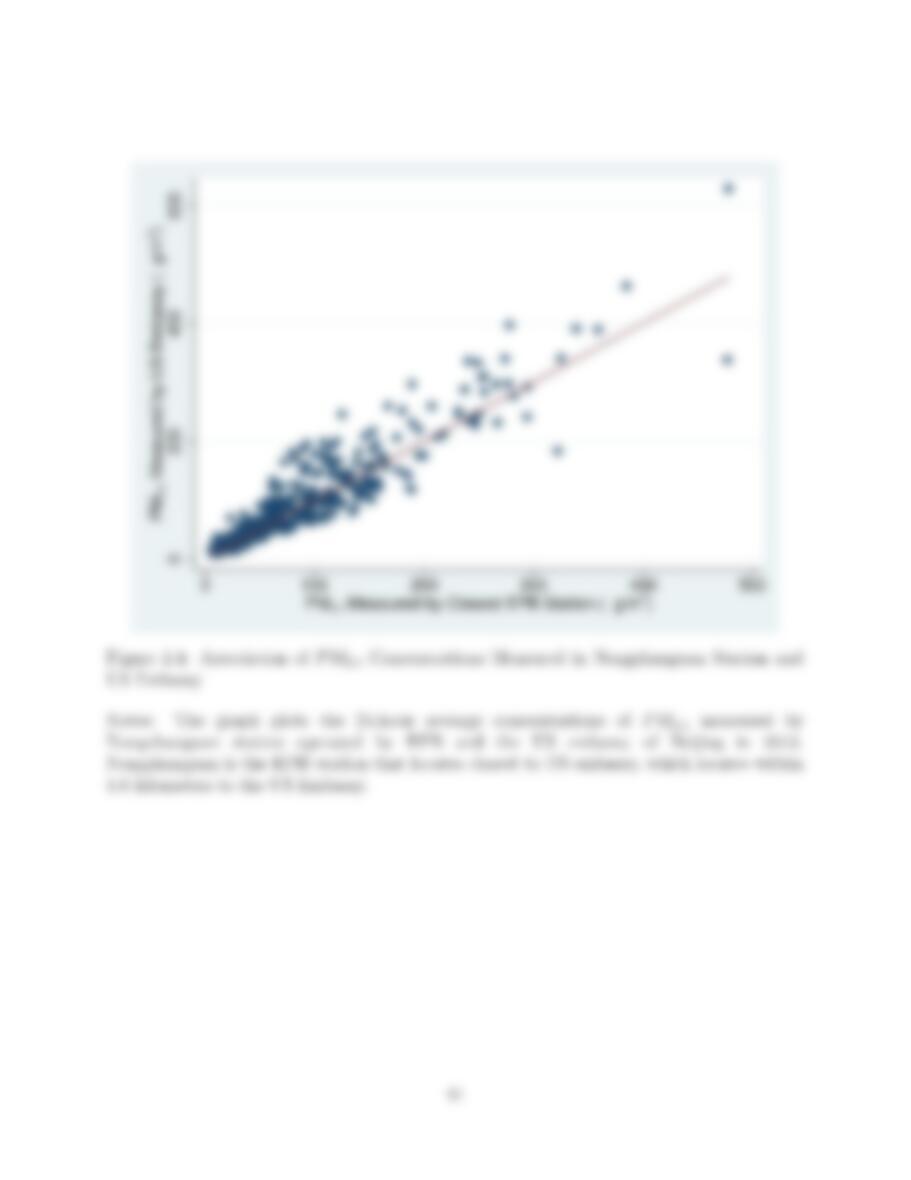
2.4 Association of P M2.5Concentrations Measured in Nongzhanguan Station and
US Embassy ……………………………… 41
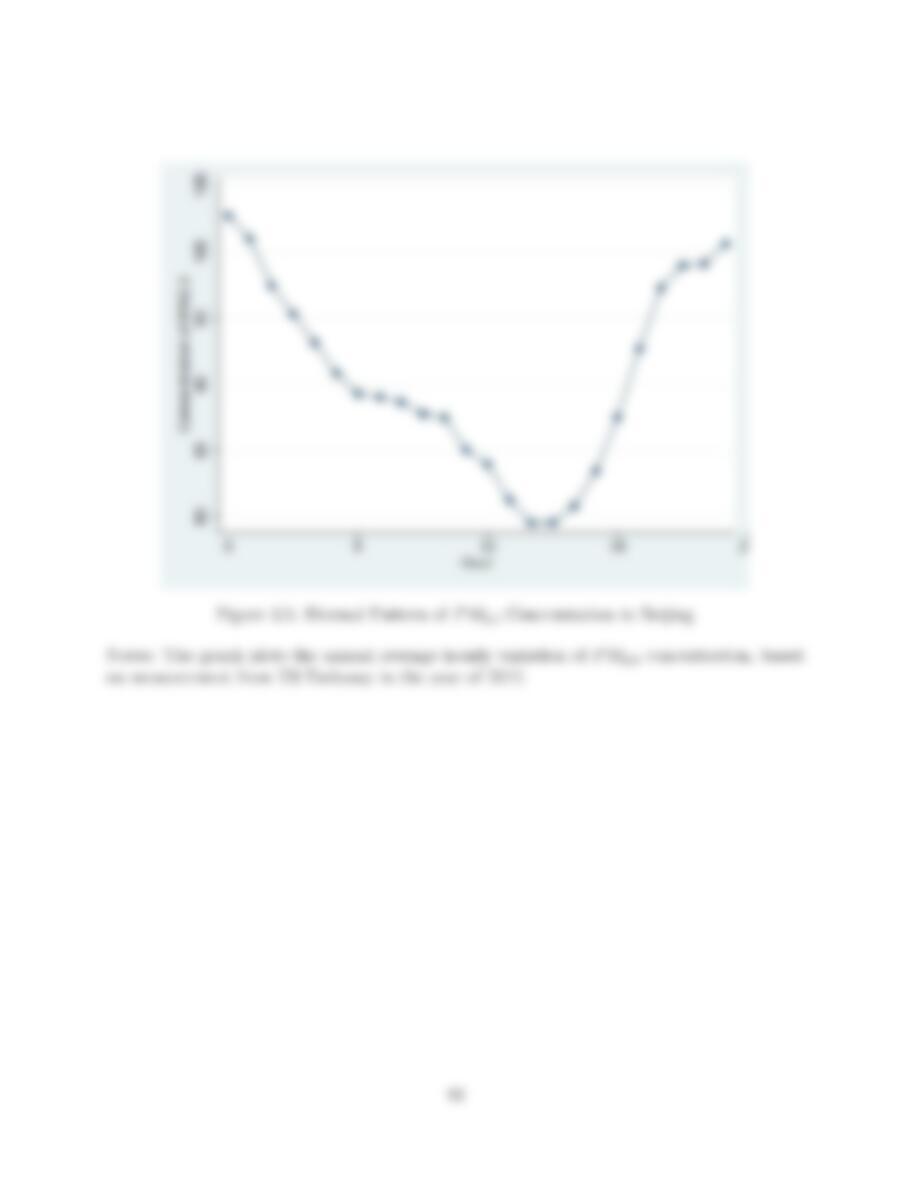
2.5 Diurnal Pattern of P M2.5Concentration in Beijing ………….. 42
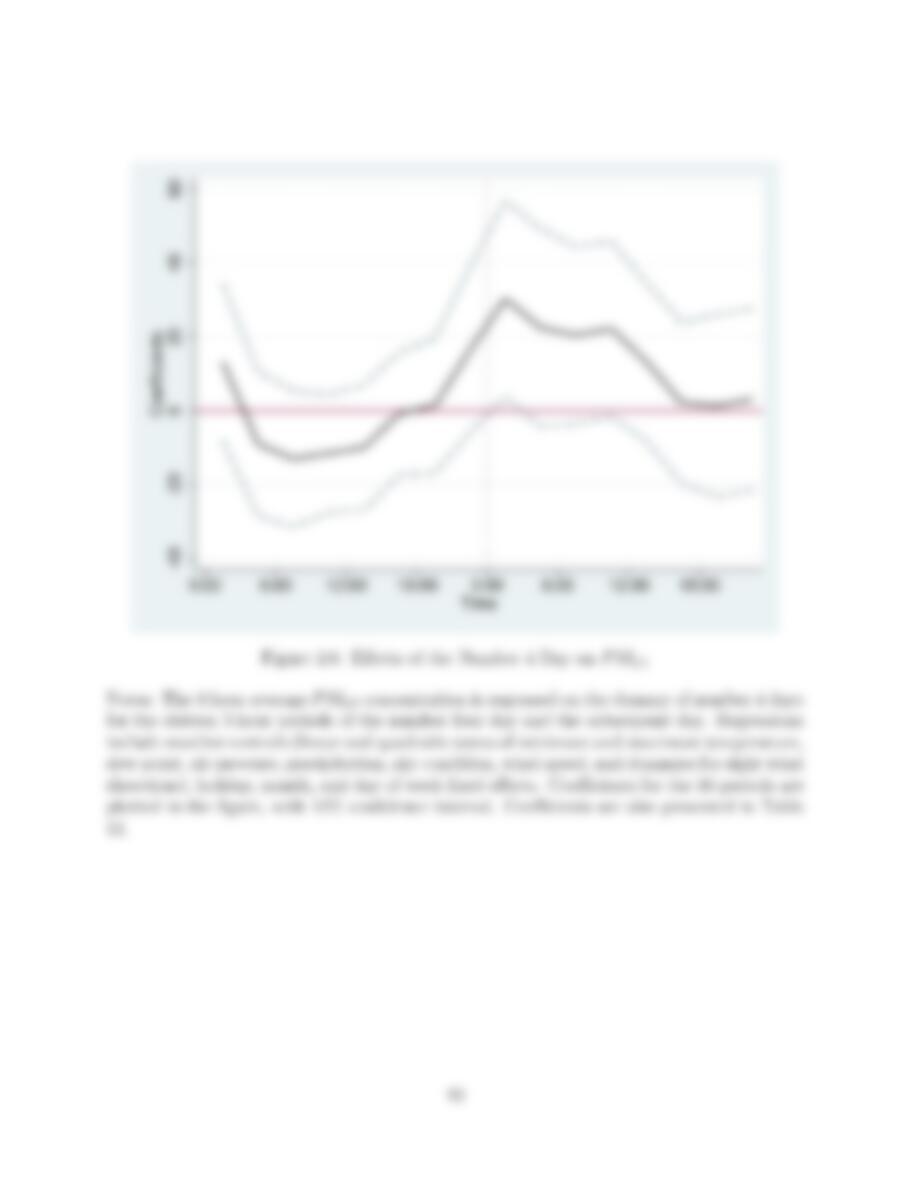
2.6 Effects of the Number 4 Day on P M2.5………………… 43
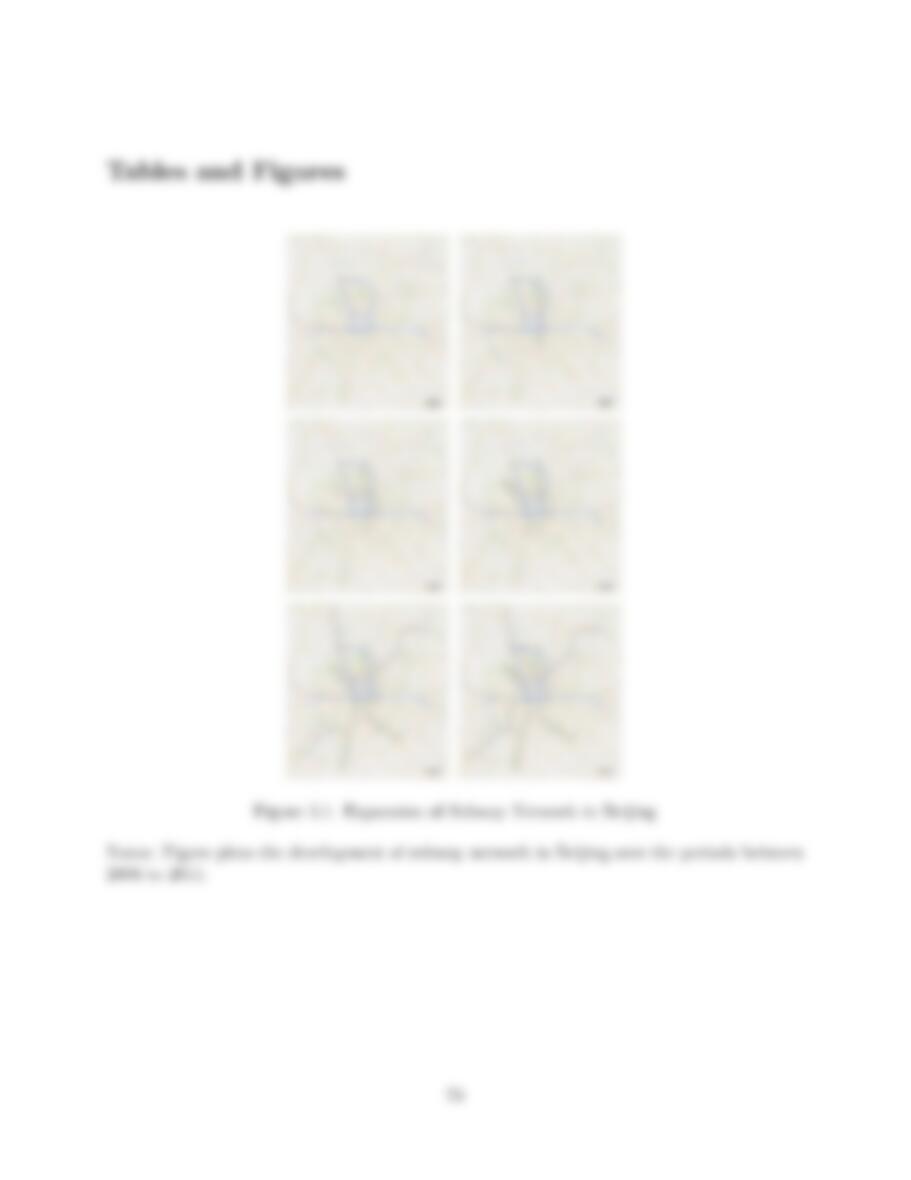
3.1 Expansion of Subway Network in Beijing ……………….. 76
3.2 Length of Subway Route in Beijing ………………….. 77
3.3 Location of Air Pollution Monitoring Stations and Subway Lines ……. 78
3.4 Monthly Average Congestion Index ………………….. 79
3.5 Residual of Congestion Index …………………….. 80
3.6 P M10 Concentration with Interceptions of Subway Opening Dates …… 81
3.7 NO2Concentration with Interceptions of Subway Opening Dates . . . . . . 82
3.8 SO2Concentration with Interceptions of Subway Opening Dates ……. 83
3.9 Residual of P M10 Concentration with Interceptions of Subway Opening Dates 84
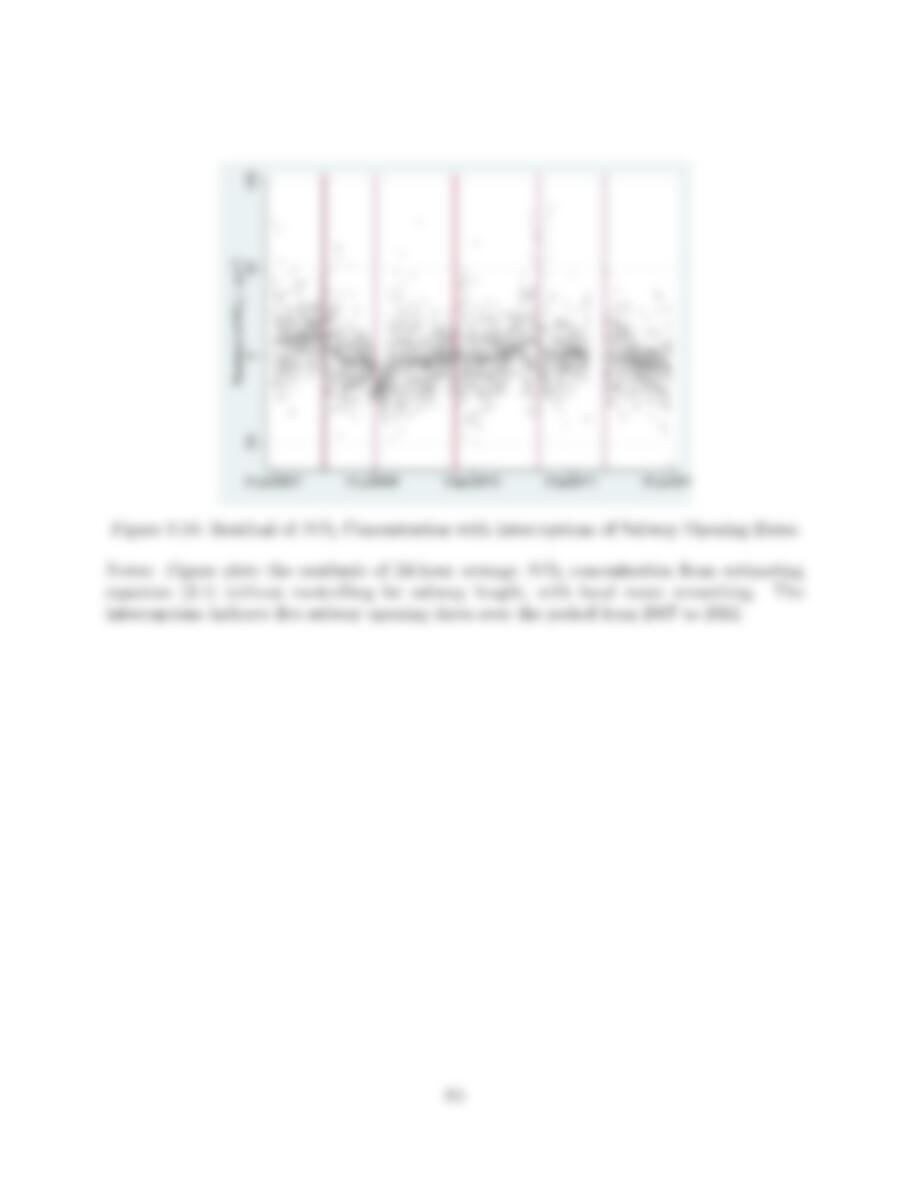
3.10 Residual of NO2Concentration with Interceptions of Subway Opening Dates 85
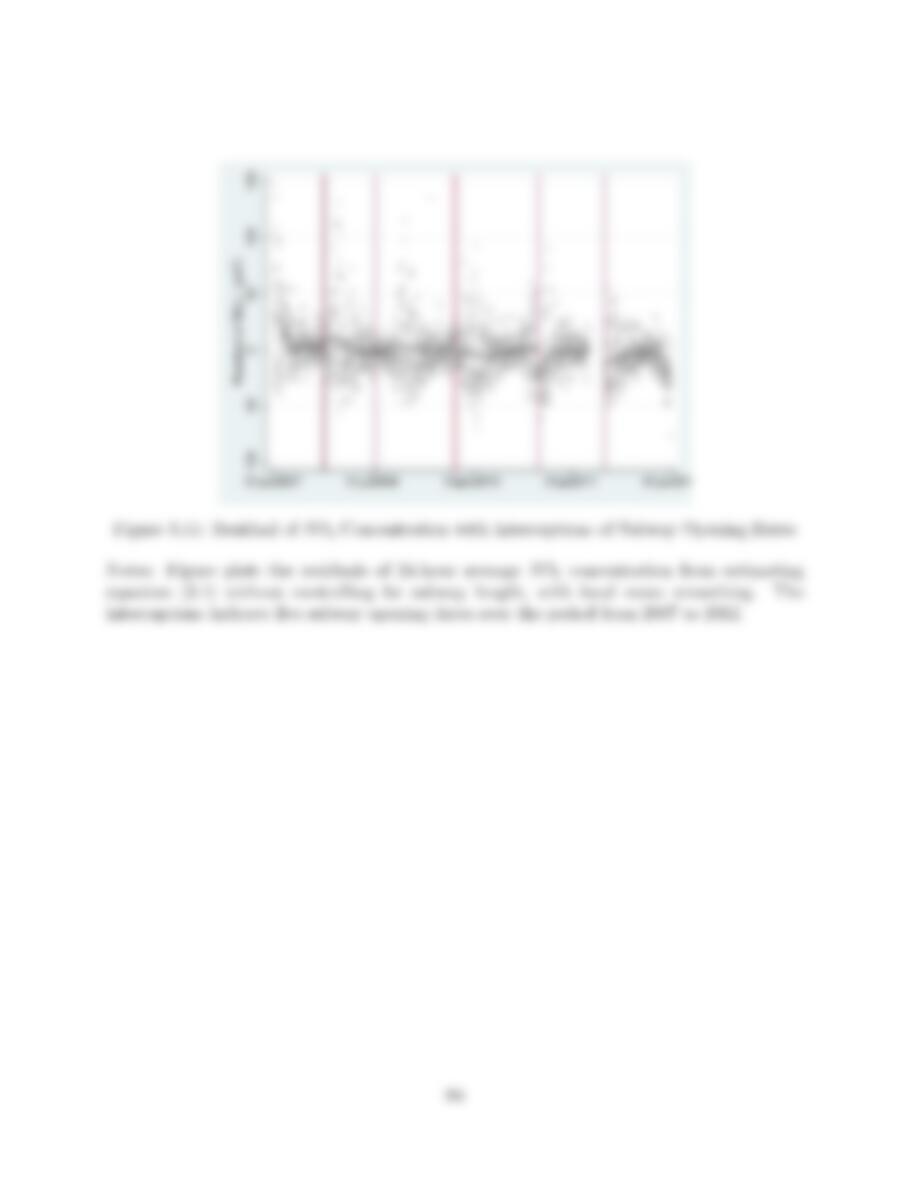
3.11 Residual of SO2Concentration with Interceptions of Subway Opening Dates 86
iv
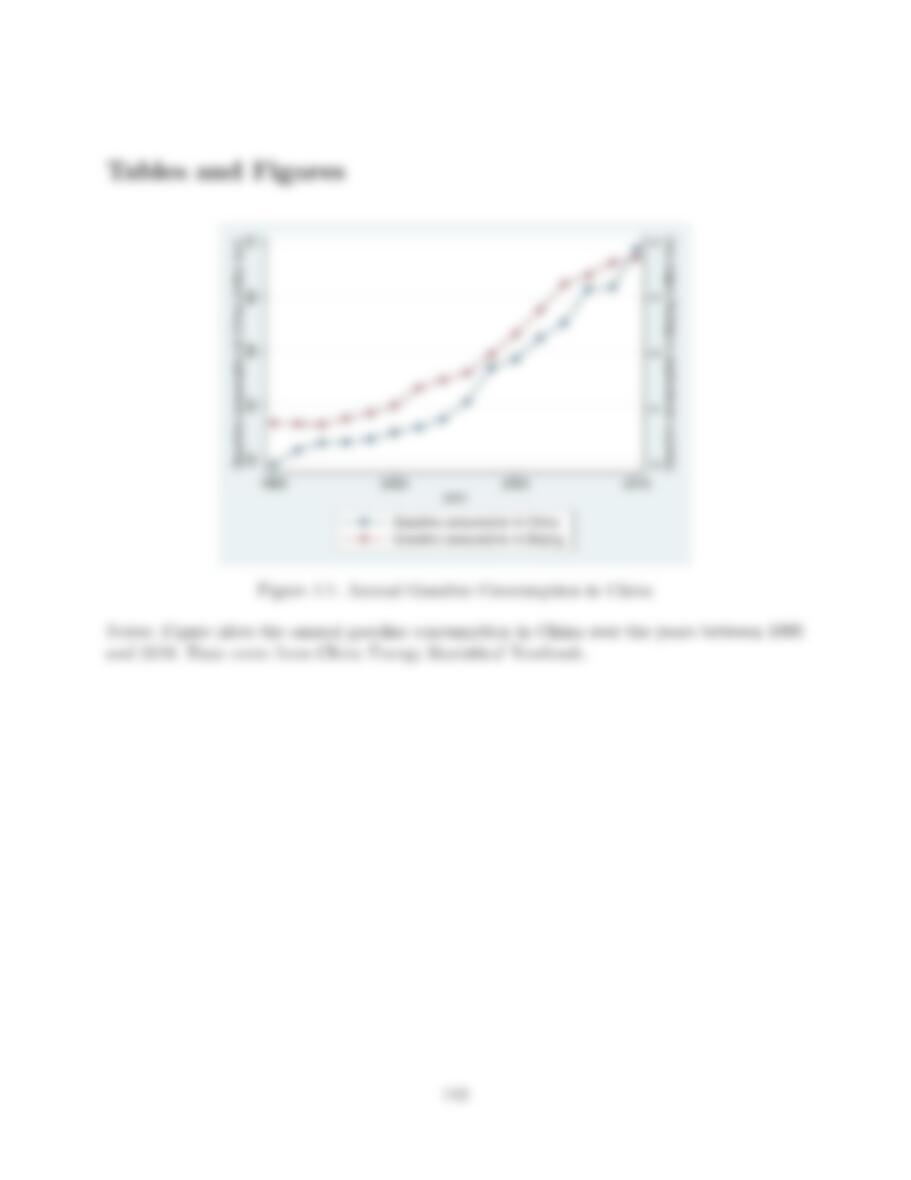
4.1 Annual Gasoline Consumption in China ……………….. 112
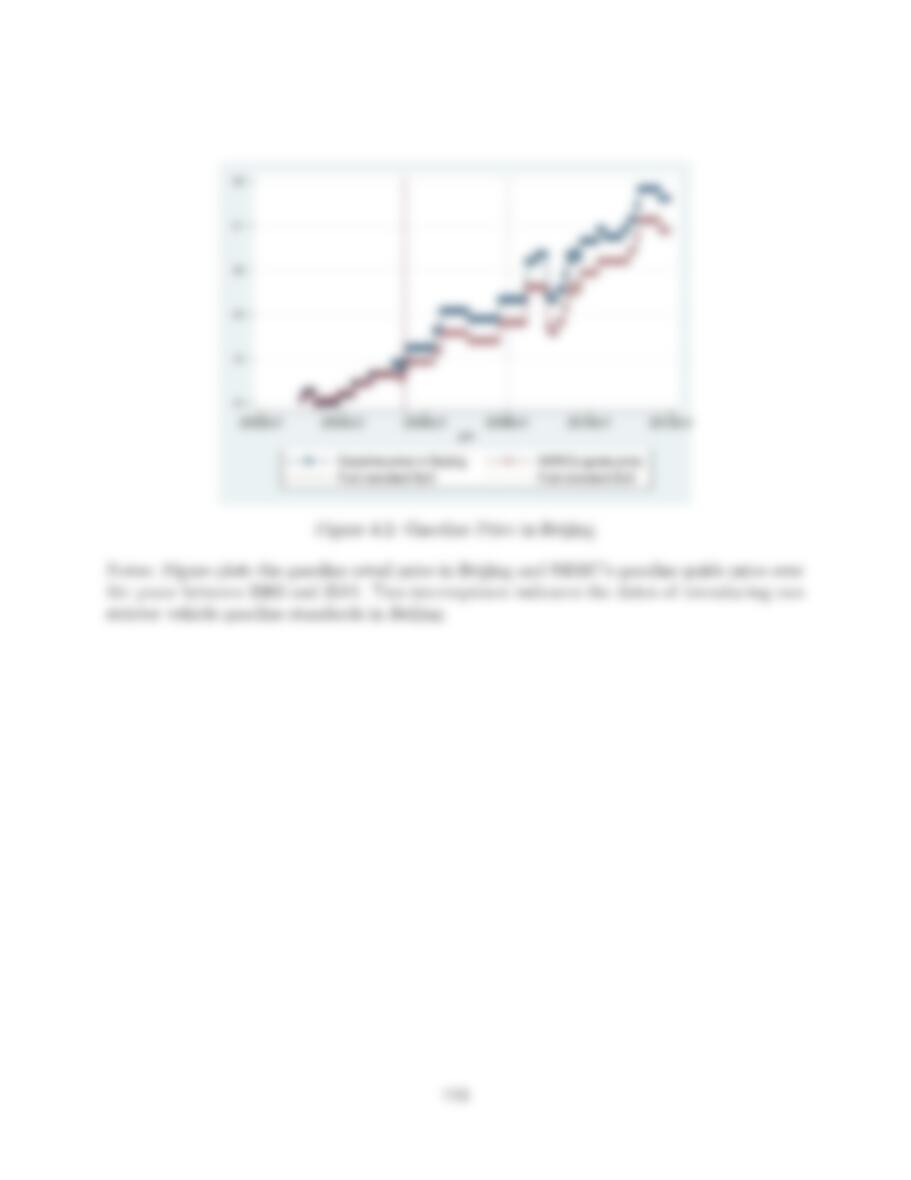
4.2 Gasoline Price in Beijing ……………………….. 113
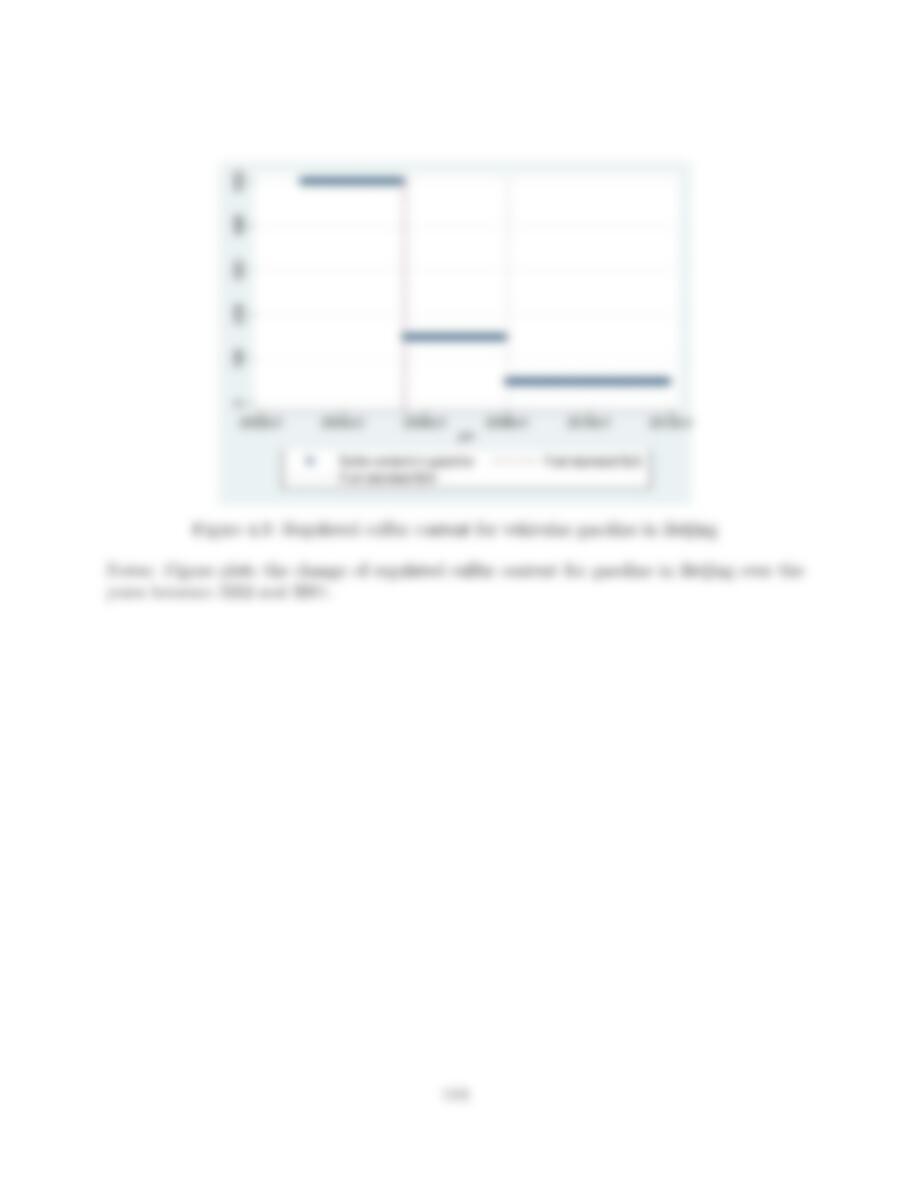
4.3 Regulated sulfur content for vehicular gasoline in Beijing ……….. 114
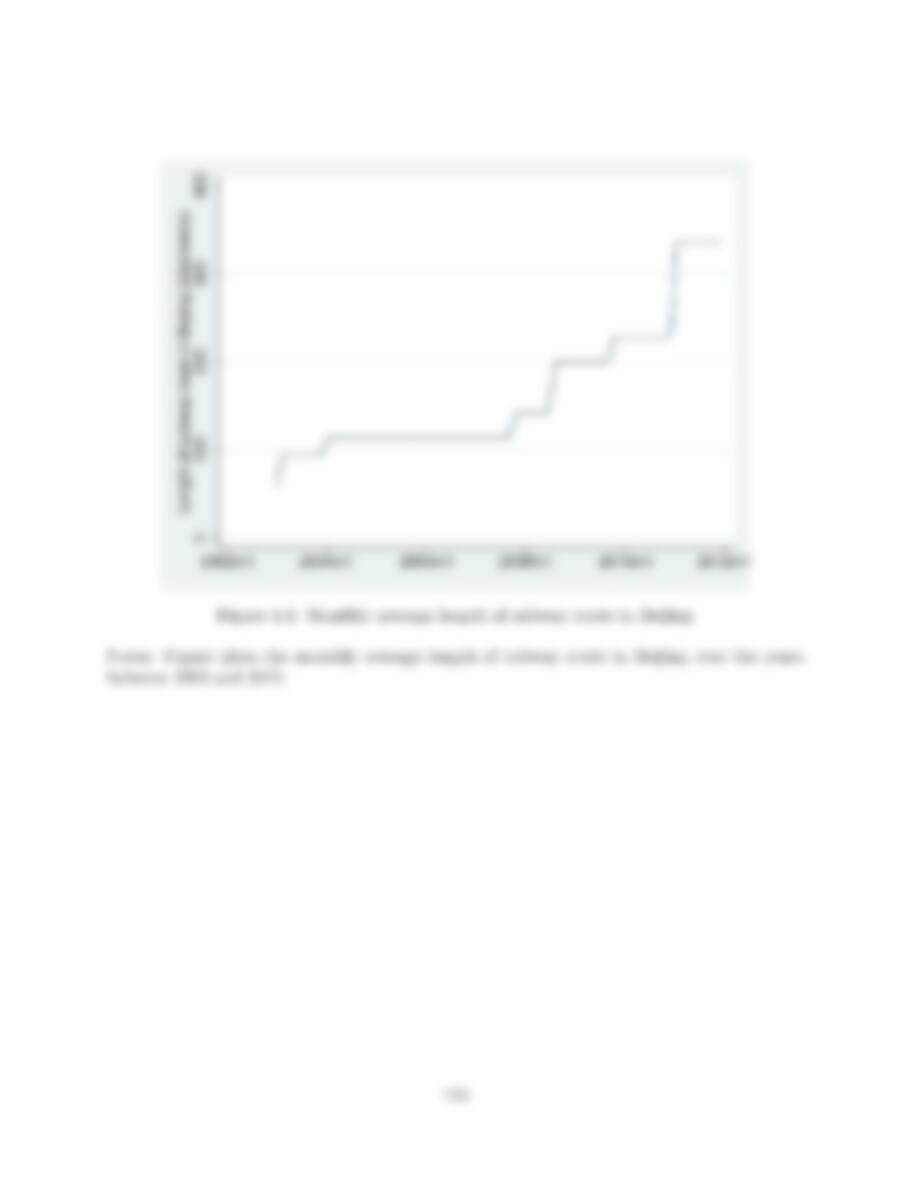
4.4 Monthly average length of subway route in Beijing …………… 115
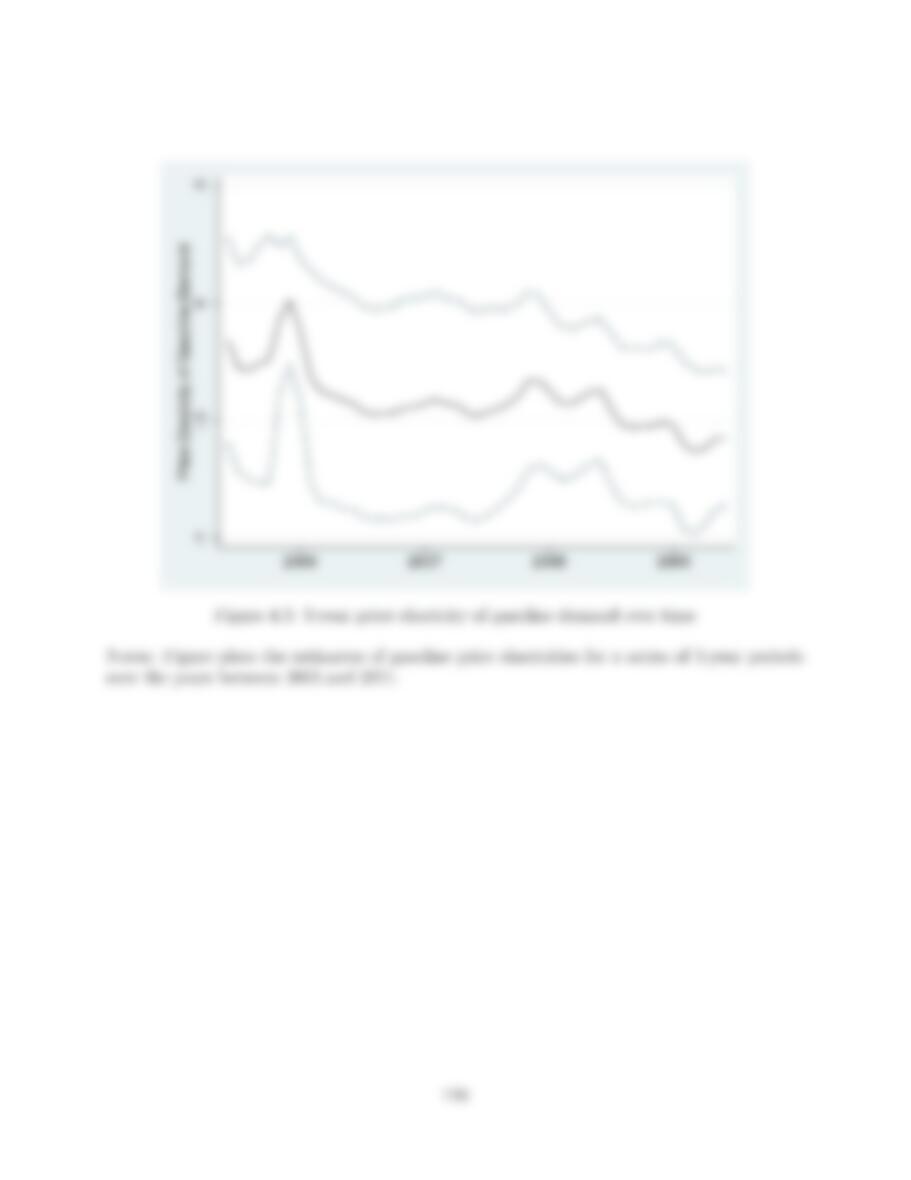
4.5 5-year price elasticity of gasoline demand over time ………….. 116
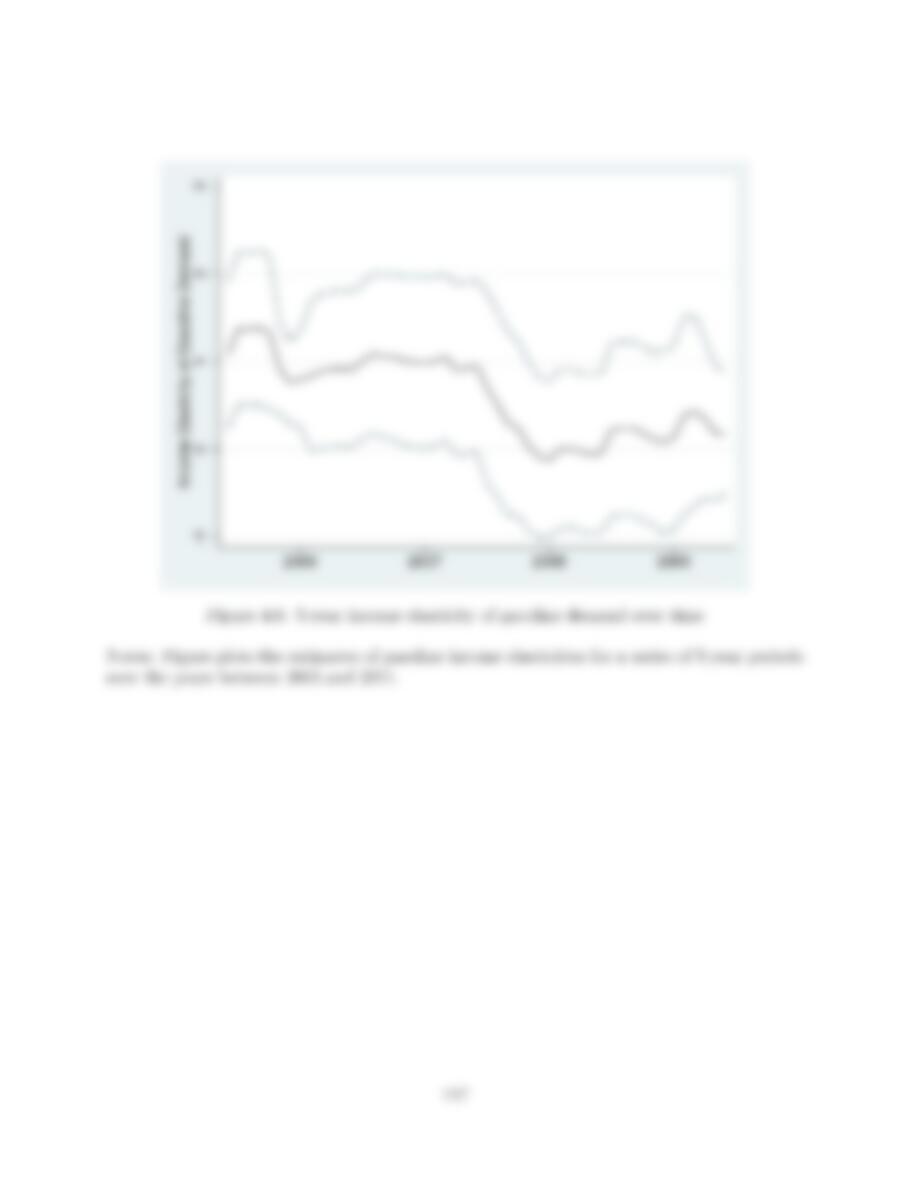
4.6 5-year income elasticity of gasoline demand over time …………. 117
v
List of Tables
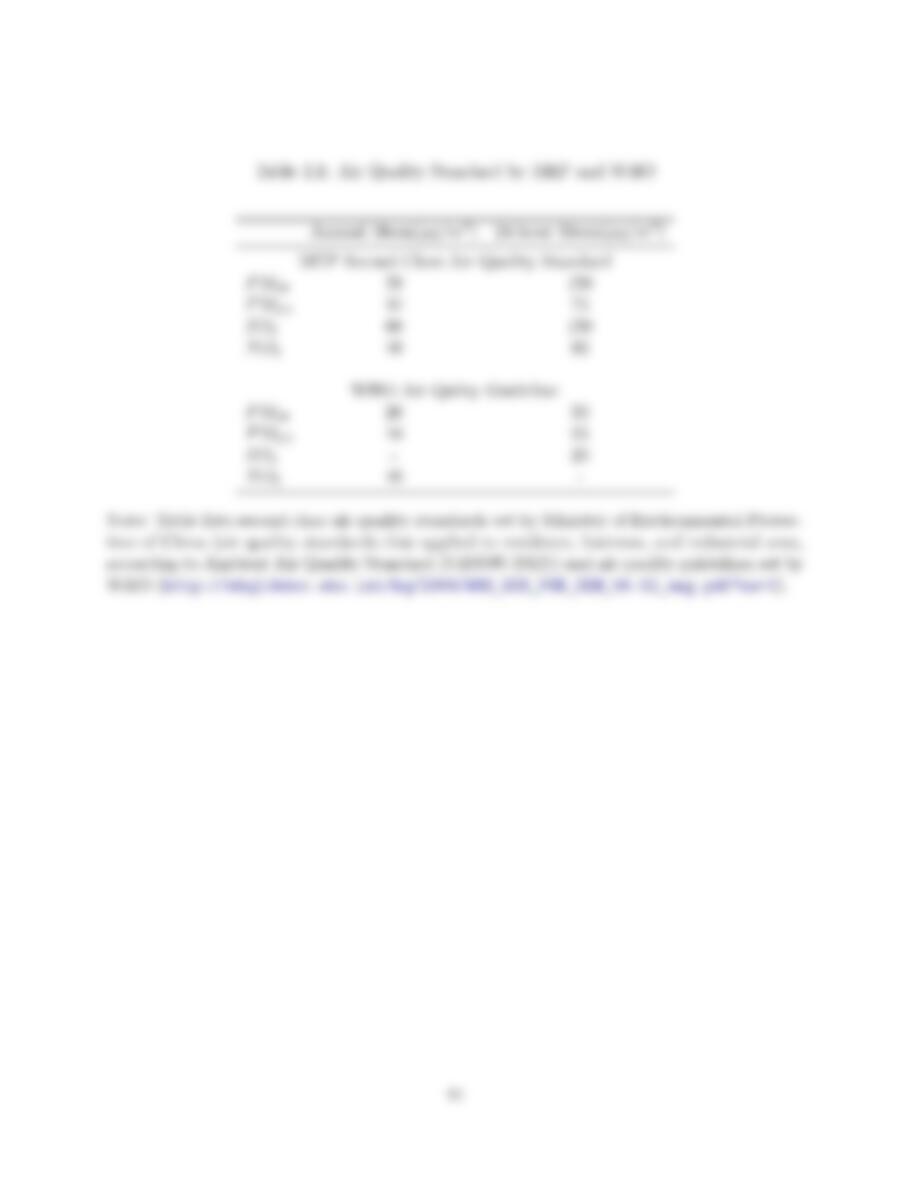
2.1 Air Quality Standard by MEP and WHO ……………….. 44
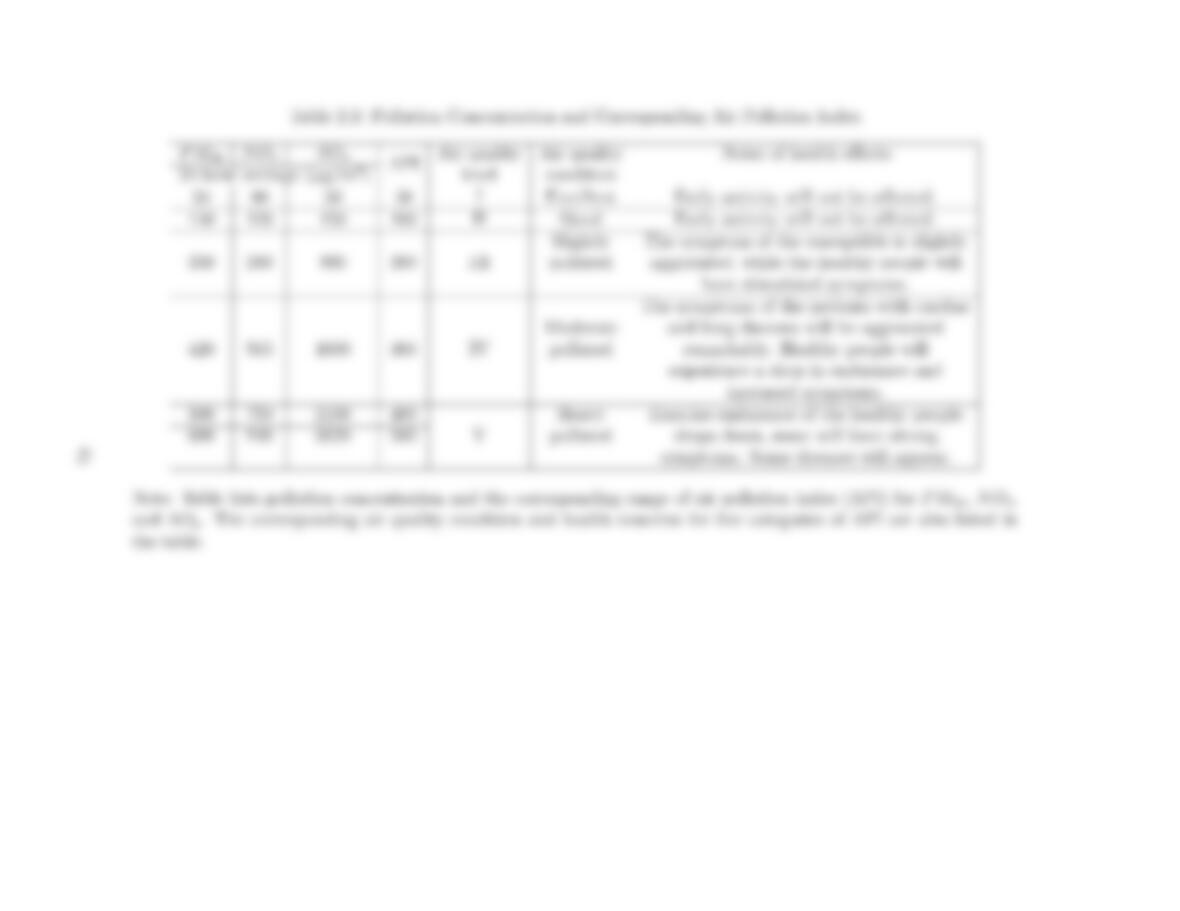
2.2 Pollution Concentration and Corresponding Air Pollution Index ……. 45
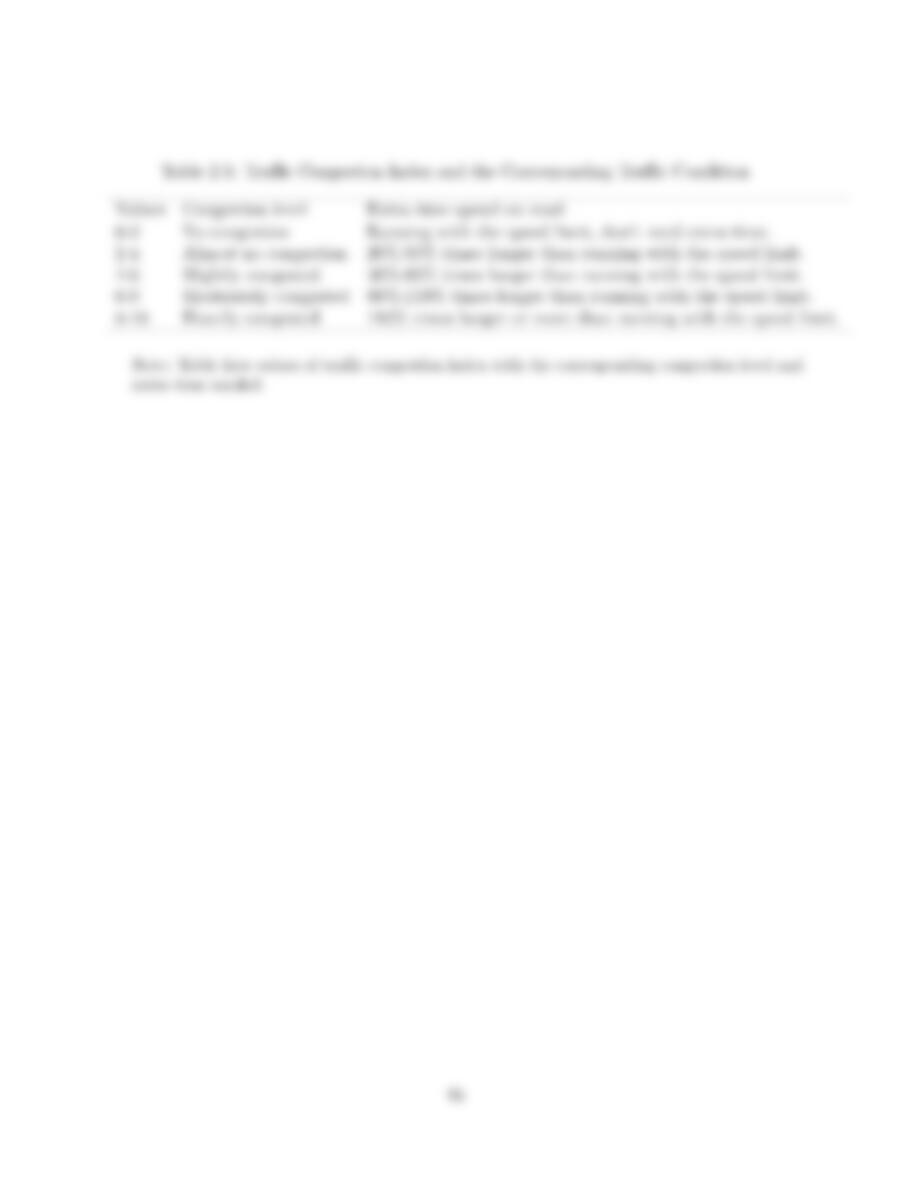
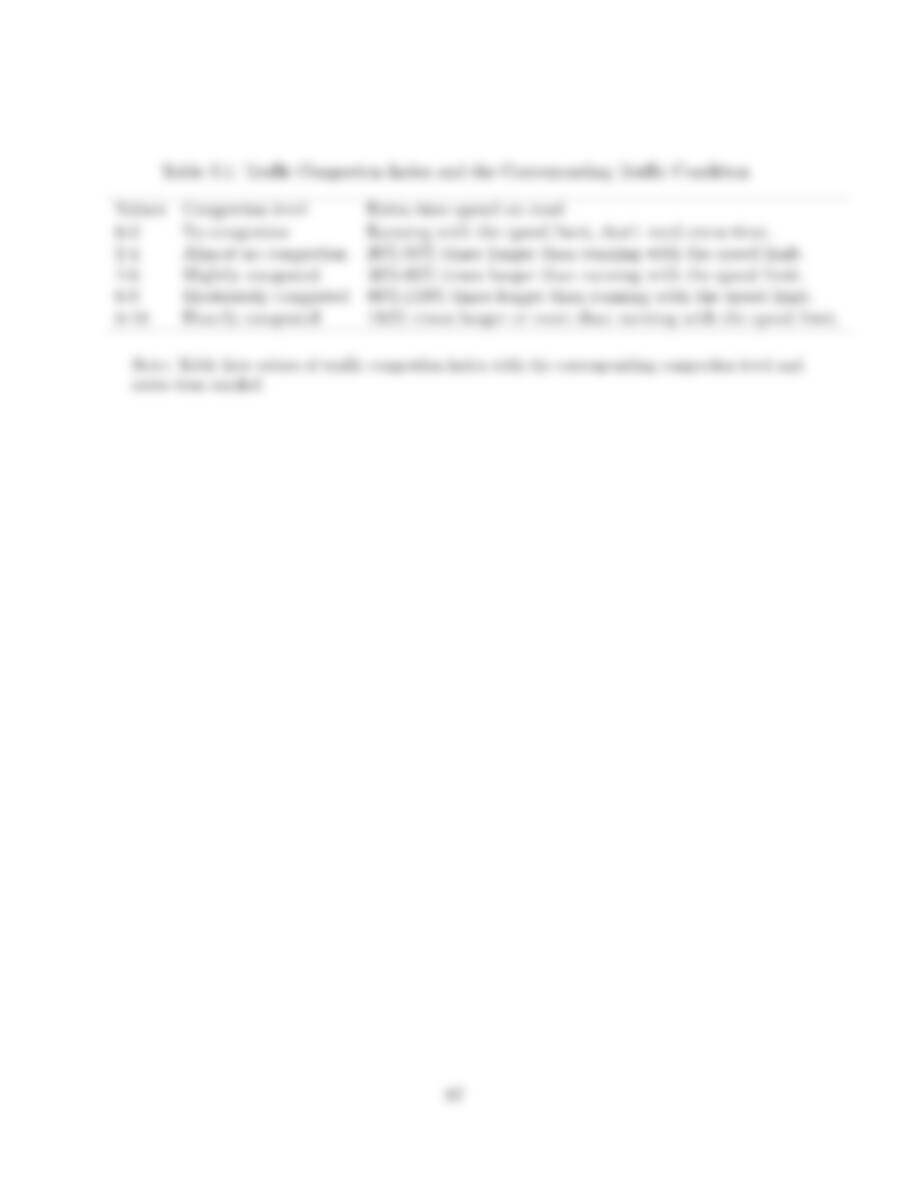
2.3 Traffic Congestion Index and the Corresponding Traffic Condition …… 46
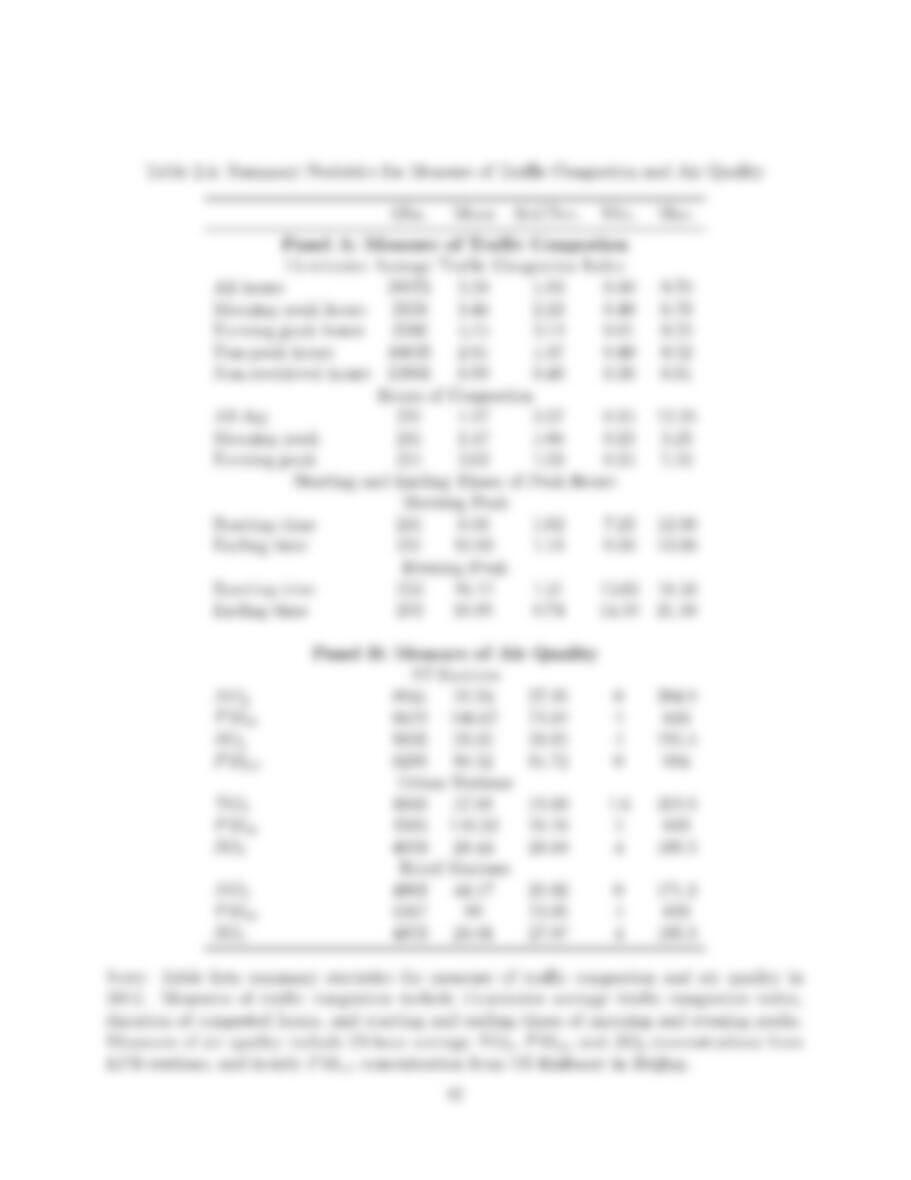
2.4 Summary Statistics for Measure of Traffic Congestion and Air Quality . . . . 47
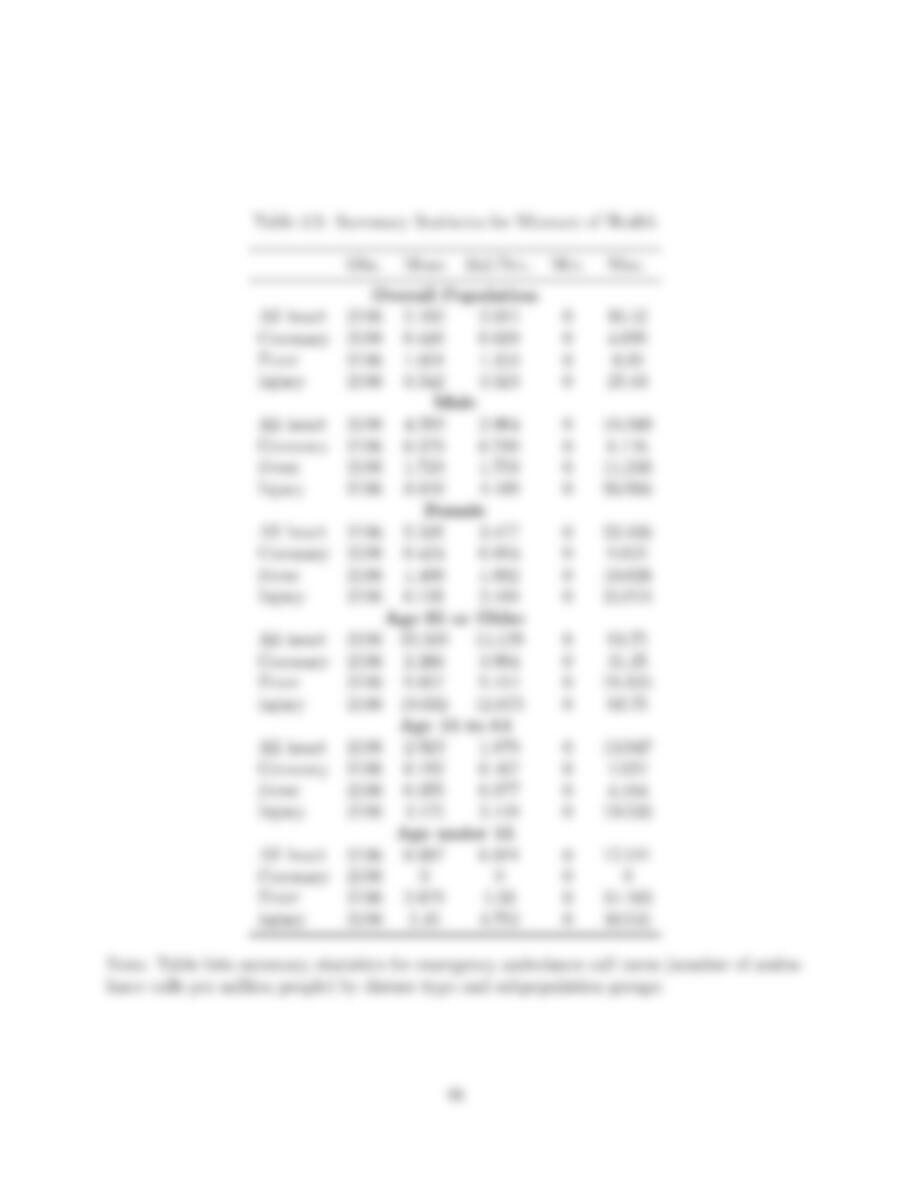
2.5 Summary Statistics for Measure of Health ………………. 48
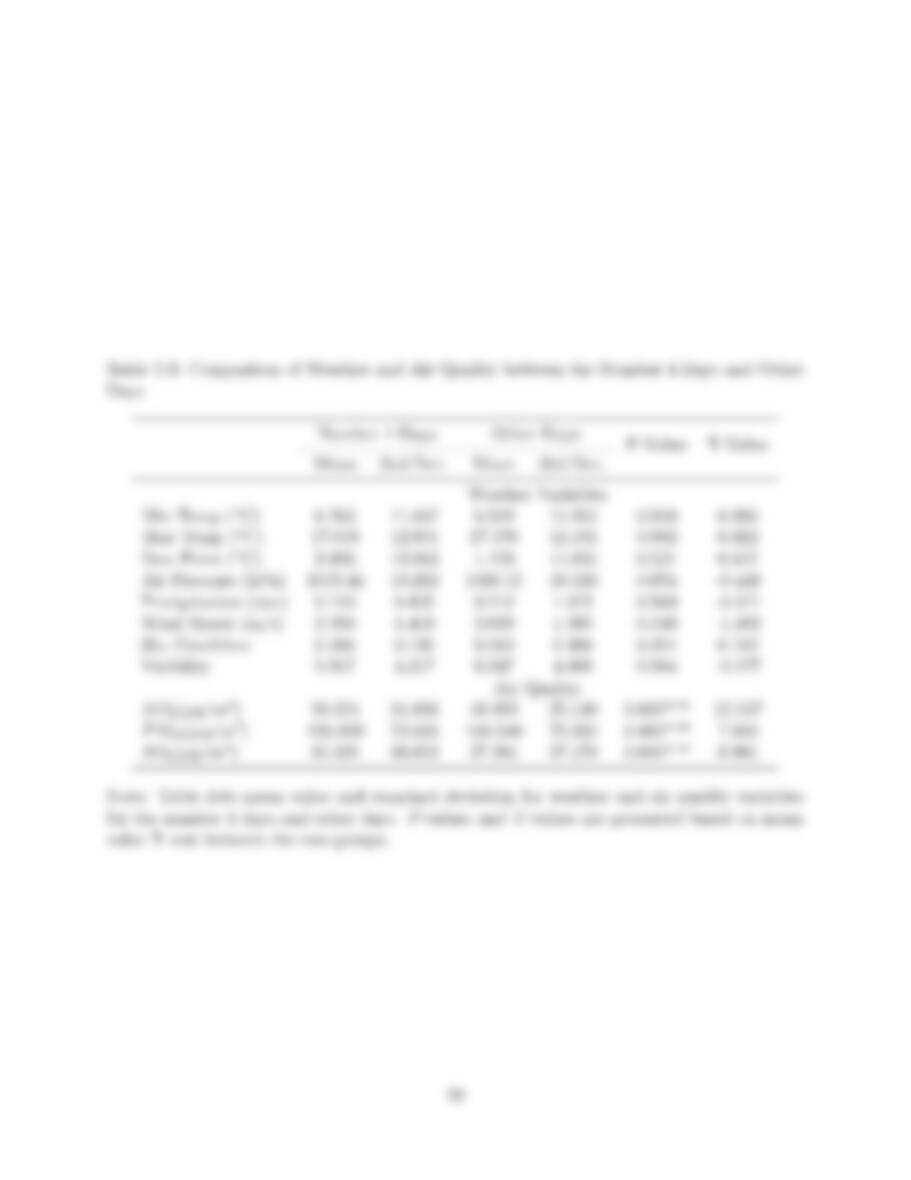
2.6 Comparison of Weather and Air Quality between the Number 4 Days and
Other Days ……………………………… 49
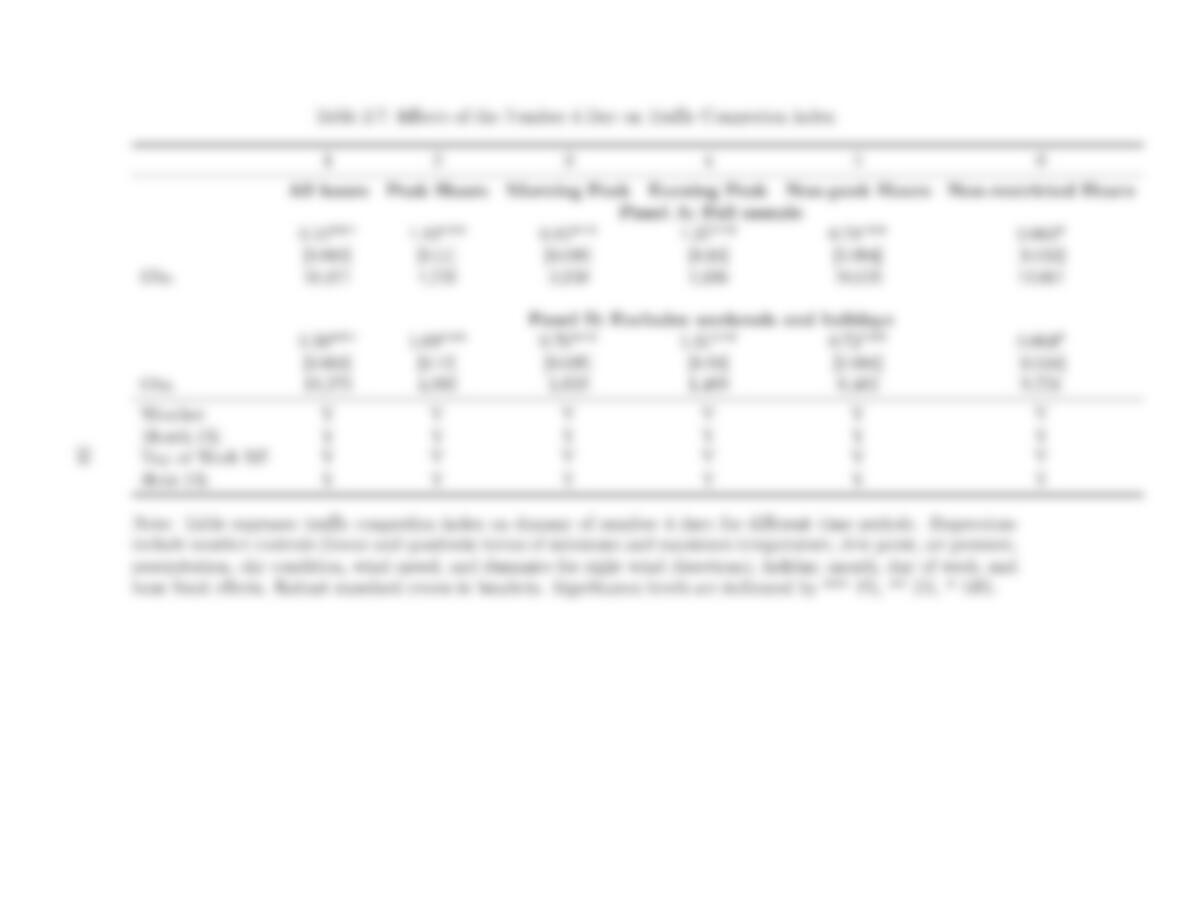
2.7 Effects of the Number 4 Day on Traffic Congestion Index ……….. 50
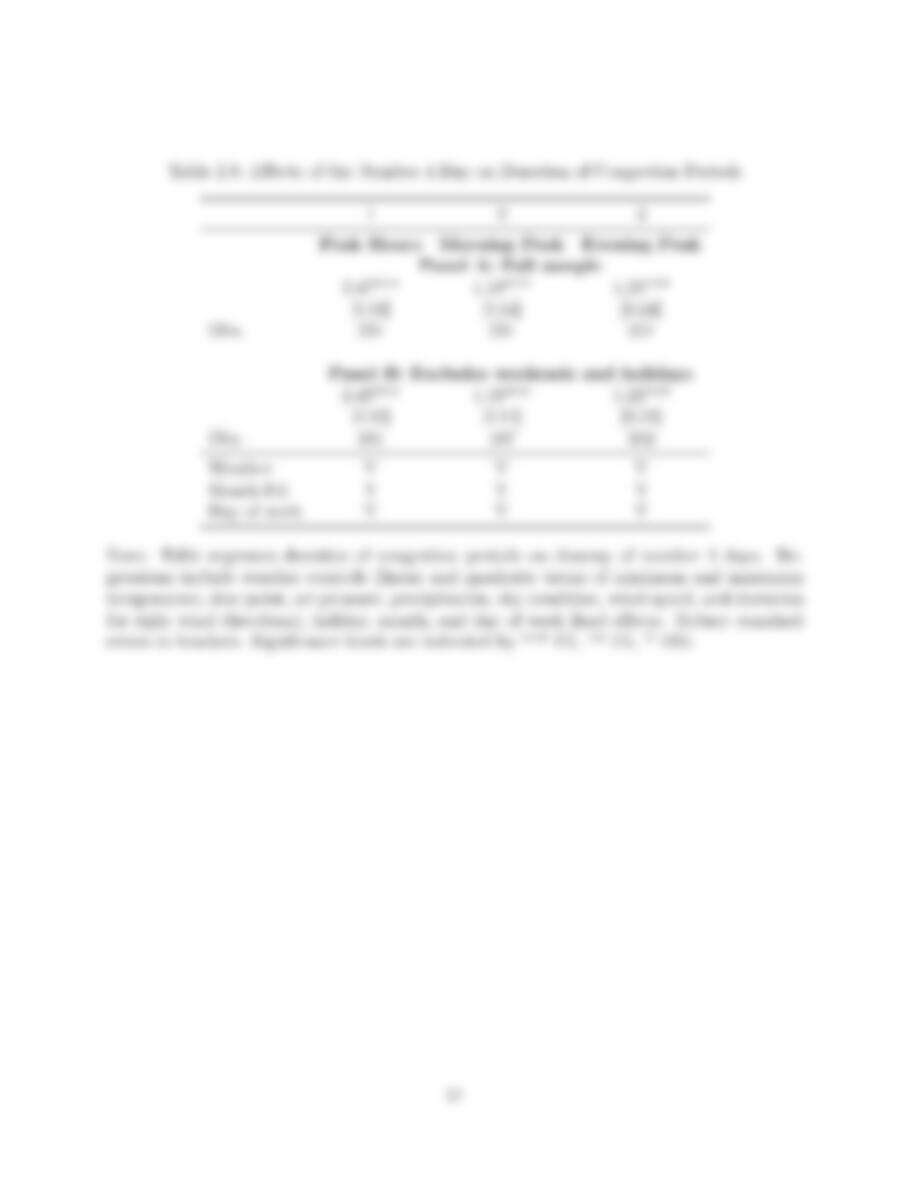
2.8 Effects of the Number 4 Day on Duration of Congestion Periods ……. 51
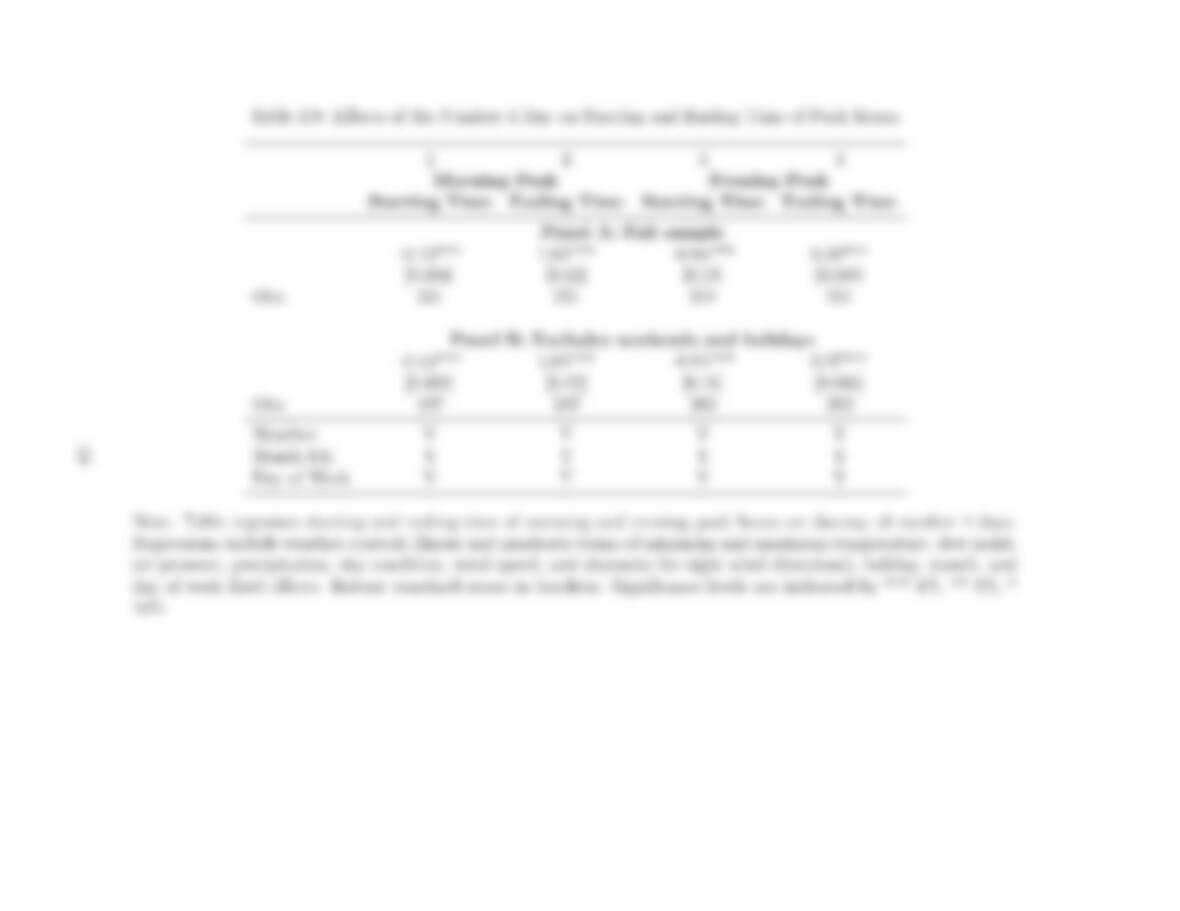
2.9 Effects of the Number 4 Day on Starting and Ending Time of Peak Hours . . 52
2.10 Effects of the Number 4 Day on Air Pollution …………….. 53
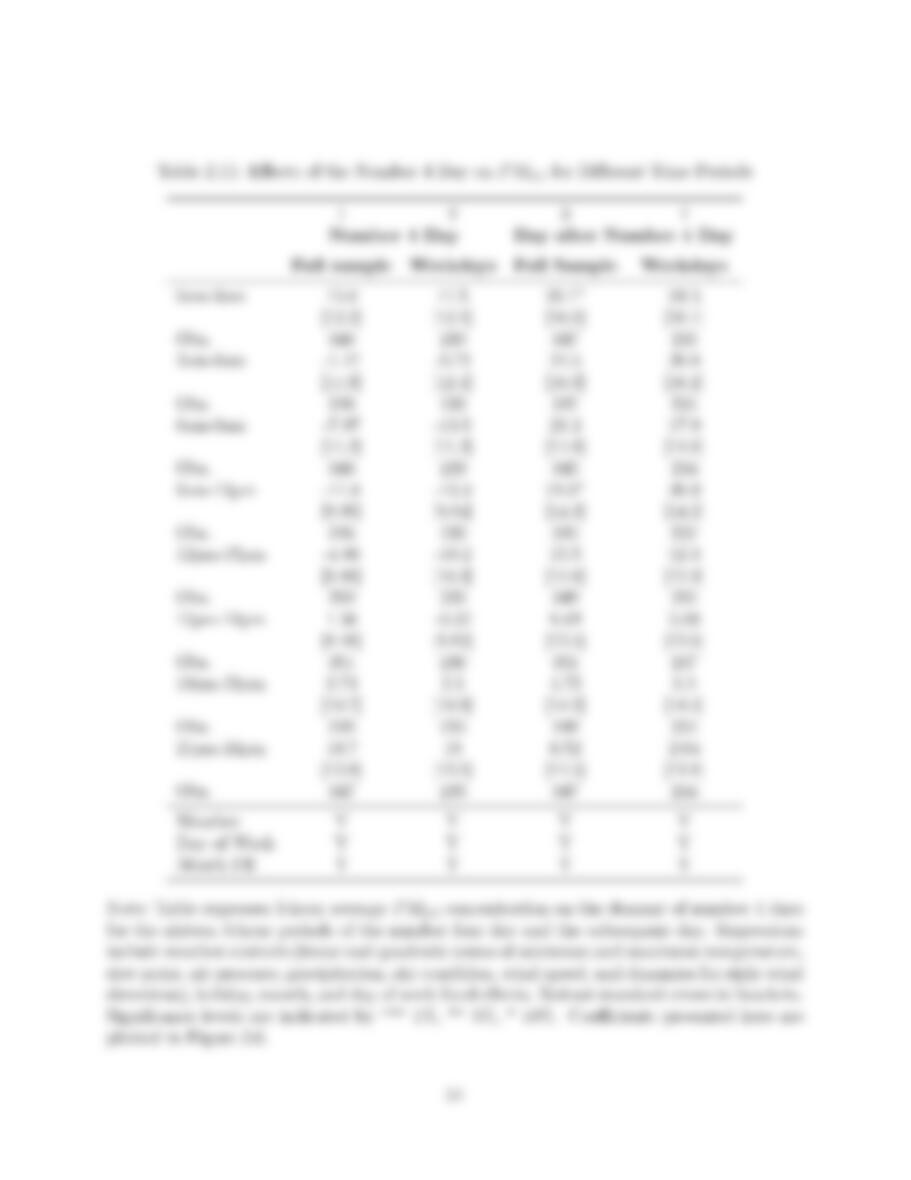
2.11 Effects of the Number 4 Day on P M2.5for Different Time Periods …… 54
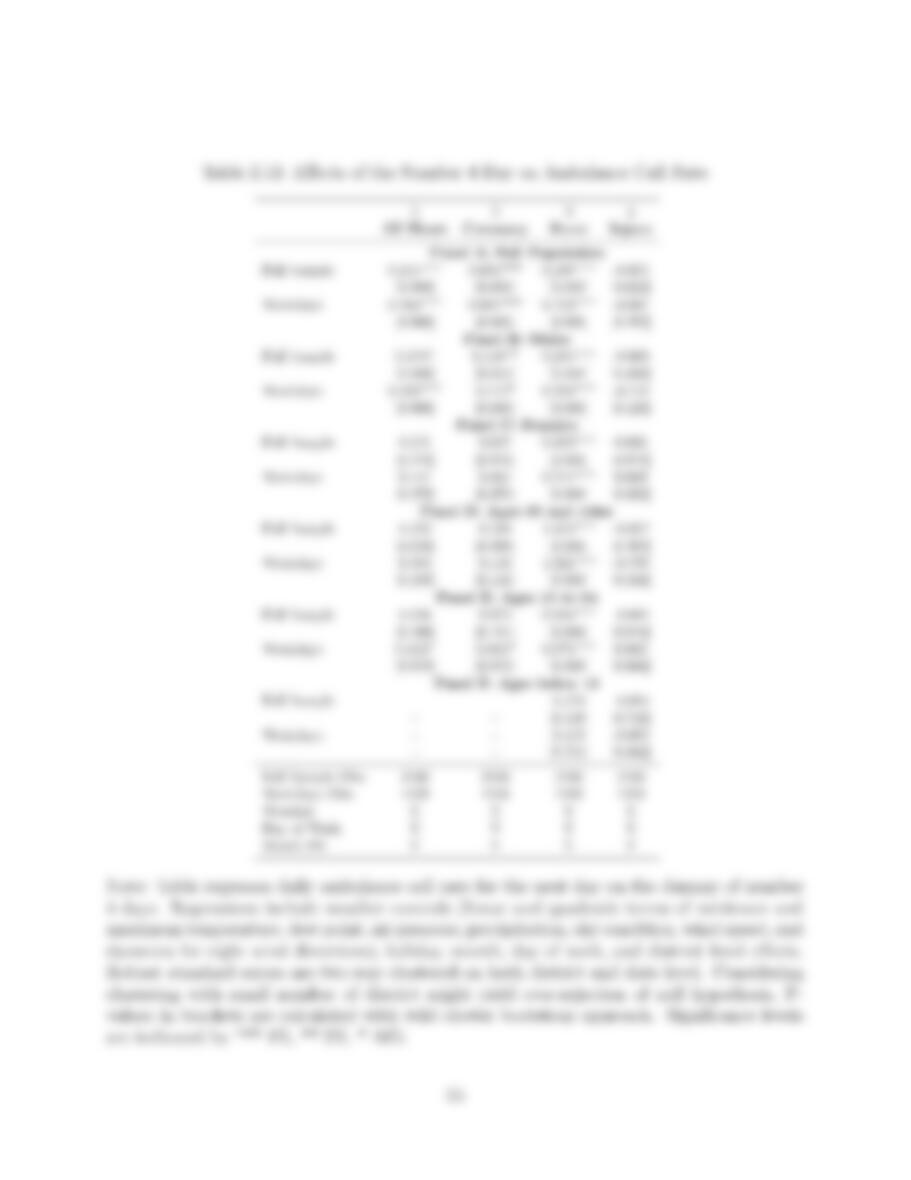
2.12 Effects of the Number 4 Day on Ambulance Call Rate …………. 55
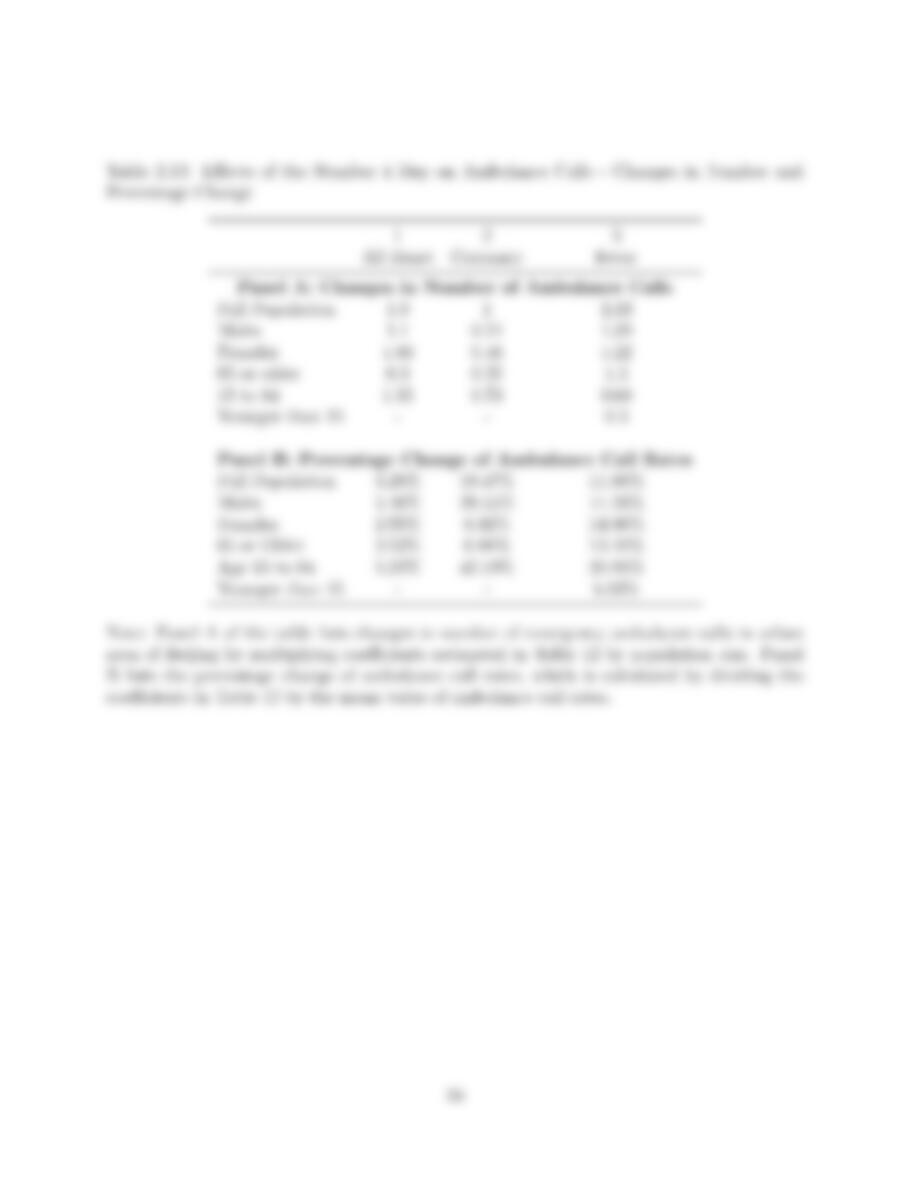
2.13 Effects of the Number 4 Day on Ambulance Calls – Changes in Number and
Percentage Change ………………………….. 56
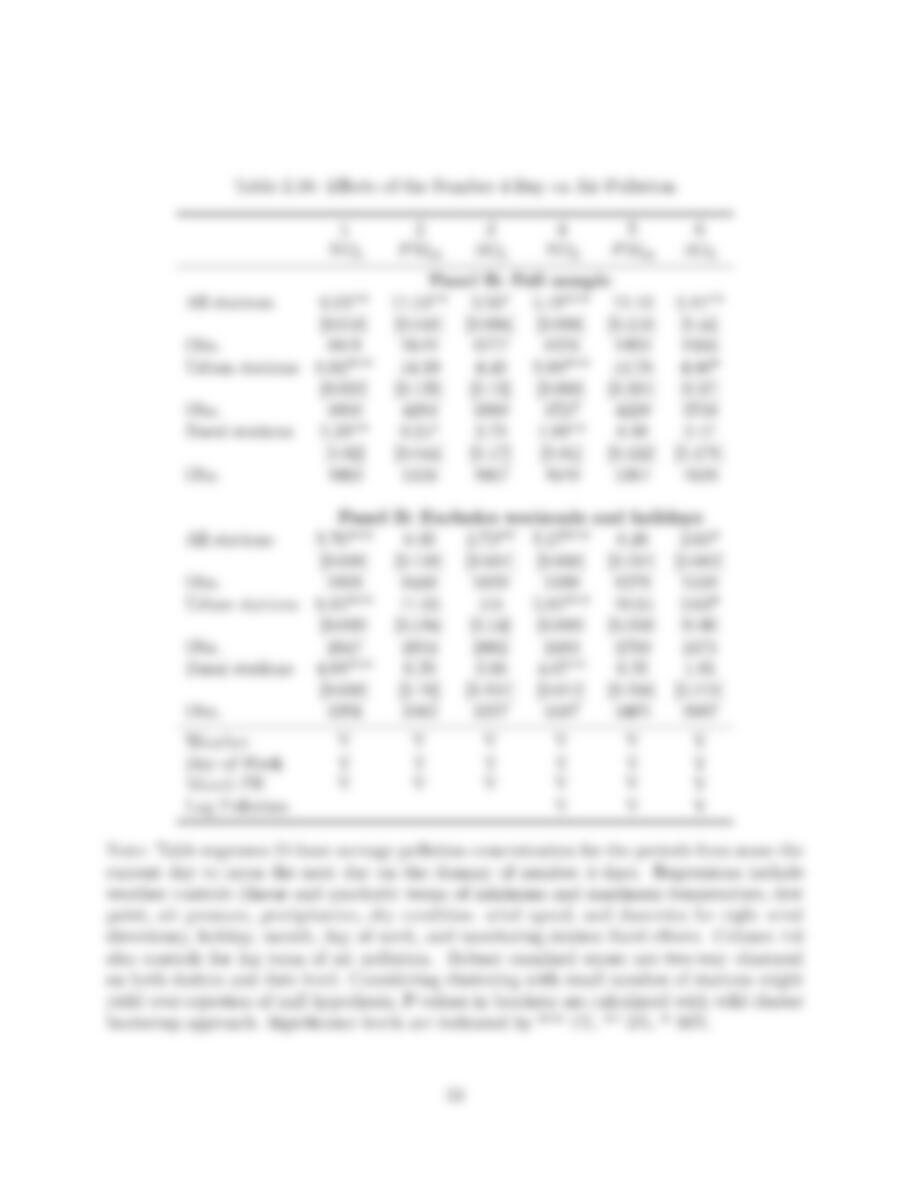
2.14 Ambulance Call Rates Regressed on Pollution …………….. 57
2.15 Effects of Instrumented NO2Concentration on Ambulance Call Rate . . . . 58
2.16 Effects of Instrumented NO2on Ambulance Call Rate – Distributed Lag Model 59
vi
3.1 Traffic Congestion Index and the Corresponding Traffic Condition …… 87
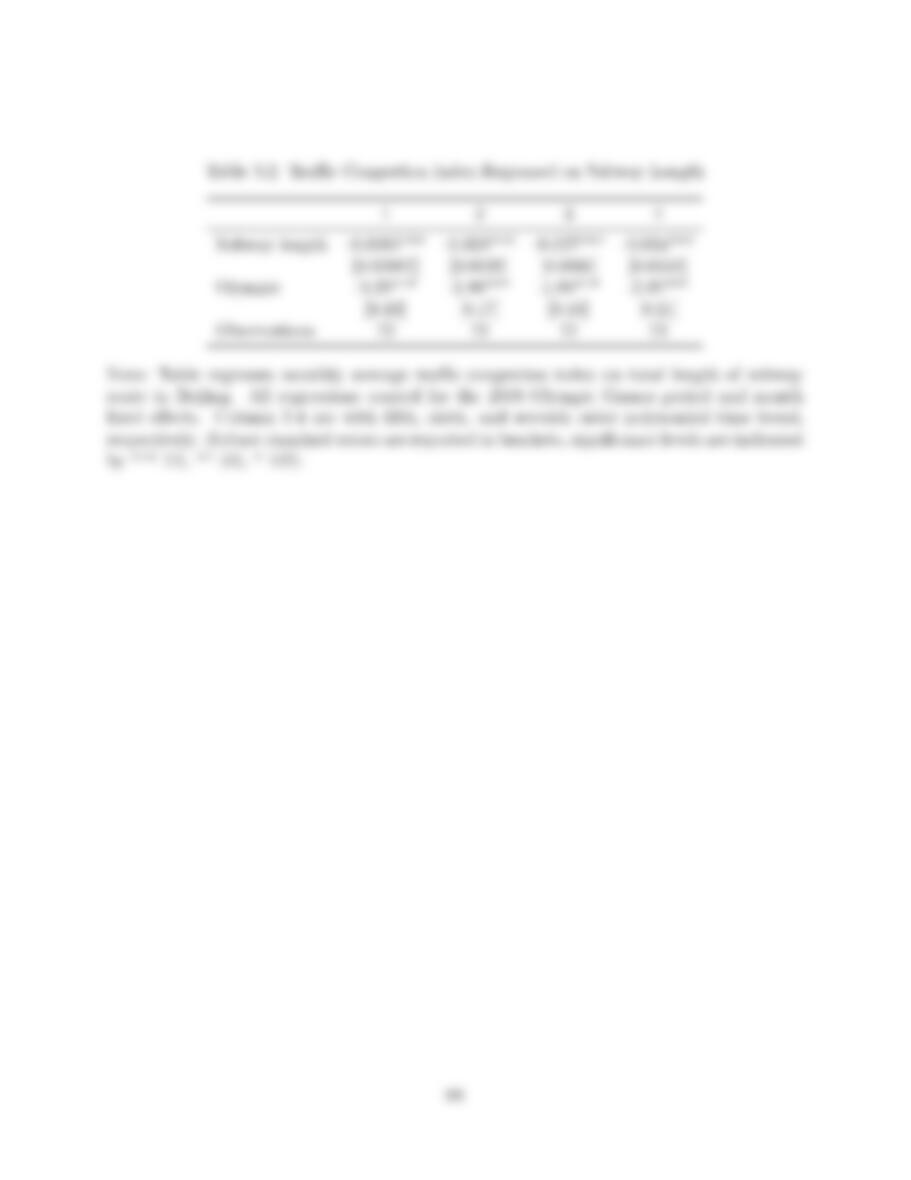
3.2 Traffic Congestion Index Regressed on Subway Length ………… 88
3.3 Traffic Congestion Index Regressed on Five Subway Dummies …….. 89
3.4 Traffic Congestion Index Regressed on Five Subway Dummies Interacted with
Subway Length ……………………………. 90
3.5 Traffic Congestion Index Regressed on Each Subway Dummy Separately . . . 91
3.6 24-hour Average Pollution Concentration Regressed on Subway Length . . . 92
3.7 24-hour Average P M10 Concentration Regressed on Each Subway Dummies
Separately ………………………………. 93
3.8 24-hour Average NO2Concentration Regressed on Each Subway Dummies
Separately ………………………………. 94
3.9 24-hour Average SO2Concentration Regressed on Each Subway Dummies
Separately ………………………………. 95
3.10 24-hour Average API Regressed on Each Subway Dummies Separately – Panel
Regression ………………………………. 96
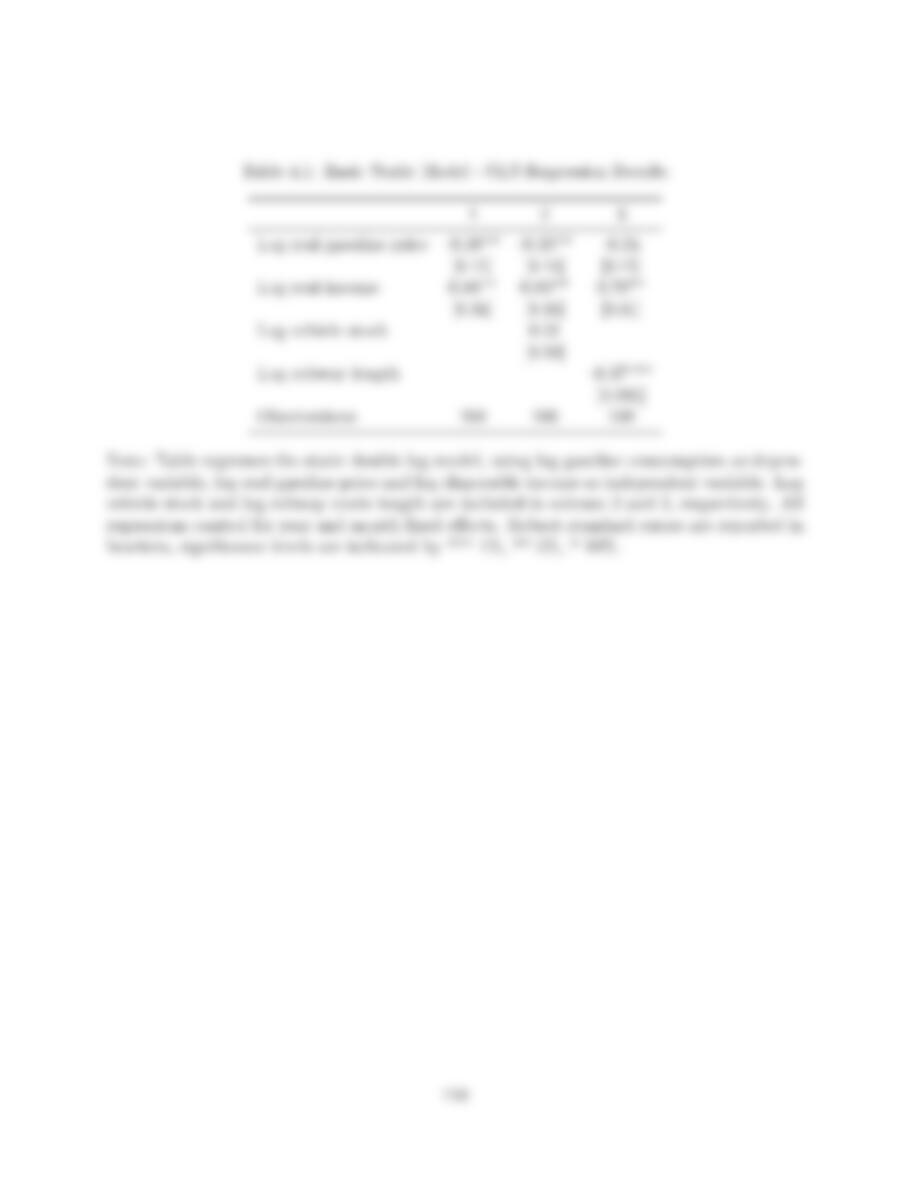
4.1 Basic Static Model – OLS Regression Results ……………… 118
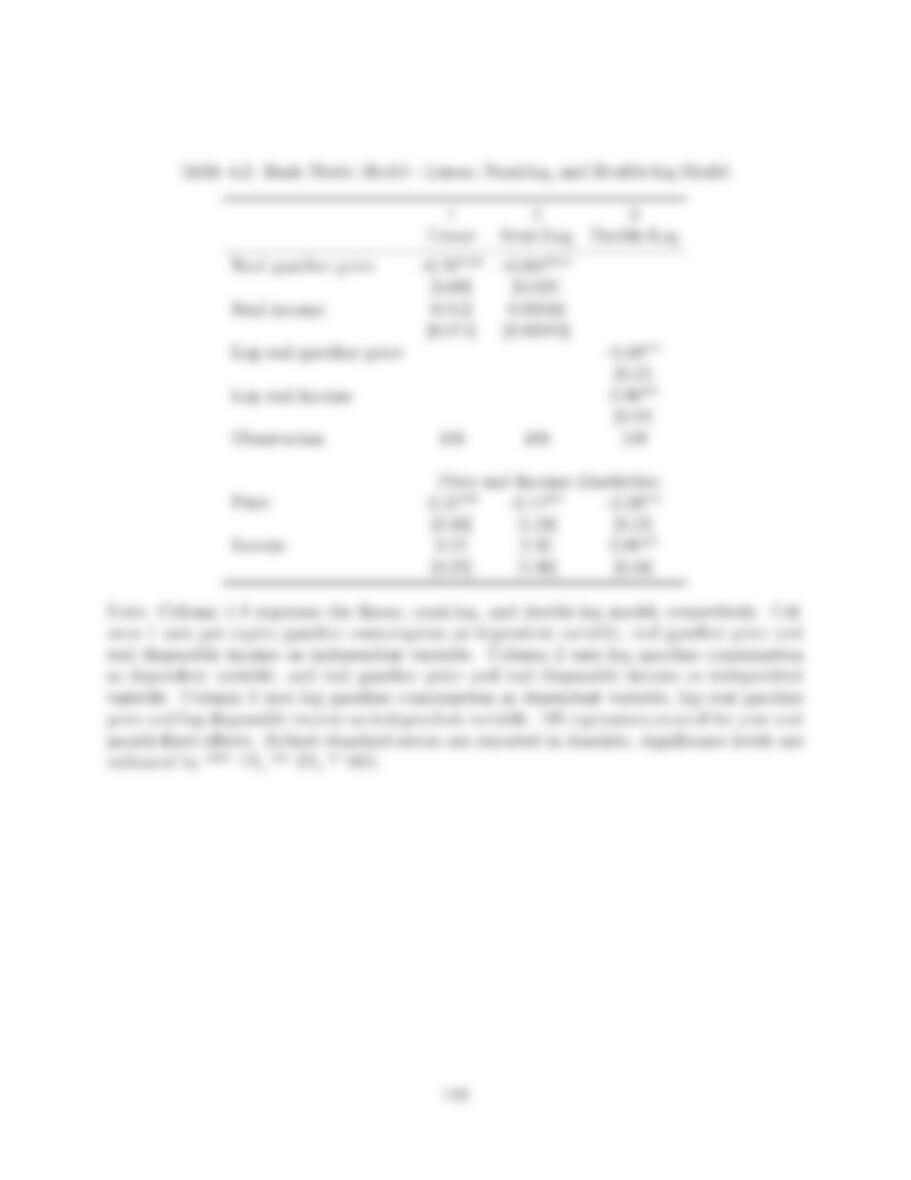
4.2 Basic Static Model – Linear, Semi-log, and Double-log Model ……… 119
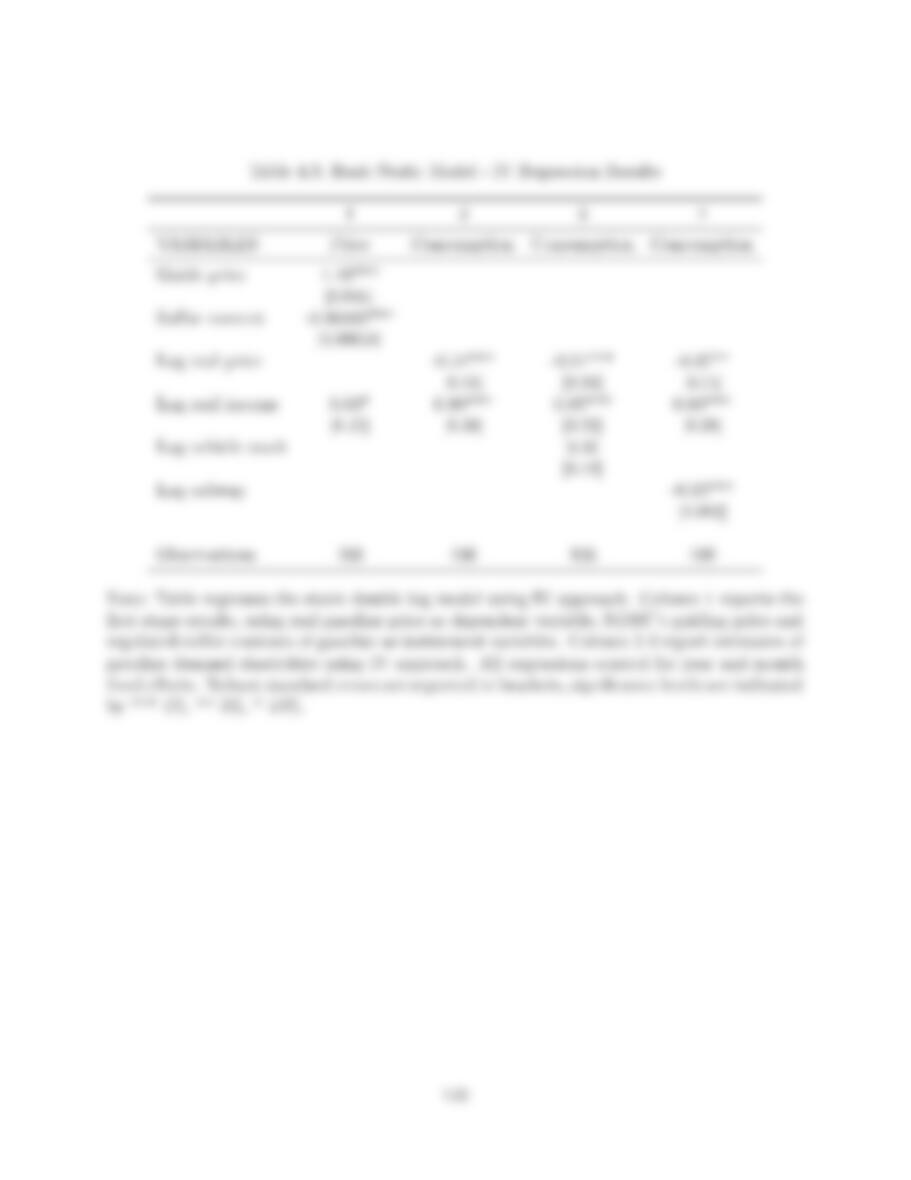
4.3 Basic Static Model – IV Regression Results ………………. 120
4.4 Partial Adjustment Model – OLS Regression Results ………….. 121
4.5 Partial Adjustment Model – IV Regression Results …………… 122
4.6 Model with Price-Subway Interaction Term ………………. 123
vii
Acknowledgments
I would like to sincerely thank my advisors Douglas Almond, Geoffrey Heal and Wolfram
Schlenker for being tremendous mentors for me. I am extremely grateful for their guidance
and support through each step of my development. Their advice on both research as well as
on my career have been priceless.
I would also like to thank Steven Chillrud, Suresh Naidu, Matthew Neidell, Cristian Kiki
Pop-Eleches, Eric Verhoogen, and Shuang Zhang for their helpful comments and discussions.
Special thanks to Mona Khalidi, John Mutter, Jeffrey Sachs, and Joseph Stiglitz for making
this doctoral program possible. I would also like to thank my colleagues and friends for their
inspiration and support. Among others, I thank Jesse Anttila-Hughes, Belinda Archibong,
Xiaojia Bao, Prabhat Barnwal, Johannes Castner, Denyse S. Dookie, Marion Dumas, Ram
Fishman, Solomon Hsiang, Amir Jina, Booyuel Kim, Chandra Kiran Krishnamurthy, Huijie
Lu, Gordon McCord, Kyle Meng, Nicole Ngo, James Rising, Tse-Ling Teh, Jan von der
Goltz, Semee Yoon, and Xiaojie Zhang.
I have the greatest gratitude to my family for their unconditional love and support.
Finally, I thank the School of International and Public Affairs and Weatherhead East Asian
Institute for generously funding my study and research.
viii