Environmental regulatory
issues, national &
International Standards,
and Certifications
DR ABBAS UDDIN SHIYAK, CTEXT FTI
Assistant Professor
Department of Dyes and Chemical Engineering
Bangladesh University of Textiles
Abbas.Shiyak@butex.edu.bd

What’s in it for today
National Standards for Environment
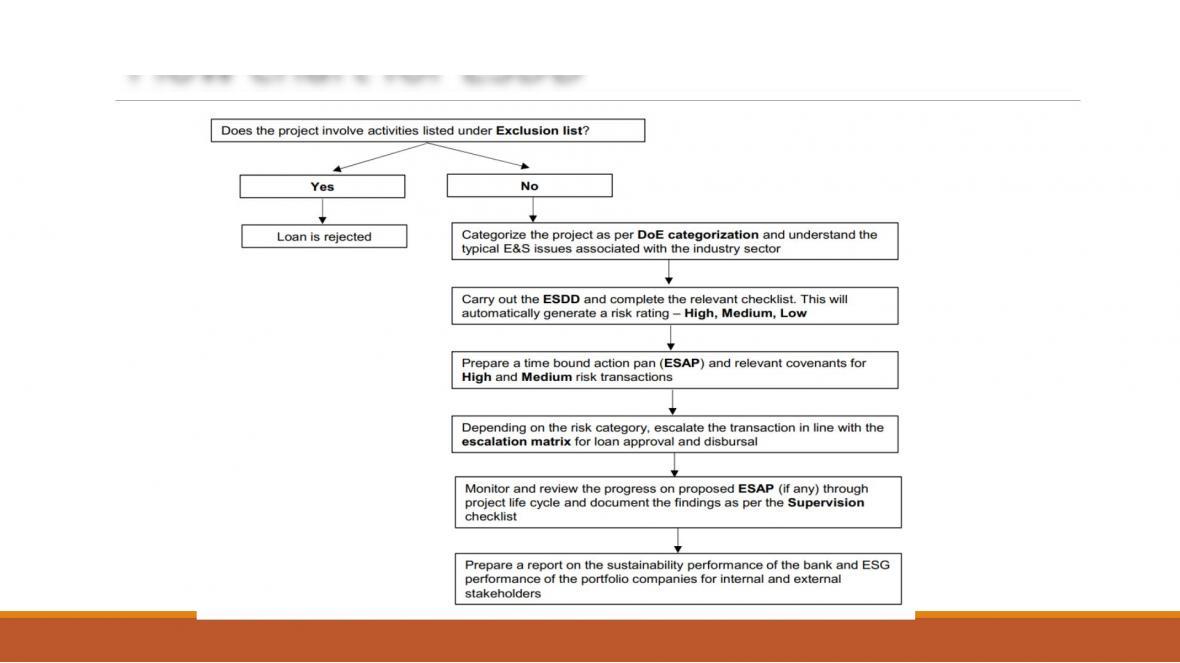
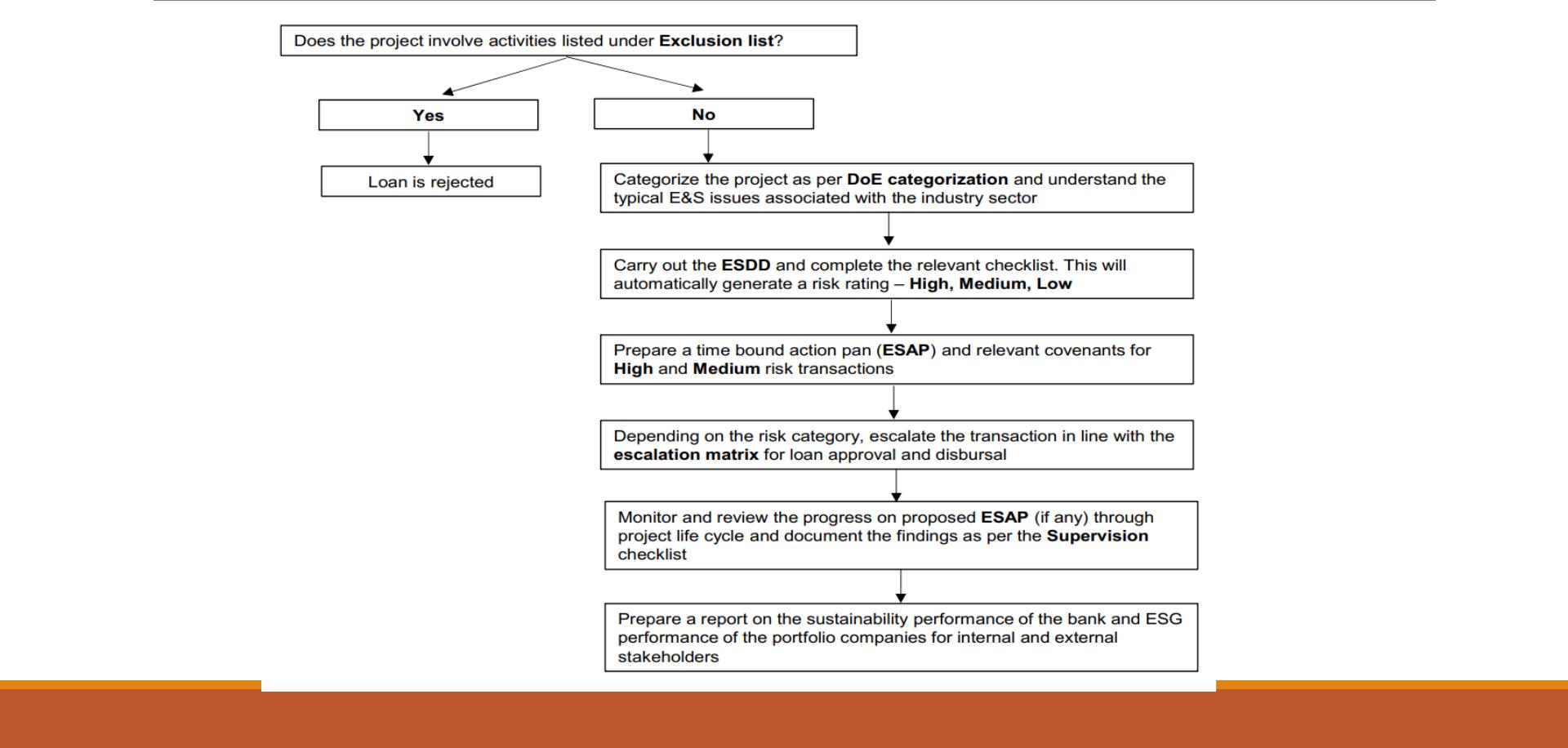
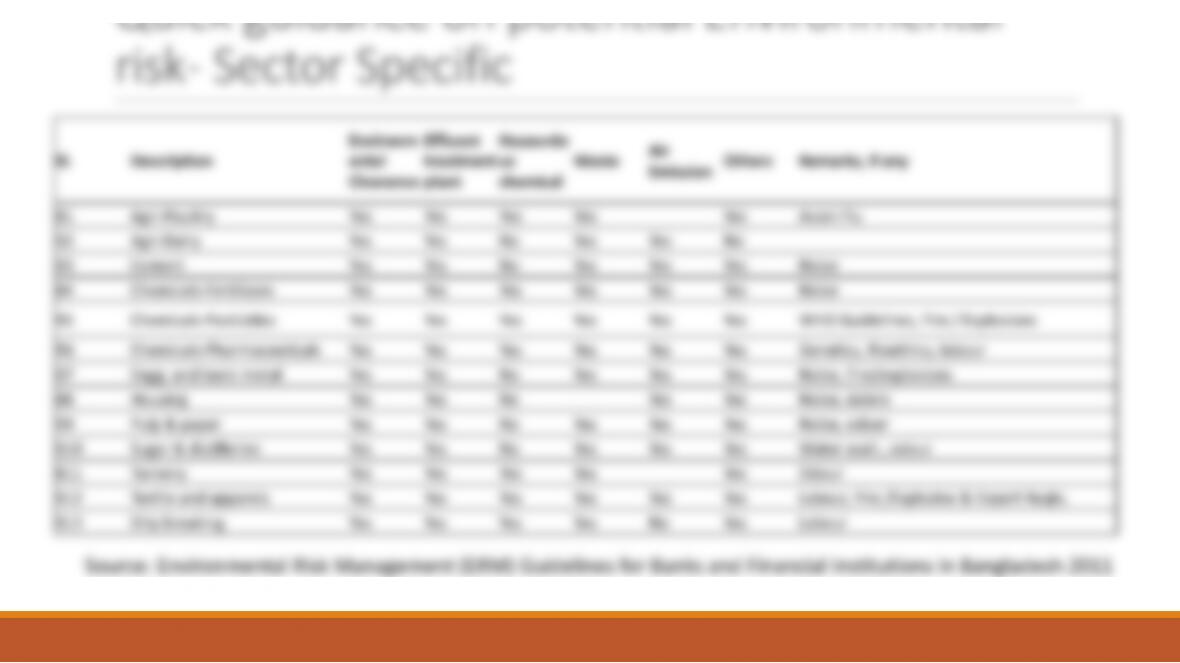
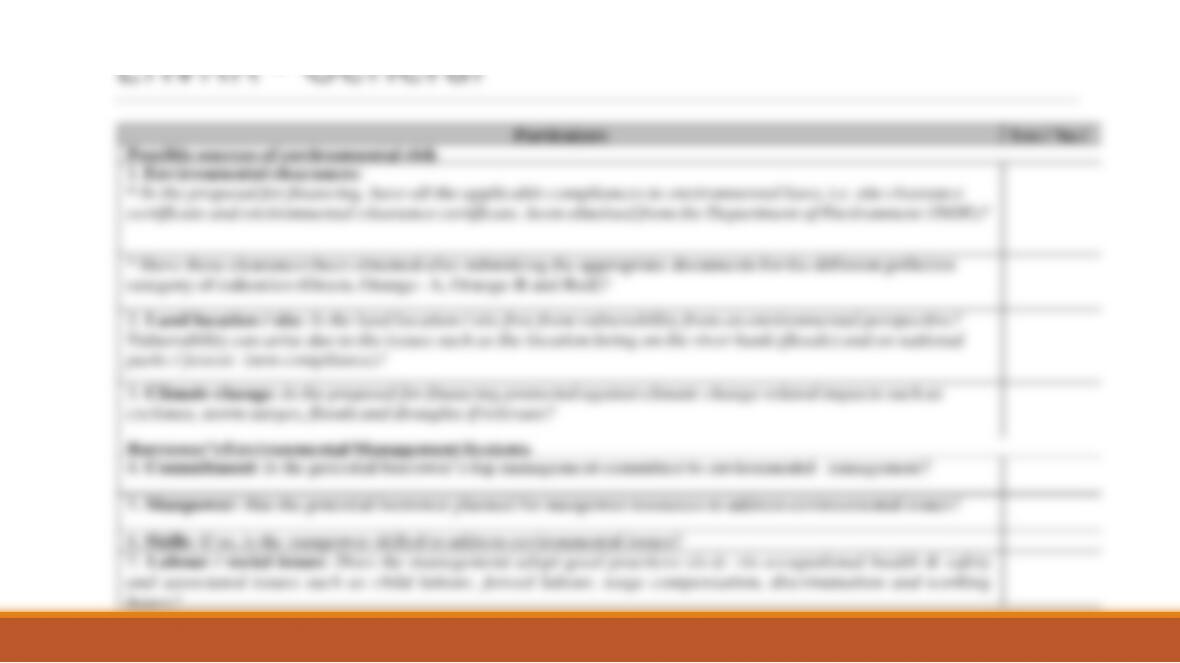
ESDD –Environmental and Social Due Diligence for an financial organisation
Some international standards
Environmental Management System (EMS)

National Standards for Environment
DR ABBAS UDDIN SHIYAK, CText FTI
Assistant Professor
Department of Dyes and Chemical Engineering
Bangladesh University of Textiles
Abbas.Shiyak@butex.edu.bd

Legal Framework
The Bangladesh Environment Conservation Act, 1995
(amended 2010)
The Environment Conservation Rules, 1997

The Bangladesh Environment Conservation Act, 1995
An Act to provide for conservation of the
environment, improvement of environmental
standards and control and mitigation of environmental
pollution.
Environment Conservation Rules 1997

Environmental Conservation Act (ECA) 1995
The national Environmental legislation known as Environmental Conservation Act, 1995, is currently
the main legislative document relating to Environmental protection in Bangladesh
The main objectives of ECA 1995 are :
◦Conservation and improvement of Environment, and
◦Control and mitigation of Pollution of Environment.

Major Features
Director General of DoE can undertake all activities, as he deems fit & necessary, to conserve
and enhance quality of environment & control, abatement of pollution
Restrictions on hill cutting & wetlands filling
Declaration of Ecologically Critical Area
Restrictions regarding vehicles emitting smoke injurious to environment
No industry/project shall be established without obtaining Environmental Clearance Certificate
from the Director General in the manner prescribed by rules
Formulation of environmental guidelines
Penalties: Any person(s) violating the Act shall be subject to a maximum of 10 years
imprisonment or a penalty of 10.000 Euro or both
Power to make rules

Environment Conservation Rules (ECR) 1997
The Department of Environment has promulgated the Environment Conservation Rules 1997
under the ECA 1995 to evaluate, review the Environmental Impact Assessment (EIA) of various
projects and activities, and procedures be established for approval.
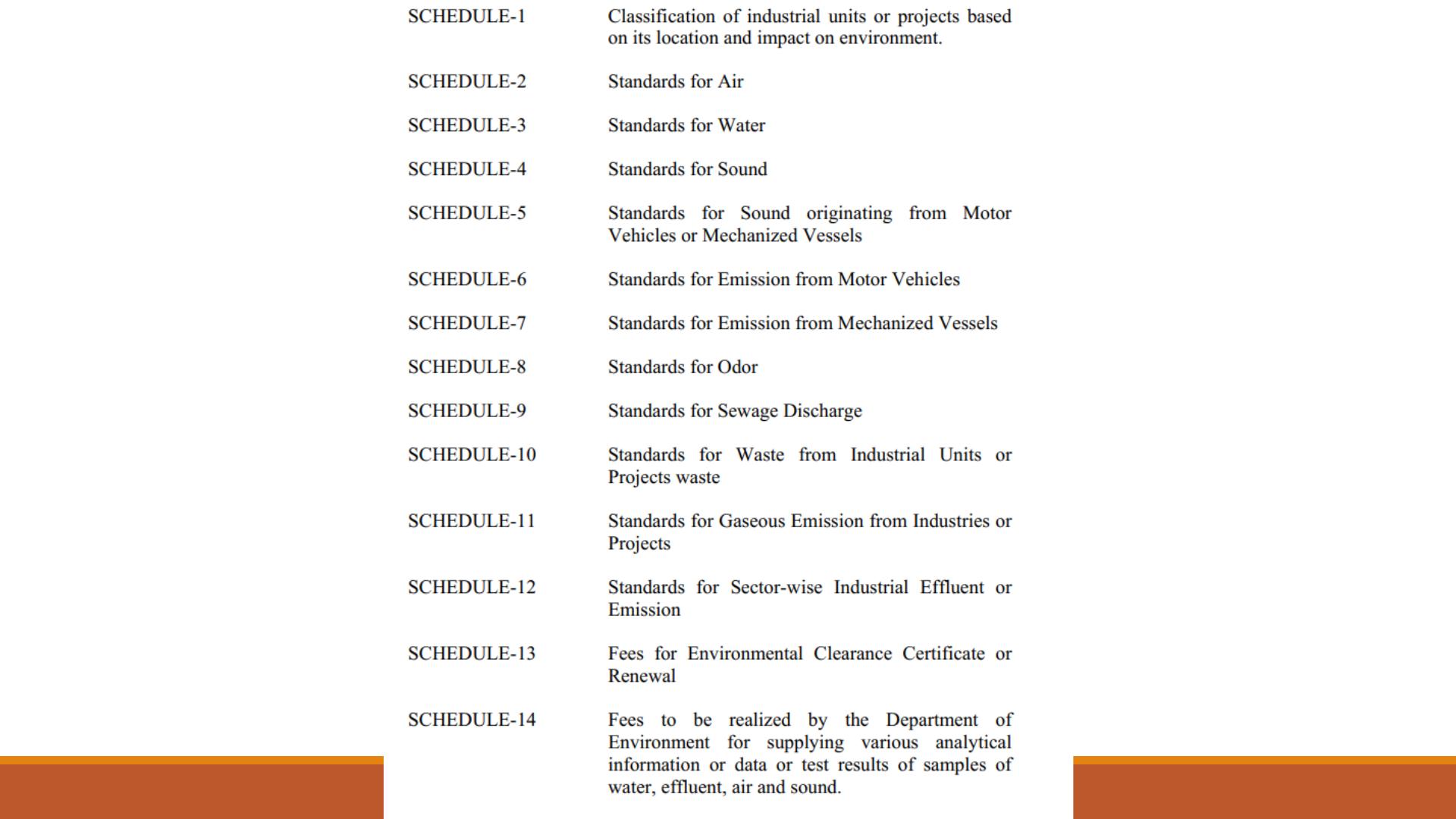
The Rules contain
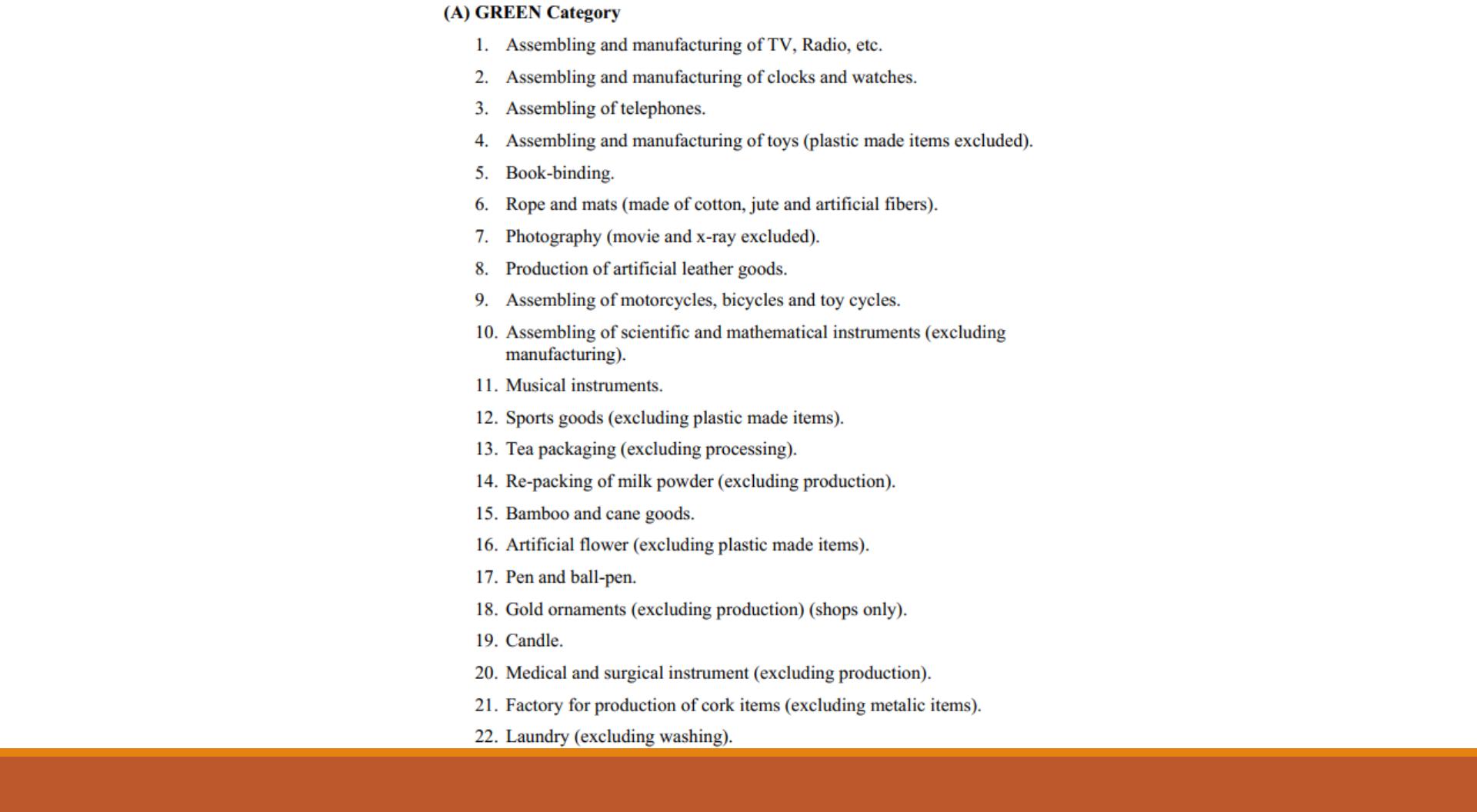
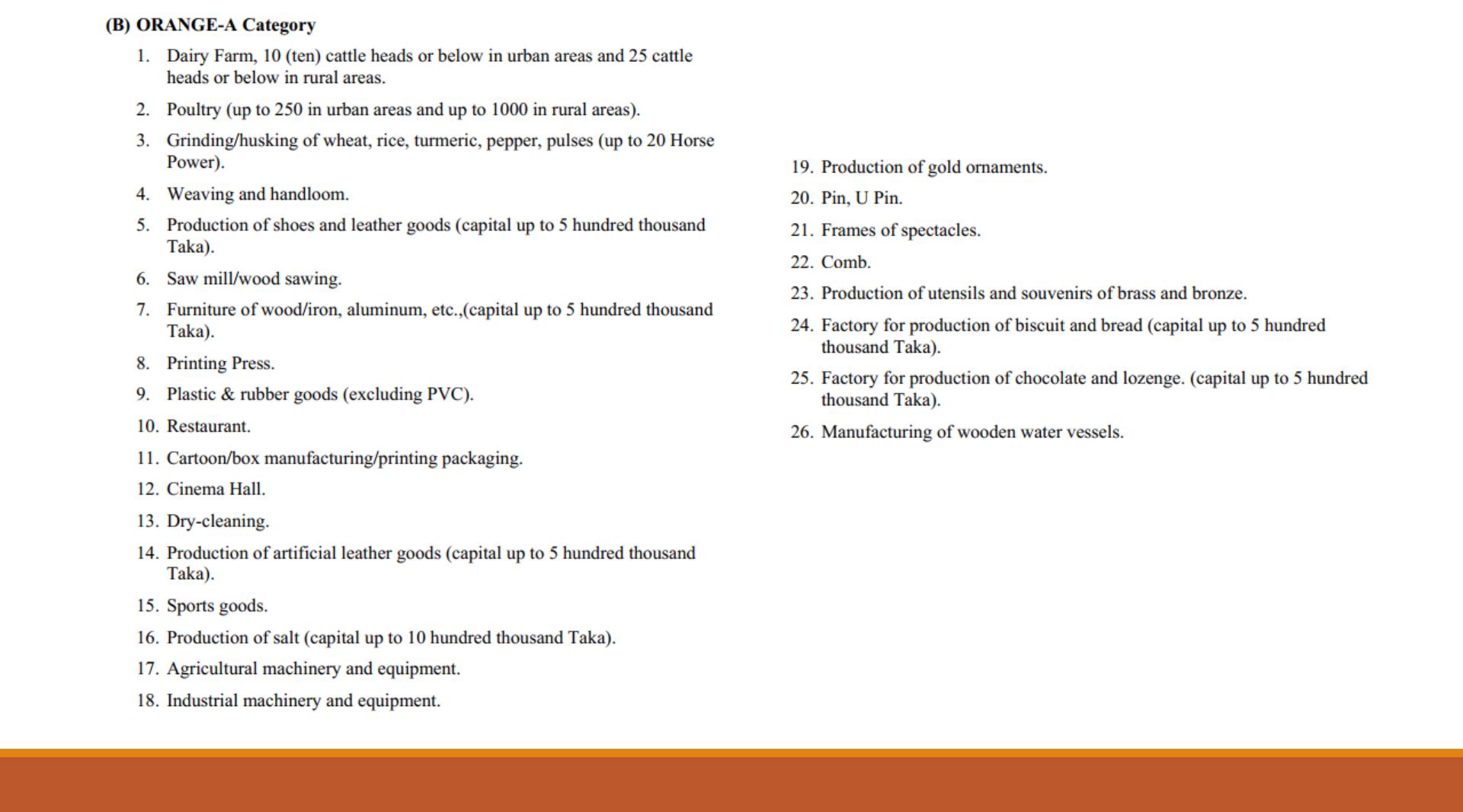
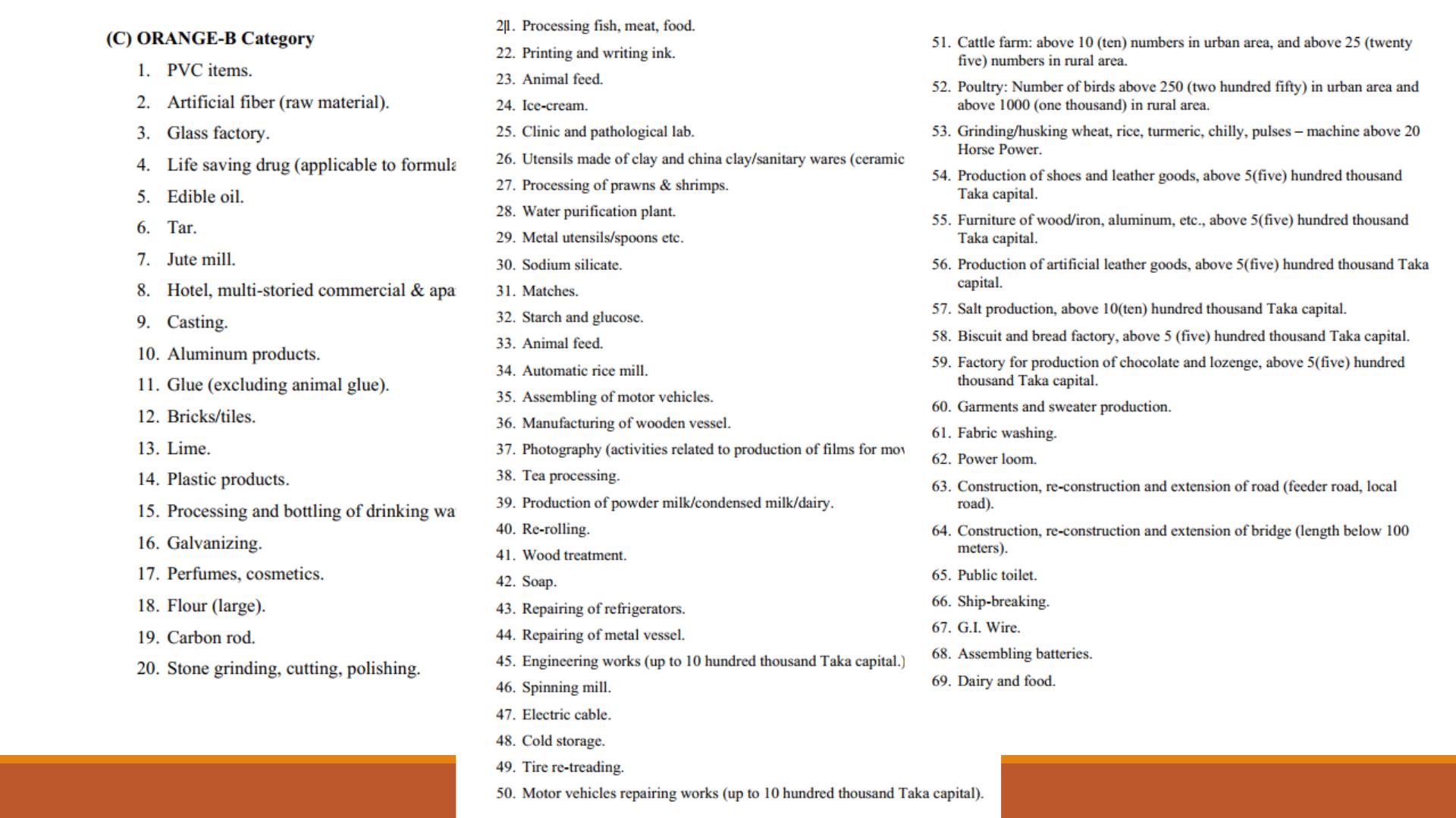
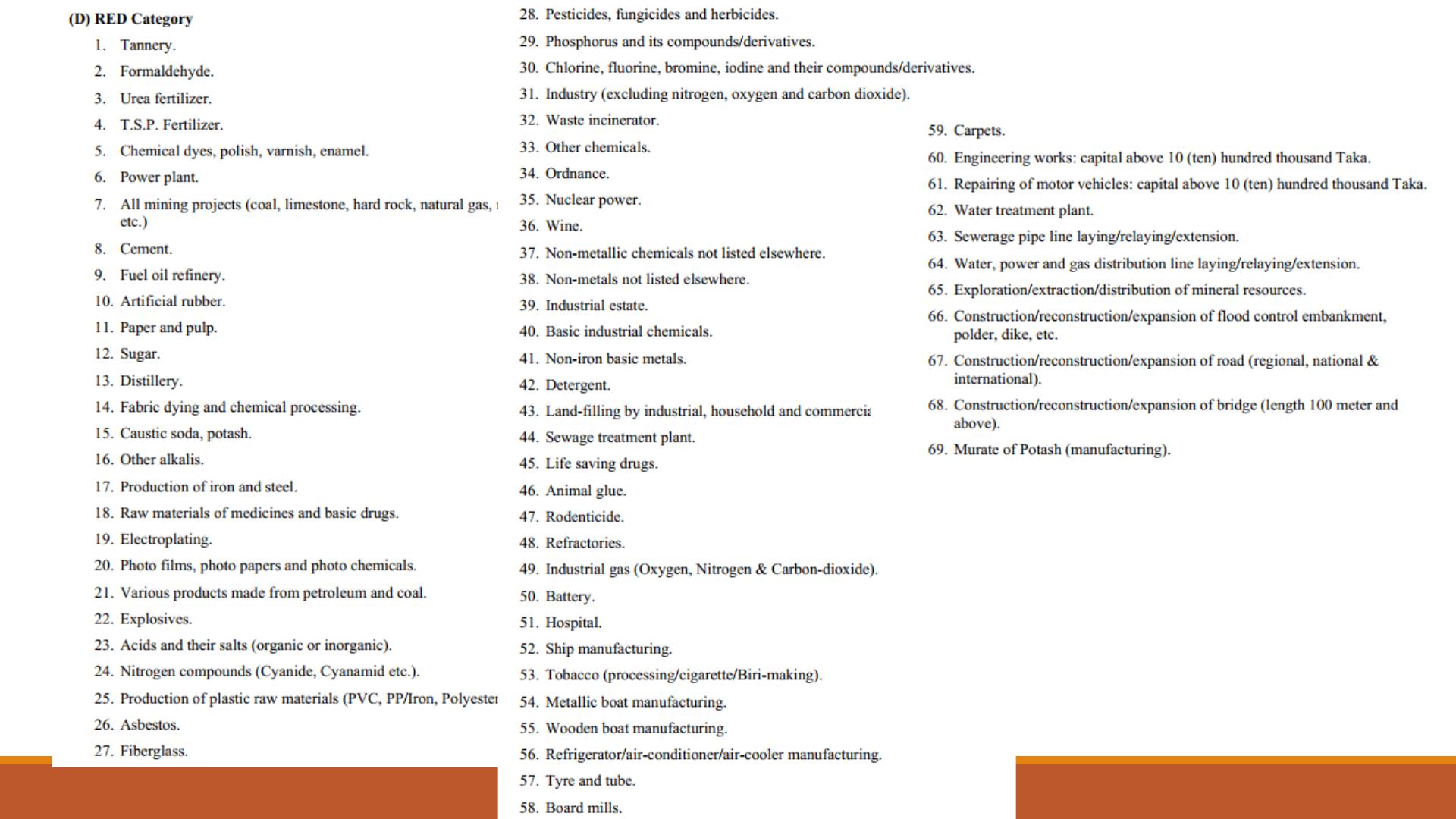
◦a list of industries, indicating their allocation to the Green, Orange -A, Orange-B, and Red categories .
◦application format for Environmental clearance
◦ambient standards in relation to water pollution, air pollution and noise, as well as permitted
discharge/Emission levels of water and air pollutants and noise by industries.
◦The Rules incorporate “inclusion lists ” of projects requiring varying degrees of Environmental
investigation

Useful definition
“environment” means the inter–relationship existing between water, air, soil and physical
property and their relationship with human beings, other animals, plants and micro–organisms;
“conservation of environment” means improvement of the qualitative and quantitative
characteristics of different components of environment as well as prevention of degradation of
those
“ecosystem” means the inter–dependent and balanced complex association of all components of
the environment which can support and influence the conservation and growth of all living
organisms;
“environment pollutant” means any solid, liquid or gaseous substance which causes harmful
effect to the environment and also includes heat, sound and radiation;

Useful definition
“hazardous substance“ means a substance, the chemical or biochemical properties of which are such
that its manufacture, storage, discharge or unregulated transportation can be harmful to the
environment;
“pollution” means the contamination or alteration of the physical, chemical or biological properties of air,
water or soil, including change in their temperature, taste, odor, density, or any other characteristics, or
such other activity which, by way of discharging any liquid, gaseous, solid, radioactive or other substances
into air, water or soil or any component of the environment, destroys or causes injury or harm to public
health or to domestic, commercial, industrial, agricultural, recreational or other useful activity, or which
by such discharge destroys or causes injury or harm to air, water, soil, livestock, wild animal, bird, fish,
plant or other forms of life;
“waste” means any solid, liquid, gaseous, radioactive substance, the discharge, disposal and dumping of
which may cause harmful change to the environment;
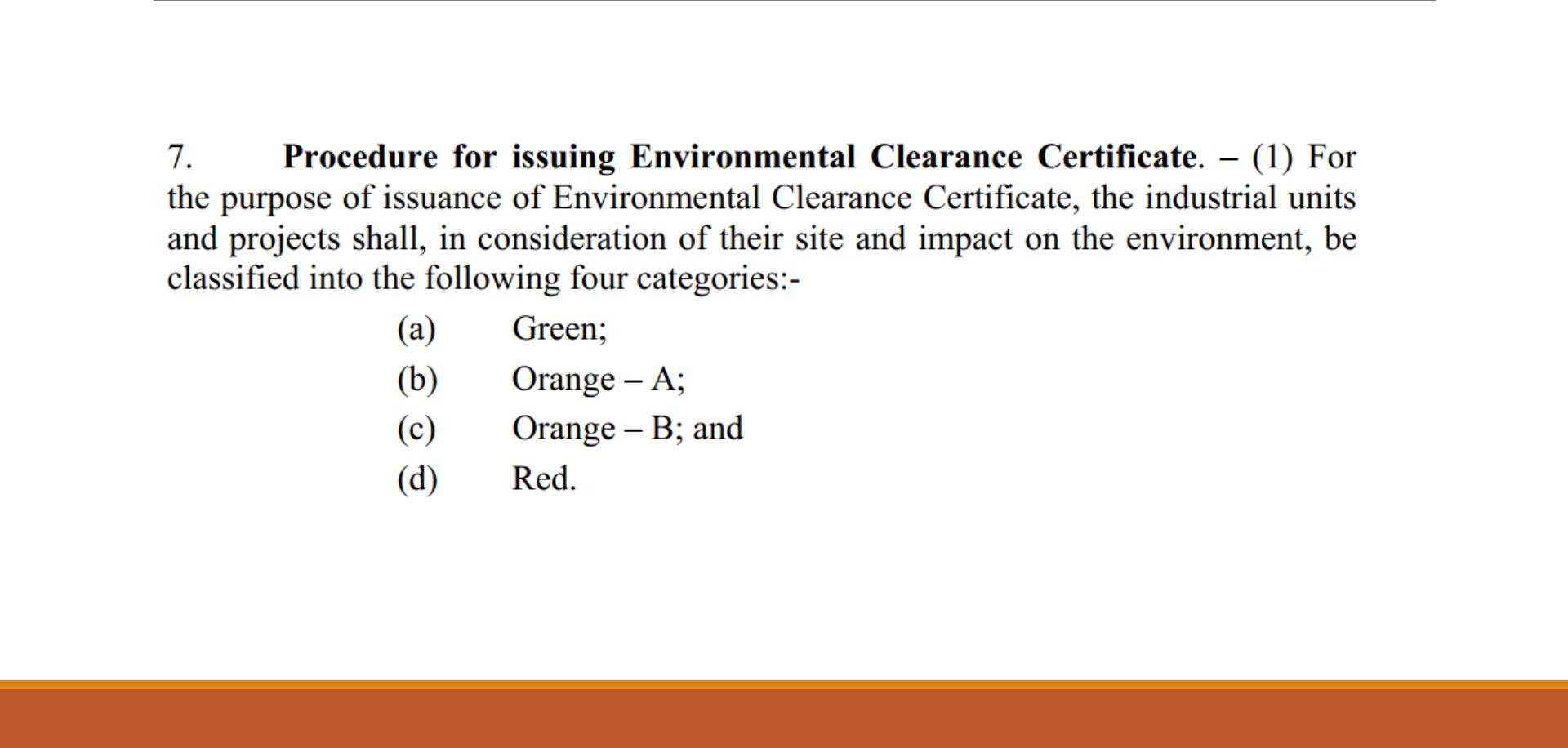
Industry/project Classification

Industry/project Classification
a) For Green Category:
i. general information about the industrial unit or project;
ii. exact description of the raw materials and the manufactured product; and
iii. no objection certificate from the local authority;
b) For Orange–A Category:
i. general information about the industrial unit or project;
ii. exact description of the raw materials and the manufactured product;
iii. no objection certificate from the local authority;
iv. process flow diagram;
v. Layout Plan (showing location of Effluent Treatment Plant);
vi. effluent discharge arrangement;
vii. outlines of the plan for relocation, rehabilitation (if applicable);
viii. other necessary information (if applicable);

Industry/project Classification
c) For Orange–B Category:
i. report on the feasibility of the industrial unit or project (applicable only for proposed industrial
unit or project);
ii. report on the Initial Environmental Examination of the industrial unit or project, and also the
process flow diagram, Layout Plan (showing location of Effluent Treatment Plant), design of the
Effluent Treatment Plant (ETP) of the unit or project (these are applicable only for a proposed
industrial unit or project);
iii. report on the Environmental Management Plan (EMP) for the industrial unit or project, and also
the Process Flow Diagram, Layout Plan (showing location of Effluent Treatment Plant), design of
the Effluent Treatment Plant and information about the effectiveness of the ETP of the unit or
project, (these are applicable only for an existing industrial unit or project);
iv. no objection certificate from the local authority;
v. emergency plan relating adverse environmental impact and plan for mitigation of the effect of
pollution;
vi. outline of the relocation, rehabilitation plan (where applicable);
vii. other necessary information (where applicable)