Destiny Walker
Coastal Environmental Issues of Georgia
12/4/17
Coastal Georgia have many aspects of environmental issues because it is residing on the
coast and experiences extreme weather conditions and other issues that are minor. One
environmental issue is water pollution and how it has affected the quality of water and being able
to use the resource since it is polluted.
Water pollution can be defined as any physical, biological, or chemical changes in water
quality that adversely affects living organisms or makes water unsuitable for desired uses. The
coastal area is surrounded by water from islands and beaches that are located on the coast. There
will be some source of contaminated water because of how much exposure to water there is for
chemicals and other organisms to expand in the beaches or islands. The water quality in Coastal
Georgia are from point sources, which are sources that discharge pollution from specific
locations. The water sources that ae available may have specific locations where the polluted
water is discharged to.
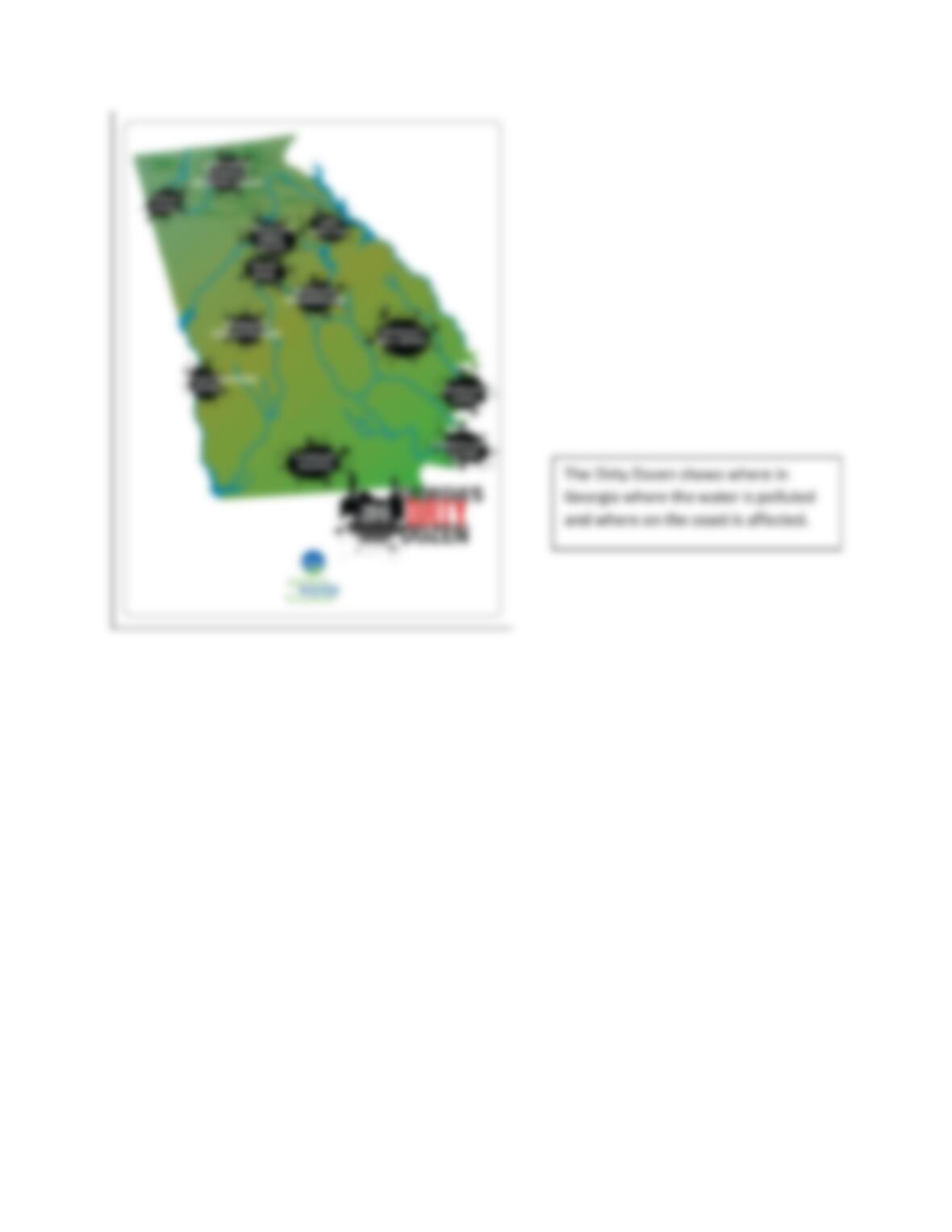
One problem that has been stated is the Dirty Dozen, where it is in different areas of
Georgia. The main highlight of this problem is it threatens the health and safety of waters, and
not safe for people. An article states that twenty percent of groundwater supplies the state’s
drinking water. Any chemicals or toxics that are in the groundwater affects the water the people
drink and lead to illness or worse. Since most of our water comes from underground, the
government should understand how it is important to remove the situation and not have lives be
at risk. An important factor is the coal from coal-fired power plants are disposed in the
groundwater and its pollutants rise into the water and the quality of the water is exposed to all the
toxic chemicals. Water pollutants that can be found are organic and inorganic chemicals and
infectious agents. Infectious agents are bacteria, parasites, and viruses that causes a threat to
human health and not having a proper disposal of the agents. Waterborne diseases that are caused
from the infectious agents or pathogenic organisms (another name for the agents) kills hundreds
of millions of people. Once the organisms enter the immune system, our system is weakened and
mostly fights the infection off itself or must be treated with some antibiotics. Another factor that
plays a role in the Dirty Dozen is properly sanitation. Not having good sanitation leads to lack of
access to clean the drinking water. Sanitation is a major factor because not having clean water
disturbs actual drinking water for not being able to be used by the citizens. “The World Health
Organization estimates that eighty percent of all sickness and disease in less-developed countries
can be attributed to waterborne infectious agents and inadequate sanitation” describes how
important it is to lessen the water pollution and make changes into our water systems. By making
changes in our water system, the water quality will be more clean and efficient to use for
drinking sources and any other sources that needs fresh water. Rural areas have bad conditions of
water because the sewage treatment either doesn’t exist or primitive and purified water is either
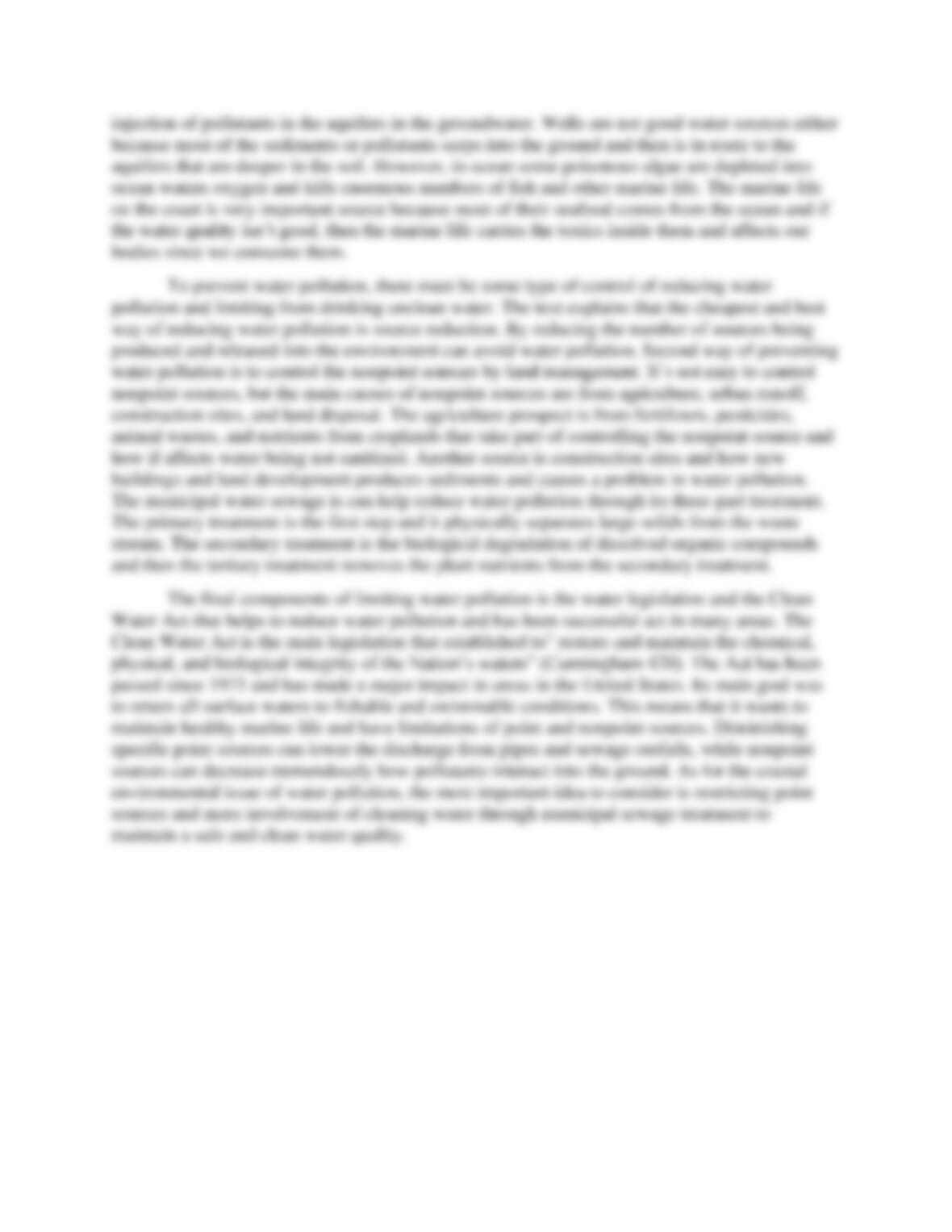
unavailable or too expensive. It is important to introduce a sewage water treatment so that water
can become available and have enough resources of drinking water.
Water pollution encounters another factor that contribute to the water quality. Nonpoint
sources of water pollution do not have a specific location to discharge in a particular body of
water. Some examples of these sources are excess fertilizers, construction sites, runoff from farm
fields and livestock, and many other examples. Nonpoint pollution stimulates and diffuses from
atmospheric deposition, in which the contaminants carried by air currents and participated into
watersheds or directly onto surface waters. A great example of this pollution is the Great Lakes
and has been found to be accumulating industrial chemicals that are in the water. Another good
example is cows roaming freely on streams and ponds, but it has a major cause of bank erosion
and water contamination. Cows are free animals, but the problem is that the feces they leave
behind can hurt the water and the locations of water itself. An important source of nonpoint
pollution is agriculture and how nutrients are affected with water quality. The nutrients that are
being transported through farming systems can overwhelm natural nutrient cycles (Carpenter).
The concern is that nutrients are being added more while fertilizers are being removed as it is
produced. When nutrients are being added, it doesn’t really affect the water, but could have
problem later during the nutrient cycle.
The two main key elements of water quality are to maintain clean drinking water and
basic sanitation are very necessary to prevent any diseases and maintain a healthy life. Many
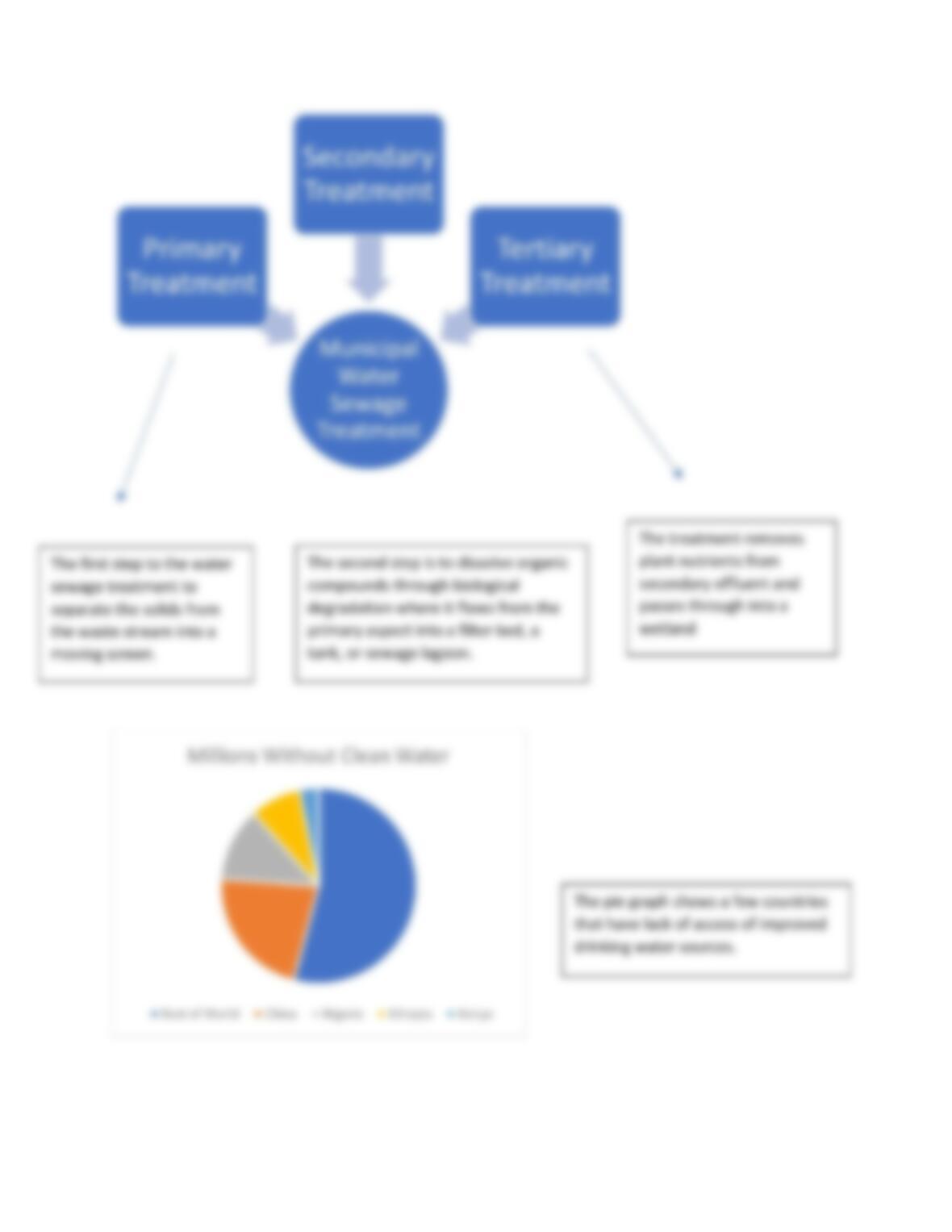
people in the world are lacking excess to safe drinking water because of poor sanitation of the
water. Another concern is that populations grow rapidly and when people move into cities,
water supplies become scarce and water shortages exist. The text states “One of the United
Nations Millennium goals is to reduce one-half the proportion of people without reliable access
to clean water and improved sanitation” (Cunningham 385). This statement is saying that