1 | P a g e
English Wine Week
Markefing Campaign
Jenny Farrar
ENGLISH WINE WEEK
MARKETING CAMPAIGN
Contents
1. Executive Summary
2. Situational Analysis
2.1 The Market Sector
2.2 The Wider Macro-Environment
2.3 Consumer Trends
2.4 Compefifive Analysis
2.5 Internal Analysis
2.6 SWOT
2.7 Key issues
3. Objectives
4. Strategy
4.1 Segmentafion
4.2 Posifioning
5. Site recommendations
5.1 Creafive
5.2 Site Architecture
6. Media Selection and format
6.1 Consumer Life fime value
6.2 Acquisifion channels
7. Database & e-CRM
7.1 Database
7.2 Twi3er
8. Contingency Plan
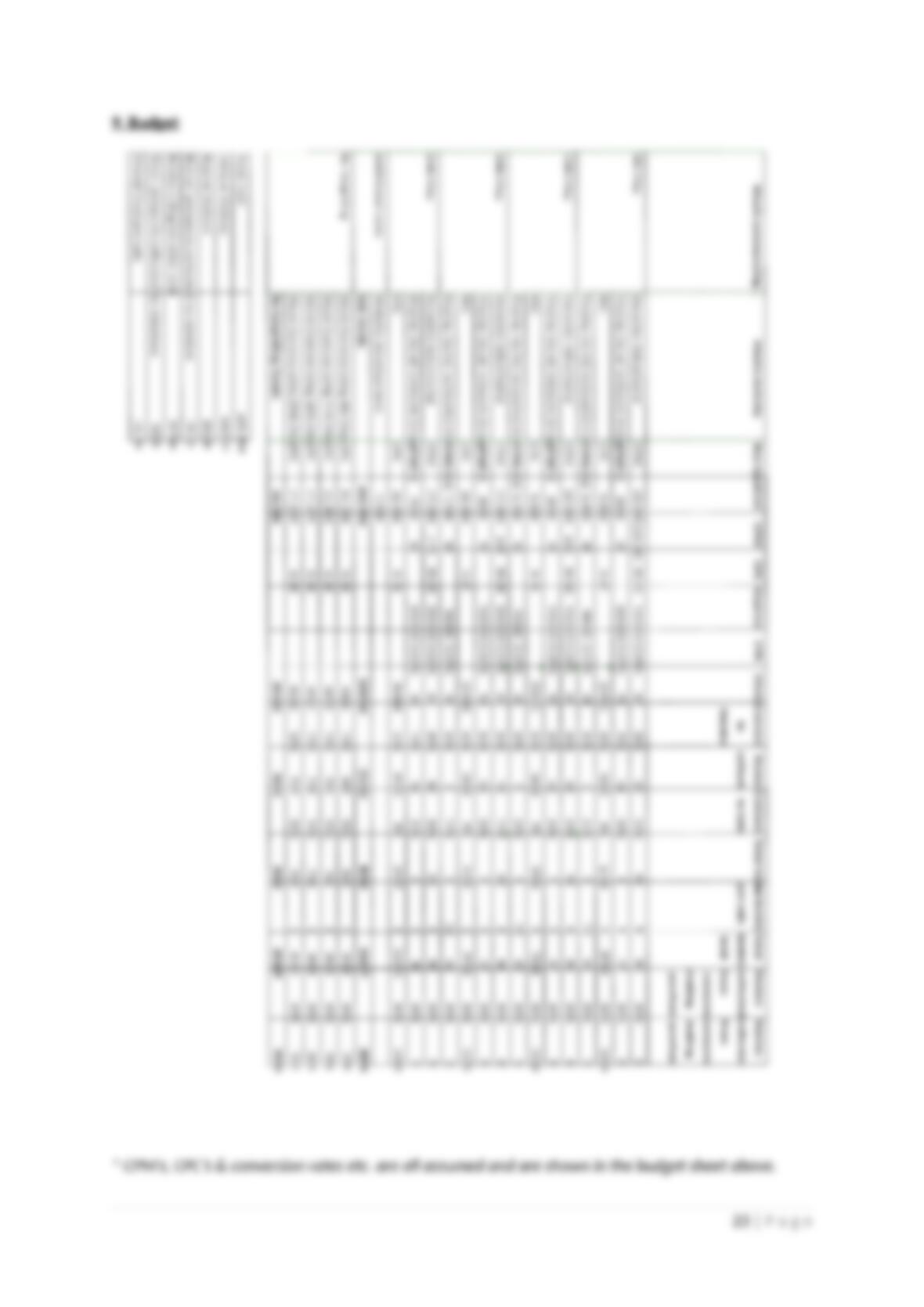
9. Budget
10. Appendix
11. References
2 | P a g e

1. Executive Summary
This report proposes a 4 week online markefing campaign to engage customers in English Wine Week
and increase both awareness and sales. A4er a full situafional analysis it is apparent that whilst
challenges such as reduced spending on discrefionary goods exist, there is good opportunity for
English wine and English sparkling wine in parficular, to increase its market share from its key
compefitor, Champagne.
This acquisifion led plan has been designed to meet the objecfive of driving 100,000 unique visits to
the English Wine Week website in the 4 weeks leading up to and including English Wine Week, as
well as bringing back a high number of repeat visitors. It is forecasted incremental sales in excess of
50,000 bo3les of English Wine will be driven by the acfivity. This will be achieved on a strict budget
of £70,000.
Display acfivity will raise a3enfion and create interest, as well as creafing desire amongst targeted
consumer segments. English Wine’s strong USP’s will also be communicated via assumed o<ine
acfivity taking place and through various website enhancements.
EWP would like the website to become a central hub for people finding informafion on and ge>ng
involved in English Wine Week and site suggesfions to facilitate this have also been outlined.
Extensive PPC acfivity will help to capture the increased brand searches as well as a3racfing
‘Champagne search term’ tra@c, whilst retargefing acfivity drives repeat visitors.
A database strategy has been proposed to collect data for use in future markefing campaigns which
should also enhance the e-CRM, as will the use of Twi3er.
In summary it is forecast that 100,727 unique visitors will be driven, 20,145 of these will return as
repeat visitors, and 55,766 bo3les of English wine will be sold at a low cost per sale of £6.30 per
customer.
3 | P a g e
2. Situational Analysis
2.1 The Market Sector
English Wine
Despite the fact that English Wines make up only 0.14% of the wider UK market they have been
a3racfing signiticant interest. The sector is experiencing a period of strong growth, posing an
increasing threat to its key compefitor, Champagne.
The Champagne Sector
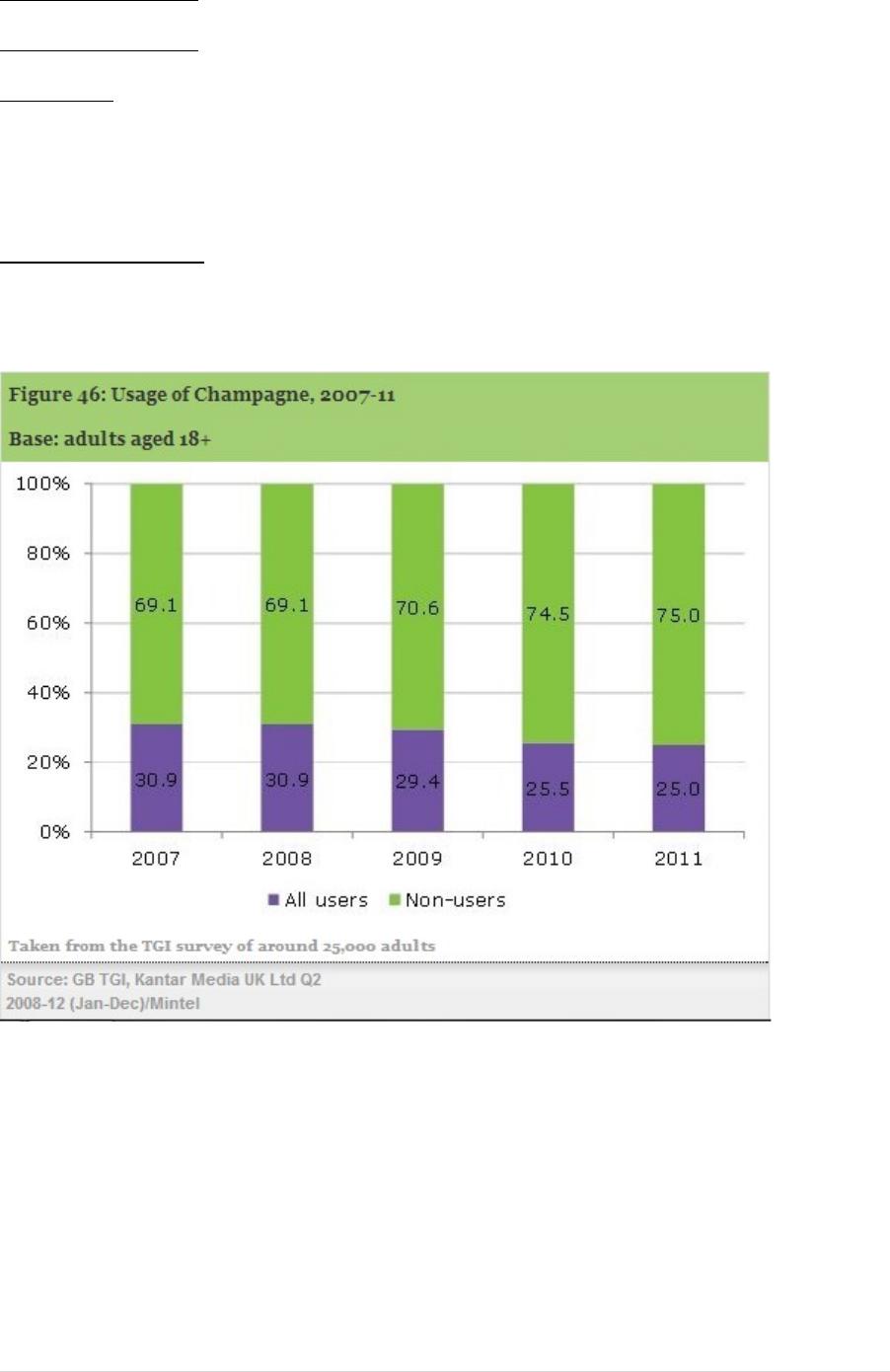
Usage in the UK has been steadily declining, supporfing the nofion that this group of consumers are
increasingly open to alternafives to champagne.
Champagnes posifioning as a truly premium, aspirafional product is a factor that plays a large part in
a3racfing its mostly a<uent consumer base. It has achieved this in part through its associafions with
exclusive, high-calibre events such as F1 racing, and its associafions with special occasions such as
weddings. However, the proliferafion of low-cost Champagnes in the oD-trade environment is likely
removing some of the market’s lustre and glamour and to an extent the decline in the appeal of
Champagne and its usage can be a3ributed to this. (Mintel)
4 | P a g e
2.2 The Wider Macro-Environment
Polifical
The escalator on alcohol duty has seen it rise by 50% for wine since it was introduced in
2008. (BBC)
Economical
Low consumer con=dence represents a very real threat to discrefionary products such as
champagne and sparkling wine. (Mintel)
Social
It is thought the patriofic fervour surrounding the Royal Wedding, the Queens Diamond
Jubilee and the London Olympic Games signi=cantly enhanced sales in 2012.
The populafion of 25-34 year olds, a key market for the target sector of Champagne, is
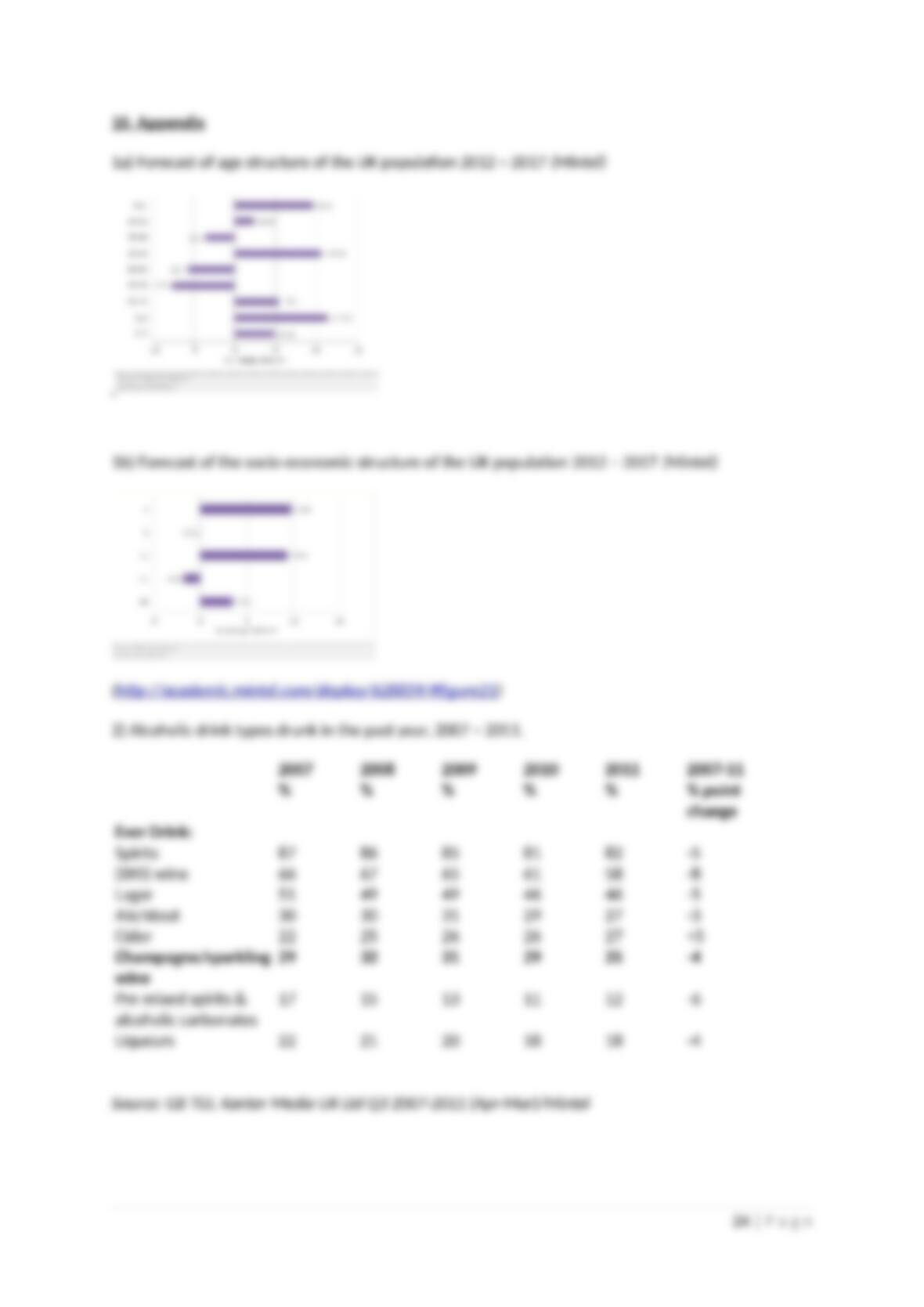
forecast to increase 11% by 2017. (Appendix 1a)
Similarly the number of AB consumers in the UK, another key market for Champagne, is set
to rise 4% by 2017. (Appendix 1b)
5 | P a g e
2.3 Consumer Trends
72% of UK wine buyers agreed they like to try wines from many diDerent countries, with
some 56% more open to trying English wine than in the past (Mintel).
From 2007 – 2011 the only type of alcoholic drink to increase its market penetrafion in the
UK was cider. It is argued by many, including Senior Drinks Analyst Jon Forsyth (Mintel) that
this is “due to a combinafion of impressive innovafion and markefing nous’’.
These points show the market place to be reacfive to diDerenfiated product posifioning, as well as
open to the prospect of trying English wine.
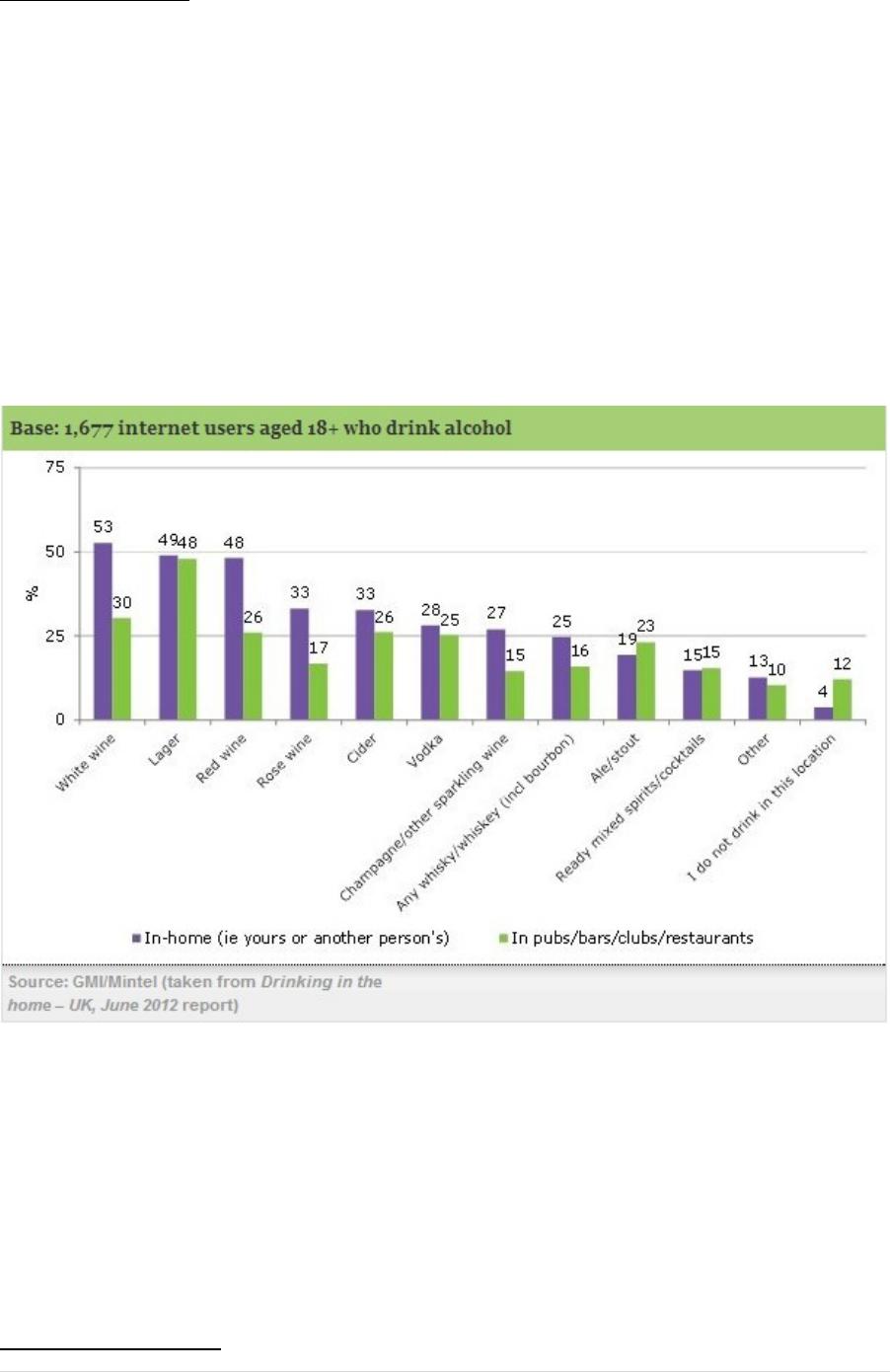
Also relevant is the notable trend in the UK towards drinking in-home;
Types of alcoholic drinks used, May 2012:
The most popular occasion for drinking at home is when relaxing/unwinding, with 71% of users
doing so. (Mintel)
2.4 Competitive Analysis
6 | P a g e
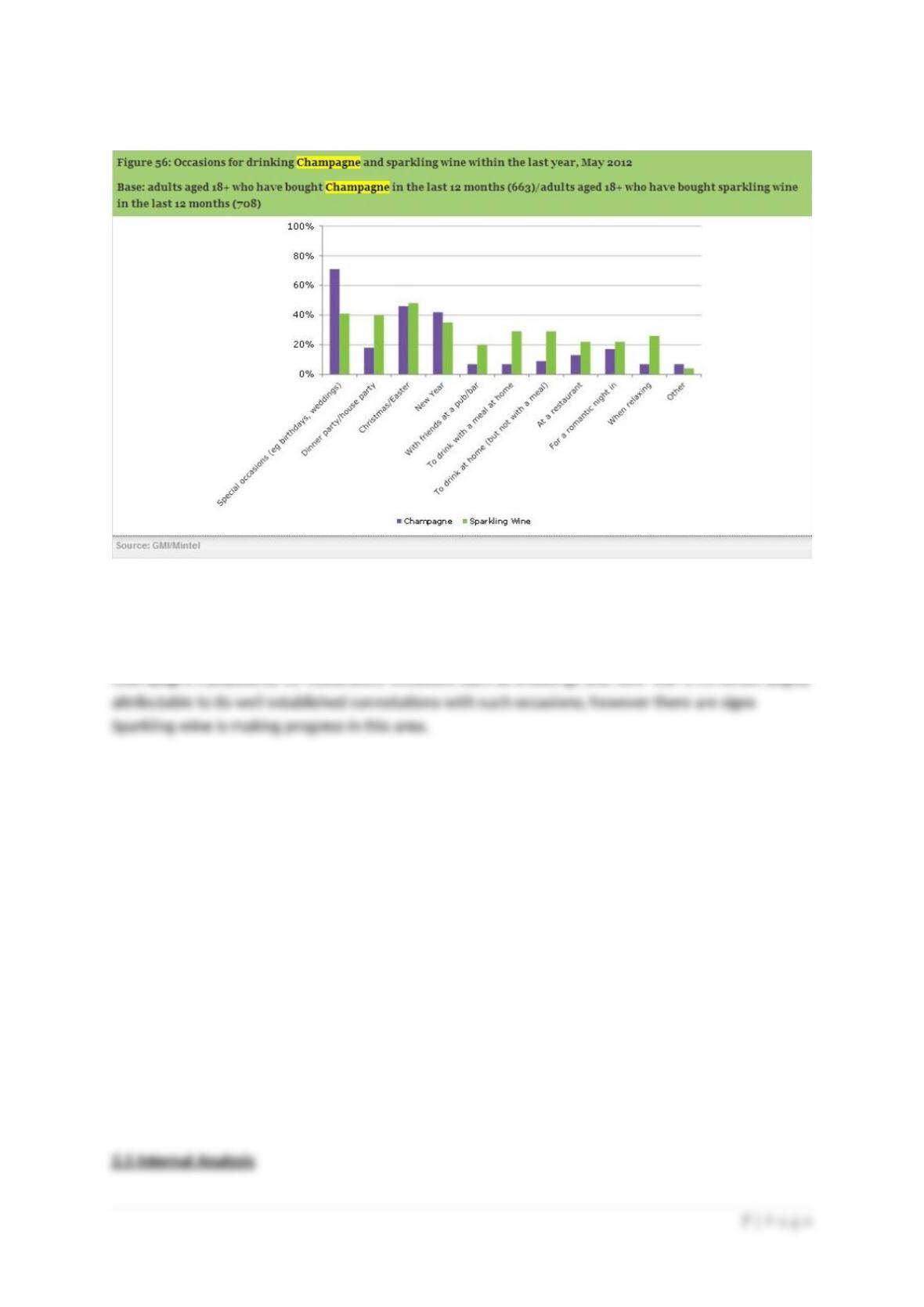
Occasions for drinking Champagne and sparkling wine within the last year, May 2012:
It can be seen sparkling wine is more versafile than Champagne; the wider use of sparkling wine is
likely due to fighter house hold budgets inLuencing spending on discrefionary goods, as well its
growing credibility.
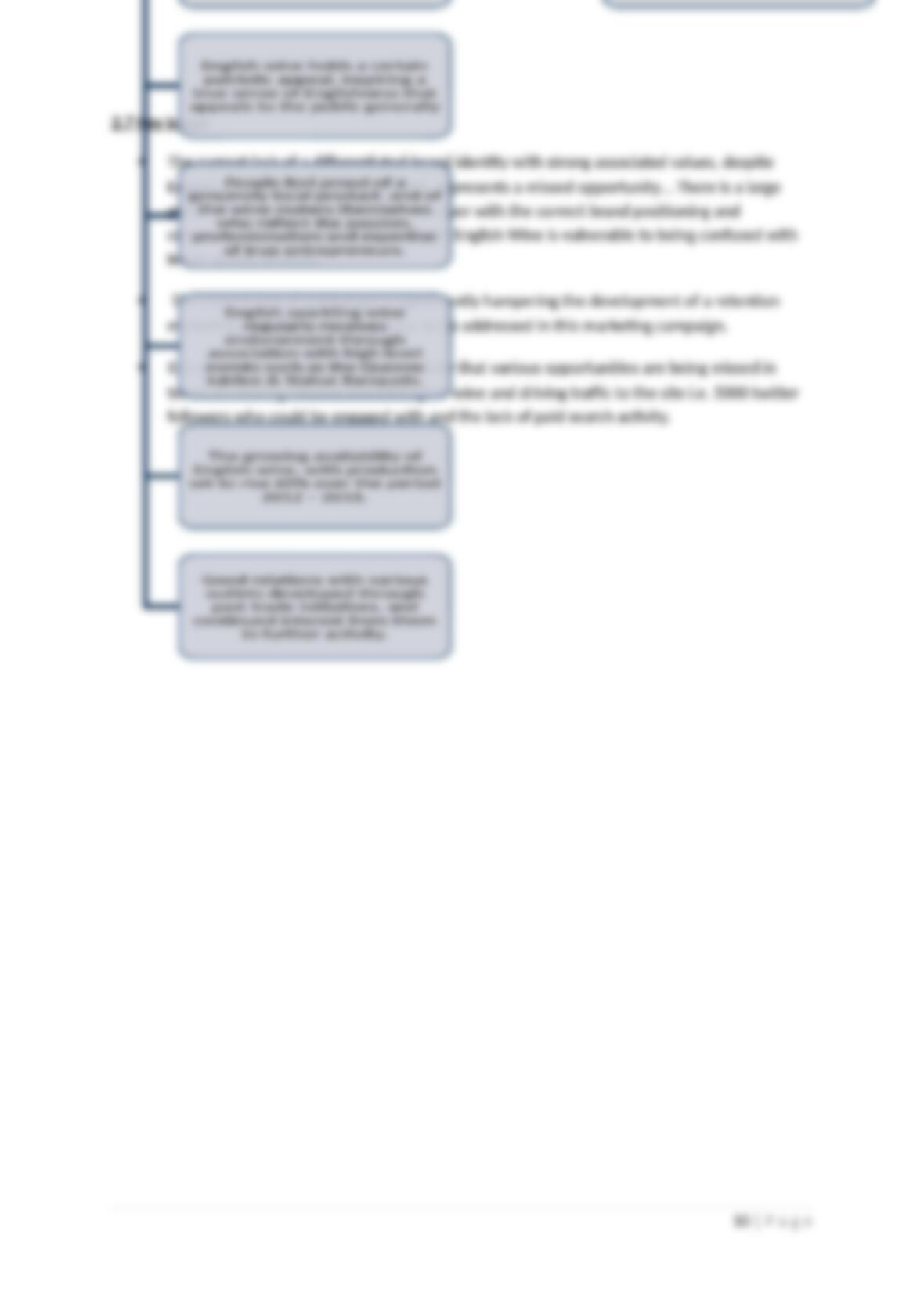
English wine holds a certain
patriofic appeal, inspiring a
true sense of Englishness that
appeals to the public generally
People feel proud of a
genuinely local product, and of
the wine makers themselves
who reLect the passion,
professionalism and experfise
of true entrepreneurs.
English sparkling wine
regularly receives
endorsement through
associafion with high level
events such as the Queens
Jubilee & Statue Banquets.
The growing availability of
English wine, with producfion
set to rise 60% over the period
2012 – 2015.
Good relafions with various
outlets developed through
past trade inifiafives, and
confinued interest from them
in further acfivity.
Strengths
Weaknesses