Be sure to turn on the All Markup setting in your Word processor so that you
see the entire markup. Go to REVIEW in the ribbon above, and then just to
the right of Track Changes you’ll see the pull-down. Set it on All Markup and
then click Show Markup.
Unit 2 Discussion: Editing, Proofreading and Submitting a Paper
Initial post:
1. Explain the differences in revision, editing and proofreading.
The revision summarizes the main points in the essay and then urges the reader to think again
about the overall point of writing (VanderMey, Meyer, VanRys, & Sebranek, 2012).
The goal of revising is change. The word “revise” comes from Latin words that mean “to see
again.” So[,] in a revision you are seeing your text or story or document differently, and making
changes that move it from its current state closer to that new and different vision. Revising often
involves making large, sweeping changes, reorganizing part or all of the text, significantly
adjusting tone and voice, and/or adding and removing sizable amounts of material as well as fixing
grammatical issues. A well-revised text often looks and sounds very different than it started
because it now says something much closer to what you really want it to say. Simply put, if you
are revising, then you are looking for alternative, different ways to write what’s already written, or
possibly taking something out or adding something new.
Vigorous writing is concise. A sentence should contain no unnecessary words, a paragraph no
unnecessary sentences, for the same reason that a drawing should have no unnecessary lines
and a machine no unnecessary parts. This requires not that the writer make all his [sic] sentences
short, or that he avoid all detail and treat his subjects only in outline, but that every word tell
(Strunk & White, 1979).
The goal of editing is clarity. Editing doesn’t so much try to change your text as to make it more
accessible and easier to read. Where revising makes a text better for you, editing makes it better
for your readers. Without editing, many books and texts would require the reader to live inside the
author’s head just to understand them. Editing involves simplifying complex concepts, trimming
excess words, replacing dense language with clear wording, making stories and examples
relatable, insuring that a reader who doesn’t know the author or their topic can still follow the text
and receive its value, and resolving issues that the author can’t see because they’re too close to
their own writing. Editing is also looking for mistakes of the spelling, grammar or punctuation type
and making necessary changes.
You should have written and edited your work for general coherence and flow before
proofreading. Proofreading is the opportunity to final check for errors in sentence structure,
grammar, verb tense and punctuation. You also look for mistakes in spelling, use of quotations,
citation details, etc. Look not just for the tricky mistakes but also for any typos. When you are
revising your own work, you’ll probably combine line editing, a grammar and spelling check, with
proofreading, checking for typos, formatting and style.
2. Provide examples of parallel structures in coordinated sentences elements, weak
sentence structures, misleading and biased words, and subject/verb disagreement.
Parallel structure in a coordinated sentence: Mary enjoys hiking, swimming, and bicycling.
Weak sentence structure (passive voice): It is my belief that gender inequality exists in the
school system.
Misleading and biased words: Before a surgeon can operate, he must know every relevant
detail or the patient’s history.
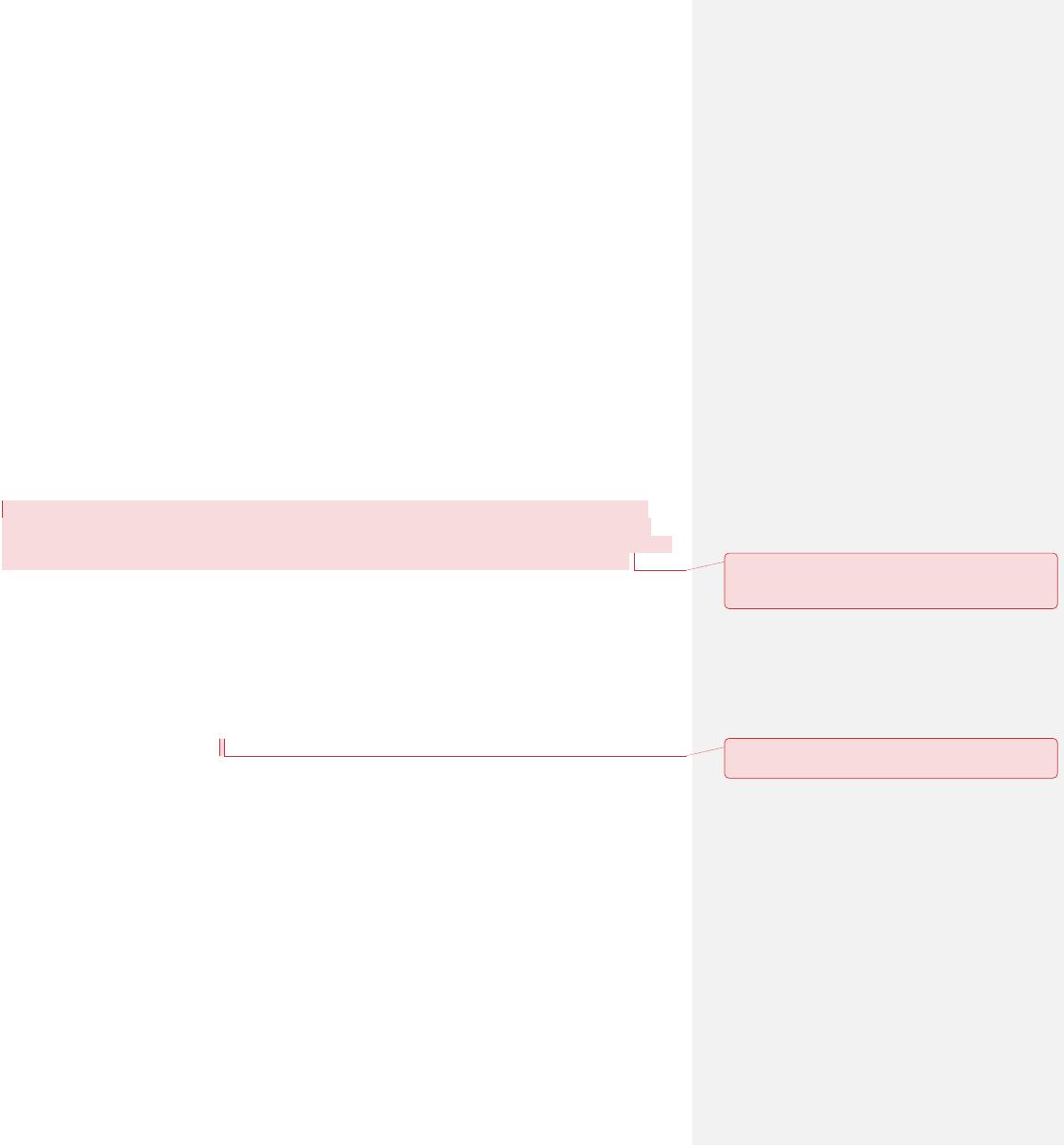
Commented [S1]: Note that much of this is quoted
directly; therefore, those quotes need to be in quotation
marks. That avoids plagiarism.
Commented [S2]: Be sure to give credit to any source
that you draw from.
Subject/verb disagreement: The banks stores money.
3. Explain what is meant by formatting in academic writing.
Formatting refers to the appearance or presentation of your essay. Using standard fonts, margins,
and indentations helps your paper gain credibility with an academic audience; readers who are
comfortable with your paper’s format can pay close attention to the ideas you’re communicating.
Formatting in academic writing is essential for the following reasons:
Proper formatting denotes an individual is capable of following directions.
Proper formatting provides consistency.
Proper formatting facilitates practice of discipline and adherence to standards.
Proper formatting allows an individual to focus efforts on content.
4. Explain how an anecdote is used in an academic essay.
An anecdote is a brief and engaging story that is used to illustrate a point. Most importantly,
anecdotes are true stories about your life. By using anecdotes in academic essay writing, you
have the ability to create a powerful bond between you and your audience. These stories help
convince readers of your sincerity and engage them in your life story, however, anecdotes should
not be used thoughtlessly to build word count. Rather, be purposeful in the stories that you tell.
Examples of effective anecdotes:
Brief
Commented [S3]: Be sure to give credit to any source
that you draw from.