1
I. Introduction
The Global Financial Crisis or also known as the GFC, is one of the biggest economical
issue known to date. Believed to have begun on 9th August of the year 2007, it is an
event that will never be forgotten by economists and businessmen. GFC is commonly
referred to as the period in which an extreme stress struck the global financial market
and the banking systems. This period is when institutions lose faith in one another
financially. Leading to institutions not lending money to one another and the acquisition
of equipment for the company ceases. Which eventually, leads downfall to companies
and some, unfortunately will cease to operate.
And in this report, I will be discussing about how the GFC hit the United States of
America and how they overcame it.
II. GFC: The Beginning
The Global Financial Crisis, as most people are aware of, actually began in the US. One
of the few reasons on why the GFC occurred was because of the collapse of the
Lehman Brothers.
Lehman Brothers played a huge role in the GFC because they are the firm who
provides financial services to other institutions including the government, business
corporations, municipalities and individuals that has a high net worth annually. Upon

2
declaring bankruptcy, the economy hit a turmoil and rapidly fell. Few other effects of the
event were: almost 6 million jobs were lost, the government bailed out cash from banks
which eventually caused starvation for the firm, unemployment rate doubled to almost a
10% high, etc.
Another reason of why the GFC begun was the loss of confidence of investors in sub–
prime mortgages. Investors lost confidence in the sub-prime mortgages when the US
Housing market took a great blow which eventually forced the home owners to take out
their sub-prime loan due to the fear that they won’t be able to pay for the mortgage
anymore. With this being said, more people eventually followed and a lot more people
defaulted their loans. The land that now the banks own, are getting one too many. The
banks cannot sell the lands for prices that can reach equity with the amount of money
they are losing. Due to this, the banks are definitely on the losing end which led to them
not being able to lend out loans even to the capable firms who were applying for it at
that point in time. This, in that point in time was known as the credit crunch.
III. GFC in the United States
How did the GFC affect the United States and what did it bring to the economy?
Effects of GFC in the United States
1. The economy was largely affected. Starting with almost 6 million jobs were lost
amounting to a whopping 15.4 million people losing their jobs by October 2019,
$401k in real estate values and 5 trillion pensions were cut down and wiped from
the system and led to 6 million people losing their homes.
2. The mortgage meltdown eventually led to recession. This forced the firms to cut
down in spending and labour workforce.
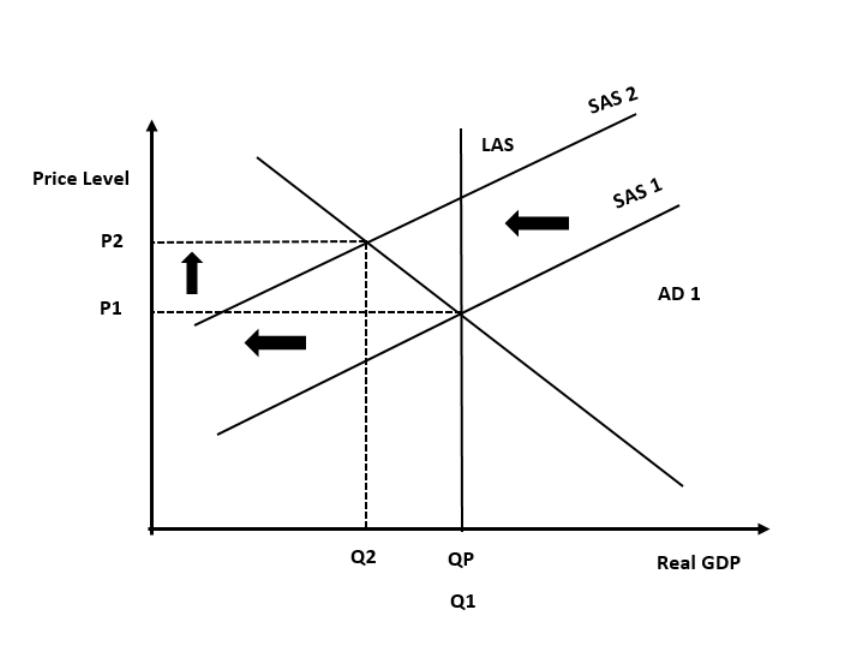
With the businesses cutting down their spending and laying off of workers, the
economy’s growth will slow down.
3
As seen on the graph above, since there is a decrease in the spending of firms
represented by the shift of the arrow to the left, naturally the Aggregate supply
will decrease. The decrease in aggregate supply would depict an increase in the
price level of the products. And with such high price and low supply of products,
economy’s production output and recover would turn out really slow.
3. Whenever banks are facing solvency issues, people and clients would not trust
banks with their money and will eventually force them to withdraw all their money
in the banks and thus, caused the credit crunch.
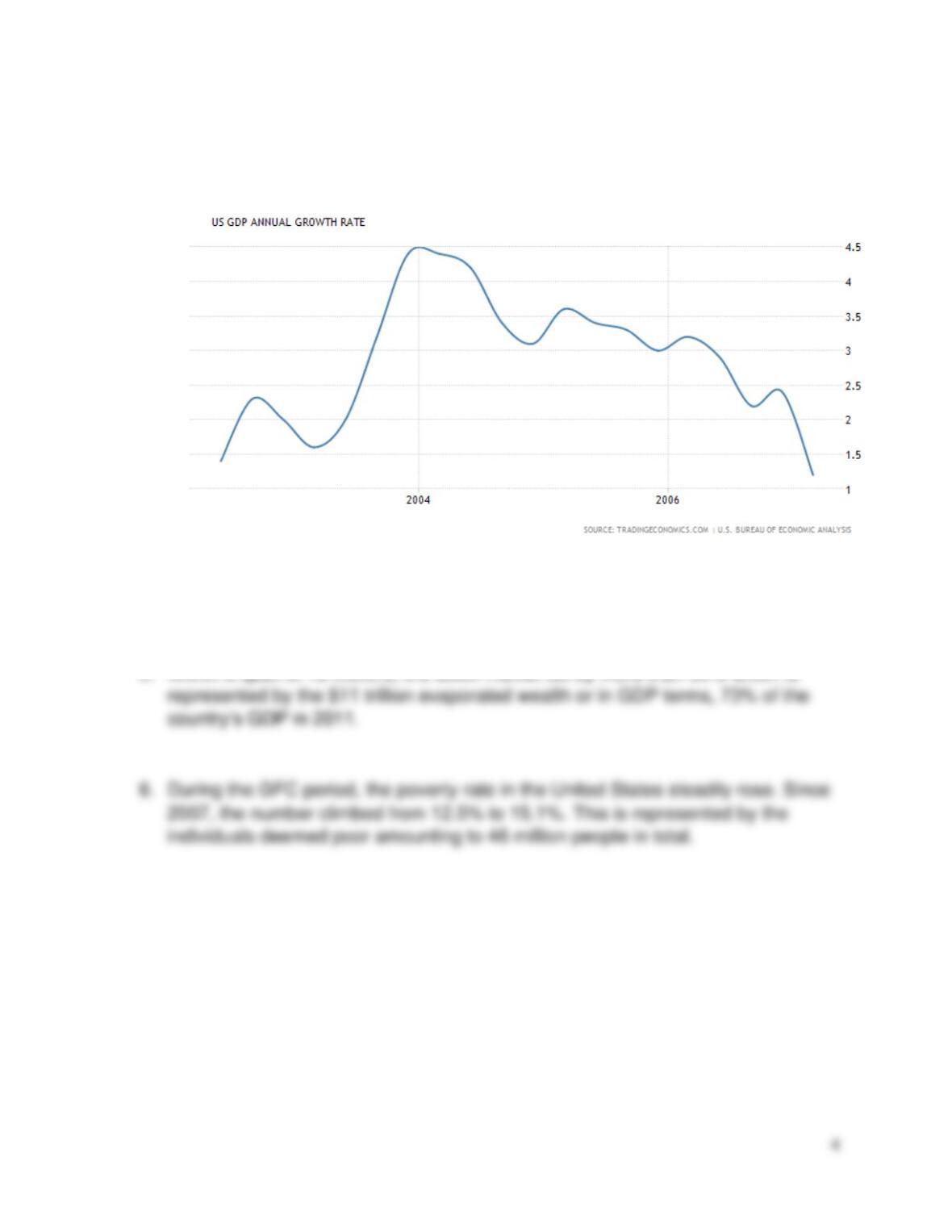
4. During the Global financial crisis, the United States’ GDP significantly dropped
and is not expected to return to its normal rate until the year 2018. Due to the
firm’s low production activity and market involvement.
(tradingeconomics.com)
As seen from the graph above, it can be clearly seen that the Global financial
crisis struck the US economy largely. The steep drop of the GDP from 2006 to
2007 is deep. From a 2.5% growth rate to a scary drop down to 1.25% rate.