Consumer Demand in an Unpredictable Pandemic
As we enter the determinant months of 2020, reflecting upon its effects and ever
changing nature seems appropriate as we try and determine the economic differences it has
enforced. When the pandemic first hit, companies scrambled to pick up the pieces from the
world’s biggest recession since the great depression, leaving their predictions, future forecasts,
and past data sets in its wake. As we saw early on, the supply for emergency medical equipment
was at an all-time low, as the demand skyrocketed for masks, ventilators, PPE across the globe.
Additionally, grocers saw a drastic shortage of basic toiletries, pantry staples, and
packaged foods, as many worrisome consumers rushed to increase their demands to sustain their
families. But, not only has the pandemic caused this sporadic change in demand of consumers, as
this year we witnessed acts of civil unrest, tensions around the presidential election, as well as
strains on our countries unemployment resources as more and more citizens face the pandemics
unpropitious consequences.
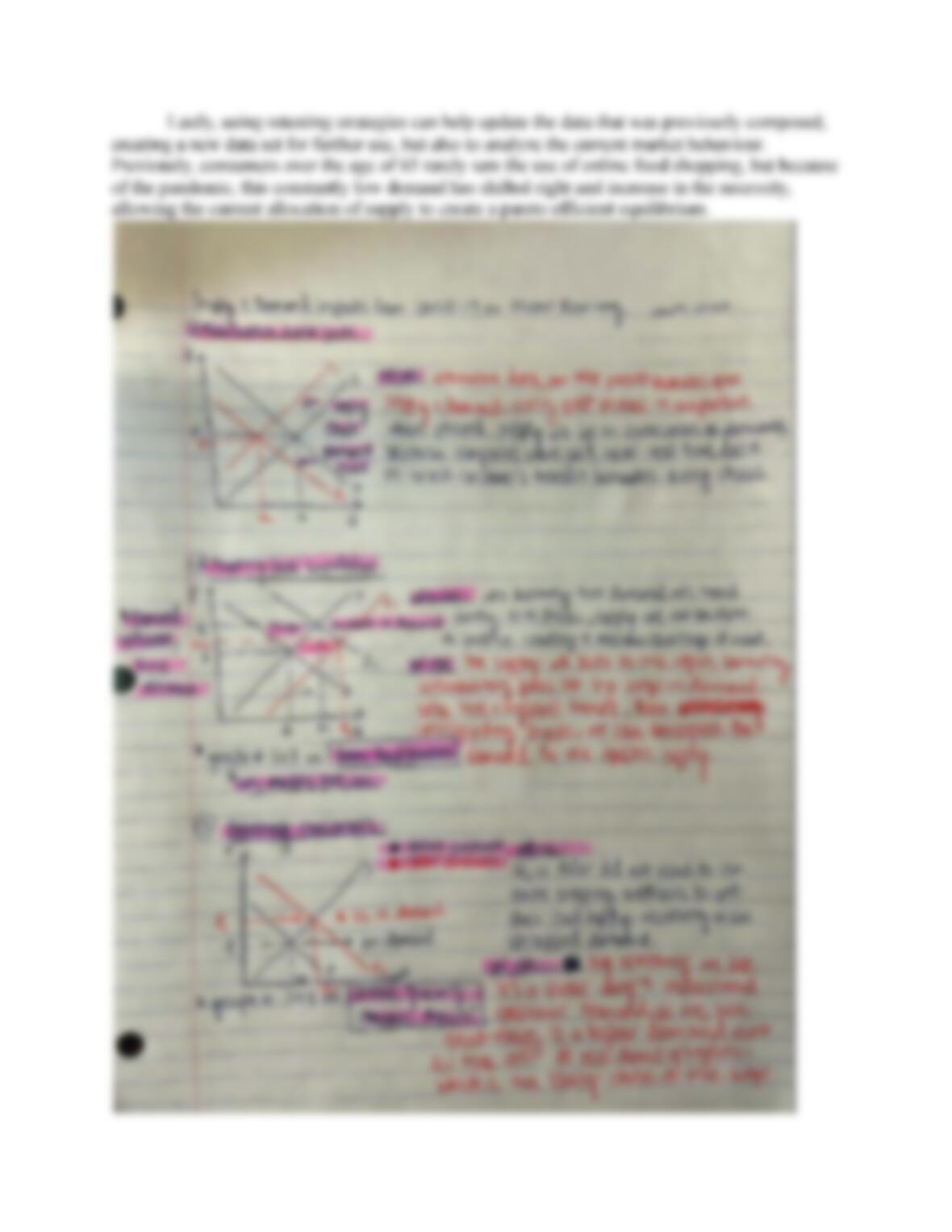
All these in relation affected the basic supply and demand chains that our economy has
fostered for years. When analyzing the deeply rooted changes in our new found normal, we see
that it starts with the changes in the behaviors and demands of our consumers. While consumers
have the tendency to reduce and minimize their risks, as well as attempt to fit within certain
demographics, this pandemic has shifted the outlook on the consumer, resulting in a broader
spectrum of differences when it comes to personal spending choices.
This changes the ability for sellers to predict certain demographics behaviors. Now,
sellers must determine the best way for their companies to recategorize their consumers, as well
as find a way to determine their new attitudes towards their current supplies. But sometimes,