Case Study
Abstract:
This case has been analyzed from a third-person standpoint. This was experienced first-
hand by a friend who works for a multinational company called Fujitsu. He works in the Quality
Control department. The case is about the repeated problems that were caused due to bugs in
their Telecom systems. These issues came to the notice of the company because of several
complaints from customers.
In this case study, a six sigma DMAIC based framework is presented to address vertical
integration issues caused by different hold-up problems. Also, critical to quality aspects are
identified, production bugs classified and measured, the causes of a large number of production
bugs were specified leading to different improvement suggestions. Several metrics were
proposed to help the company control its software development process to ensure the success of
the project.
Keywords:
Software quality, six sigma, DMAIC, Critical to quality parameters (CTQs), SIPOC, Pareto
charts, 5-Why technique, Fishbone diagram, Interrelationship diagram, Quality function
deployment, Measurement metrics.
Introduction
To compete in today’s world, businesses require a structured approach, disciplined
thinking, and also the engagement of everyone within the organization (Evans & Lindsay, 2005).
The software industry is not any exception. In recent years, the software has become an
increasingly important component in consumer products and capital goods industries. More and
more products contain multiple software components (embedded systems) and depend upon
them for several of their functions. The industry has also not remained untouched with software
playing a crucial role in many service industries like telecoms, banking, and insurance (Issac et
al., 2010). As a result, the criticality of software quality cannot be ignored. Poor software quality
leads to delayed failed, abandoned, or rejected software projects. Indeed, even those product
extends effectively actualized may require costly on-going support and restorative discharges or
service packs for guaranteeing great software quality (Chow and Cao, 2008).
During this case study, a six-sigma based approach is proposed for improving software
quality within the organization. Six sigma is often best described as a business process
improvement approach that seeks to search out and eliminate causes of defects and errors, reduce
cycle times and value of operations, improve productivity, better meet customer expectations,
and achieve higher asset utilization and returns on investment in manufacturing and repair
processes (Evans & Lindsay, 2005). the target of six sigma is to extend the gross margin,
improve the financial conditions by minimizing the defects rate of a product. It increases
customer satisfaction, retention, and produces the most effective class product from the most
effective process performance (Kabir et al., 2013). it’s supported a straightforward problem-
solving methodology – DMAIC, which stands for Define, Measure, Analyze, Improve, and
Control.
The DMAIC Methodology
The DMAIC may well be a process improvement cycle of the six sigma program further
as an efficient problem-solving methodology (Hung & Sung, 2011). The five steps involved in
the DMAIC methodology are described as follows:
1. Define:
After a six sigma project is chosen, the first step is to obviously define the matter. One must
describe the matter in very specific operational terms that facilitate further analysis. the aim of
this phase is to line the project goals supported the knowledge of the organization, customer
critical to quality (CTQ), and also the method that has to be improved.
2. Measure
This phase focuses on the thanks to measuring the inner processes that impact CTQs. It requires
understanding the causal relationship between process performance and customer value.
3. Analyze
Too often, we’d prefer to leap to a solution without fully understanding the character of the
matter and identifying the source, or “root cause”, of the matter. The Analyze phase focuses on
why defects, errors, or excessive variation occur.
4. Improve
Once the premise reason behind a problem is thought, the analyst or team must generate ideas for
removing or resolving the matter and thereby improve the CTQs.
5. Control
The control phase focuses on the thanks to maintaining the improvements and includes putting
tools in place to substantiate that the key variables remain within the utmost acceptable ranges
under the modified process (Evans & Lindsay, 2005). keep with Evans and Lindsay (2005), any
system has three components: a customary or goal, the way of measuring accomplishments, and
comparison of actual results with the standard, along with feedback to form the thought for
corrective action.
.
The Case Study
This case study was done at Fujitsu Ltd. by applying DMAIC methodology to one of its
software development projects. Fujitsu is the leading Japanese information and communication
technology (ICT) company, offering a full range of technology products, solutions, and services.
Approximately 132,000 Fujitsu people support customers in more than 100 countries building
software applications using the latest technologies.
Initially, the company’s quality control team did a root cause analysis to try to resolve the
issue of bugs in their Telecom systems but failed to fully resolve it because of improper vertical
integration within the organization caused by different holdup problems. It was discovered that
software was being inadequately tested to detect these bugs in the Telecom systems caused by
bugs experienced at the customer’s end.
To address these issues, top management set up a development team consisting of six
sub-teams, where each team is specialized in developing a specific area. In total, the project has
35-40 developers. There is also a system test team that consists of 12-14 engineers that test the
product manually. Software developer engineers were also added to the test team to create
automated test cases. Their current focus was to create test tools.
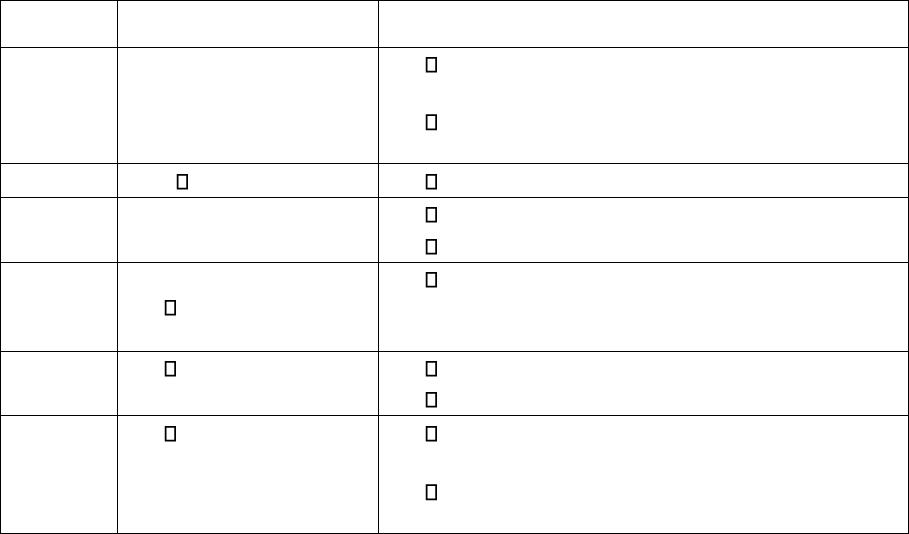
Phase
Tools Used
Justification of Usage
Define
• Critical to quality
(CTQs)
• SIPOC
To determine the metrics that are most
important to customers
To establish the boundaries of the business
process.
Measure
Pareto charts
To prioritize the problem-solving work
Analyze
• 5-Why technique
• Cause and effect
To isolate the causes from the symptoms Identify
the root cause of the problem
diagram
Interrelationship
diagram
Identify the relationship between different
causes
Improve
Quality function
deployment
To help improve the design phase To
gain client satisfaction
Control
Measurement
metrics
To help identify whether the improvements
applied are going in the right direction
To help identify areas that needs additional focus
Table 1: Techniques used in DMAIC
The above Table 1 represents the various techniques employed in this study at different stages of
DMAIC for improving software quality within the organization.
Software development at Fujitsu
The methodology followed at Fujitsu for software quality management of the project is
waterfall. Waterfall model could be a sequential software development process during which
progress is considered flowing increasingly downwards through a listing of phases that has got to
be executed so as to successfully build a computer software (Royce, 1970). These phases are
requirements analysis, system design, implementation, testing and maintenance. Moving to the
following phase can happen only its preceding phase is totally done. Waterfall model is sweet for
little projects where requirements are clearly defined and detailed at the primary stage.
However, waterfall model isn’t suitable for moderate to large projects. the amount of
uncertainty and risk is extremely high. it’s idealized and doesn’t match reality well. Also, the
software is delivered late in project (Munassar & Govardhan, 2010), and as a result the bugs
aren’t found until the top of the software life cycle which results in an increased cost to repair
those faults. Moreover, waterfall isn’t an honest model for complex and object-oriented projects.
Another disadvantage of waterfall model is that it’s not suitable for projects where requirements
change all the time which results in a high risk.
DMAIC methodology for software quality improvement
The development teams emphasized applying the DMAIC framework on the described
project so as to spot the basic causes for the big number of bugs found in production and supply
improvement suggestions to make sure the success of the project. Interviews were applied with
the software development manager and also the quality assurance manager to gather information
about the method followed and also the issues the team has. The collected information is used
throughout the DMAIC phases.
Problem statement
To reduce the bugs through the use of the proper testing channels within the organization.
This would save the team money and time that could be spent on developing new features,
ultimately increasing customer revenue and boosting team morale.
Define Phase
In this phase, the CTQs of the project under study are identified and so the boundaries of
this process were defined through the employment of the SIPOC diagram.
Critical To Quality (CTQs): The foremost important quality attributes that contribute to customer
perceptions for the project under study are the following:
• Security: Security relates to the ability of software to forestall prohibited access and
withstand deliberate attacks intended to understand unauthorized access to guidance, or to make
unauthorized access (Chang et al., 2006). Since the project under study relies on a security
concept, this attribute is that the most key for patrons.
• Reliability: Quyoum et al. (2010) explained that software reliability could be an
important facet of software quality.
• Efficiency: Chang et al. (2006) explains that it relates to how the software optimally uses
system resources. It includes the time behavior due to the power of software to produce
appropriate responses, interval, and throughput rate when performing its function under stated
conditions.
• Maintainability: Which refers to the convenience with which software is usually
understood, modified, and retested. the higher the software is usually maintained, the higher it’s
to isolate defects or their causes, correct defects or their causes, maximize the software useful