Economic Efficiency of African Countries in Relation to Healthcare and Environmental Expenditures
Chanda Kapemba
Managerial Economics EBS5032
Term Project
May 2022
Graduate School of Business
The University of Zambia
Abstract
The most important pillars are public health and the environment, both of which have a significant
economic impact. The economic and environmental climates must be stable and clean, respectively,
in order to improve public health. As a result, the focus of this research is on the economic, public
health, and environmental link. The goal of this study is to see if healthcare and environmental
spending have an impact on economic efficiency and vice versa. As a result, this research examines
the impact of healthcare and environmental expenditures on the economic efficiency of 16 African
countries. The DEA-window and Malmquist Index Productivity, as well as Stochastic Frontier
Analysis, are used to select appropriate input-output variables (SFA). Furthermore, this research
examines the relationship between economic efficiency, healthcare, and environmental spending
using both fixed and variable costs. As a result of the findings, countries are economically efficient.
SFA estimation, on the other hand, finds that countries are inefficient because efficiency change
varies more than technological efficiency change and total factor productivity change on average.
Furthermore, healthcare and environmental spending boost the country’s economic efficiency.
Economic efficiency also has an impact on public health. To improve economic efficiency, this study
argues that governments should better utilize available resources and spend a percentage of
national wealth.
Introduction
Global health and environmental crises cut across national borders. In order to assist countries in
transitioning to a green environment and economy, these concerns require coordinated solutions at
all levels as well as global engagement (Scovronic NN, 2015). Countries are actively engaged with
health and environmental concentrations to solve health and environmental challenges and their
negative effects on the economy. According to a WHO research, healthcare spending focuses on
both green economic development and establishment resilience (WHO, 2019). Changes in economic
activity, economic efficiency, and increases in demand for human health are all directly tied to
healthcare costs (Apergis N, Bhattacharya M, Hadhri W.2020).
Healthcare expenses are significant to consider for analysis with rapid economic development,
investment, industrialization, and urbanization, particularly in African countries. Because economic
activities such as investment, transportation fuel burning, industrial sectors, and energy generation
are the key drivers to rising pollution levels. Particulate matter is emitted into the atmosphere,
causing harm. As a result, anthropogenetic factors can exacerbate the detrimental effects on public
health (Dogan B, Driha OM, Balsalobre Lorente D, Shahzad U 2021). Governments can direct scarce
resources toward improving public health under such circumstances. Furthermore, authorities
should evaluate the balance between distributing healthcare spending to improve people’s health
and maximizing economic efficiency. It is undeniable that improving people’s health can contribute
to economic growth, therefore improving population well-being and efficiency. The link between
economic activities and public health can have both beneficial and bad consequences, such as
increasing healthcare spending over time by utilizing natural resources (Mart Cervantes PA Rueda
L3pez N and Cruz Rambaud S, (2020).
Why did you decide on Africa? To begin with, African countries have emerging and developing
economies with a diverse range of markets, including labour markets, product markets, and so forth.
Second, they contribute significantly to global gross national product (GNP) (Apergis N, Bhattacharya
M, Hadhri W.2020). Third, they are the world’s most populous countries, necessitating a bigger
growth in healthcare and environmental spending. Fourth, the macroeconomic management
systems of African countries differ greatly. Fifth, these countries are responsible for producing
greenhouse gases, which have resulted in the occurrence of numerous ailments, resulting in
increasing healthcare and environmental expenditures (Shahadin MS, Mutalib NSA, Latif MT, Greene
CM, Hassan T. 2018)
The following research problems are addressed in this study: The low public budgets and fiscal
viability of African countries are major concerns. Investing in Africa’s project can present several
difficulties for participants, such as debt and a limited budget for infrastructure development
(Cervantes PAM, L3pez NR, Rambaud SC, 2020). Economically poor countries, on the other hand,
must face similar issues and manage their financial resources effectively. Despite economic activity
like investment, public health and environmental concerns have arisen over time. In such conditions,
expenditures on public health and the environment may be impacted (Cervantes PAM, L3pez NR,
Rambaud SC, 2020). It is critical to determine whether or not countries are economically efficient,
and if so, to what extent. But why aren’t they more efficient? To put it another way, before
beginning the initiatives, are the participating countries well-organized by utilizing their own
resources? As a result, it’s critical to stress the link between health and environmental spending and
economic efficiency.
On the other hand, unlike the bulk of research looking into the healthcare-economic growth nexus,
this one looks at the relationship between economic efficiency, healthcare spending, and
environmental spending for the first time (Westerlund J. 2007). In most circumstances, economic
growth is determined as a precondition in conventional argument, according to the literature. In the
African region, none of the studies have looked at how healthcare and environmental spending
affect the country’s economic efficiency (Westerlund J. 2007).
The goal of this study is to look into the economic efficiency of African countries and the relationship
between public health and the environment. It’s important noting which countries are efficient
under which conditions, as well as how healthcare and environmental spending have a substantial
impact on economic efficiency. Furthermore, efficiency enables countries to achieve the optimal
level of economic objectives or outputs, such as gross domestic product, quality, and quantity
constraints, or the bare minimum of inputs, such as healthcare expenditures, total labor force,
capital formation, fiscal sector rating, and macro-economic management (Westerlund J. 2007).
Furthermore, it appears whether countries well or efficiently utilize their own existing resources
over a year. This also implies that countries must manage their resources which remained properly
initialized to be efficient (Pu X, Zeng M, Luo Y. 2021). In addition, environmental expenditure can
also improve the country’s performance by investing the amount on projects related to low caron-
economy, because a clean environment can provide better health that leads enhance the labor
productivity (Westerlund J. 2007).
This study is motivated by a number of contributions to the present literature, the first of which is
the estimation of a country’s economic efficiency for African countries. Second, look on the link
between economic efficiency and healthcare spending in African nations. Indeed, the findings’
originality offers insight on the link between economic efficiency and healthcare spending. Third, this
research looks at both the linear and non-linear effects of healthcare spending on economic
efficiency. Fourth, we use the non-parametric DEA-Window, which includes a time-varying effect
based on a moving average. Finally, the impact of environmental spending on economic efficiency
and healthcare spending is calculated in this study. Furthermore, it focuses on the combined impact
of healthcare and environmental spending on efficiency, as well as the reverse.
To investigate the efficiency analysis, we use the non-parametric and parametric approaches,
namely data envelopment analysis (DEA) and stochastic frontier analysis (SFA), respectively, to
assess economic efficiency. (Charnes A, Cooper W, Rhodes E. 1978). Furthermore, scales’ Malmquist
index productivity (MPI) decomposes efficiency into technical, technological, pure, scale, and total
factor productivity changes (Caves DW, Swanson JA, 1981). The DEA-window technique is based on
the notion of moving average and produces efficiency for each country over time (Caves DW,
Swanson JA, 1981). As a result, each country’s economic efficiency at a given point in time differs
from its own and that of other countries at other points in time. In this method, difficulties with the
DEA technique’s robustness can be avoided (Charnes A, Cooper W, Rhodes E. 1978).
To build the partial adjustment model in the second step, we used an econometric technique called
dynamic panel data analysis (DPA). In order to ensure robustness, a GMM estimate with one and
two steps (Arellano M, Bond S. 1991) is also required. As GMM estimators are resilient, they don’t
need to know the exact distribution of the disturbances. As a result, the disturbances have no
relationship to the equation’s instrumental variables. Fixed and random effect models are also
suggested to account for country-specific and non-systematic effects (Arellano M, Bond S. 1991).
This is how the paper is organized. The literature review section discusses related research, whereas
the methodology section discusses the used methodologies, study scope, and data sources.
Following that, the section discussion discusses the empirical findings and their interpretation.
Limitations, policy recommendations, future research, and findings are presented at the end of the
report.
Literature Review
Several studies look at economic efficiency, public health, and the environment from a variety of
perspectives. With considerable study contribution to the current literature, we describe prior
efforts connected to economic efficiency and spending concern for public health and the
environment.
Effects of Economic Efficiency
Previous studies measured economic efficiency and evaluated the performance of countries in
various dimensions, and this literature strand is about economic efficiency. Mustafa et al (2021),
DEA-CCR and DEA-BCC methods were used to assess technical efficiency. As a result of the findings,
the CCR model was proven to be effective in several nations. On the other hand, the BBC model
found South Africa and Kenya to be efficient, improving their efficiency score by 33%. (Mustafa et al.
Mustafa FS, Khan RU, Mustafa T, 2021). Surprisingly, countries outperformed by increasing outputs
with the same amount of inputs, a method known as increasing return to scale. The macroeconomic
variables, which are the most essential in determining economic efficiency, were not included in the
study. Following that, De Mendonca and Nascimento (2020) used the frontier approach to quantify
efficiency using forty-two countries. The findings imply that macroeconomic variables are critical for
increasing efficiency, and that macroeconomic stability leads to increased efficiency. Countries that
have higher levels of development, lower inflation, and no financial crises perform better.
Fernandes et al. (2021), on the other hand, used mathematical functions to measure economic
efficiency. Their findings suggest that economic growth is the most important macroeconomic
subject that might lead to increased economic efficiency and improved country performance.
Countries were also shown to be effective in allocating resources from economic growth to welfare
efficiency. Economic efficiency, particularly energy efficiency, is also discussed by Zhong et al. (2020).
The efficiency analysis was divided into pure technical and scale efficiency using the Slack-Based
Model. The findings reveal that economic efficiency fluctuated throughout time, with some units or
countries outperforming others, implying better resource usage. The impact of technological
advancement on economic efficiency, on the other hand, was determined to be negligible. Yuan et
al. (2020) also looked at African countries’ economic and environmental efficiency. They claim that
by employing non-parametric convex and non-convex production methods, some countries perform
well economically and environmentally. Some African countries, however, continue to underperform
in terms of either economic or environmental efficiency (Hussain Z, Miao C, Zhang W, Khan MK, Xia Z
2021).
Healthcare Expenditures-Economic Efficiency Nexus
The link between healthcare spending and economic efficiency has been well-documented in
previous studies. Economic output has a major impact on healthcare costs, according to Yang et al.
(2021). In the countries with the greatest healthcare costs, economic progress boosts healthcare
spending. The countries with the highest healthcare spending have the financial means to invest in
public health in order to improve their economic standing. Similarly, Aum et al. (2021) found that
health-related activities improve economic output; less fear of COVID-19 infection, early lockdown
lifting, and working from home due to infection all had a large influence on economic output in
industrialized countries. Economic output in the G7 countries, according to Pu et al. (2021), has a
considerable impact on health expenses. Their findings reveal that health expenditures rose during
periods of economic prosperity (such as before the 2008 financial crisis), but fell following the crisis.
Chen et al. (2021) looked at the impact of healthcare spending on GDP (efficiency). They argue on
how much a country should spend on healthcare vs other expenses. Furthermore, the amount and
composition of health expenditures that maximize welfare (efficient) are dependent on efficiency
principles at three levels, which are frequently confounded in the debate (Chen et al. 2021).
Welfare-maximizing aggregate health spending assessment macro-efficiency scores. The findings
imply that increasing healthcare spending can enhance GDP efficiency. Poor countries, on the other
hand, continue to struggle with healthcare spending. Chen and Chen (2021) looked at how
healthcare spending affects a country’s performance. The study concludes that healthcare spending
rises as a result of better economic efficiency or a rise in GDP. Additionally, healthcare spending has
a favorable impact on economic efficiency (Chen et al. 2021).
Environmental Expenditures-Economic Efficiency Nexus
Can and Gozgor (2017), Mehmood (2021), and Zheng et al. (2017) have all discussed the dynamic
relationship between economic efficiency and environmental expenses (2021). Their findings
suggest that increased economic efficiency aids in the reduction of negative environmental effects.
Dogan et al. (2020) argue that economic efficiency in African countries greatly reduces
environmental degradation. Romero and Gramkow (2021) also discovered that economic
considerations have a substantial impact on environmental repercussions. To put it another way, it
contributes to the reduction of greenhouse gas emissions. Then, according to Boleti et al. (2021),
economic complexity aids in improving environmental quality by lowering carbon emissions.
According to Ahmad et al(2021) .’s research, economic efficiency lowers environmental quality in
middle-income countries while raising it in high-income countries. After that, Neagu and Teodoru
(2019) looked into the relationship between economic output and environmental protection in
European Union economies. Their findings show that a lower level of economic output (efficiency)
has a bigger influence on national environmental expenditures. Shahzad et al. (2021) also
documented the detrimental consequences of economic complexity on environmental
deterioration. Other research, such as Chu and Le (2021), show an inverted u-shaped link between
economic production and environmental spending. However, Adedoyin et al. (2021) contend that
there is no evidence of a strong link between economic output and environmental degradation,
which leads to increased environmental expenditures. Yuan et al. (2020), on the other hand, focused
on both environmental and economic efficiency study. Their findings show that a lesser number of
environmental expenditures degrades economic efficiency since a larger amount is necessary to
address environmental challenges such as air pollution. As a result, economic efficiency or
production may improve through many economic activities.
Most studies have been undertaken in a narrow sense, such as carbon dioxide emissions,
transportation, non-economic issues, and so on, according to the aforementioned literature. Thus,
empirical data support macroeconomic contributions to the country’s economic development
(Bruno SS, D’Aleo V, Arbolino R, Carlucci F, Barilla D, Ioppolo G, 2020). Our models, on the other
hand, add to the body of knowledge; first, we use non-parametric and parametric methodologies to
analyse the country’s economic efficiency. Second, we use econometric methodologies to calculate
the link between economic efficiency and healthcare spending. Furthermore, in order to be efficient,
our model includes macroeconomic variables, and then uses investment in healthcare expenditure
as an external variable (Kyriacou AP, Muinelo-Gallo L, Roca-Sagalés O, 2019). Third, the impact of
environmental spending on economic efficiency and healthcare spending is investigated in this
study. It also calculates the non-linear impact of healthcare and environmental spending on
economic efficiency. Our mode (Kyriacou AP, Muinelo-Gallo L, Roca-Sagalés O, 2019) spans the
entire continent of Africa.
Methodology
Study Scope and Data Source
The focus of this research is on 16 African nations. The countries of the participants are diversified in
terms of geography and economy, and thus have more potential to expand transportation
infrastructure. The countries are also divided into three groups: East, South and Central Africa. As a
result, data on appropriate versions (inputs/outputs) has been gathered from a variety of
international institutions, including the World Bank and the OECD. We use data spanning 25 years
from 1996 to 2021 to achieve our goals (Yang G, Huang X, Huang J, Chen H, 2020).
We also use four inputs and two outputs, namely, the total labor force (quantity in million), gross
capital formation (at current prices, million US$), fiscal sector rating (low = 1, high = 6), macro-
management rating (low = 1, high = 6), gross domestic product (GDP) in million US$ at current prices,
and the human development index. In addition, we include external variables like public-private
partnership transportation investment in millions of dollars. The variables, measure, and source are
all listed in Table 1 (Chen et al. 2021).
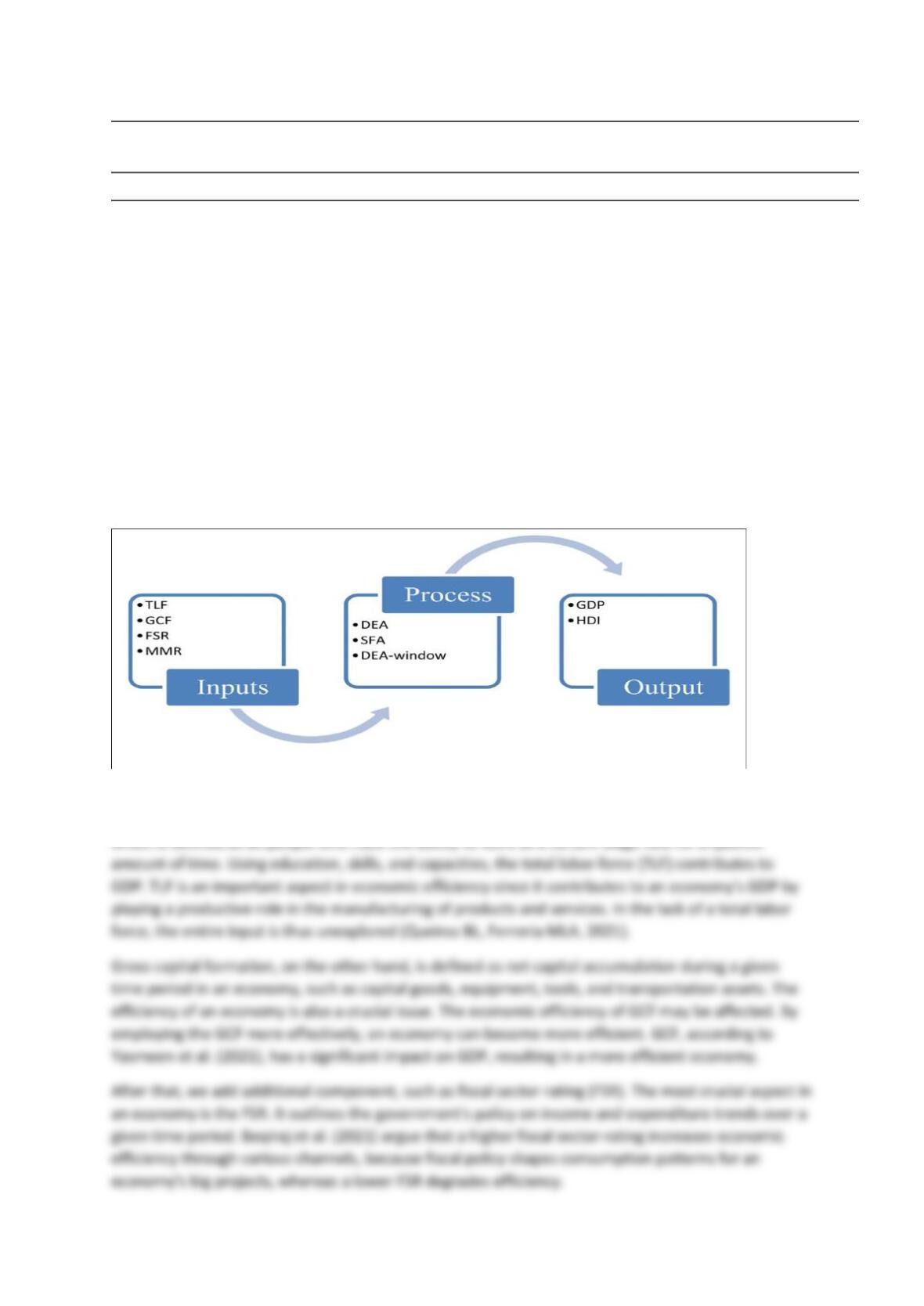
TABLE 1 | Variable, measure, and source.
Variable
Measure
Observer
Code
Source
Total labour force
Number (Million)
Input
TLF
WDI
Gross capital formation
Current prices (million US$)
Input
GCF
WDI
Fiscal sector rating
Low =1, High = 6
Input
FSR
WDI
Macro-management rating
Low =1 High =6
Input
MMR
WDI
Gross domestic product
At current prices (million US$)
Output
GDP
WDI
Human development index
Score 0 to 1.0
Output
HDI
WDI
Healthcare expenditures
Percentage of GDP
Independent
HCX
WDI
Environmental expenditures
Percentage of GDP
Independent
EXP
WDI
Economic efficiency
Score 0 to 1
Dependent
EFF
Constructed
Theoretical Framework
Figure 1 depicts the present model’s theoretical framework. Labor skills, capital, and financial
management all contribute to the transformation of economic resources.
We shed light on inputs in light of the occurrence of transformation, such as the total labor force,