Topic Four: Monopoly
Q: How does a monopoly choose price and quantity to maximize it profit
Market Structures
Measures of market structure
Why monopoly arises?
How is it different from competitive market?
Profit maximizing monopoly
Production and pricing decisions
Their relations with elasticities
Deadweight loss under monopoly
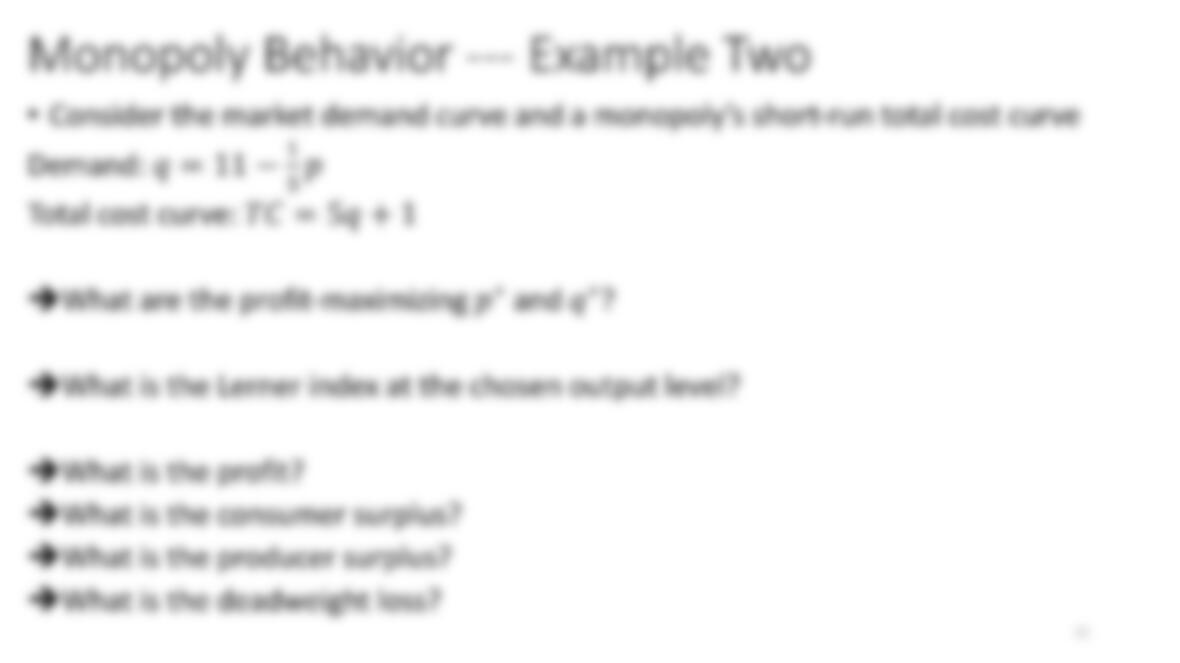
Examples
1

Market Structure
There are four types of market structure:
1. Perfect competition
2. Monopoly
3. Oligopoly
4. Monopolistic competition
2
Some measures of market structure
Four-firm concentration ratio (CR4)
The share of industry sales accounted for by the four largest firms
Herfindahl-Hirschman Index (HHI)
The sum of the squared market shares of each firm in the industry
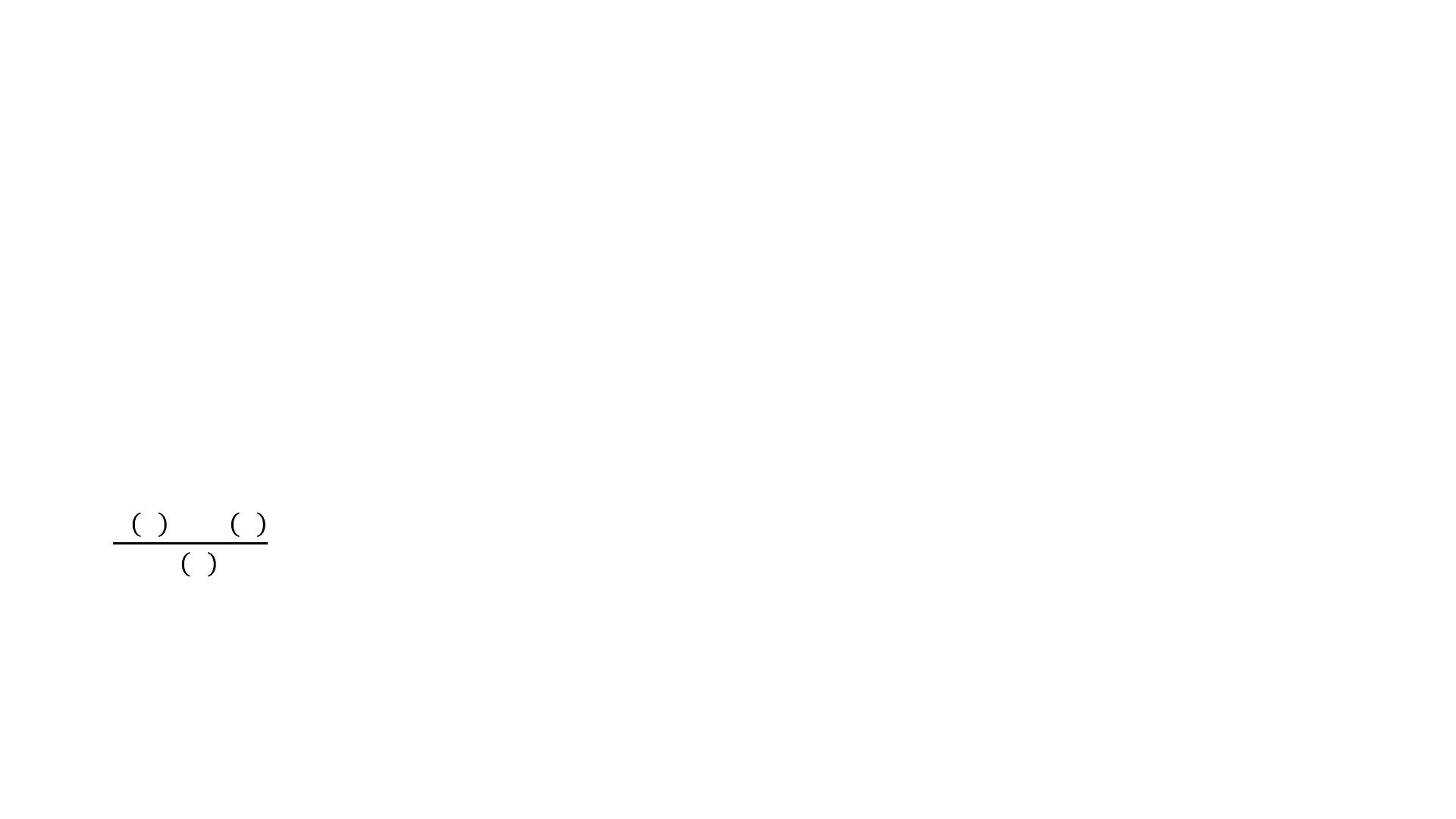
Lerner’s Index (we will discuss it next page)
𝑝 𝑞 −𝑀𝐶 𝑞
𝑝 𝑞
3
Monopoly — Market Power
Market Power means the ability to set price above marginal costs and earn a
positive profit.
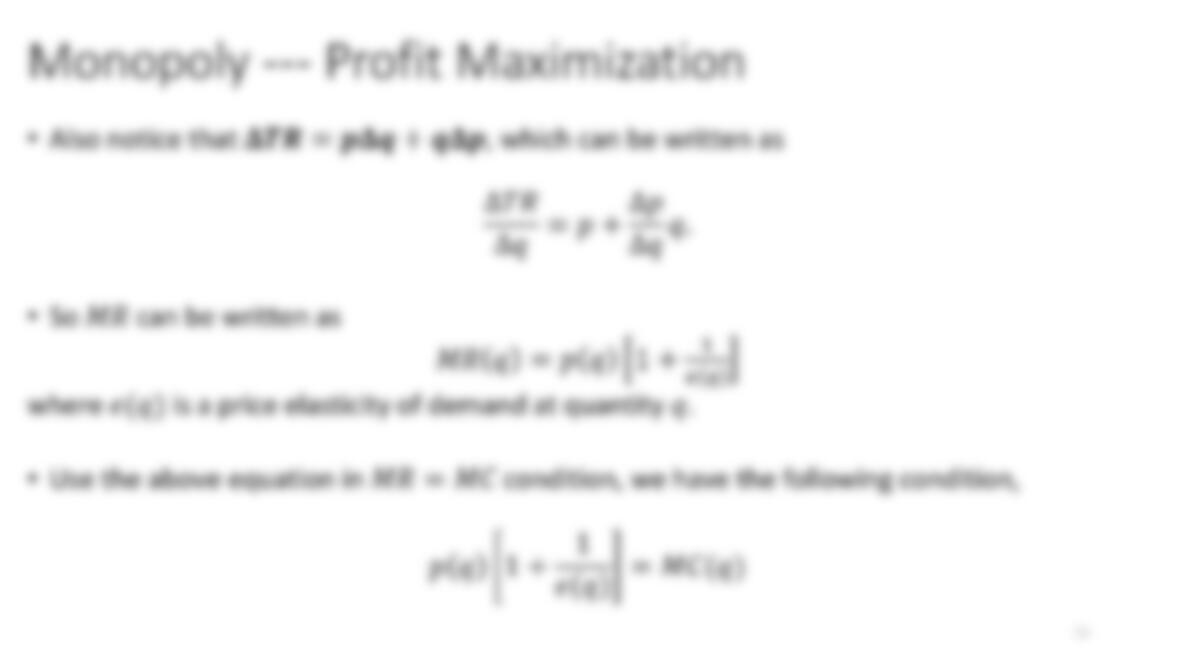
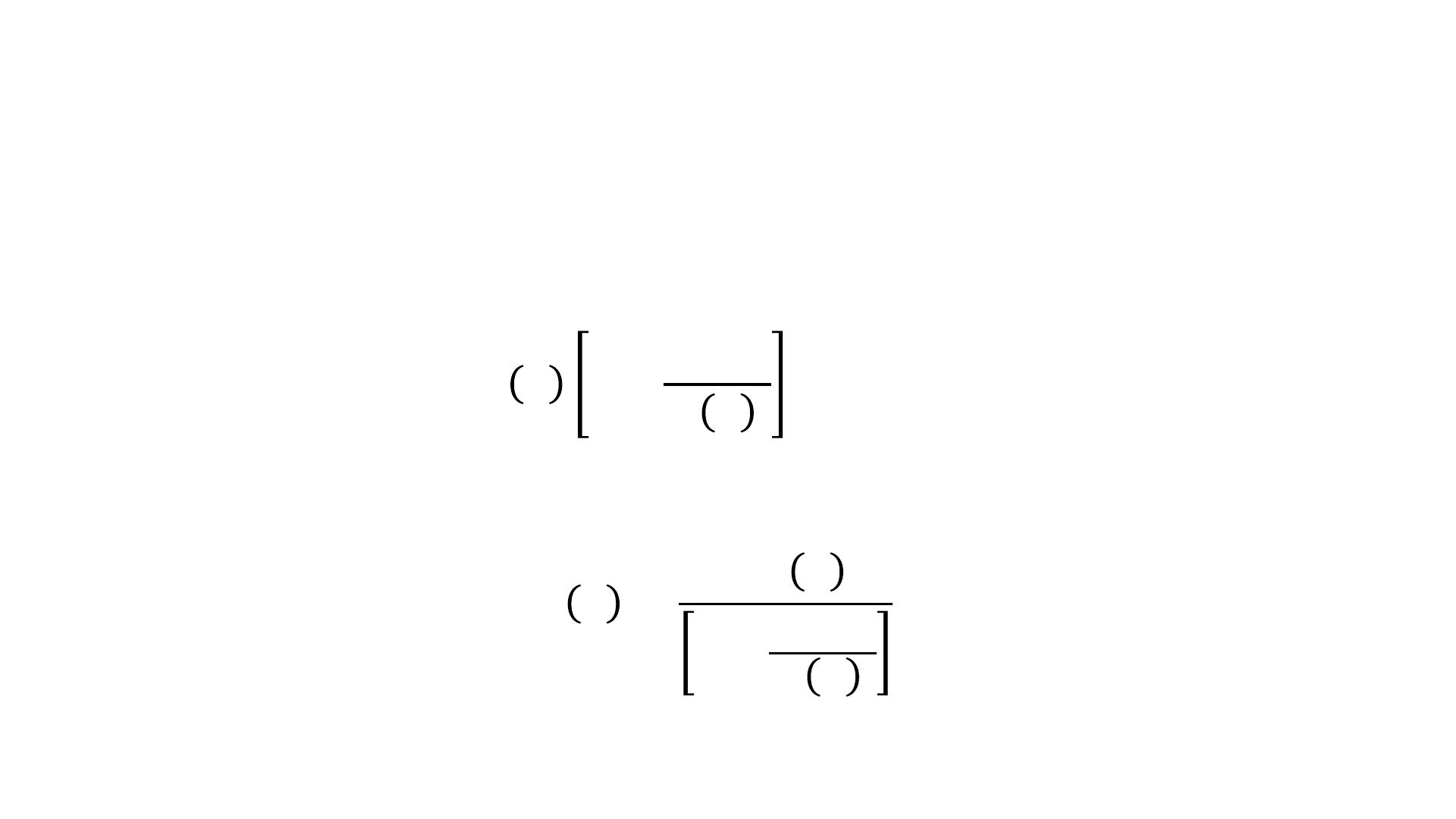
Let us refer to the optimal condition:
𝑝 𝑞 1 − 1
|𝜖 𝑞 | =𝑀𝐶(𝑞)
which can be rewritten as
𝑝 𝑞 = 𝑀𝐶 𝑞
1 − 1
|𝜖 𝑞 |
.
4
Monopoly — Lerner Index
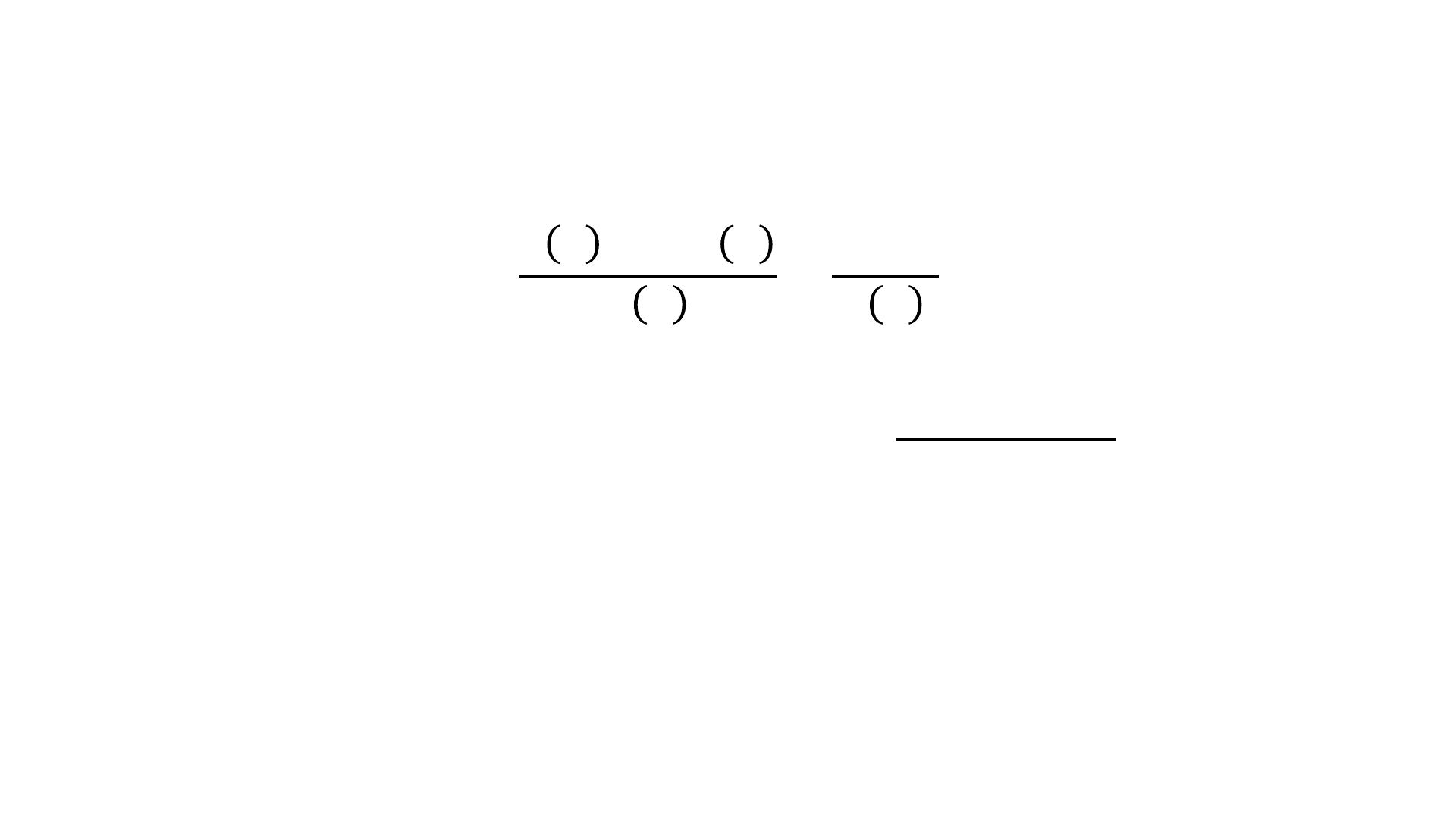
We can also write the optimal condition to be
𝑝 𝑞 − 𝑀𝐶 𝑞
𝑝 𝑞 =1
|𝜖 𝑞 |
which is called price-cost margin and is also called Lerner Index of market power.
The Lerner Index ranges from 0 to 1 for a profit-maximizing firm.
The degree to which the monopoly raises its price above its marginal cost
depends on the shape of the demand curve at the profit-maximizing quantity
5

Monopoly — How monopolies arise?
Monopoly
A firm that is the sole seller of a product without close substitutes
The fundamental cause of monopoly is barriers to entry. Barriers to entry
have Four main sources:
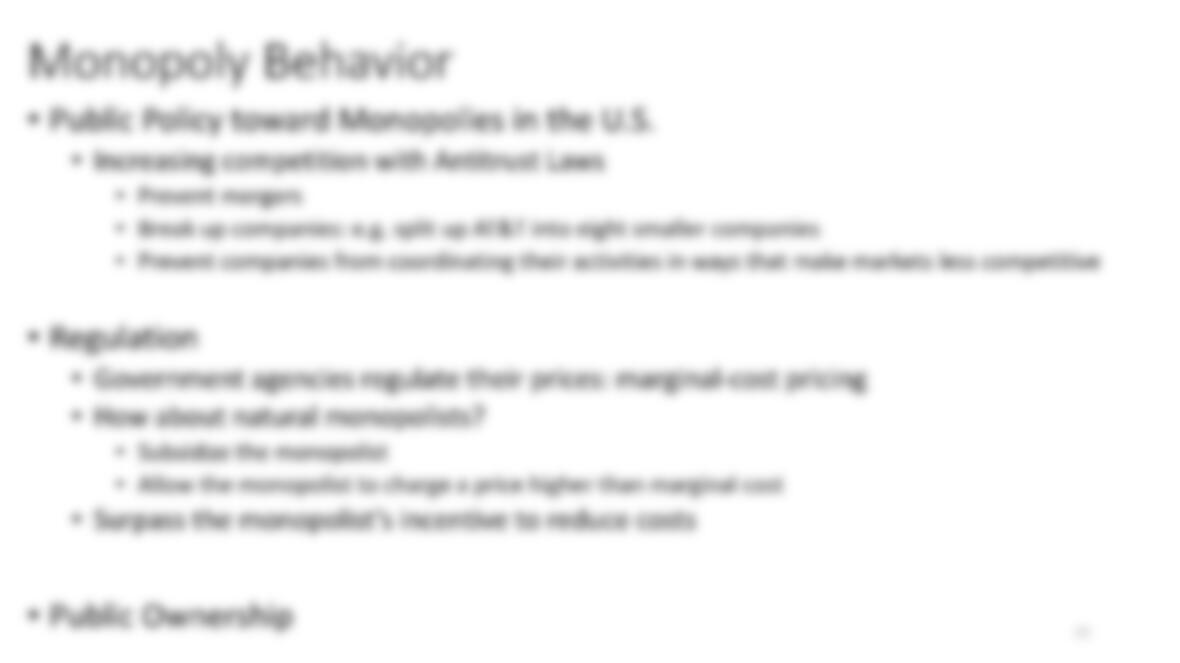
The production process — Natural Monopoly
Switching costs and network goods
Monopoly resources
Government regulation
6
Monopoly — why monopolies arise?
Natural Monopoly
One firm can produce the total output of the market at lower cost than several firms
could, i.e. suppose that the cost for any firm to produce 𝑞is 𝐶(𝑞), the condition for a