ECON 2106 (Online) Anna White
Dr. Patton
Paper 1
Gas/Oil Price Fluctuations Affect on the Economy
Oil prices and the supply level relative to demand mainly affect retail
gasoline prices. Even when crude oil prices are stable, gas prices fluctuate because
of seasonal demand and local gas station competition. Gas prices can also change
rapidly if there is a disturbance in the supply of crude oil of if any other problems
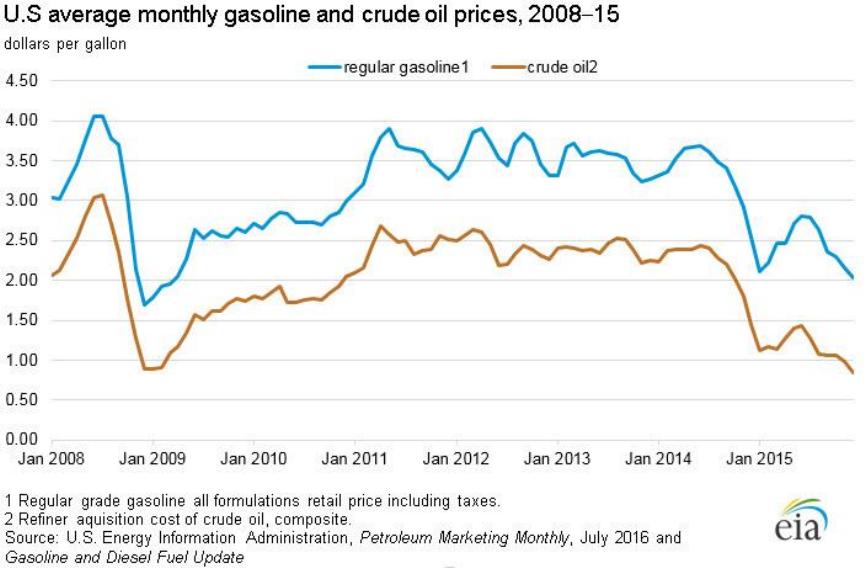
with pipelines arise. This chart shows the U.S. average monthly corresponding
prices between crude oil and gasoline.
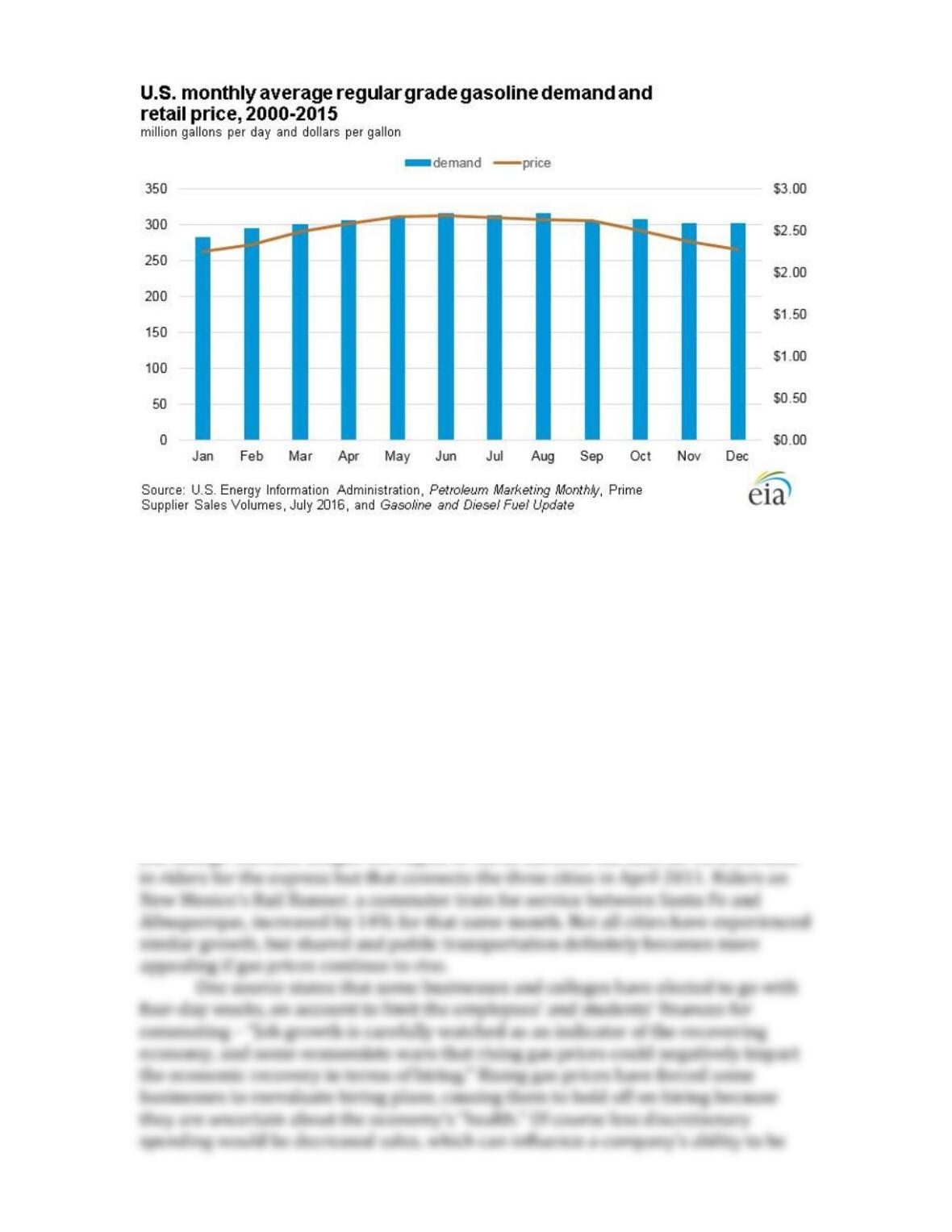
The prices for crude oil are determined by worldwide supply and demand, and the
chart below shows the U.S. monthly average for regular grade gasoline demand and
retail price, 2000-2015.
No surprise, oil crisis tend to lead to higher costs.
So how do changing gas prices affect the economy? A very simple side effect
of high gas prices is that discretionary spending (government spending
implemented through an appropriations bill) goes down. Higher gas prices also
mean people will drive less. According to Mastercard advisors, online shopping in
the United States grew by its fastest rate in close to four years, and according to
Marin Software, searches for online shopping drastically increase along with gas
prices.
The auto industry responds to rising gasoline pries and the need to reduce
dependence on oil by making smaller, more efficient cars, hybrids, and most
recently, electric cars. Electric cars can travel up to 100 miles in between charges,
and because consumers have supported this shift, sales in the U.S. have grown since
2011. Higher gas prices are resulting in noticeable increases in public
transportation as well. The American Public Transportation Association says that