2. Problems and Applications Q2
You are trying to decide whether to take a vacation. Most of the costs of the vacation
(airfare, hotel, and forgone wages) are measured in dollars, but the benefits of the
vacation are psychological. Suppose you had to work for one month in order to save
enough for the vacation.
Which of the following is true if you decide to take the vacation?
The benefits of going on the vacation exceed the cost of working for a month to
pay for the vacation.
You are not being rational because it is impossible to compare the benefits of going
on the vacation to the costs.
The opportunity cost of going on the vacation is the forgone wages you could have
earned.
3. Problems and Applications Q3

5. Problems and Applications Q5
Because the $5 million your company invested in a new product has already been spent, it
should not be considered in the decision of whether to finish development, according to the
principle of thinking at the margin. In this case, the additional cost to finish development is
$4 million, whereas the expected additional benefit of the new product is $2 million in profit
(assuming that the company receives zero profit if the product remains unfinished).
Therefore, your company should not go ahead and finish the product. In fact, your
company should be willing to pay up to $2 million to finish development, since that is the
marginal benefit from doing so.
6. Problems and Applications Q6
7. Problems and Applications Q7

8. Problems and Applications Q8
9. Problems and Applications Q9
Which of the following is the reason behind the slow growth in U.S. incomes during
the 1970s and 1980s?
Labor unions were relatively weak.
Minimum-wage laws were not in place to protect the livelihoods of workers.
The United States experienced an increase in competition from abroad.
There was a slowdown in productivity growth.
Productivity is the primary determinant of living standards. The slow growth in U.S. incomes

during the 1970s and 1980s was mainly due to flagging productivity growth in the United
States during that period. See Section: Principle 8: A Country’s Standard of Living Depends
on Its Ability to Produce Goods and Services.
Which of the following statements support the notion that your standard of living
is different from that of your parents or grandparents when they were your age?
Check all that apply.
Many families have two or more cars, whereas having any motor vehicle was a
luxury in the early 20th century.
In the United States, the average person‘s life expectancy was roughly 79 years in
2018, but only 70 years in 1960.
A cutting-edge television comes with 4K, HD, and SmartTV technology, while your
grandparents likely enjoyed at most a black-and-white television in their early years.
Average income in the United States has roughly doubled every 35 years. Therefore, you
are likely to have a better standard of living than your parents and an even better standard
of living than your grandparents. This includes having access to safer cars, better technology,
and improved health care. See Section: Principle 8: A Country’s Standard of Living Depends
on Its Ability to Produce Goods and Services.
10. Problems and Applications Q10
11. Problems and Applications Q11
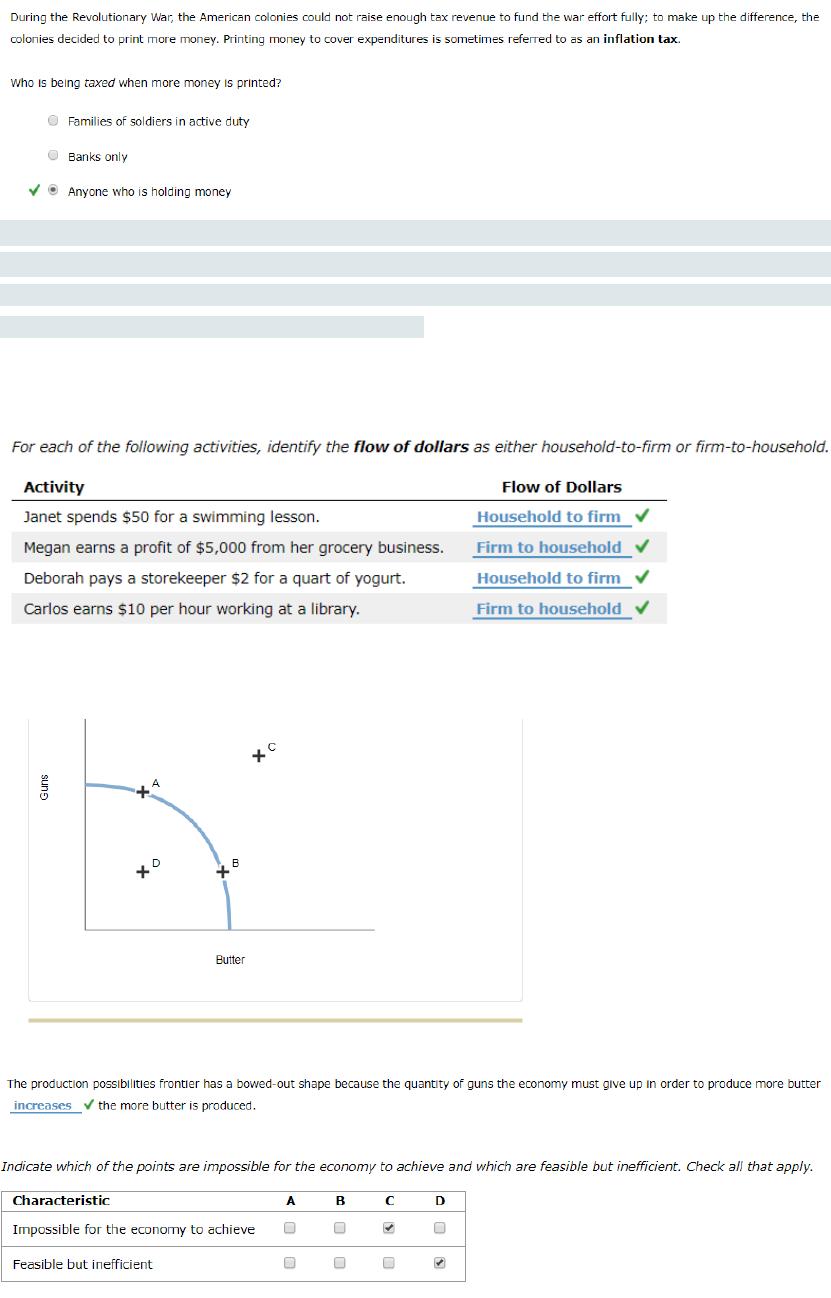
When the government prints money, it imposes a tax on anyone who is holding money. This
is because printing money decreases the value of money by causing inflation, or an
increase in the overall level of prices in the economy. See Section: Principle 9: Prices Rise
When the Government Prints Too Much Money.
12. Problems and Applications Q1
13. Problems and Applications Q2
14. Problems and Applications Q3
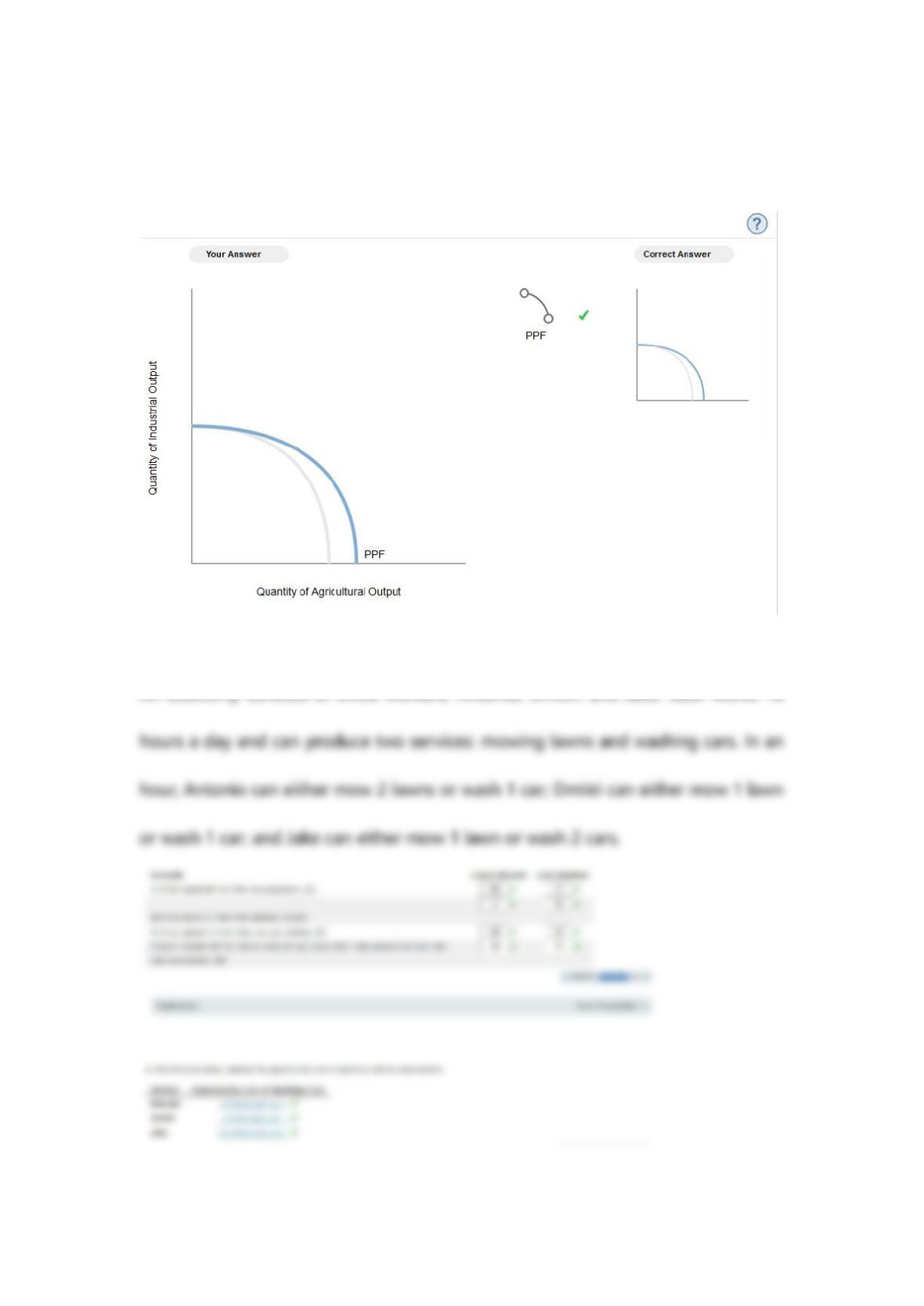
Show what happens to the production possibilities frontier (PPF) if the society
develops a new fertilizer that significantly increases agricultural production.
15. Problems and Applications Q4