CECN 603 Session 4
Topics: The Environment
Readings: GA Ch 7, 8, 9; PB Ch 16
Externalities:
• An externality is a cost or benefit that arises from production and falls on someone other
than the producer, or a cost or benefit that arises from consumption and falls on someone
other than the consumer.
• A negative externality imposes a cost and a positive externality creates a benefit.
• The four types of externality are
Negative production externalities
Positive production externalities
Negative consumption externalities
Positive consumption externalities
Negative Production Externalities
• Some examples are noise from aircraft and trucks, polluted rivers and lakes, the destruction
of animal habitat, and air pollution in major cities from auto exhaust.
Positive Production Externalities
• Positive production externalities are less common that negative externalities.
• Two examples arise in honey and fruit production.
• By locating honeybees next to a fruit orchard, fruit production gets an external benefit
from the bees, which pollinate the fruit orchards and boost fruit output; and honey
production gets an external benefit from the orchards.
Negative Consumption Externalities
• Negative consumption externalities are a common part of everyday life.
• Smoking in a confined space poses a health risk to others; noisy parties or loud car stereos
disturb others.
Positive Consumption Externalities
• Positive consumption externalities are also common.
• When you get a flu vaccination, everyone you come into contact with benefits.
• When the owner of an historic building restores it, everyone who sees the building gets
pleasure.
Page 1 of 9
Negative Externality: Pollution
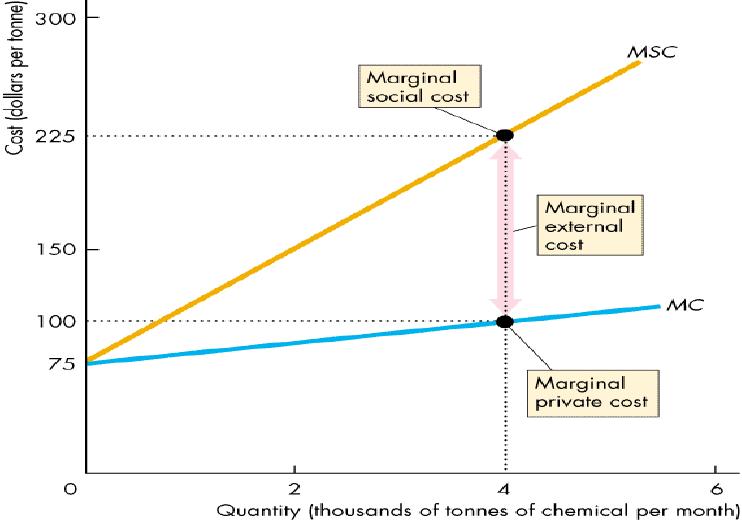
Private Cost and Social Cost of Pollution
• A private cost of production is a cost that is borne by the producer.
• Marginal private cost (MC) is the private cost of producing one more unit of a good or
service.
• An external cost of production is a cost that is not borne by the producer but is borne by
others.
• Marginal external cost is the cost of producing one more unit of a good or service that falls
on people other than the producer.
• Marginal social cost (MSC) is the marginal cost incurred by the entire society—by the
producer and by everyone else on whom the cost falls.
• Marginal social cost is the sum of marginal private cost and marginal external cost.
• MSC = MC + Marginal external cost
• We express costs in dollars but remember that the dollars represent the value of a forgone
opportunity.
• Marginal private cost, marginal external cost, and marginal social cost increase with
output.
External Cost and Output
Page 2 of 9
Production and Pollution: How Much?
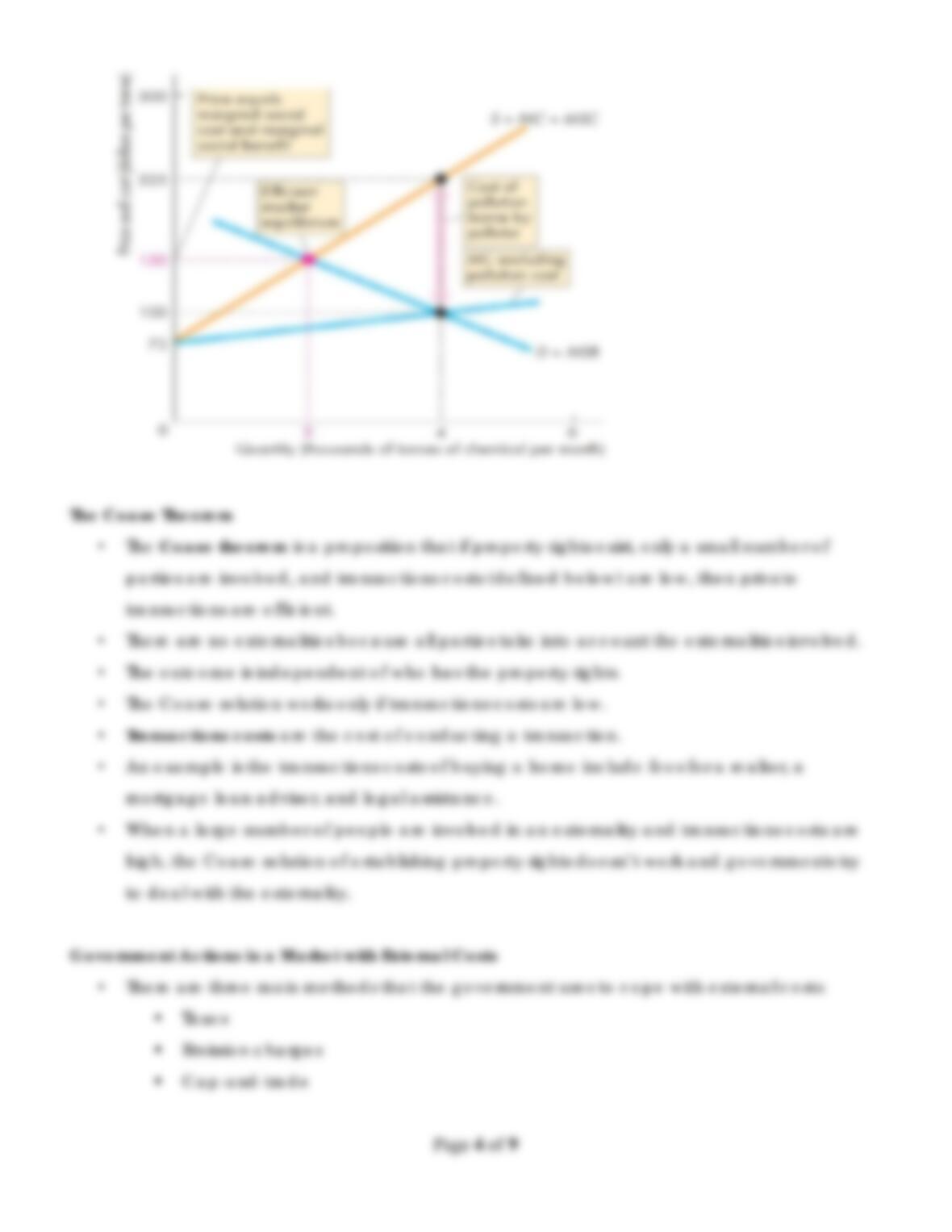
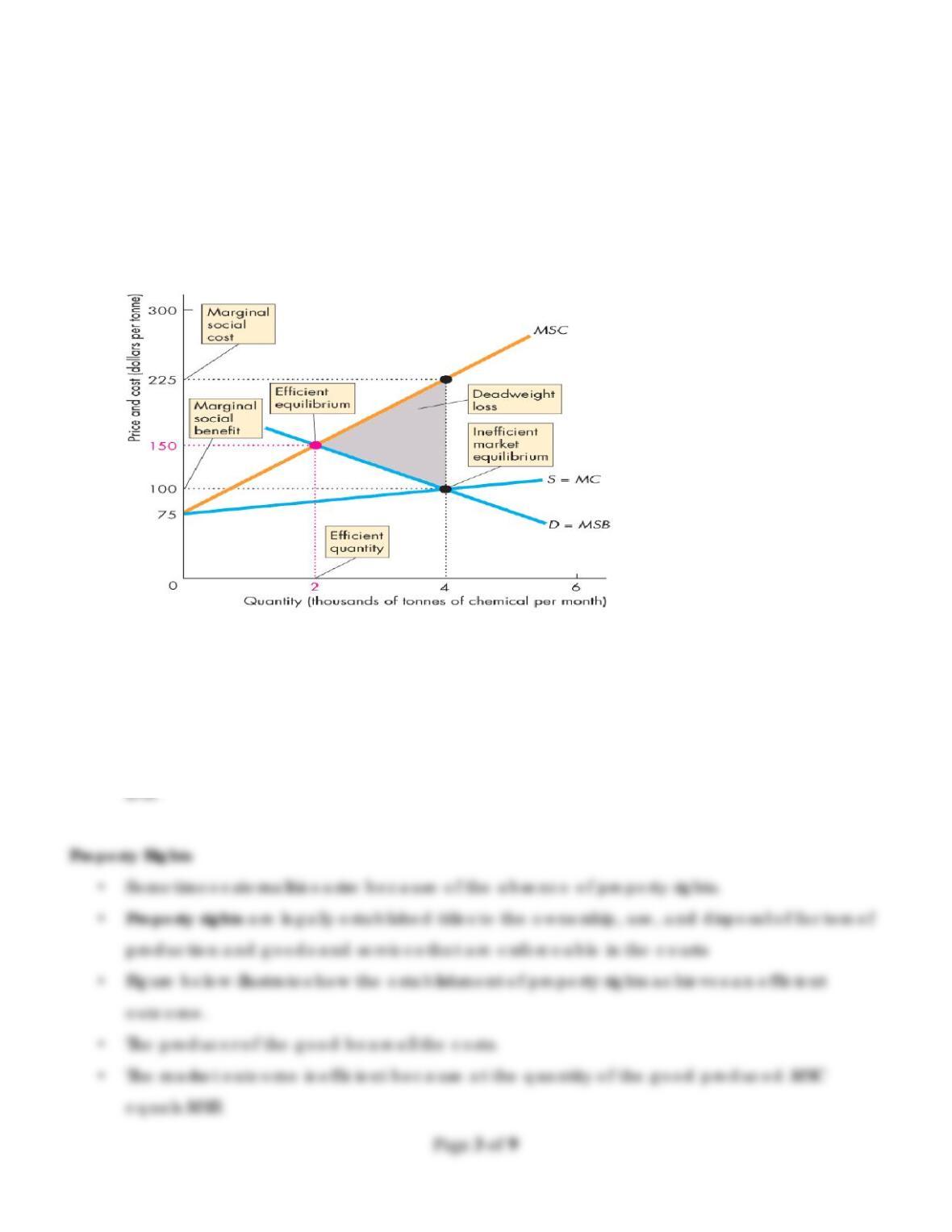
• In the market for a good with an externality that is unregulated, the amount of pollution
created depends on the equilibrium quantity of the good produced.
• Figure below shows the equilibrium in an unregulated market with an external cost.
• The quantity of the good produced is where marginal private cost (MC) equals marginal
social benefit (MSB).
• At the market equilibrium, MSB is less than MSC, so the market produces an inefficient
quantity of the good.
• At the efficient quantity of the good, MSC = MSB.
• With no regulation, the market produces too much of the good and creates a deadweight