1
UNIVERSITI UTARA MALAYSIA
SCHOOL OF ECONOMICS, FINANCE AND BANKING
BWRR3133 RISK ANALYSIS & DECISION MAKING (A161)
RISK ANALYSIS PORTFOLIO
“……GROCERY SHOP v–MAll….”
SUBMITTED TO:
Dr. Diara Binti Md Jadi
SUBMITTED BY:
GROUP 4
(GROUP A)
NAMES
MATRIC. No.
KOH SOON WEI
232684
NISHAA A/P S SARAVANA KUMAR
231593
NUR AISYA BINTI KHALIL
MALANI D/O GARNISANMURTY
234031
235041
SUN YUE
228727

2
TABLE 1
Risk Identified /
Justification
Risk Category?
Type Of
Exposure
Analysis
Likelihood?
Why?
Analysis
Impact?
Why?
Tool /
Technique
used to
identify risk
1. Theft
Known Risk
Physical Asset
Exposure
Low
Frequency
Low
severity
Brainstorming
2.Flood
Predictable
Risk
Physical Asset
Exposure
Low
Frequency
High
severity
Brainstorming
3. Dishonesty of
employee
Known risk
Low frequency
Low
severity
Interview
4. Property
damage
Unpredictable
risk
Liability
Exposure
Low frequency
High
severity
Checklist
analysis
5. Failure to
meet customer
needs
Known Risk
Strategic Risk
Exposure
High
frequency
Low
severity
Interview
6. Fire
Unpredictable
Risk
Physical Asset
Exposure
Low frequency
High
severity
Fire risk
assessment
7.Staff get
injured in
working place
Unpredictable
risk
Human assets
loss exposure
Low
Frequency
Low
Severity
Brainstorming
8.Power failure
Unpredictable
Liability
exposure
Low
Frequency
Low
Severity
Checklist
analysis
9. Risk of selling
expired products
Known Risk
Liability
Exposure
Low
Frequency
High
Severity
Checklist
10. Risk of
falling objects.
Unpredictable
Risk
Liability
Exposure
Low
Frequency
High
Severity
Checklist
3
RISK IDENTIFICATION: GROCERY SHOP
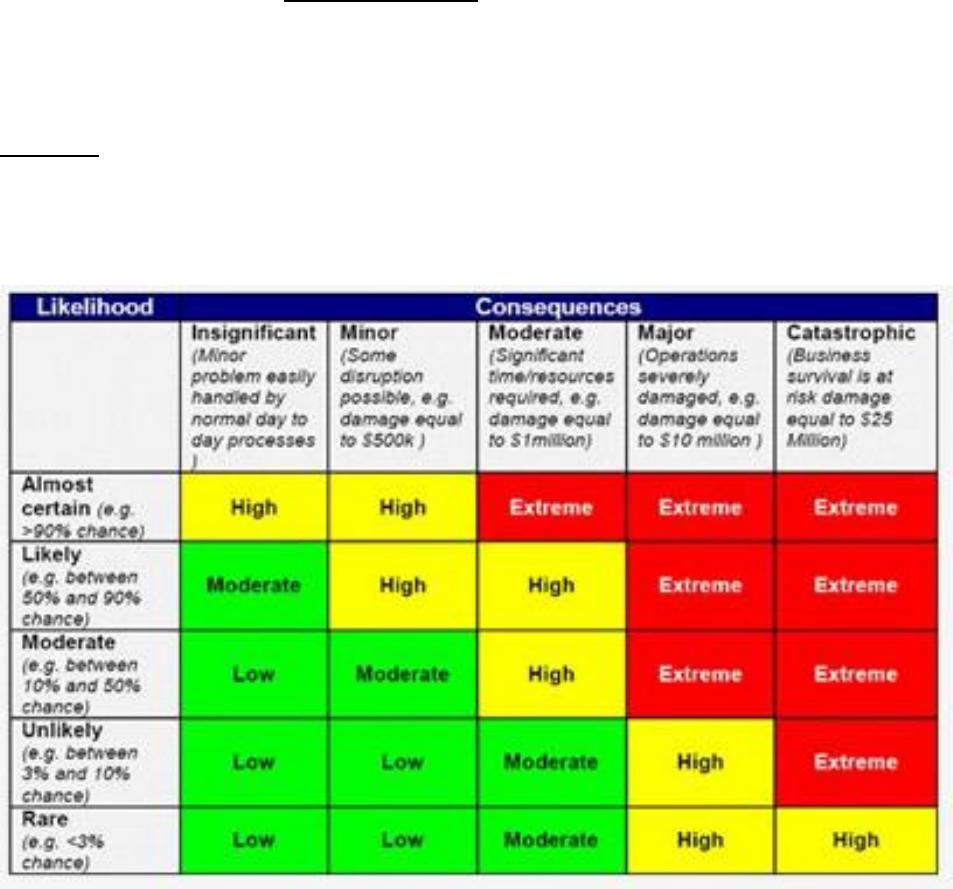
TABLE 2
5
6
1
2
3
4
9
10
7
8
EXPLANATION OF THE RISK
RISK 1: THEFT
1. Why does it becomes a risk to the business?
Theft can easily happen in the premise because the shop is always crowded with students and
also outside people. Theft is also a common risk to any business premises.
2. Why LF, LS?
Low Frequency: It is less likely to occur. The premise is monitored by CCTV.
Low Severity: This is because people can only steal cheaper items and not the heavy and