DRUG RELATED CRIMES
While there has been a steady increase in incarcerations in the United states since the 1920s,
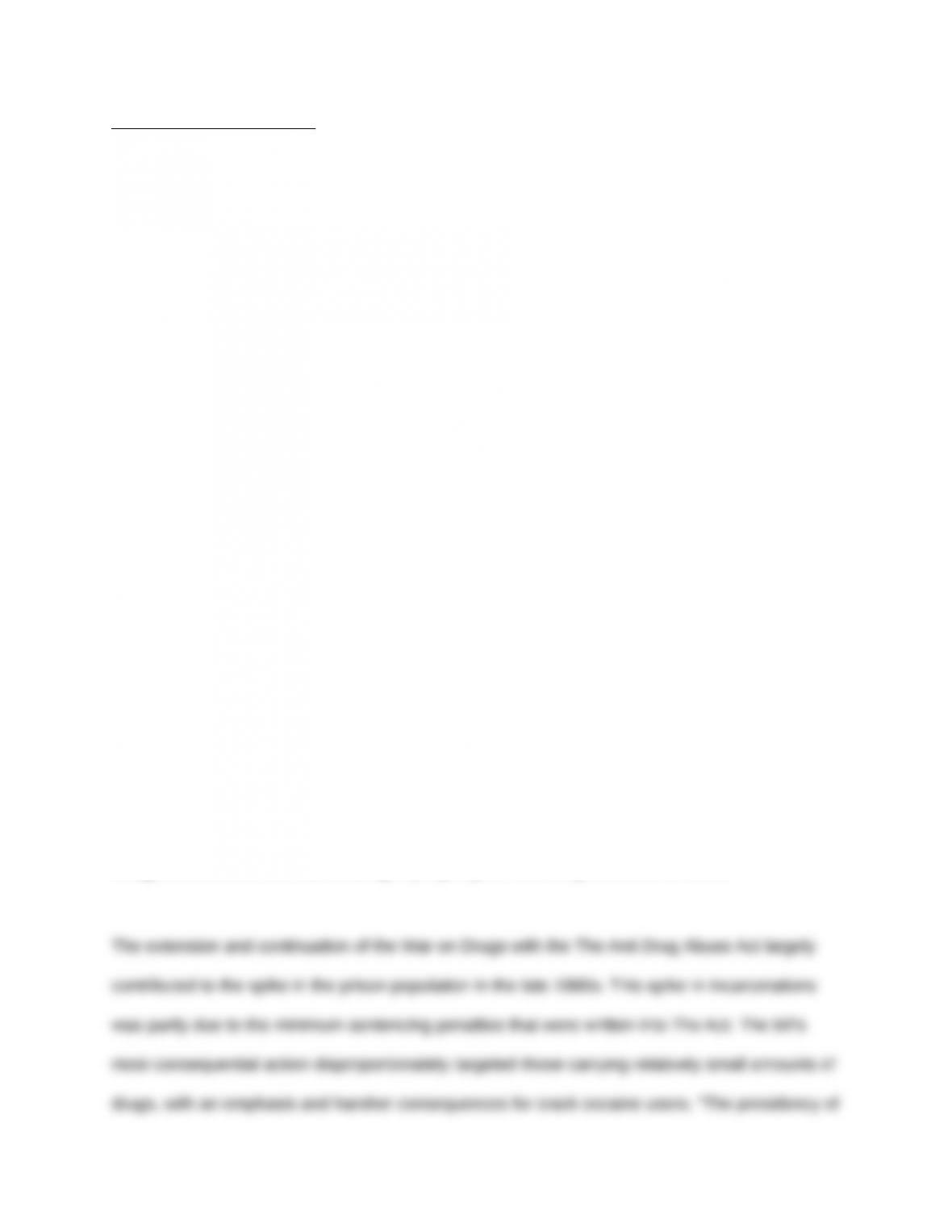
the largest increase was seen between 1986 and 2001.(See appendix A for a graph illustrating
the growth of the prison population) One of the factors that caused this exponential growth of
individuals behind bars is the Anti Drug Abuse Act in 1986 (The Act). The bill was part of the War
on Drugs campaign which began with president Richard Nixon.
Beginning in the early 1960s, the use of marijuana and crack cocaine a rose at an exponential
rate. Of these two drugs, crack cocaine, which is a cheaper form of cocaine, became
increasingly popular . “In 1969, In a special message to Congress, President Richard Nixon
identified drug abuse as “a serious national threat.” Citing a dramatic jump in drug-related
juvenile arrests and street crime between 1960 and 1967, Nixon called for a national anti-drug
policy at the state and federal level.”(War on Drugs) Soon after, Nixon created the Drug
Enforcement Administration (DEA) which assisted in ending some the activities of the drug
cartels that emerged at that time. Even with the creation of the DEA, “by the end of 1986, crack
cocaine was available in twenty-eight states and the District of Columbia. By 1987, crack was
reported to be available in all but four states in the United States.” (The History of Crack
Cocaine ) This widespread use of crack cocaine in the late 1980s prompted president Ronald
Reagan to continue the War on Drugs by signing the Anti Drug Abuse Act of 1986.