Smart decisions. Lasting value.
Audit / Tax / Advisory www.crowe.mx
Doing Business in
Mexico 2019

www.crowe.mx Content 2Content
Prepared by Gossler, S.C. January 2019.
Audit / Tax / Advisory Content www.crowe.mx
The purpose of this
handbook is to
enable a better
understanding of the
legal, financial and
other aspects
involved when
establishing a
company in Mexico.
Content

www.crowe.mx Content 3Content
Preface
We will be glad to meet with
businesspersons who visit Mexico and to
provide them with any consulting or
advisement requested. We encourage you
to address any questions you may have
directly with Mr. Héctor García, our
international liaison partner at our
Monterrey City office, or the corresponding
partner located in the city in which you
intend to establish a business.
Offices around the globe.
Partners in Mexico.
Offices in Mexico.
The purpose of this handbook is to provide
the necessary background information to
those contemplating doing business in
Mexico. In it we include the legal
framework, the financial and employment
regulations, which we consider to be of
particular interest to businesspersons.
However, we did not intend to go in depth
with any of these topics. The text reflects
the laws implemented during 2018.
Our recommendation for anyone intending
on doing business in Mexico is for them to
seek professional assistance before
undertaking any business commitments.
Many complex and important financial and
tax implications must be considered and
discussed with a professional adviser
regarding organizational policies, in addition
to the formalities, when establishing a new
business.
Gossler, S.C., with its specialized team, is
ready to assist you with all the necessary
steps to establish a new venture in Mexico.
Gossler, member of Crowe Global, offers a
wide range of financial and advisory
services including Audit, Tax, Business
Consulting, Transfer Pricing, Trade,
Corporate and Legal Advisory.

Audit / Tax / Advisory www.crowe.mx
Part 1 General
Business and Legal
Requirements
1. General information
about Mexico
Government.
Physical & Geographical Characteristics.
Trading, Industry & Infrastructure.
Government Policies Affecting Business.
2. Sources of
Financing
The Banking System.
Short and Long Term Financing.
Stock Market and Money Market.
3. Types of Business
Entities
Foreign Investment.
Corporation.
Limited Liability Company.
Limited Partnership.
Branch.
Joint Venture.
4. Organizing a
Company
Procedure of Organizing a Company.
Administration of a Corporation.
Accounting and Reporting Requirements.
Annual Reports.
Part 2 Taxes
5. Introduction
6. Corporate taxes
The Mexican Taxation System.
Social Security System.
State and Municipal Tax Laws.
Taxable Entities.
Income Tax.
Other Federal Taxes.
7. Personal taxes
Taxable Individuals.
Taxes on Income.
8. International Rules
Tax Treaties.
Withholding Taxes.
Content
Smart decisions. Lasting value.

All lasting
business is
built on
friendship
Alfred A. Montapert
Audit / Tax / Advisory Content www.crowe.mx
Content
www.crowe.mx Content 6Content
Chapter 1 General
information about Mexico
Government / Federation
The United Mexican States, commonly
known as Mexico, is a federal republic
conformed of 31 federal entities and Mexico
City, which used to be a Federal District up
until 2016. The executive branch of the
country is led by the President, who is
elected through popular voting for a term of
six years with no right for re-election.
Eighteen cabinet secretaries, the Attorney
General and 299 government entities are
also part of the executive branch. The
legislative branch is made up of the House
of Representatives (Cámara de Diputados)
and the Senate (Cámara de Senadores).
The House of Representatives is powered
by 500 representatives elected for a
three-year period, 300 of which are elected
by simple majority in each electoral district
of the country and 200 are proportionally
assigned by political party elected from 5
main areas with 40 seats each.
Part 1 General
Business and Legal
Requirements
Smart decisions. Lasting value.

www.crowe.mx Content 7Content
The Senate is powered by 128 senators
elected for a six-year period, two for each
of the 32 states elected under the
principle of relative majority, one for each
32 states assigned under the principle of
first minority and 32 national senators
divided among the parties in proportion to
their share of the national vote. Neither
Senators nor House Representatives are
eligible for re-election for consecutive
terms.
The judiciary power is conformed by 11
Supreme Court judges nominated by the
President and ratified by the Senate.
State and Municipalities
The 31 states and Mexico City are
similarly delegated, each state has its
own constitution, congress and a
judiciary, which its citizens elect by direct
voting a governor for a six-year term and
representatives to their respective
unicameral state congress for three
years. Each state is divided into
municipalities, governed by a mayor or
municipal president, elected by its
residents through plurality.
Physical & Geographical
Characteristics
Mexico´s geographical area covers
almost 2,000,000 square kilometers
(770,000 square miles), the fifth largest
country in the Americas by total area.
To illustrate, the distance from Merida to
Tijuana is equivalent to the distance from
Barcelona to Moscow. The length of the
US-Mexico border is 1, 954 miles (3, 145
km). It’s located in the southern portion of
North America, bordered by the United
1. ProMexico, Special Feature: Mexican food industry / Mexico feeding the world.
States to the North, the Pacific Ocean to the
South and West, Guatemala, Belize and the
Caribbean Sea to the Southeast and the
Gulf of Mexico to the East.
Although it’s formally considered as part of
North America and Central American
countries, it constitutes a barrier between
North and South America. Mexico has
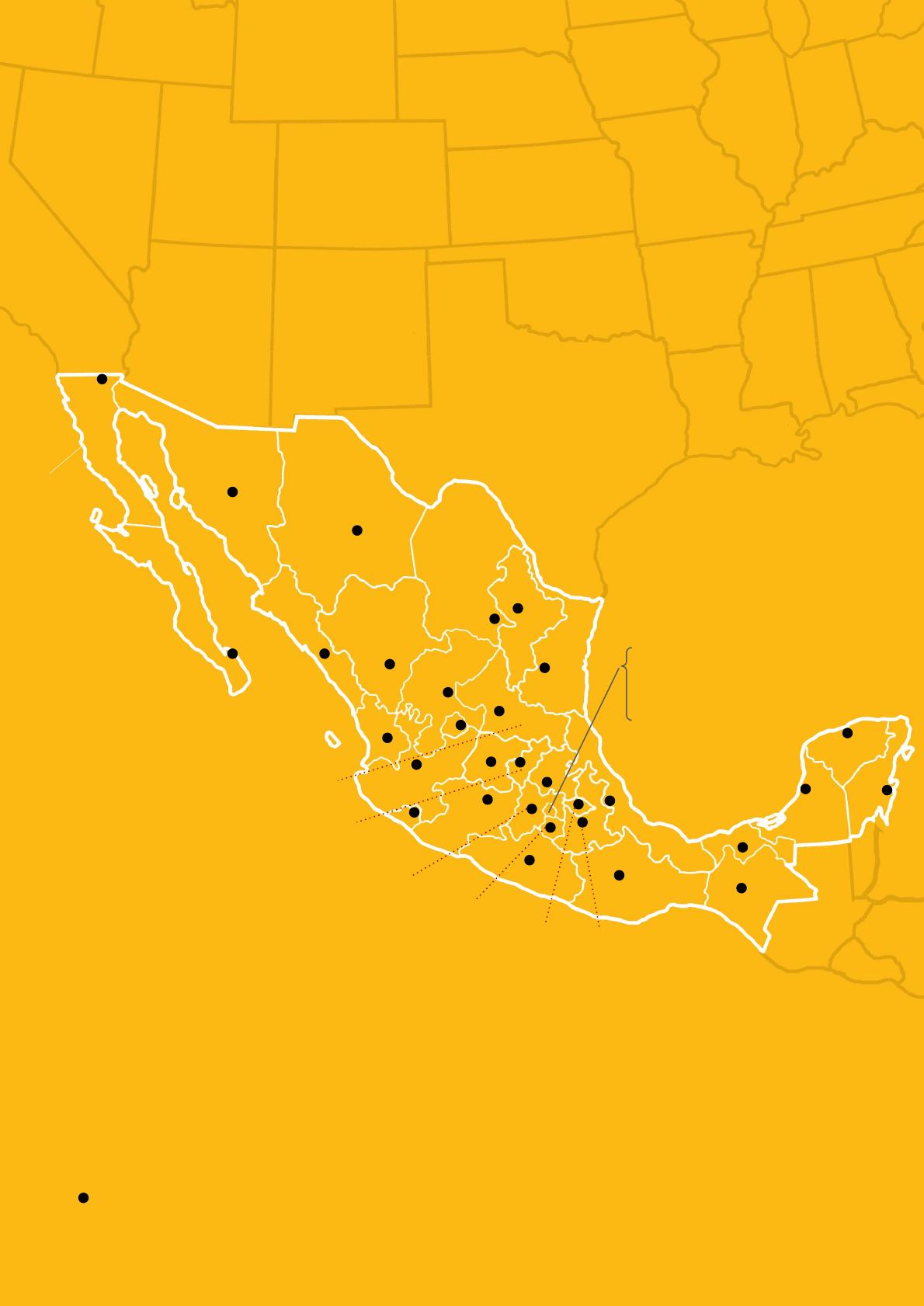
access to two oceans and has more than
eleven thousand kilometers in shorelines,
as demonstrated by the map below.
Mexico’s strategic geographical location
gives it access to many markets, hence the
reason why Mexico has trade agreements
with more than 46 countries. Mexico is
placed on number 13 among other
exporting countries in the world and number
1 among Latin America. Some of the main
manufactured products being exported from
Mexico include: automobiles, auto parts,
cellphone parts, computers, crude oil,
televisions, electric cords, medical
equipment, tractors, seats and refrigerators.
Mexico is an important leader in the
agro-food industry; avocado, vanilla, cocoa,
cactus, amaranth, dahlias and agave are
some of the 200 varieties of crops
originating in Mexico. The Ministry of
Economy (SE) indicates that the growth of
the food industry is due to Mexico’s
production capacity, agricultural resources
and low manufacturing costs1.
Language
The official language in Mexico is Spanish
with several other indigenous languages
spoken by 5.4% of the population. It’s the
largest Spanish speaking population in the
world and for its industrialized cities, their
secondary language is English.
Ciudad de Mexico*
Or “Mexico City” is the country’s capital,
its cultural center and the most important
business and trading center along with
the cities of Monterrey and Guadalajara.
Mexico
United States of
America
Guatemala
Belize
Honduras
El Salvador
www.crowe.mx Content 8
1. Aguascalientes*. 7. Coahuila*. 12. Hidalgo. 17. Nayarit. 22. Quintana Roo*. 27. Tamaulipas*.
2. Baja California*. 8. Colima. 13. Jalisco*. 18. Nuevo León*. 23. San Luis Potosí*. 28. Tlaxcala.
3. Baja California Sur*. 9. Durango. 14. Estado de México. 19. Oaxaca. 24. Sinaloa*. 29. Veracruz*.
4. Campeche. 10. Guanajuato*. 15. Michoacán*. 20. Puebla. 25. Sonora*. 30. Yucatán*.
5. Chihuahua*. 11. Guerrero. 16. Morelos. 21. Querétaro*. 26. Tabasco. 31. Zacatecas*.
6. Chiapas.
States of Mexico (* with Crowe offices)
Geographical position of the capital of each State.
2
3
25
5
718
27
19 6
4
30
22
24 9
23
29
8
17
13
15
31
1
10
26
12
1
1
16
21
14
28 20
Texas
New
Mexico
Arizona
California
Gulf of
Mexico
Pacific Ocean
Content
www.crowe.mx Content 9Content
Population
Mexico’s population at the end of 2018 was
approximately 130 million, equivalent to
1.71% of the total world population. Its
capital known as Mexico City is the most
populated city in North America and home
to more than 150 museums, the second
with the most in the world after London.
Mexico City has the highest population
concentration, followed by the cities of
Guadalajara with 4,434,252 and Monterrey
with 1,135,512 citizens. During the last 50
years the population in Mexico has grown
four times, nevertheless, the annual growth
rate has decreased since 1970.
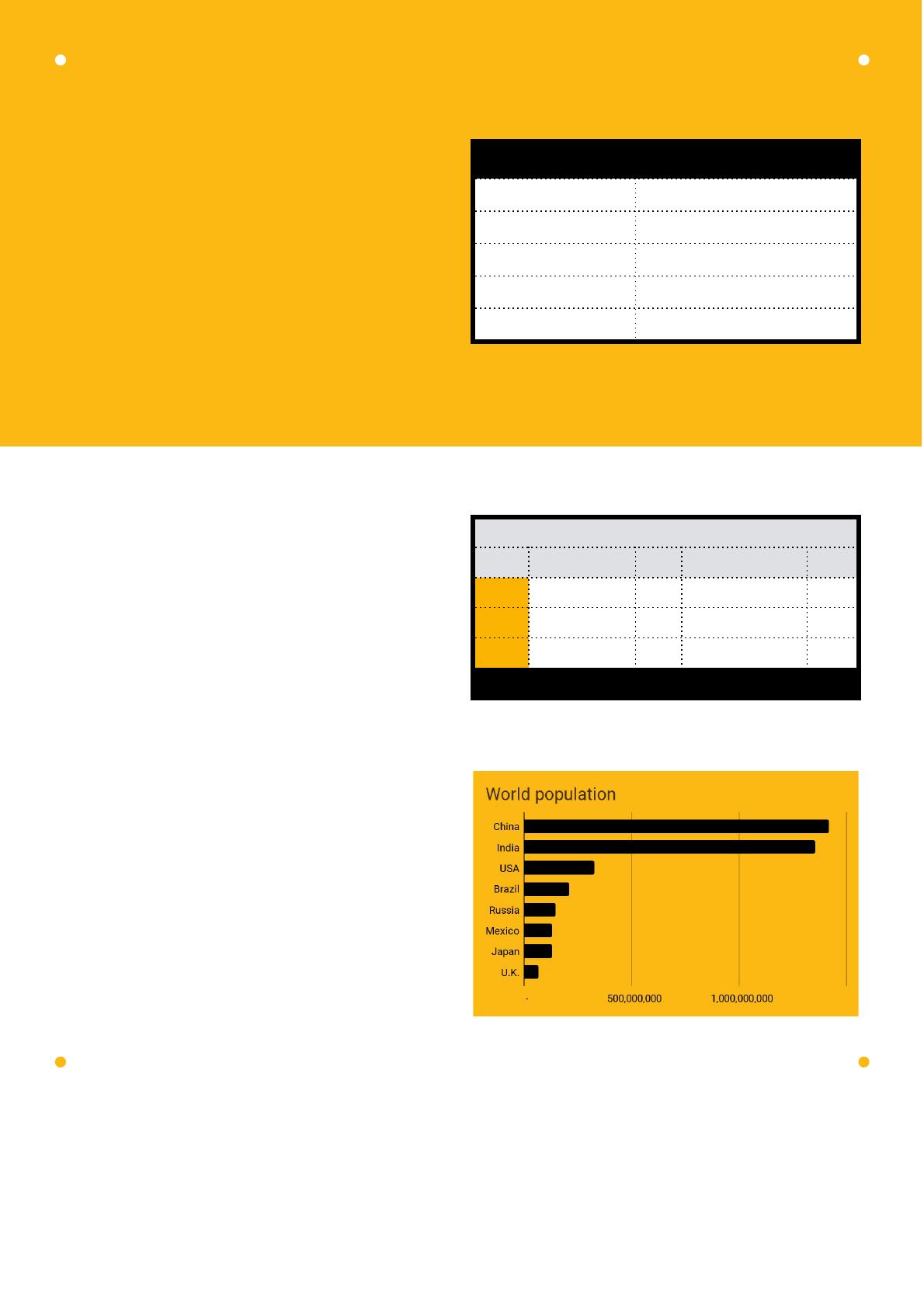
According to the World Factbook, China
and India both have populations of over a
billion while the US places third with 325
million. Brazil, Russia, India and China also
called the BRIC, are known as the four
major economies in the world. Mexico has
the largest population after Russia with
about 130 million.
Population in millions (2018)
Age Mexico % World %
0-14 34 26 1,984.5 26
15-64 87.6 67 4,961.5 65
65+ 9.2 7 687.0 9
Total 130.8 7,633.0
Mexico as exporter, compared with the
rest of the World:
■ 4th in computers.
■ 5th on home appliances,
■ 7th largest exporter of cars,
exports on medical equipment also
stand out.
About 19.4% of all exports require
medium or high levels of technology.
Mexico is the 3rd country with the most
airports with 64 international airports, 12
for domestic traffic, and 117 sea ports.
General Information
Population 130,759,074
GDP $1,150.88 Billion USD
GDP per capita $9,865.79 USD
Exports $413,042 million USD
Imports $428,583 million USD
www.crowe.mx Content 10Content
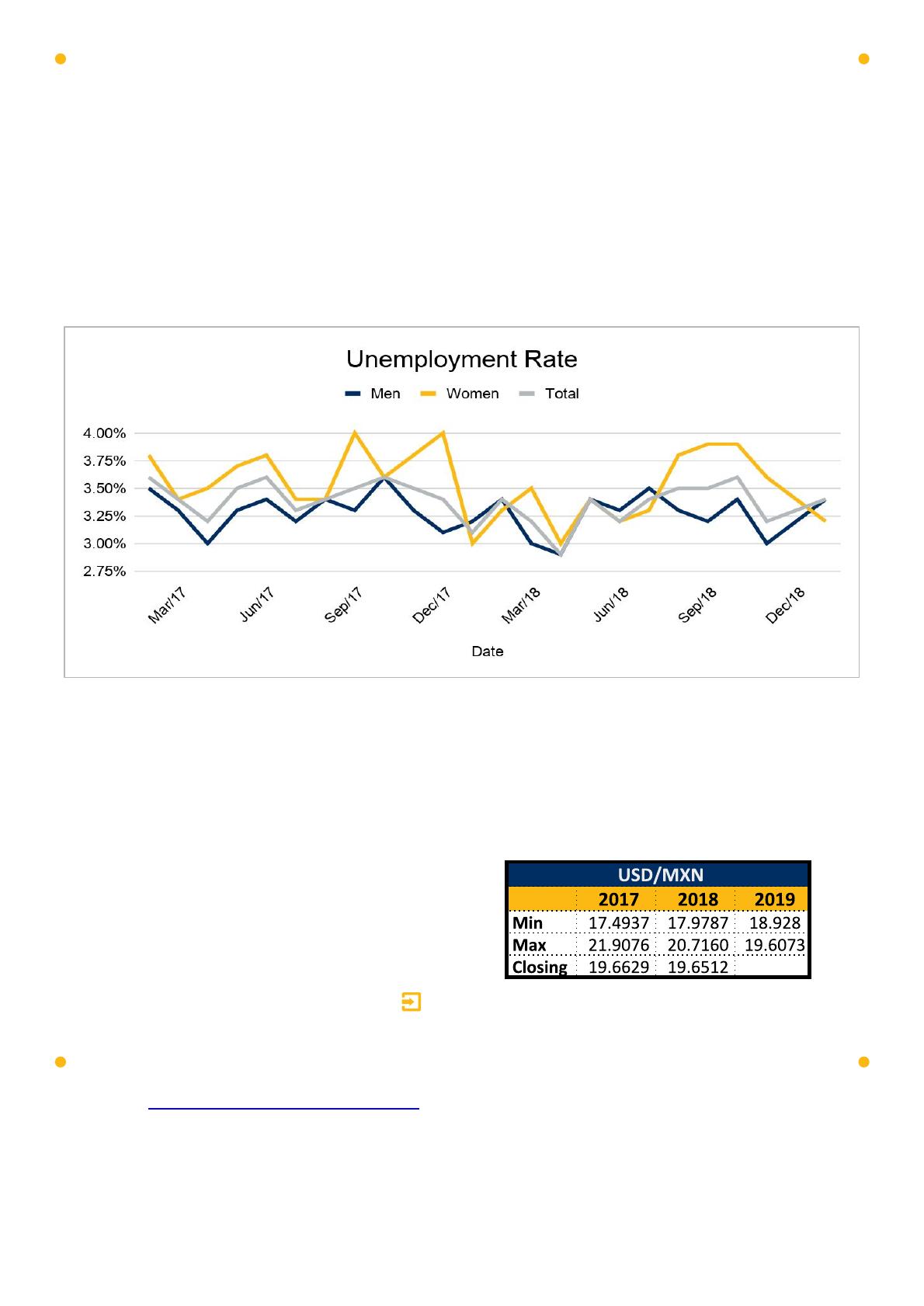
Unemployment
Mexico’s unemployment rate decreased
throughout 2017 reaching a low of 3.1% at
the end of the year. During March of 2018
unemployment reached a record low of
2.93%, the lowest in 10 years. At the end of
2018, unemployment rate was 3.4% an
equivalent to 1.8 million people, as
expected by seasonality.
Trading, Industry and Infrastructure
Currency
The monetary unit in Mexico is the
“PESO” represented by the letters
“MXN”1. The exchange rate on April
17, 2018 was 17.9787 MXN, with the
highest being 20.7160 MXN per USD
as of June 15, 2018.
The following chart from Bank of
Mexico summarizes the Maximum,
Unemployment levels between men and
women throughout 2017 were higher for
women and higher for men throughout the
first half of 2018. The gap between them
closed off on April 2018 and since then
unemployment rates have been higher for
women.
minimum and closing exchange rates
for the last two years, as measured
by the FIX:
Source: Bank of Mexico.
1. Source: https://www.iso.org/iso-4217-currency-codes.html
www.crowe.mx Content 11Content
Government Role
Mexico has a mixed economy, which is
made up of both privately-owned and
state-owned companies. In 2016, there
were thorough changes implemented after
11 reforms were passed by the legislative
chamber. Above all these approved new
reforms, the “energy reform” has
significantly transformed the country’s oil
and gas industry.
The Mexican commerce is regulated by the
Ministry of Economy, whose functions
include: the supervision of distribution and
consumption, promotion of foreign trade,
analysis of official prices and related
indexes, regulating import and export and
initiating tax incentives for promoting price
controls on fees for services with public
interests, whose number are limited.
Mining plays an important role in the
economy of the country, since Mexico was
the largest producer of silver, fluorite and
arsenic in the world. Nowadays, it’s still one
of the biggest mining producers.
Communications
The main highways of the country pretty
much crisscross the country. The most
traveled highways are those that link the
three most populous cities: Mexico City,
Monterrey and Guadalajara in the form of a
triangle.
The main seaports on the Gulf of Mexico
are Altamira, Coatzacoalcos, Veracruz,
Tuxpan, Campeche and Progreso. The
main seaports on the Pacific Ocean are
Acapulco, Mazatlan and Manzanillo. The
railroad system was state controlled but
faced a privatization process in the 1990s
and was closed to promote the private
investment on roads and highways. Mexico
has more than 58 international airports with
flights connected all over the world, with
major foreign airlines servicing the country.
The main airline company flying in Mexico
is AeroMexico.
Government Policies Affecting
Business
Economic Policies
Source: Bank of Mexico.
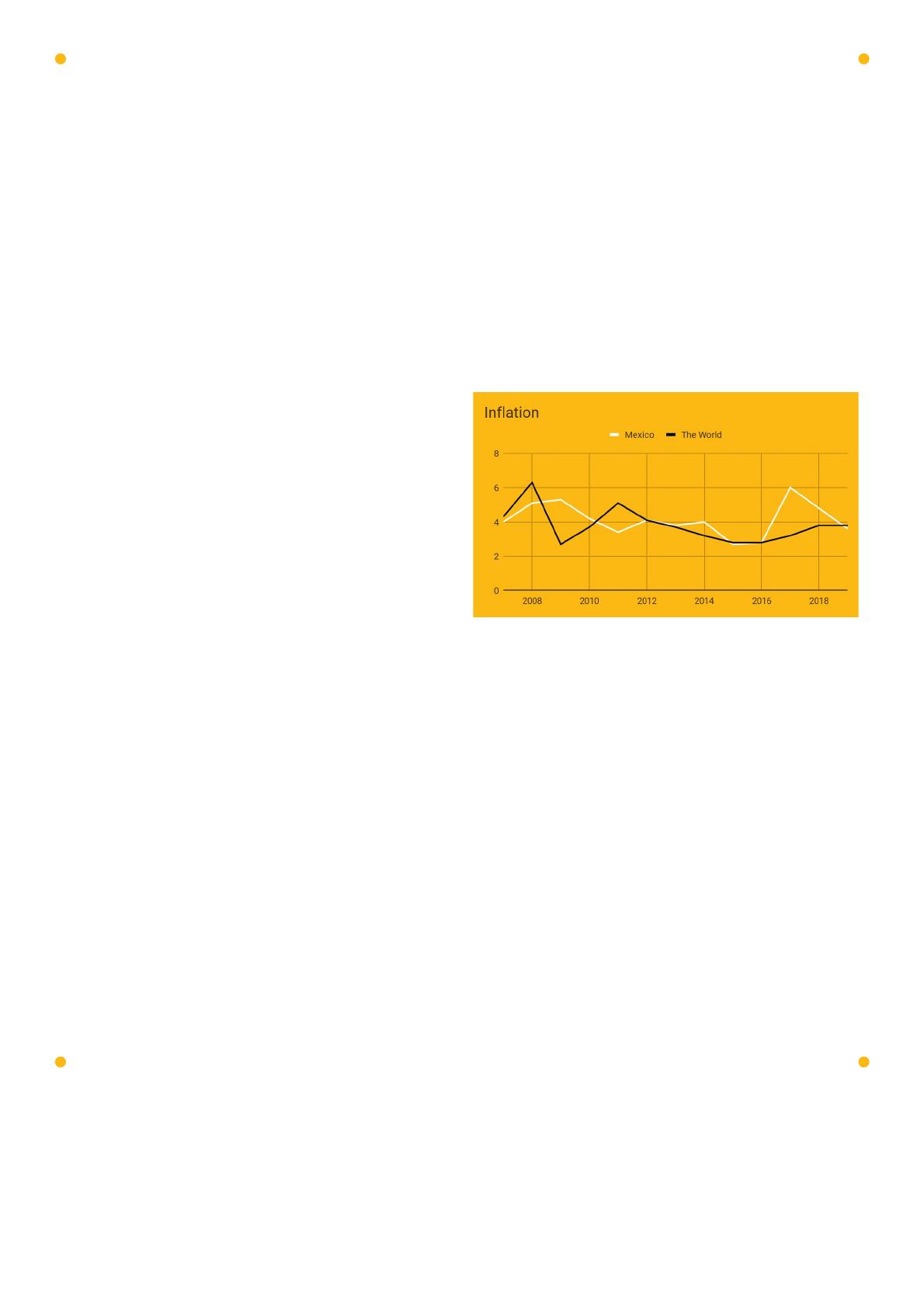
The annual percentage change on inflation
from 2007 until 2019 is shown in the
previous graph.
In the last decade, economic policies
contemplated a national plan for recovery
emphasizing a high growth rate in
productivity.
During 2007, inflation was around 4% but
by the end of 2016 it was as low as 2.8%.
Throughout 2017 inflation increased to 6%,
its highest in 17 years due to the
liberalization of oil prices. As of 2019,
inflation is down to 3.6%; for 2019 year’s
end, Bank of Mexico Analyst consensus
expect inflation to be around 3.4%.
www.crowe.mx Content 12Content
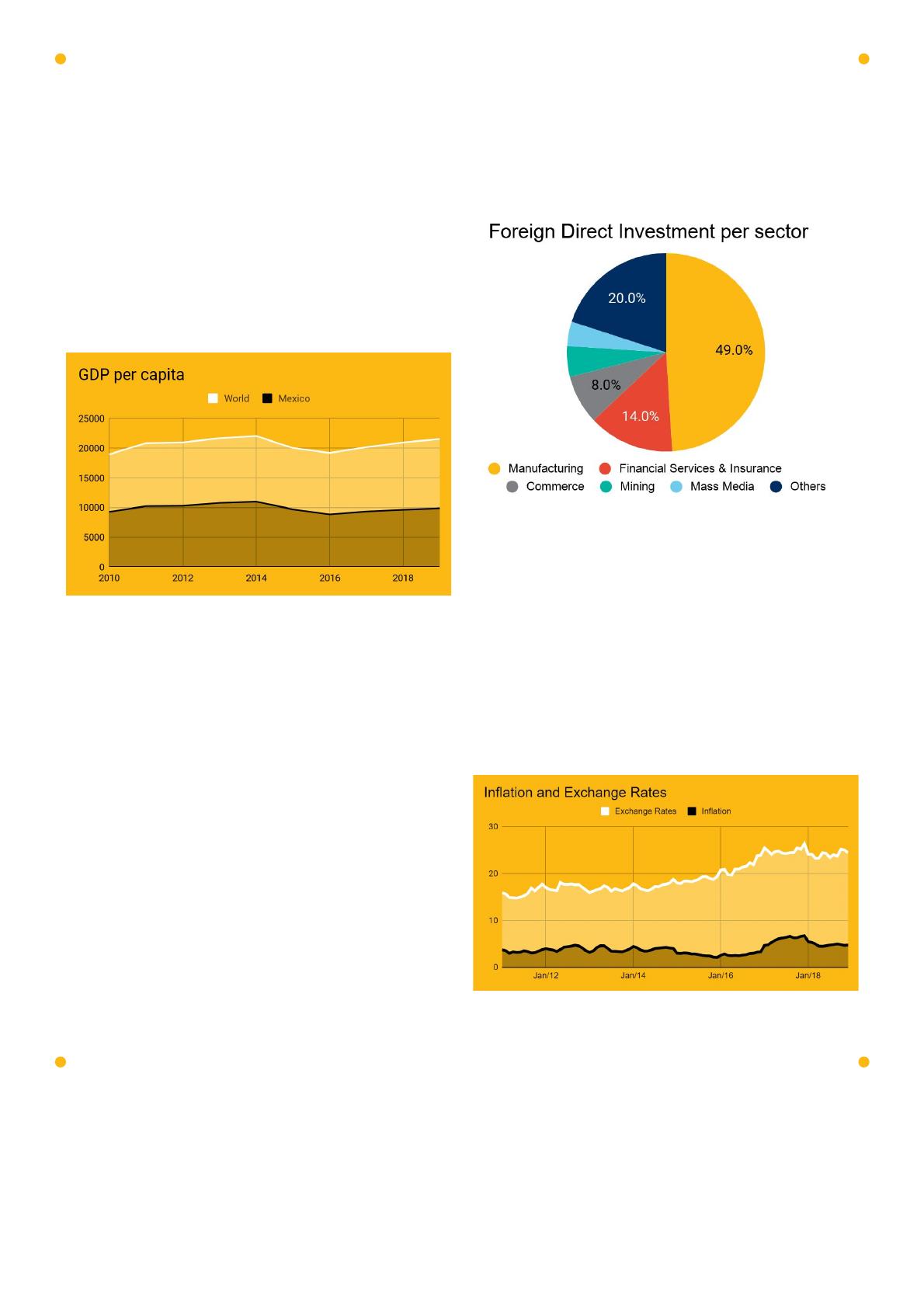
The world’s Gross Domestic Product (GDP)
throughout the last 8 years has been
positively increasing except for a slight
decrease in 2015. The main
macroeconomic variables seem to only
slightly deviate from their original targets
despite the presence of an unfavorable
international environment. According to the
World Bank, GDP per capita reached US$
18,535 at the end of 2016. As of 2018, the
GDP per capita converted to dollars was
equal to US$ 19,093.
The graph above shows that Mexico’s GDP
per capita has had a positive correlation to
the world’s GDP, even though it’s had its
ups and downs throughout the last 8 years.
Mexico’s GDP per capita is positioned in the
90th place in the ranking by the World
Factbook among 230 countries.
Mexico’s GDP has recently experienced a
steady growth, showing great potential in
some economic sectors, such as
maquiladoras. Mexico has the second
largest economy in Latin America, ranking
second to Brazil whose economy
experienced a slow growth in 2017.
The fastest growing sectors in the economy
in comparison with the overall performance
The next graph shows the comparison
between inflation and USD/MXN rates for
the past 7 years. The two variables show no
correlation between them, the exchange
rates show currency fluctuations while
inflation has remained relatively stable until
the beginning of 2015 and began to
increase throughout 2016 due to many
reforms being approved that year.
of the Mexican economy can be seen in the
following graph. Manufacturing is also
included because it is one of the most
important sectors in the economy despite
not having one of the highest growing rates.
Source: World Bank.
Source: Bank of Mexico
Source: ProMexico.org
www.crowe.mx Content 13Content
According to the Bank of Mexico’s
economic perspectives, the future trajectory
of the exchange rate remains sensitive to
commercial deals and changes to the
monetary policy normalization in the US.
The USD/MXN rate appreciated over the
course of 2018 relative to the US dollar,
although a weakening has been observed
in recent months.
The USD had a noticeable increase in value
against some other major currencies (CCY),
which shows that the depreciation of
currency was extremely affected by external
factors. The table below presents the USD
depreciation, which can be analyzed facing
other important currencies.
A depreciation was seen between the years
2016 and 2018 but some currencies have
recovered against the dollar while others,
such as emerging market economies have
shown weak signs of recovery.
GDP Growth per State
In 2016, the states that showed the highest
growth rates were Aguascalientes and
Quintana Roo. During 2017, Baja California
Sur, Morelos and Puebla experienced the
highest growth rates. Baja California Sur
also experienced the highest growth rate
CCY Jul/16 Jul/17 Jul/18 Dec/18
MXN 18.309 18.2064 20.1453 19.3208
EUR 1.1139 1.14249 1.17015 1.1445
GBP 1.32695 1.30276 1.31155 1.2746
RUB 0.01565 0.01697 0.01602 0.01442
ZAR 0.06873 0.07646 0.07632 0.06946
BRL 0.3092 0.30233 0.2665 0.2577
CAD 0.77491 0.77068 0.7678 0.7323
seen during the first quarter of 2018.
The States with the highest growth rates
show their potential being worth investing
in.
According to the following graph the growth
per state in 2016, 2017 and 2018 were the
following:
GDP growth at constant prices per State
2016 2017 2018
Aguascalientes 9.50% 7.09% 3.10%
Baja California 3.60% 4.73% 3.50%
Baja California Sur 2.20% 9.14% 21.40%
Campeche -5.80% -7.05% -6.50%
Coahuila 1.80% 4.58% -0.30%
Colima 5.70% 3.14% 4.60%
Chiapas -1.10% -2.12% -1.60%
Chihuahua 5.10% 3.26% -0.50%
Mexico City 4.60% 3.78% 2.20%
Durango 3.70% 2.28% -2.60%
Guanajuato 4.50% 5.63% 1.00%
Guerrero 2.80% -2.33% 5.00%
Hidalgo 4.00% -2.80% 5.10%
Jalisco 4.70% 3.11% 5.50%
Mexico 2.90% 3.17% 5.00%
Michoacán 4.00% 2.33% 4.10%
Morelos 2.70% 7.58% -2.50%
Nayarit 3.60% 1.77% 1.30%
Nuevo León 1.40% 3.93% 2.40%
Oaxaca -0.90% -2.97% 1.60%
Puebla 3.10% 7.58% 2.90%
Querétaro 3.60% 5.87% -0.40%
Quintana Roo 7.60% 3.31% 4.50%
San Luis Potosí 4.30% 4.87% 8.40%
Sinaloa 5.50% 0.09% 3.90%
Sonora 5.60% 3.52% 0.90%
Tabasco -6.30% -9.90% -3.20%
Tamaulipas -0.80% -0.05% 1.30%
Tlaxcala 0.80% -0.54% 0.90%
Veracruz 1.60% -0.60% -0.90%
Yucatán 3.80% 4.11% 2.90%
Zacatecas -0.20% 1.21% 2.70%
Source: ProMexico.org
Source: INEGI
www.crowe.mx Content 14Content
Import – Export Policies
As a result of the United States housing
crisis of 2009 and other world effects,
exports, especially the maquiladora industry
and manufacturing were affected. In 2008,
the Ministry of Finance and Public Credit
(SHCP) and the Ministry of Economy issued
a decree to expedite and streamline their
operations in order to mitigate any negative
impact they could. The measures taken
benefited the users of foreign trade with a
reduction of paperwork in order to expedite
and streamline their operations.
Mexico was the main promoter of the North
American Free Trade Agreement (NAFTA)
in which Canada, USA and Mexico signed
one of the most important tariff and trade
agreements in the world, second to the
European Union. Since the new presidential
elections for both US and Mexico, this
agreement was renegotiated and renamed
United States, Mexico and Canada
agreement (USMCA) and kept 80% of the
original deal with some modifications.
Mexico has Free Trade Agreements with
other countries such as: Colombia,
Venezuela, Costa Rica, Bolivia, Nicaragua,
Chile, Israel, El Salvador, Guatemala,
Honduras, Norway, Liechtenstein, Japan
and Switzerland, among others.
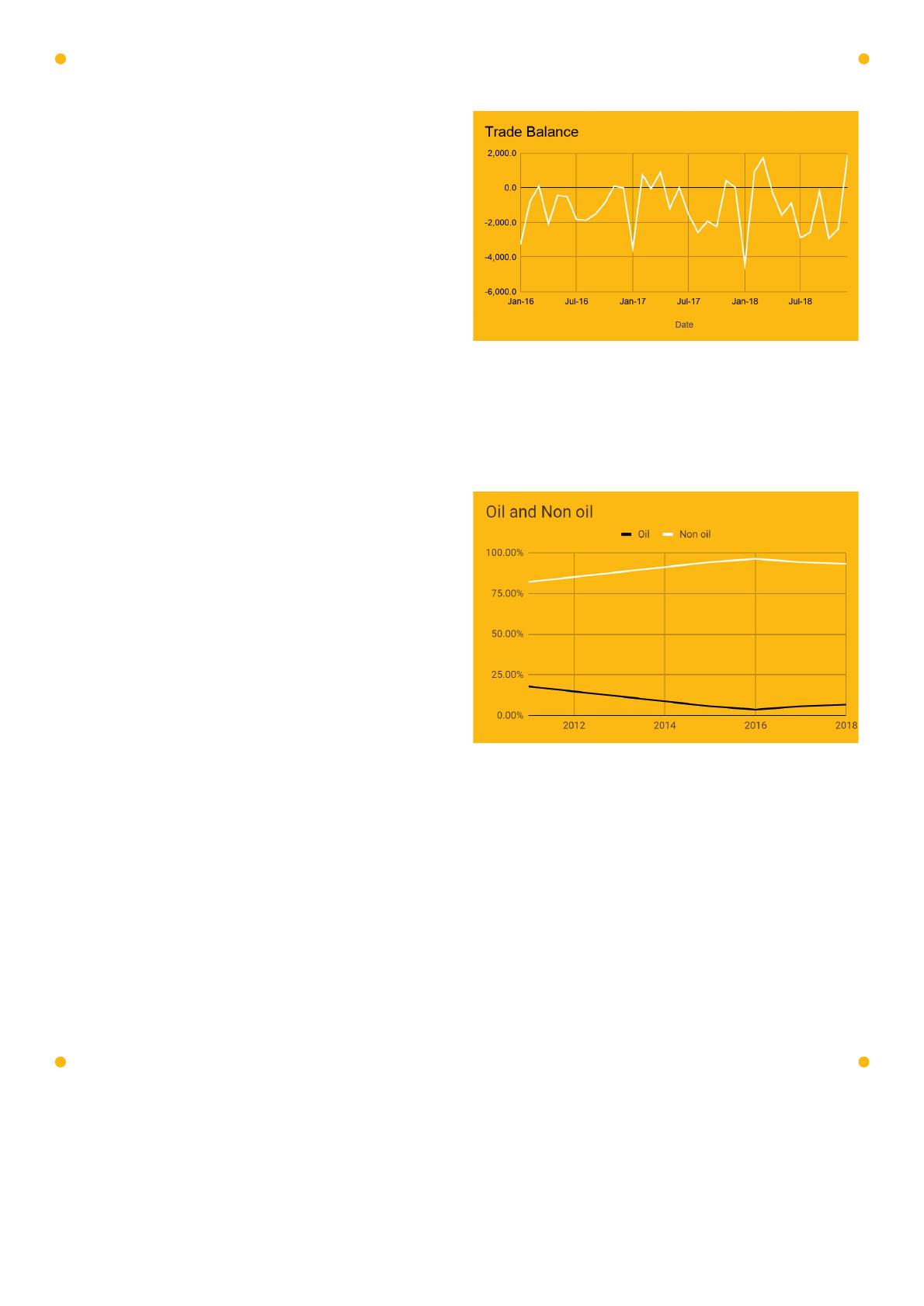
Mexico’s trade balance from January 2016
to December 2018 is demonstrated in the
following graph. It is important to note that
the trade balance in the first quarter of 2018
was one of the most negative since the
beginning of the 2000s, at – US$ 4,419,826
million. One of the causes for this fall was
due to the manufacturing exports falling by
3.3%.
It is a common assumption that Mexico’s
biggest export is oil but that is not the case.
We can see the importance of each type of
export in the following chart.
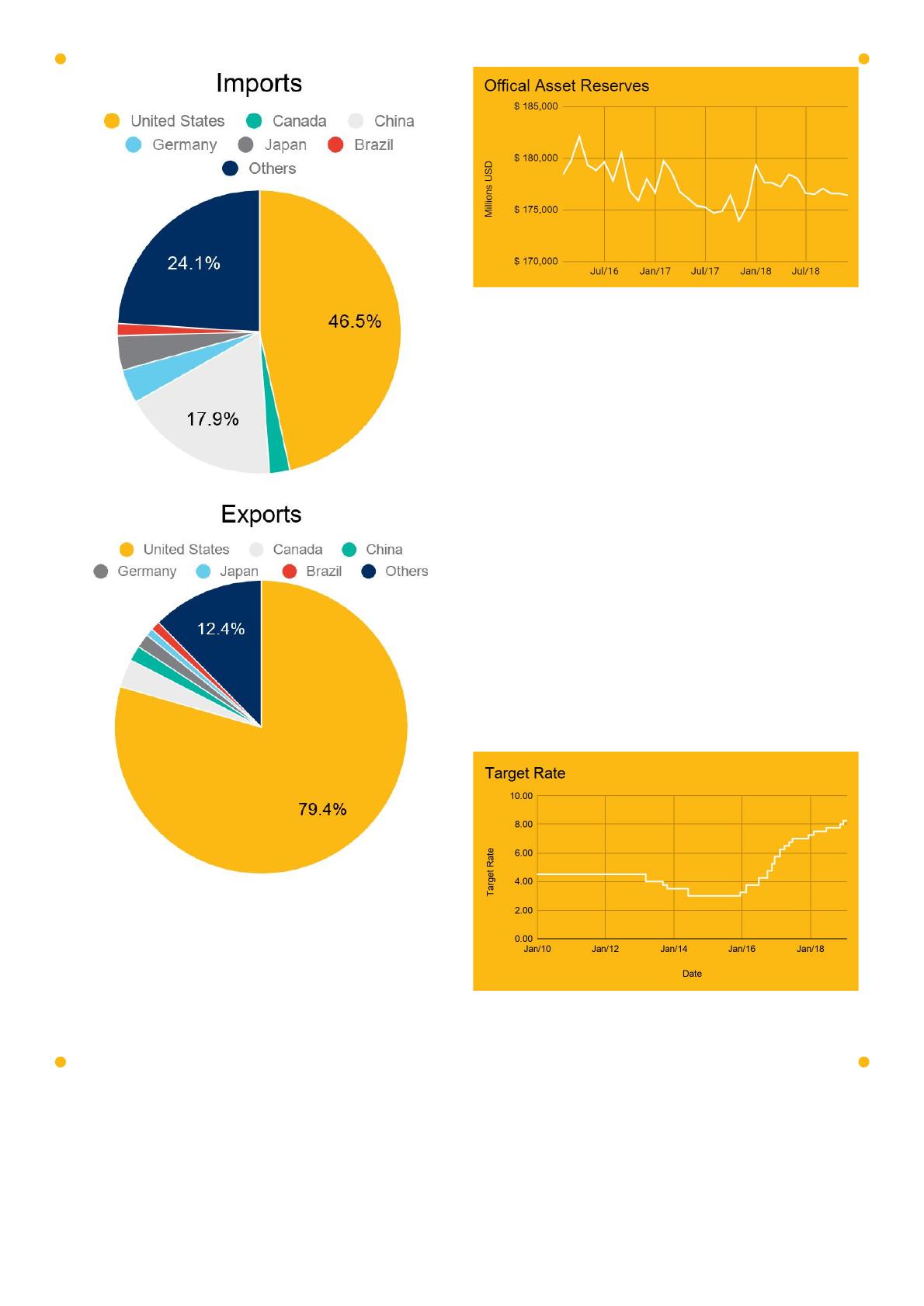
According to data provided by the Bank of
Mexico, the major trading partners are the
US and China. In 2018, the US received the
most exports from Mexico with 79% of total
exports while Canada only 3%. Mexico
received 47% of its imports from the US,
18% from China and 4% from Japan.
Source: INEGI
Source: INEGI
www.crowe.mx Content 15Content
The decrease in reserves is due to the
country stabilizing its currency against the
USD by auctioning and selling dollars. Its
intervention in the Forex markets is limited
to curb the pass-through effect of the
exchange rate into inflation.
Central Bank
Mexico´s central bank is a fully
autonomous institution whose main
function is to provide stability to the
purchasing power of the currency. As
stated before, Mexico’s inflation has been
stable and has permitted its currency to
maintain its purchasing power.
Mexico had been lowering its interest
rates in the last years in tandem with the
Federal Reserve Board. When a country
increases its interest rates it is expected
to see an appreciation in its currency. The
two most recent increases made to the
target rate were registered on November
to 8% and on December to 8.25%.
Source: Bank of Mexico.
Source: Bank of Mexico.
Source: Bank of Mexico.
According to the Bank of Mexico, as of
January 24, 2019 other interest rates are
the following:
primarily focused on the US and other Latin
American markets while also expanding into
Europe. Hence, the countries that show the
most percentage change increase are
Brazil, France, Germany, Indonesia and