I. What is digital transformation?
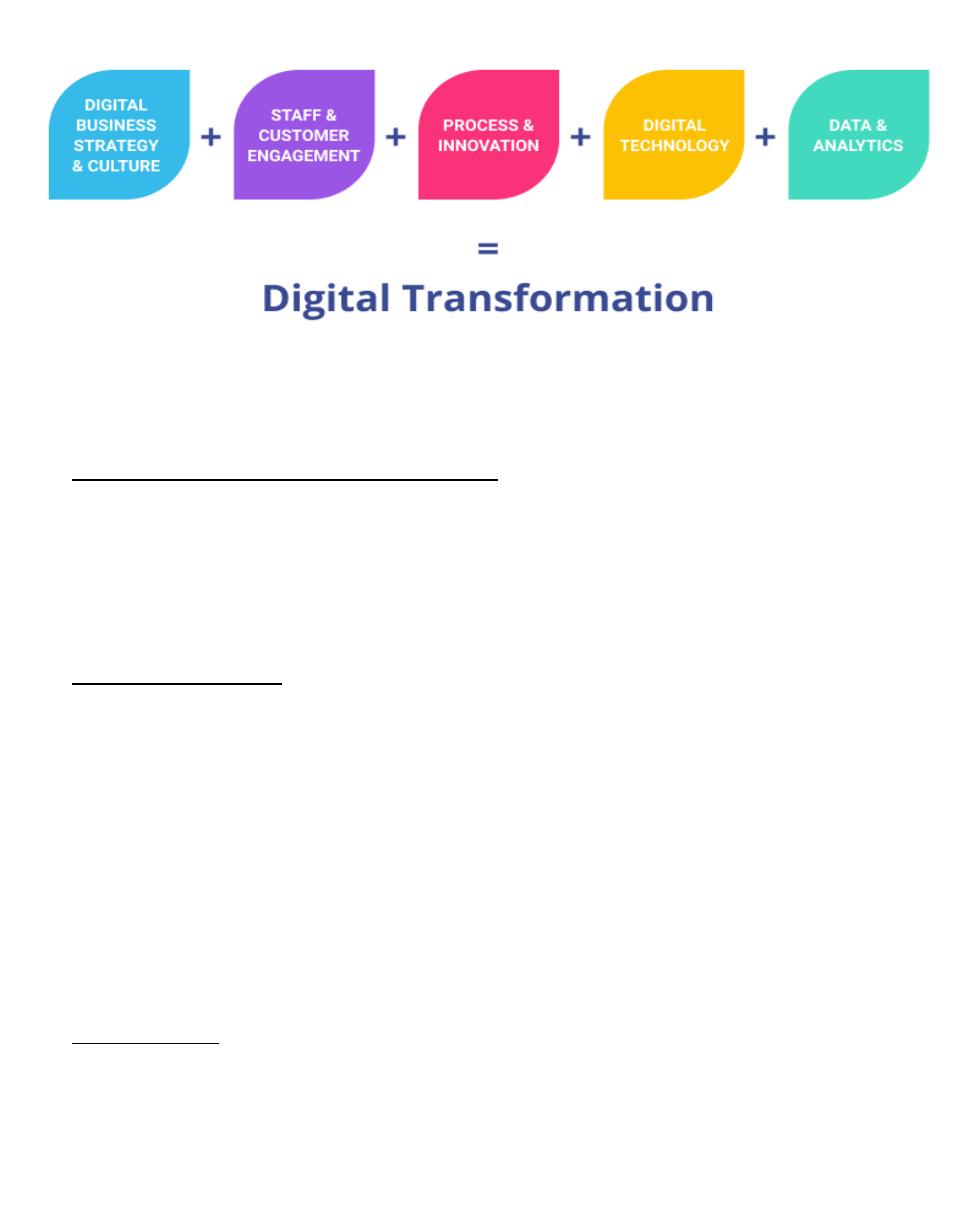
● Digital transformation is the adoption of digital technology by a company
● 4 types of digital transformation: process transformation, business model
transformation, domain transformation, cultural/organizational transformation.
II. How digital transformation can enhance customer intimacy through every
possible touch point
– Content optimization and channel activation
● For the millennial or Gen Z consumer, optimizing content becomes all the
more important. The ‘digital native’ has very little time to process
advertisements and is mostly hooked to one or more digital devices. Highly
qualified leads can be generated by rendering ads in a format that is native to
the user’s device or with content of specific interest to this segment.
Understanding the user’s online behavior holds the key.
– Insights and analytics
● An obvious advantage of digital transformation is the wide range of data that
businesses can have access to. Analyzing website visit data through
hypothesis testing provides valuable insights into making your site content
and navigation better. Similarly, most e-commerce companies enhance their
visibility on purchase funnel performance, check-outs and transactions where
data is updated on a real-time basis. This facilitates tactical decision-making
and reduces thought–to-market time.
● Digitization thus enables a 360 degree unified view from multiple data
sources (online, retail, sales, consumer brand tracking surveys and
attitudinal studies) to arrive at well-defined customer segments and
customize targeting strategies.
– Social listening
● Social media not only provides data on awareness and engagement levels of
your content but also gives an opportunity to listen to the voice of the
consumer in an unrestricted environment. Of course, it comes with its own set
of challenges such as content irrelevance, spam and ambiguous tonality.
Highly evolved tools that process social media data through complex text
mining algorithms can contextualize and assign sentiments (positive, negative
or neutral) to the conversations. This opens pathways for scalable early
warning systems, influencer outreach and customer response management.
III. Examples of digital transformation
– Logistics and operation (UPs and Orion)
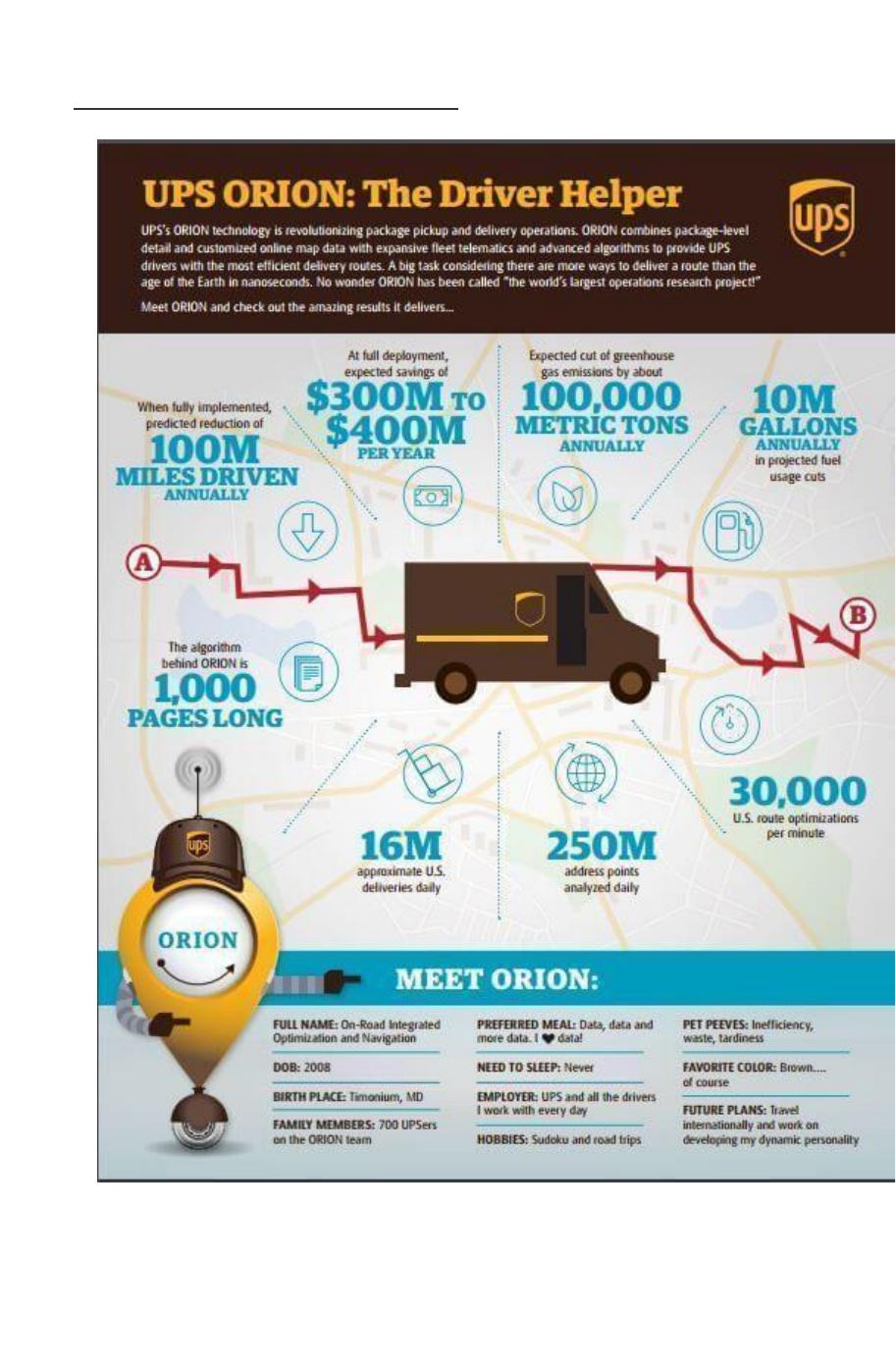
Firstly, UPS developed a tool to manage its fleet system called ORION (On-road Integrated
Optimization and Navigation).
The machine learning software’s algorithms create optimal routes for delivery drivers using
data coming in from the field (package deliveries, pickup times, past route performance,
etc.).
With the average UPS driver making over 135 deliveries per day, any ongoing route
optimization is going to have a huge impact on customer experience.
Not only that, but ORION also helps reduce the company’s carbon footprint.