Tutorial 3.
Q1) Explain how a stop-loss trading rule can be implemented for the writer of an out-of-the money
call option. Why does it provide a relatively poor hedge?
Suppose the strike price is 10. The option writer aims to be fully covered whenever the option is in
the money and naked whenever it is out of the money. The option writer attempts to achieve this by
buying the asset underlying the option as soon as the asset price reaches 10 from below and selling
as soon as the asset price reaches 10 from above. The trouble with this scheme is that it assumes
that when the asset price moves from 9.99 to 10, the next move will be to a price above 10 (in
practice the next move might back to 9.99). Similarly it assumes the other way as well. The scheme
can be implemented by buying at 10.01 and selling at 9.99. However, it is not a good hedge. The cost
of the trading strategy is zero if the asset price never reaches 10 and can be quite high if it reaches
10 many times. A good hedge has the property that its cost is always very close the value of the
option.
Q2) A fund manager has a well-diversified portfolio that mirrors the performance of the S&P 500
and is worth $360 million. The value of the S&P 500 is 1,200, and the portfolio manager would like
to buy insurance against a reduction of more than 5% in the value of the portfolio over the next six
months. The risk-free interest rate is 6% per annum. The dividend yield on both the portfolio and
the S&P 500 is 3%, and the volatility of the index is 30% per annum.
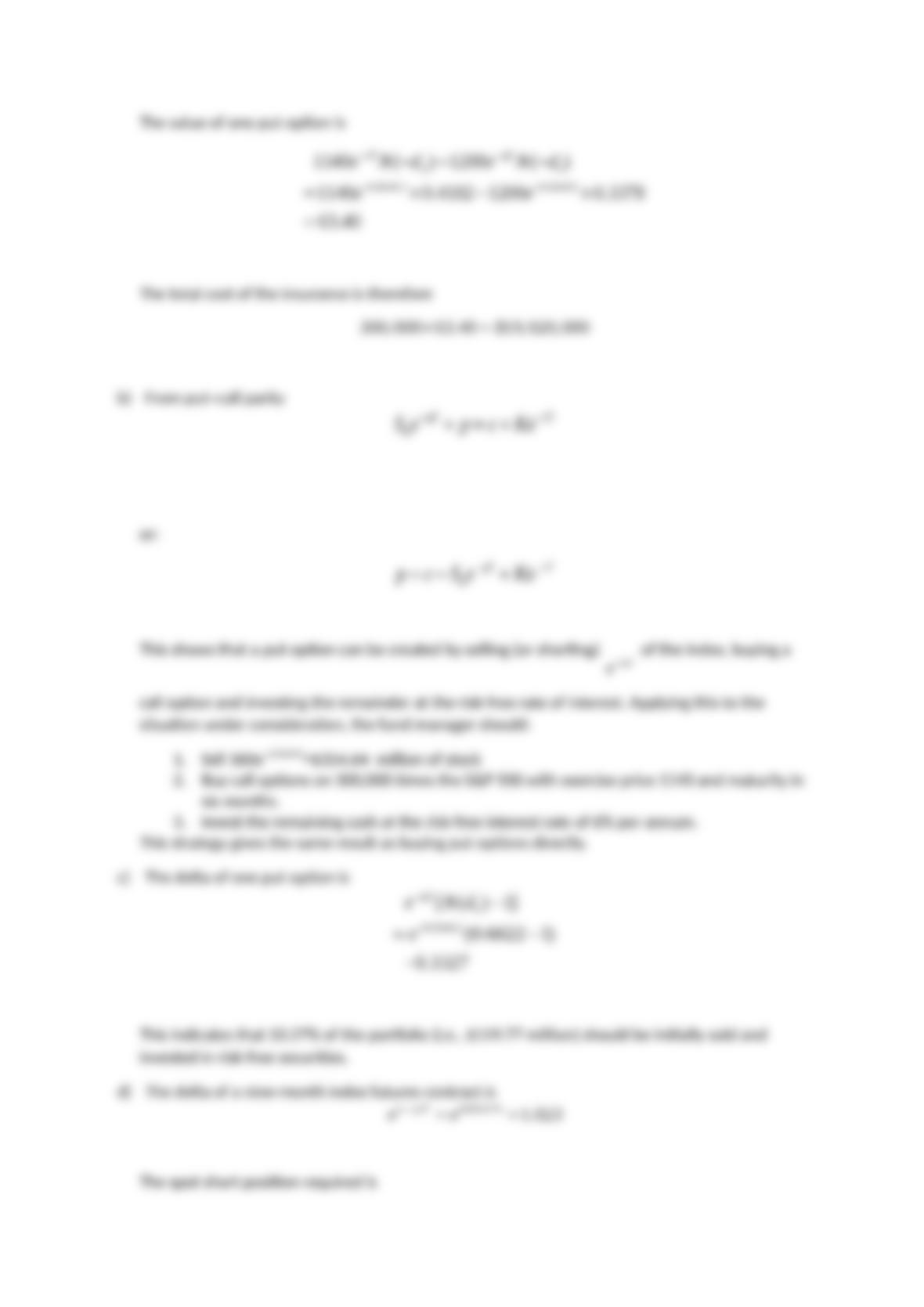
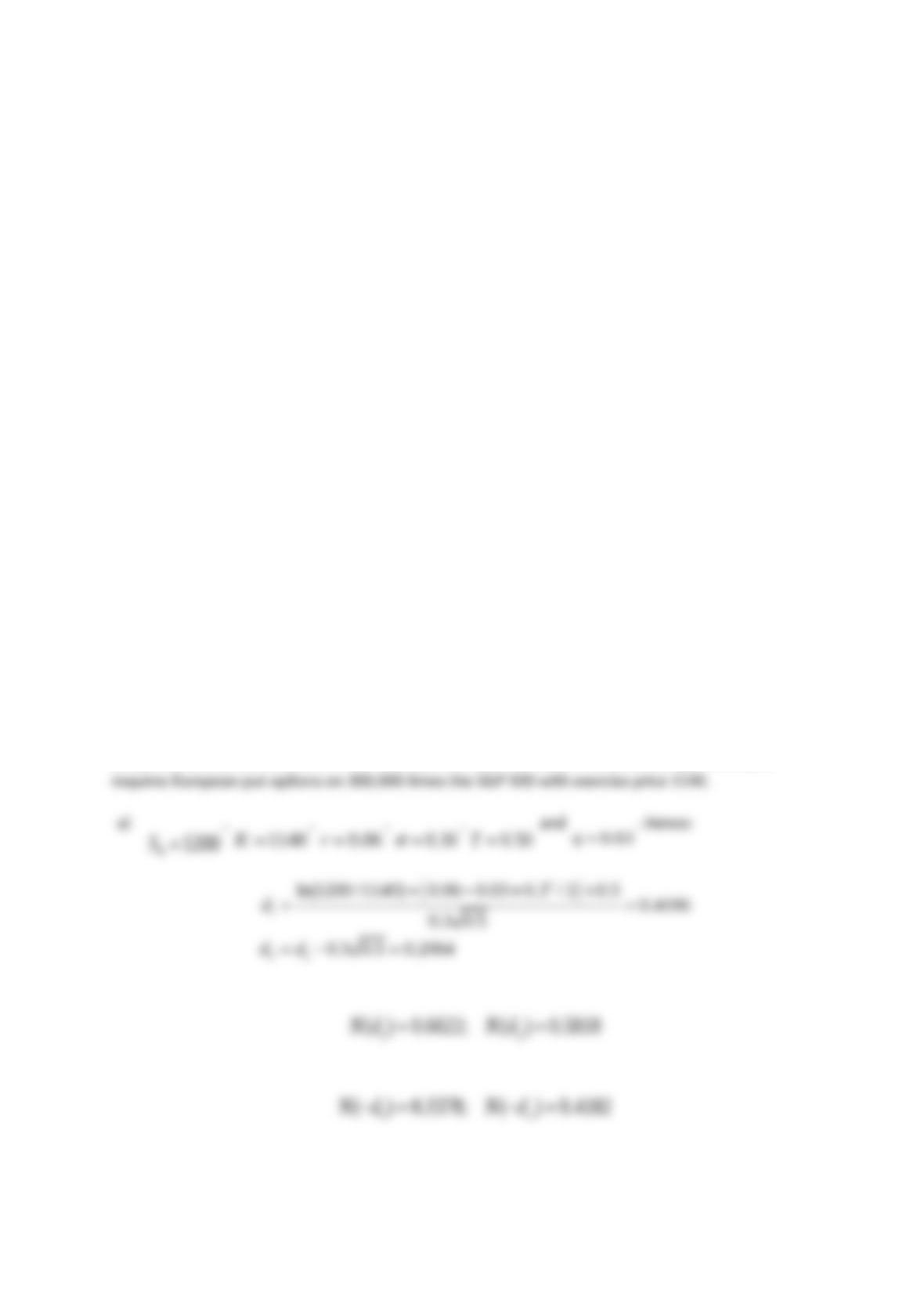
a) If the fund manager buys traded European put options, how much would the insurance
cost?
b) Explain carefully alternative strategies open to the fund manager involving traded