Overview of accounting distortions identified
In the early 2000s, Dell Inc. was a highly regarded company and the largest PC manufacturer. Goldman
Sachs marveled at Dell’s ability to meet analyst expectations stating that “consistency is the hallmark of Dell’s
financials.” However, this all changed on July 22, 2010. The Security and Exchange Commission brought an
action against Dell Inc. and its top executives for failing to disclose exclusivity payments from Intel and for using
fraudulent accounting methods to manipulate reserve funds. These actions helped Dell meet or surpass analysts’
earnings consensus estimates for 20 consecutive quarters from 2002 to Q12007. After an intense investigation,
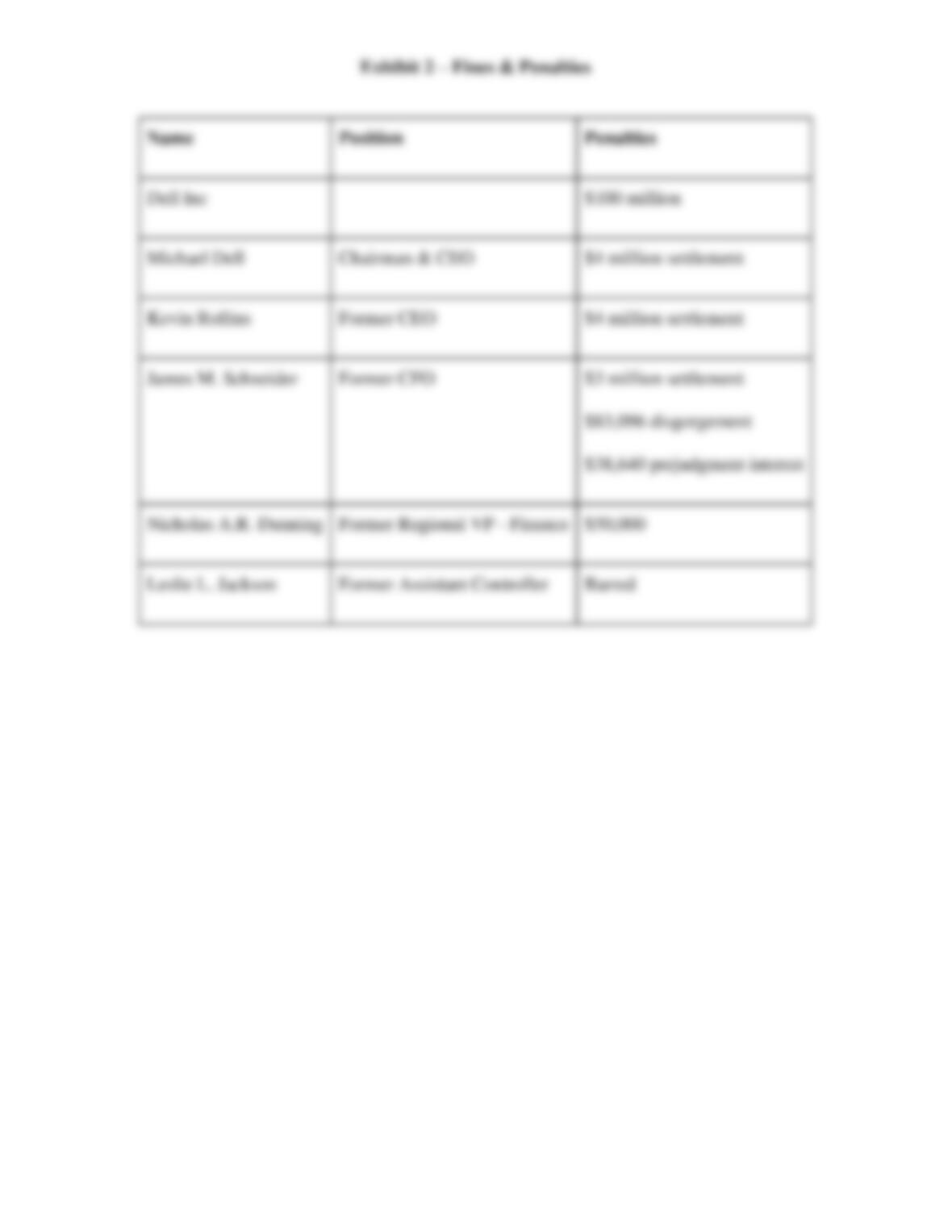
Dell agreed to pay $100 million in penalties.
Nature, type and intensity of accounting misstatement or distortion;
Dell failed to accurately disclose payments received by Intel Corporation on its financial statements. Dell
received payments from Intel through a MCP (Meet Competition Request) program to ensure that Dell would not
collaborate with Intel’s competitors. Dell misled the public by indicating that profitability was attributable to
operational and management decisions rather than these quid pro quo payments. Dell relied heavily on Intel;
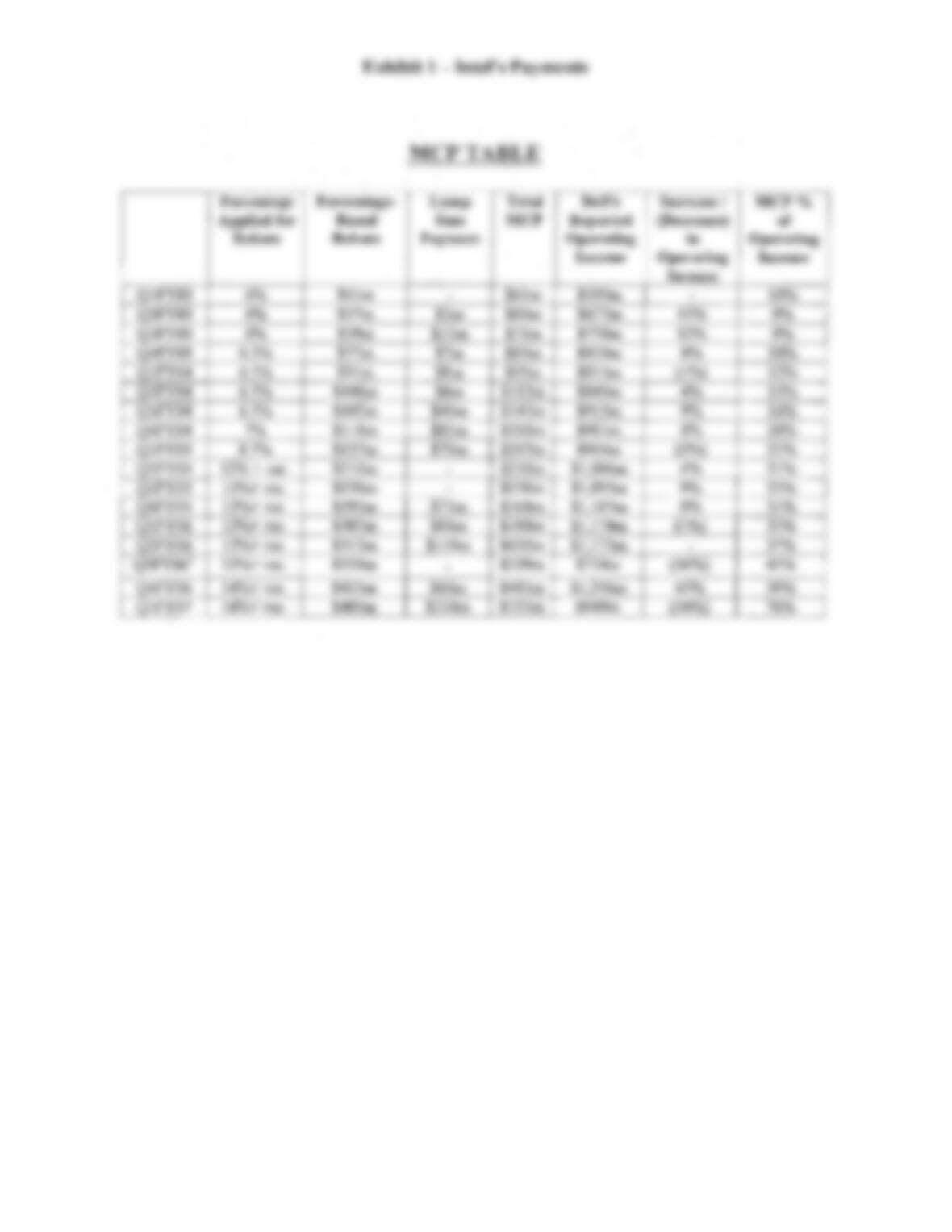
towards the end of this arrangement, the payments made up most of its operating income. In 2003, the payments
comprised 10% of Dell’s operating income and gradually increased over the years. In 2006, the payments
constituted 39% of operating income and peeked in Q12007 at 76%. Please see Exhibit 1 which outlines the
payments throughout the years. Intel payments and rebates to Dell through the MCP program totaled $4.3 billion.
These “payments” were not cash Intel paid to Dell, but rather a reduction of price far below tier 1 pricing, credits,
and discounts. The net effect was to greatly reduce the component cost of microprocessors which led to a higher
gross margin and gross profit.
Intel had warned Michael Dell (founder, chairman, & CEO), Rollins (former CEO), and Schneider (CFO)
payments would cease should Dell work with AMD (Advanced Micro Devices). Dell did not heed Intel’s warning
and in 2007 announced their collaboration with AMD. Intel cut off the payments. Dell could not sustain its
profitability and as a result manipulated its financial statement to make it appear as though the company was
continuing to meet its target earnings and reducing operating expenses.
Dell misrepresented to investors about the company’s declining profitability. During the Q22007 earnings
call, Dell informed investors that the decline in operating earnings was caused by pricing too aggressively when
faced with decreased in demand. Dell failed to tell investors that a large chuck of the company operating income
was because of the Intel payments. A Wall Street analyst on the call opined that Dell would not have performed
so well from 2002 to 2006 without Intel payments.
Dipping into the cookie jar
Dell mainted “cookie jar” reserves to help meet quarterly earnings. The cookie jar method is the process
of using reserves from good years against the bad years. Dell would mislead investors from 2002 and 2006 by
dipping into its reserves to cover unforeseen shortfalls of its operating income.
Below is a list of suspected reserves Dell created, but were not allowed under Statement of Financial
Accounting Standards No. 5, Accounting for Contingencies:
– Strat Fund, Accrued relocation accruals, Corporate restructuring reserve, Bonus-and-profit sharing