DATA WRANGLING AND DATA
VISUALIZATION

Learning Objectives
At the end of this module, learners are expected to:
1. Visualize categorical and numerical variables.
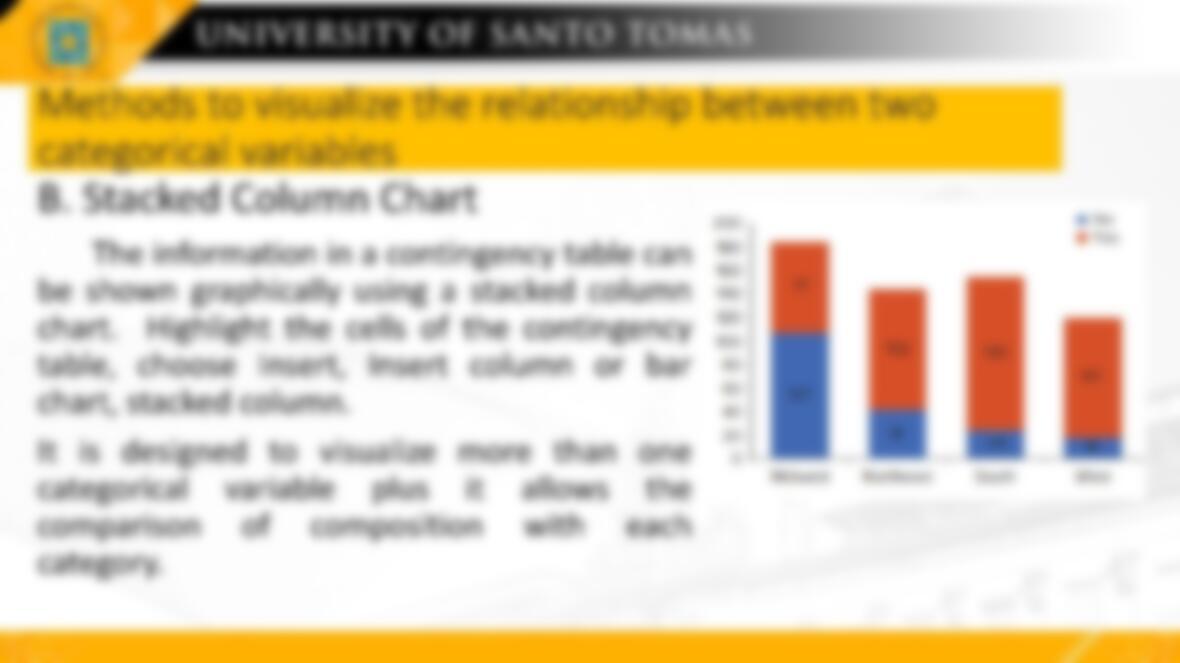
2. Construct and interpret a contingency table and a stacked bar chart.
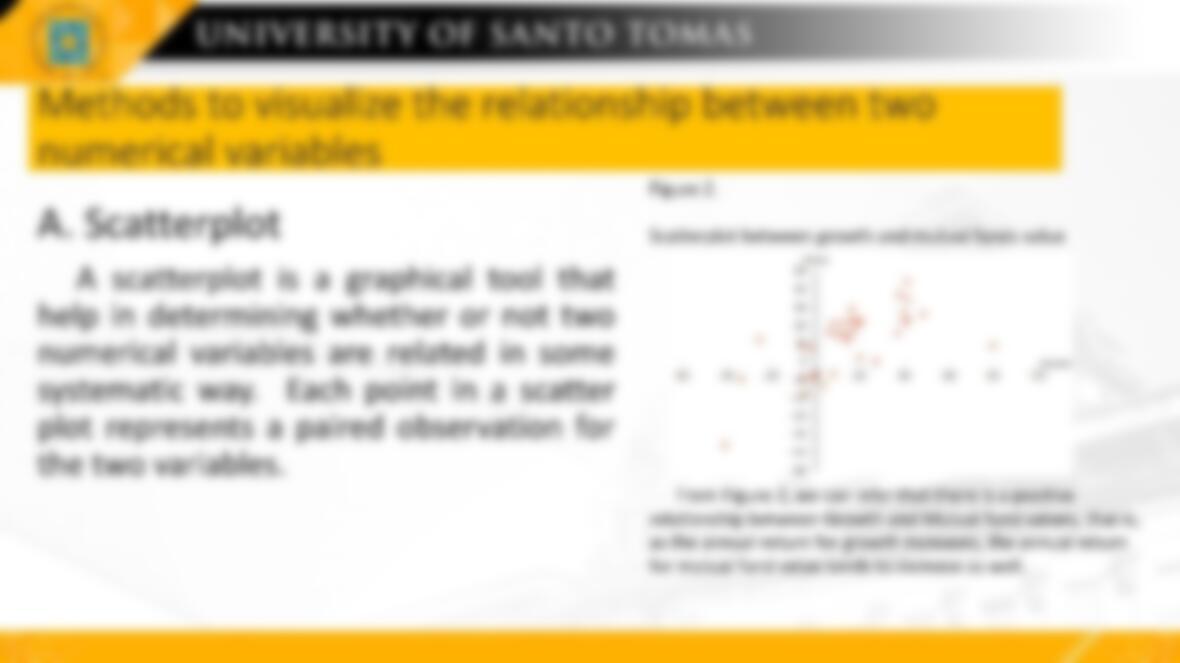
3. Construct and interpret a scatterplot.
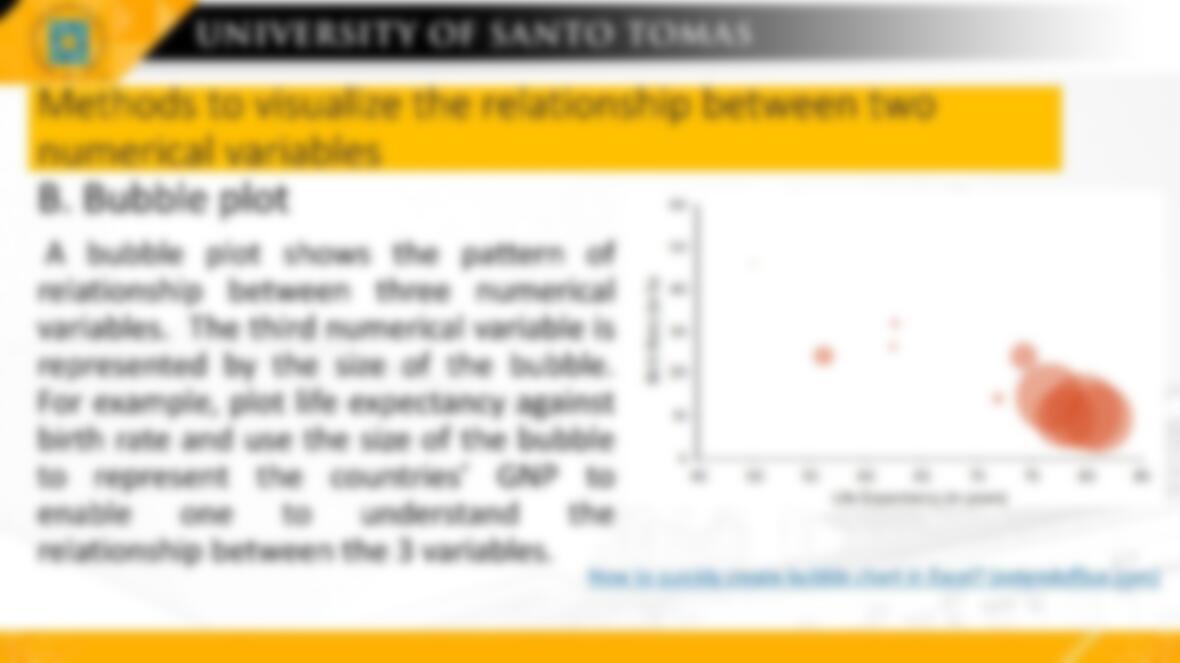
4. Construct and interpret a scatterplot with a categorical variable, a
bubble plot, and a line chart.
5. Calculate and interpret summary measures.
6. Use boxplots and z-scores to identify outliers.
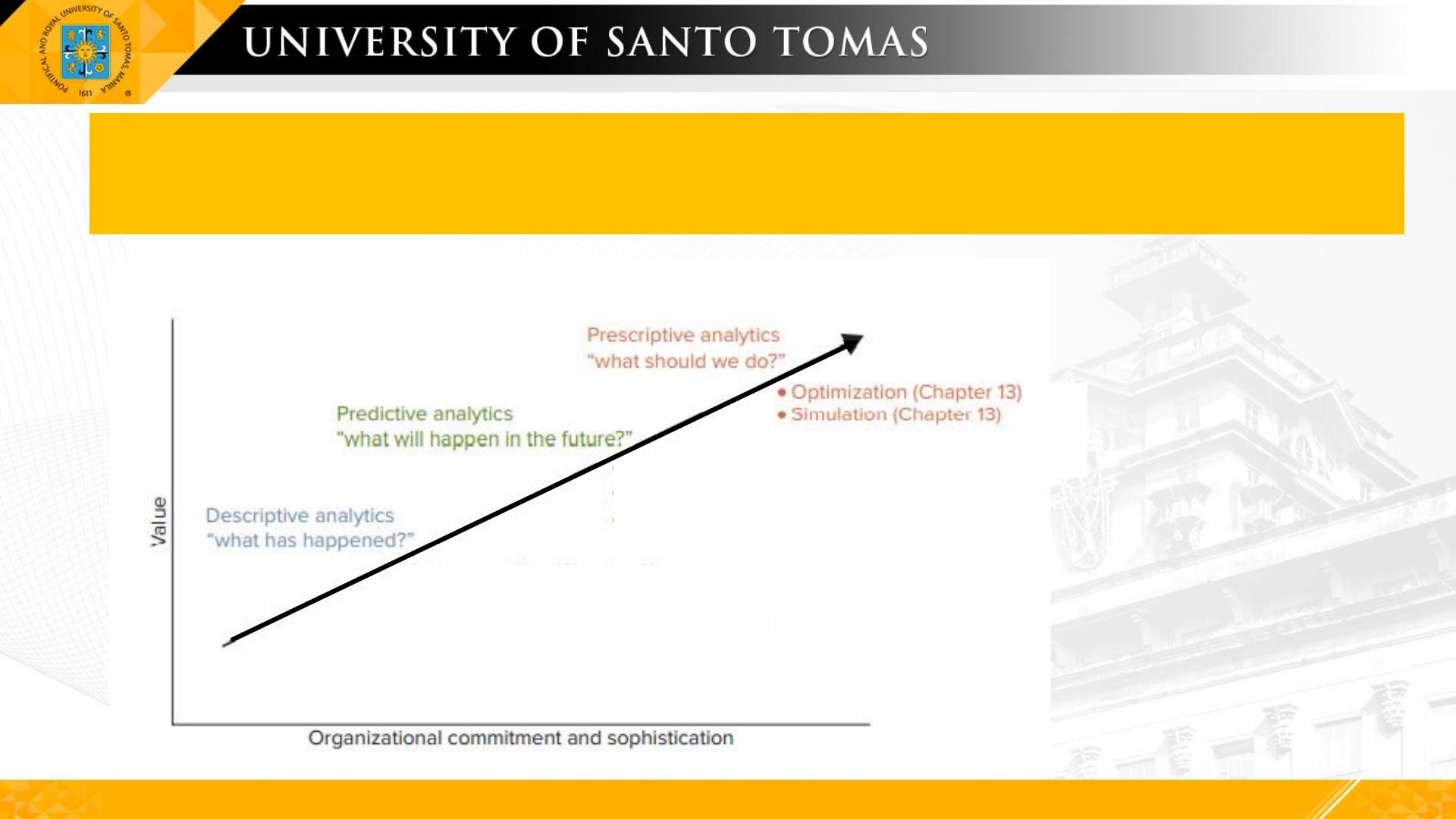
The 3 stages of business analytics (Jaggia et al, 2021)
-Optimization
-Simulation
–Data wrangling
-Data visualization
-Unsupervised data mining
-Regression
-Supervised data mining
-Forecasting
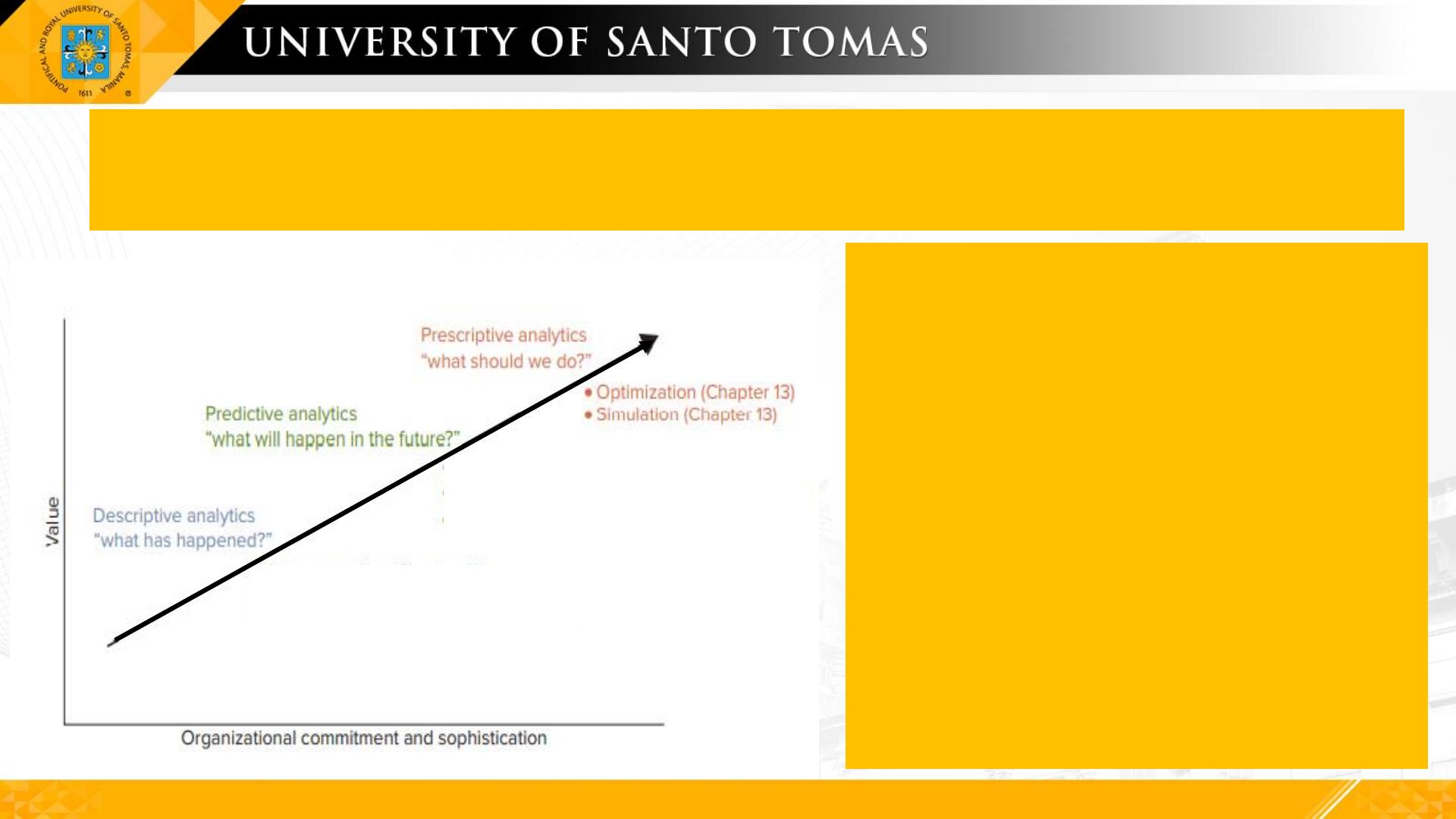
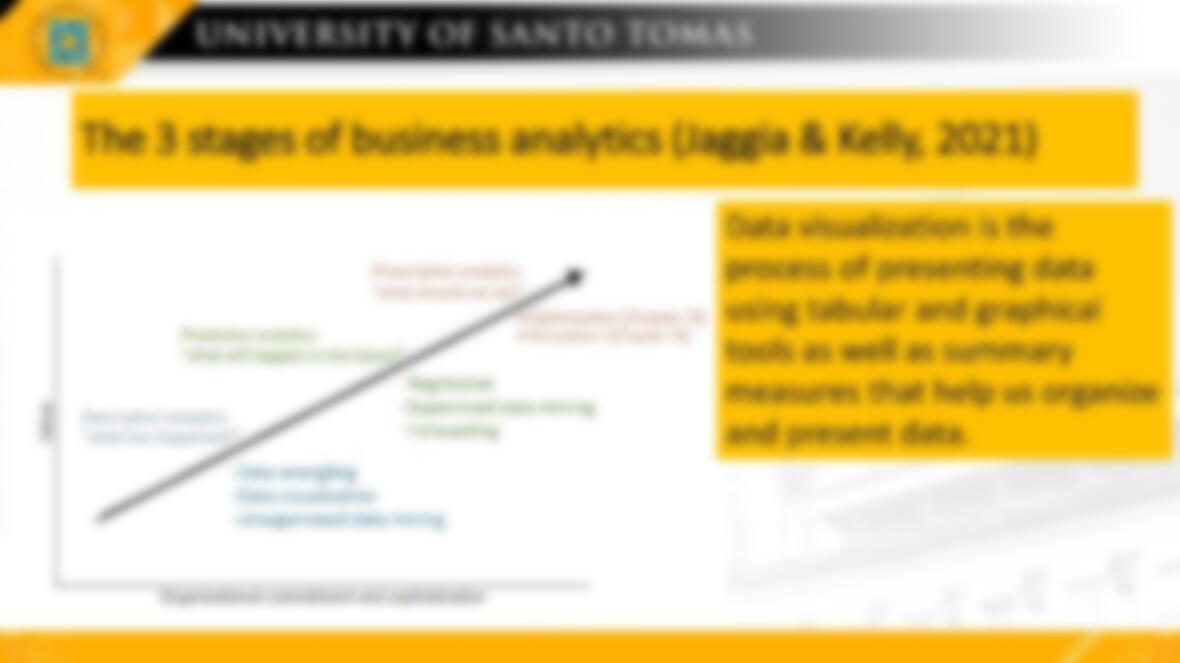
The 3 stages of business analytics (Jaggia & Kelly, 2021)
-Optimization
-Simulation
–Data wrangling
-Data visualization
-Unsupervised data mining
-Regression
-Supervised data mining
-Forecasting
Descriptive Analytics –refers to
gathering, organizing, tabulating
and visualizing data to
summarize “what has
happened”. Examples include:
Financial reports, public health
statistics, enrollment at
universities, students report
cards and crime rates across
regions and time.
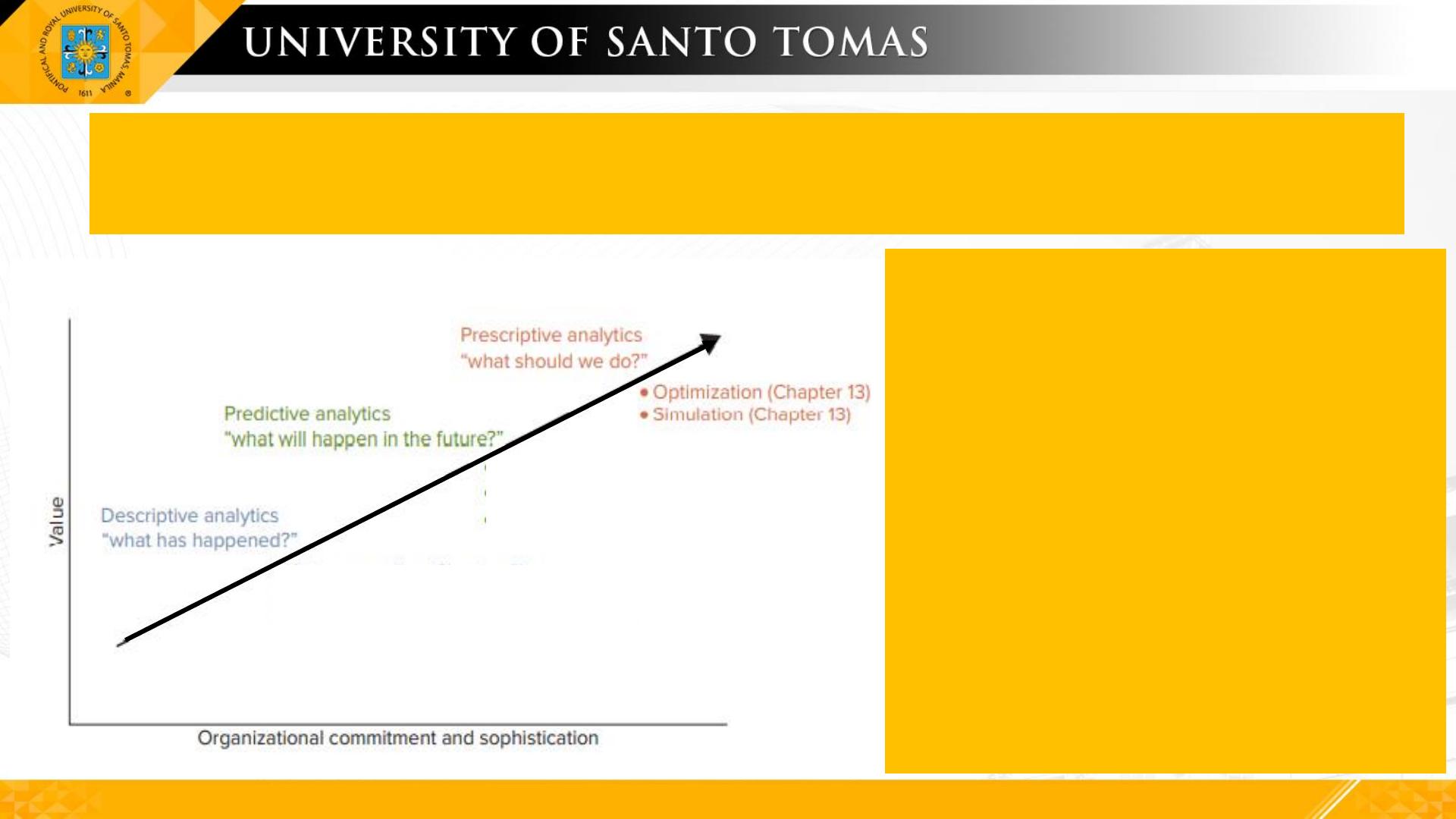
The 3 stages of business analytics (Jaggia & Kelly, 2021)
-Optimization
-Simulation
–Data wrangling
-Data visualization
-Unsupervised data mining
-Regression
-Supervised data mining
-Forecasting
Data wrangling is the process
of retrieving, cleansing,
integrating, transforming and
enriching data to support
analytics.
The key tasks during data
wrangling process are data
management, data inspection,
data preparation, and data
transformation.

Key tasks in Data wrangling
1. Data Management –is a process that an organization used to acquire,
organize, store, manipulate, and distribute data.
•A database is a collection of data logically organized to enable to enable
easy retrieval, management, and distribution of data. The most common
type used by organizations is the relational database. A relational
database consists of one or more logically related data files, where each
data file is a two-dimensional grid that consists of rows and columns.
•Database management system (DBMS) is a software application for
defining, manipulating, and managing data in databases. Popular DBMS
packages include Oracle, IBM DB2, SQP Server, MySQL and Microsoft
Access.

Key tasks in Data wrangling
2. Data Inspection
Once the raw data are extracted from the database, data warehouse or
data mart, they must be reviewed and inspected to assess data quality and
relevant information for subsequent analysis.