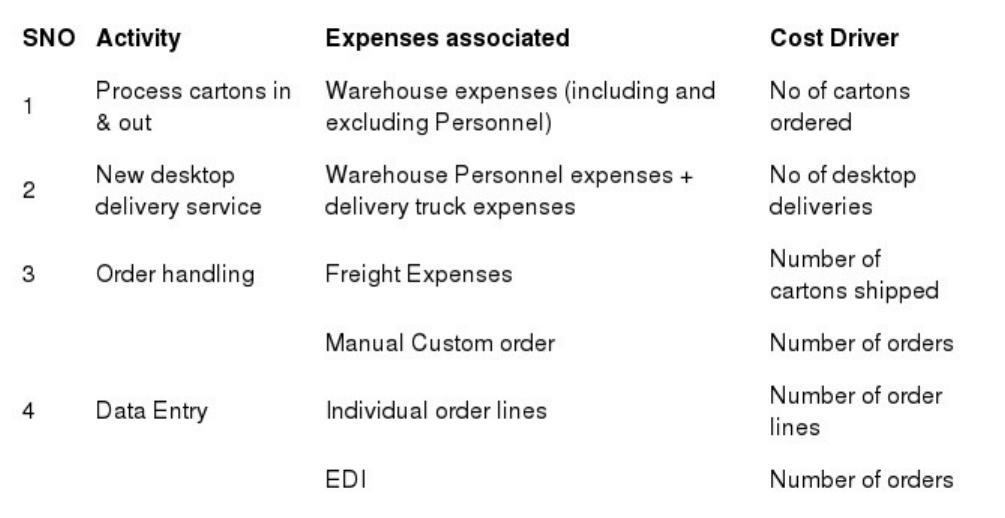
Distributor Case Study: ABC for Customer Profitability
•Develop an activity-based cost system for Dakota Office Products (DOP) based
on Year 2000 data. Feel free to use charts or diagrams to describe it. Calculate
the activity cost-driver rate for each DOP activity in 2000.
•
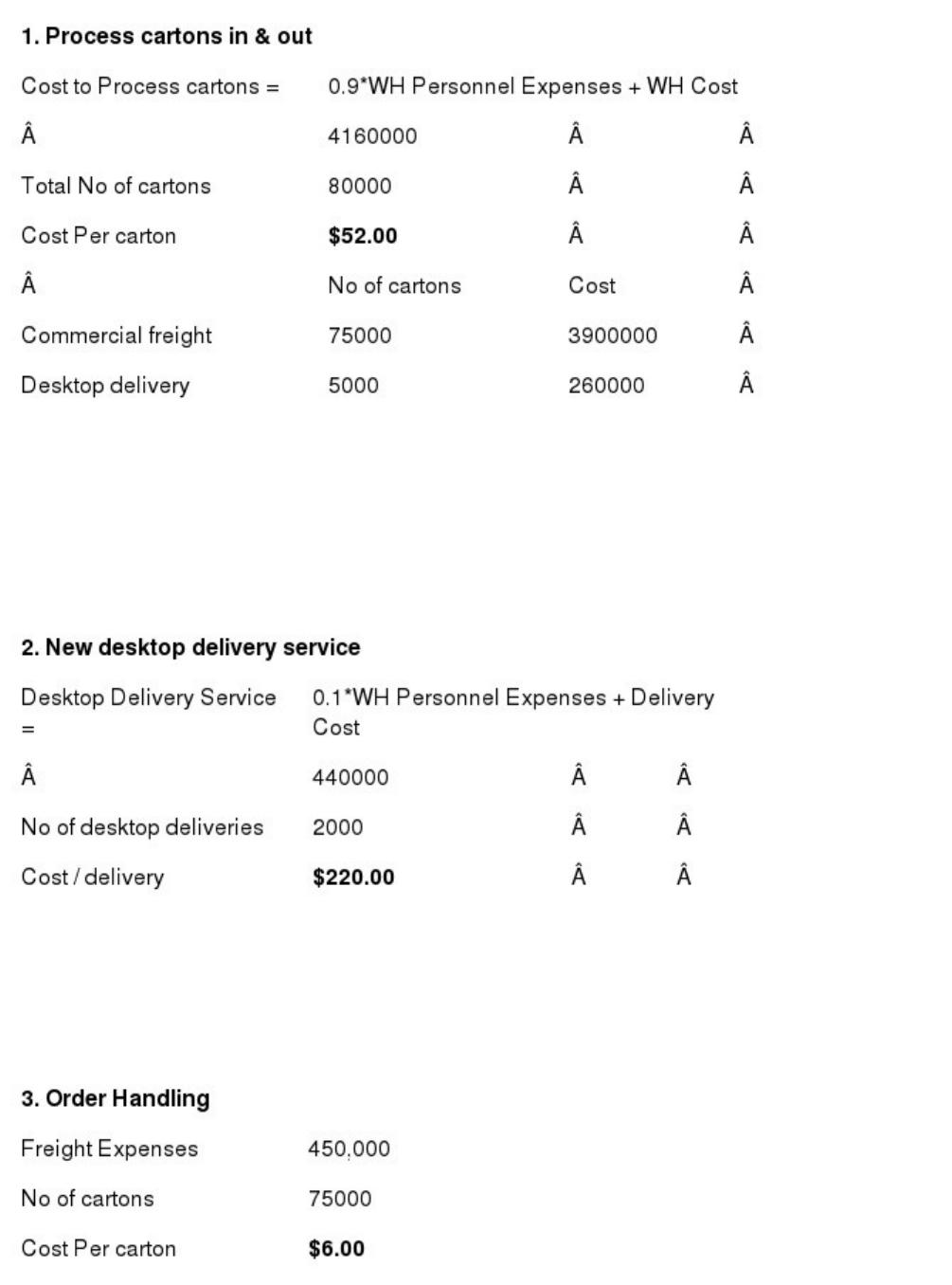
Cost Driver rates for each activity are as follows:
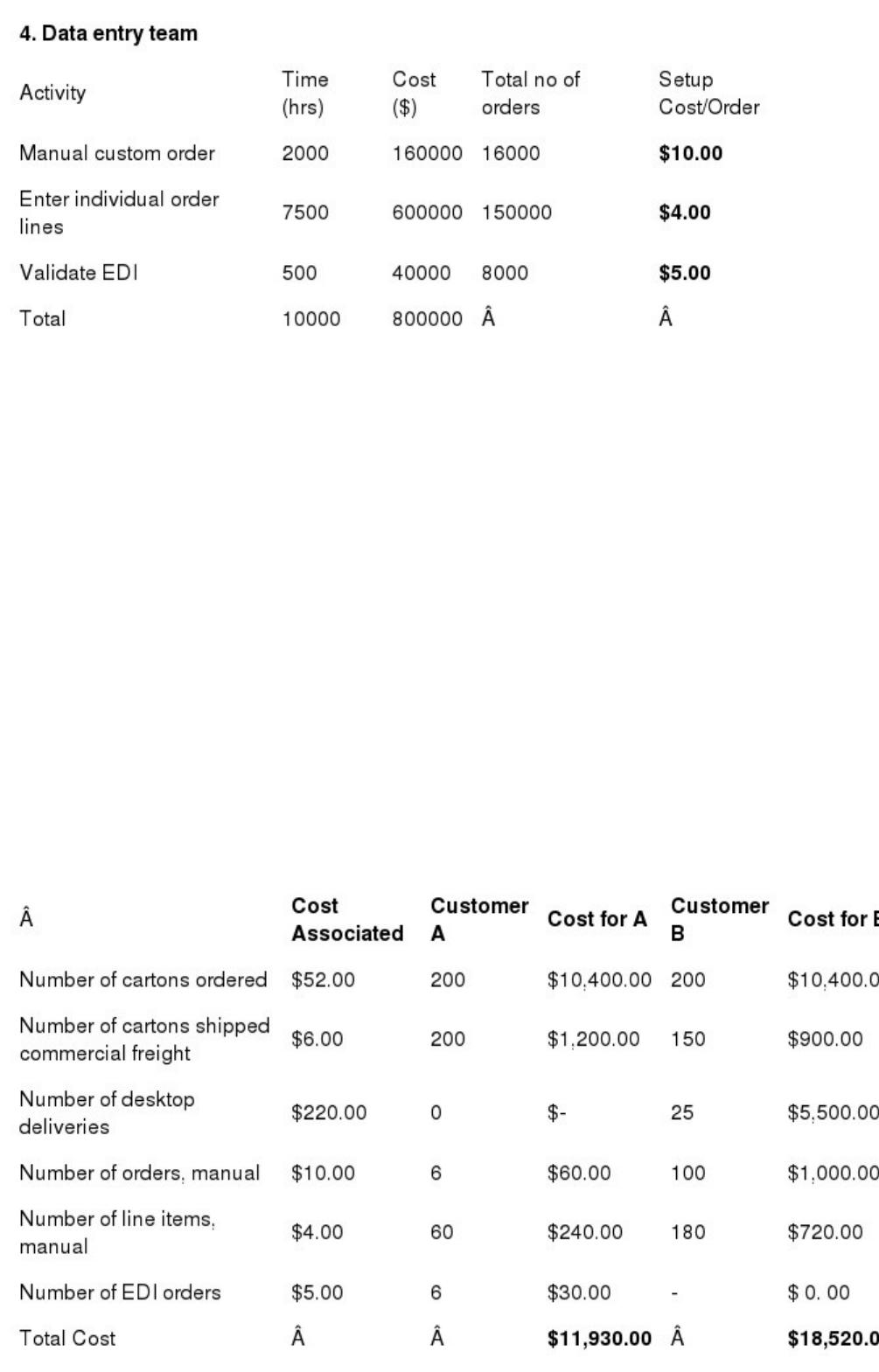
•Using your answer to Question 1, calculate the profitability of Customer A and
Customer B.
•
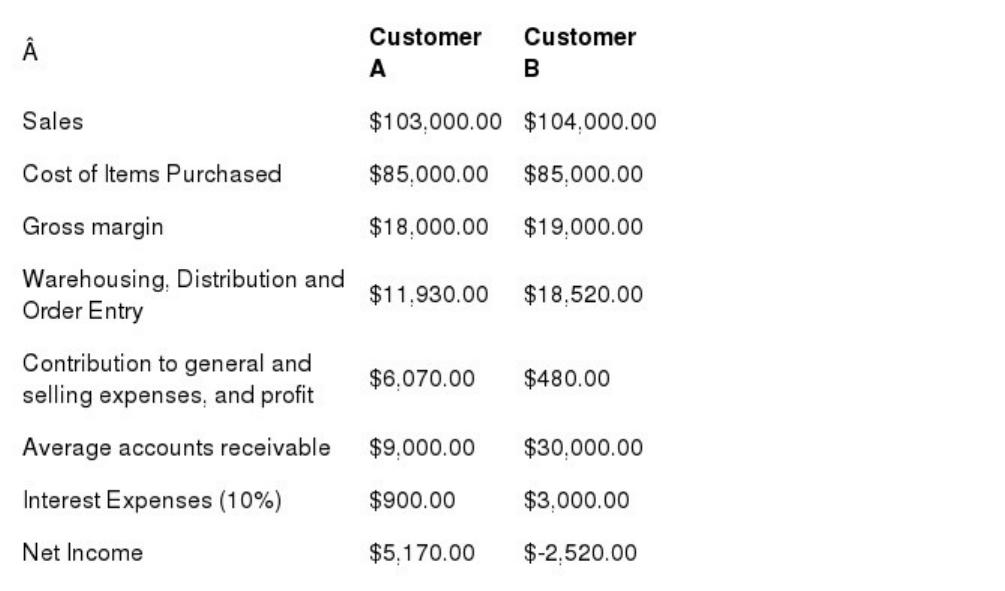
Thus, we can infer that customer A is profitable by $5170 whereas Customer B is in a loss
of $2520.
•Assume that Dakota applies the analysis done in Question 2 to its entire
customer base. How could such information help Dakota managers increase
company profits?
•
If Dakota Office Products changes the costing methodology to activity based for
the entire customer base, then the management will be able to make more informed
decisions. Compared to traditional method, ABC provides a more detailed and
accurate view of the expenses that are being incurred to produce a product. Hence
the indirect costs can now be directly attributed to specific activities. This is
especially useful when the complexity and varieties of the product or service is
higher. The management now can see where it can make improvements and reduce
costs in the manufacturing process to increase the profits. Additionally, it can
incentivize the customers to move towards platforms where it can reduce the cost
of activities that are being incurred (for e.g. online orders v/s manual orders)