CASE 1:
1, Project context:
The project involves whether to replace the current planes with currently available
alternatives. There are still many possibilities that management could assess but only 5
options are selected by management. An analysis will answer 2 questions: when to upgrade
and how long to upgrade. The quantitative analysis is based on assumption below.
Case 2:
1, Project context
The project involves whether to keep the old machine or replace it with the new one.
Based on the data provided, our calculation has been modeled in incremental cash flow. To
complete the analysis, we also need to consider the risks associated with the new
investment by using sensitivity analysis rather than just focus on the NPV of alternatives.
Case 3:
A) Fundamental characteristics of float:
B) Working out the issuing value of shares
CASE 1:
1, Project context:
The project involves whether to replace the current planes with currently available
alternatives. There are still many possibilities that management could assess but only 5
options are selected by management. An analysis will answer 2 questions: when to upgrade
and how long to upgrade. The quantitative analysis is based on assumption below.
2, Assumptions:
Firstly, there are obviously other possibilities that management could assess, such as keep
the current planes for one more year before replacing them with the current generation jets.
However, it is assumed that other alternatives have been considered and excluded by the
management.
Secondly, all the proposals will be evaluated using a constant chain of replacement in
perpetuity method.
Thirdly, all the cash flows are assumed to occur at the end of the year
Fourthly, all cash flows are in real terms. Consequently, those cash flows under the four
proposals will be discounted using the real rate of return.
Fifthly, 25% selling cost margin is applied to all sales.
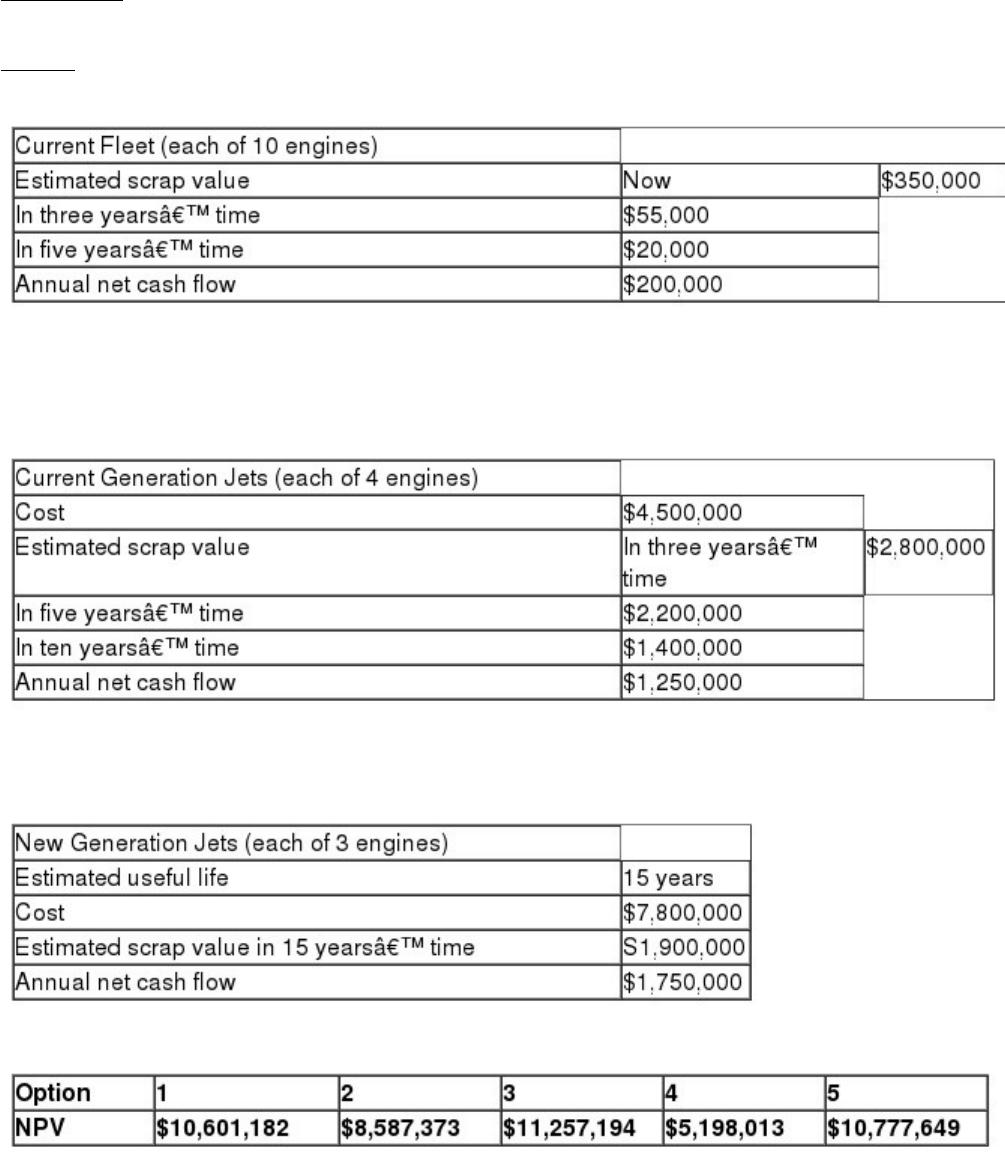
3, Valuation
Inputs:

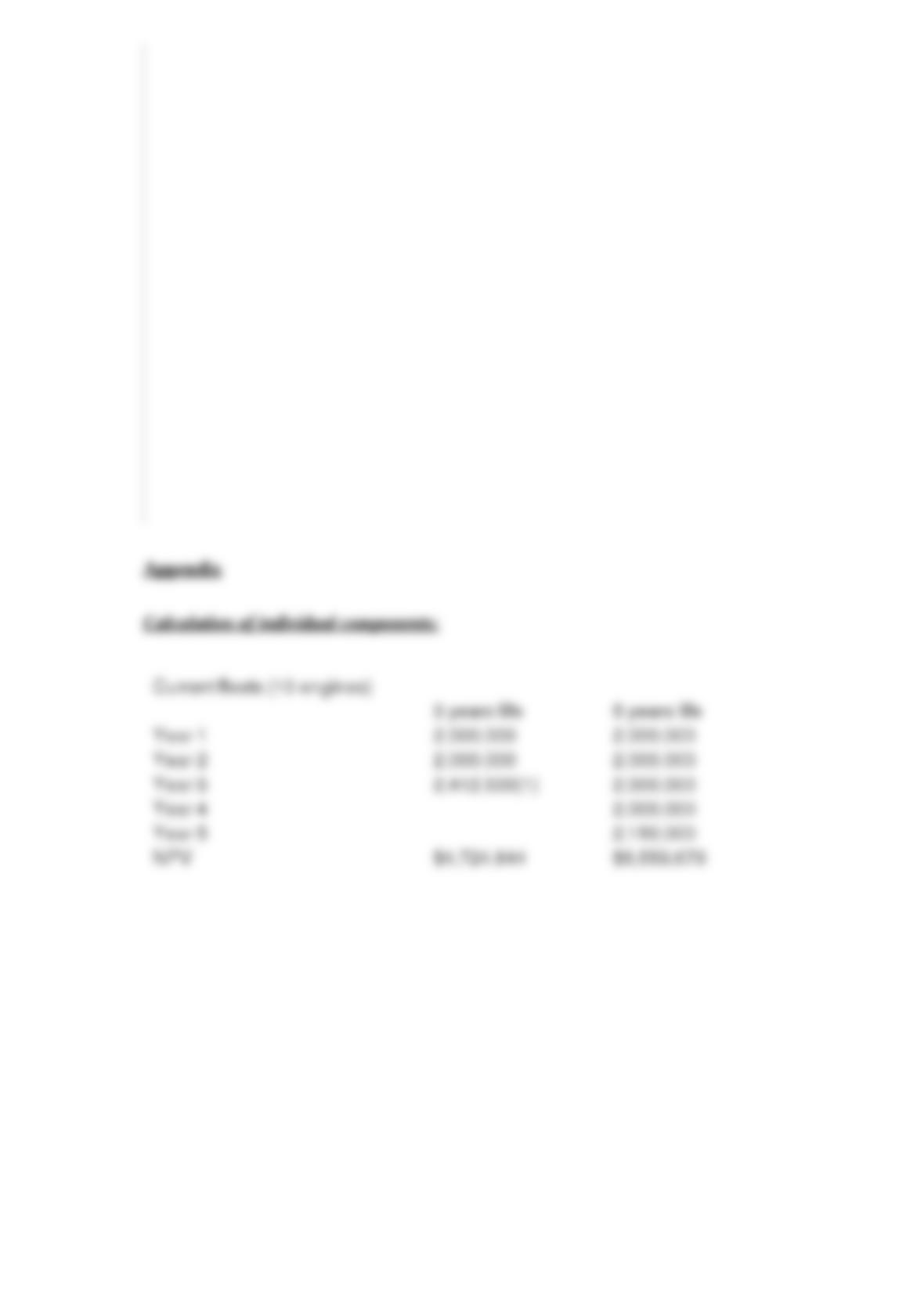
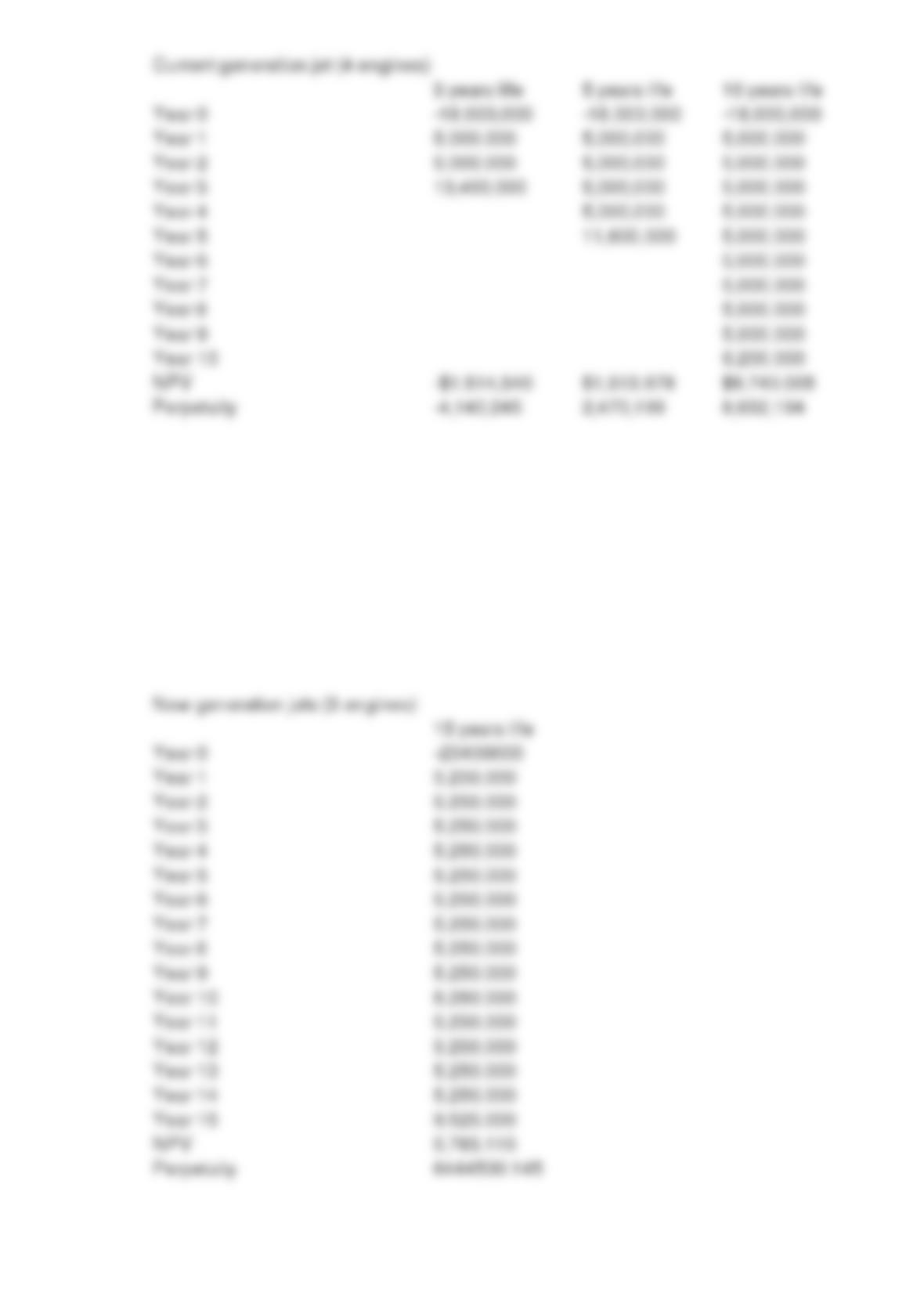
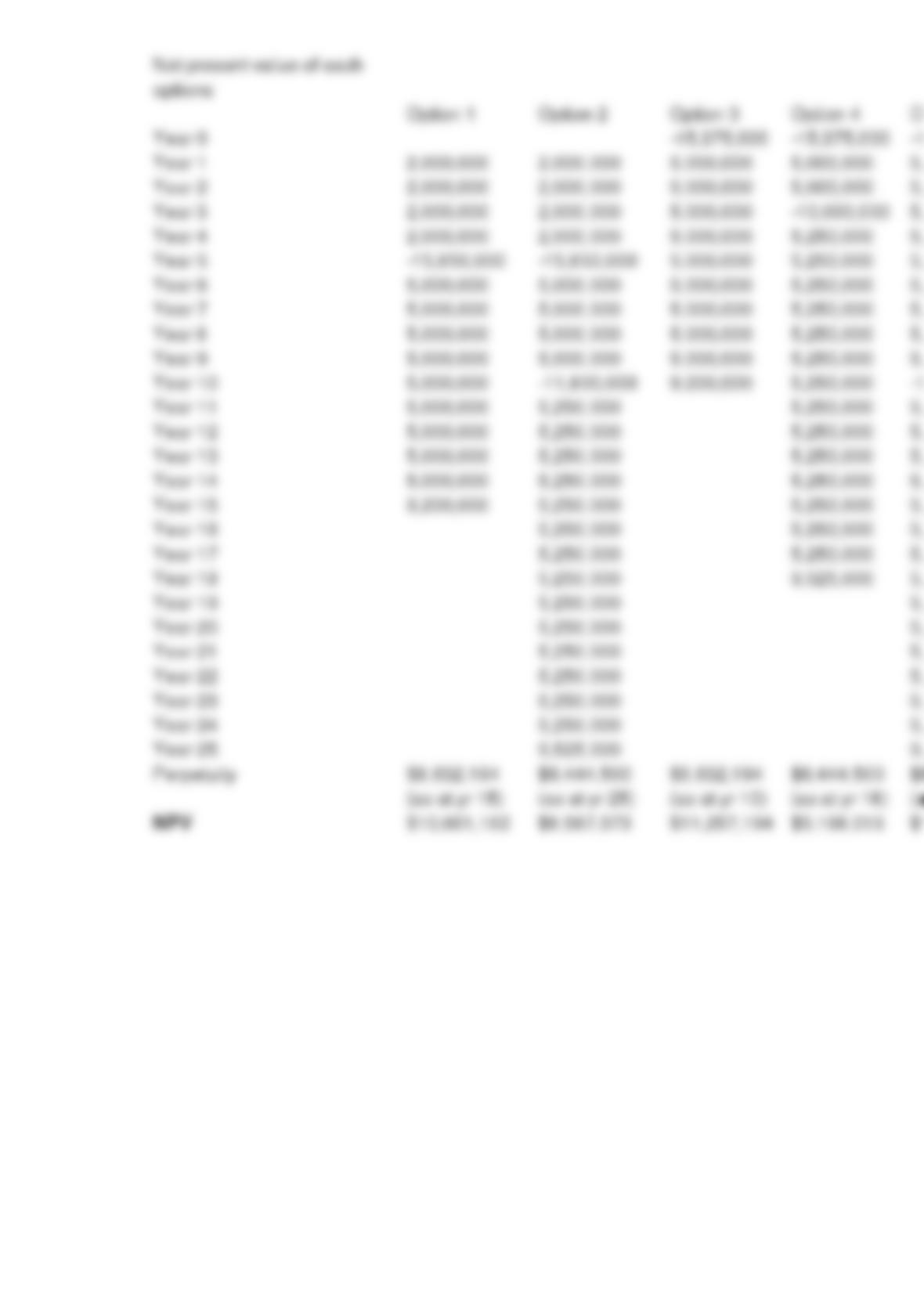
(Details for calculation are in appendix)
4, Conclusion:
Regarding to quantitative method, the best choice is only option 3 which states that we
replace the current fleet with the current generation jets and keep that forever because this
option generates the highest NPV. Our decision is even more valid if the new generation
small jets are available to use beyond 3 years as we still expect to keep our current
generation jets.
However, we do need to consider about the qualitative factors which also play a significant
role in decision making. For example, regardless of quantitative factors, managers still
want to replace the current jets with the new jets to remain the modern image of the
company as well as improve the satisfaction of customers and productivity. Moreover, if
company still goes for option 3 meaning that it refuses updating to the new jets; company
will face with the risk that its competitors will enter the market with the new jets after 3
years. Therefore, company’s cash flow from current jets will be eroded, possibly resulting
in negative NPV.
Case 2:
1, Project context
The project involves whether to keep the old machine or replace it with the new one.
Based on the data provided, our calculation has been modeled in incremental cash flow. To
complete the analysis, we also need to consider the risks associated with the new
investment by using sensitivity analysis rather than just focus on the NPV of alternatives.
2, Assumptions:
Firstly, all cash flows are in real terms. Consequently, those cash flows under the four
proposals will be discounted using the real required rate of return.
Secondly, we assume that the residual value of old and new machine is equal to 0
Thirdly, all cash flows are expected to occur at the end of each year. This makes our
calculation simple and still reasonable.
Fourthly, assume that the marginal tax, the cost of capital and the inflation rate are
unchanged. However, this assumption seems unrealistic because unstable economy
together with regular changes in the regulation is likely to change the marginal tax and the

cost of capital.
Fifthly, we capitalize the investment in new machine as an asset rather than an expense so
the tax reduction from depreciation will happen annually after that instead of being
deducted immediately in the year the investment starts.
3, Valuation
a, Calculate cost of ordinary shares and yields on debentures
For valuation calculation, see appendix ….
Rate of return expected on ordinary shares:
The current yields on debentures:
b, Project valuation
4, Conclusion
We should accept the investment as it generates the positive net present value and IRR
exceeds the real cost of capital. Additionally, we also have to consider the risk associated
with the new investment. Our assumptions are based on the current analysis of customers’
demand. However, the change in consumer needs and demands in the future and the
generation of new technology from its rivals might affect the NPV.
The NPV when we increase (decrease) the unit sale by 20% is not much different from the
NPV when we increase (decrease) the selling cost by 20%. Therefore we cannot decide
whether selling cost or unit sales are key factor in decision making. The sensitivity
analysis also involves some problems. Firstly, it is difficult to separate the relationship
between these 2 variables and the NPV. For example, when sale volume decreases by 20%,
selling cost also goes down so NPV is affected by decrease in both sale volume and selling
cost. Furthermore, it is inappropriate to examine the effect on NPV of 20% reduction in