Running Head: Crude Oil Prices 1
The central problem of this case is falling crude oil prices and how it affects the global economy
and economic growth of oil producing countries.
According to the Energy Information Administration (EIA) World oil prices are
influenced by a number of factors, some of which have short-term impacts. Others, such as
expectations about world oil demand and OPEC [Organization of Petroleum Exporting
Countries] production decisions, affect prices in the longer term. Supply and demand in the
world oil market are balanced through responses to price movements.
As with any commodity, oil price is determined by the interaction between supply and
demand. The basic law of supply states that as the price of oil commodity rises, oil producers
will response by increasing production to gain more profit. On the other hand, as oil prices
decrease when supply is abundant, oil producers will respond by decreasing production to cut
losses. The basic law of demand states that as the price of oil price rises, oil consumers will
response by decreasing consumption. On the other hand, as oil prices decreases and supply is
abundant, oil consumers will respond by increasing consumption. But oil is the most widely-
traded commodity and fluctuating prices profoundly affect national economies. To guard against
these fluctuations, many businesses take advantage of the futures market to safeguard against
movement in the price of oil.
Crude Oil Prices 2
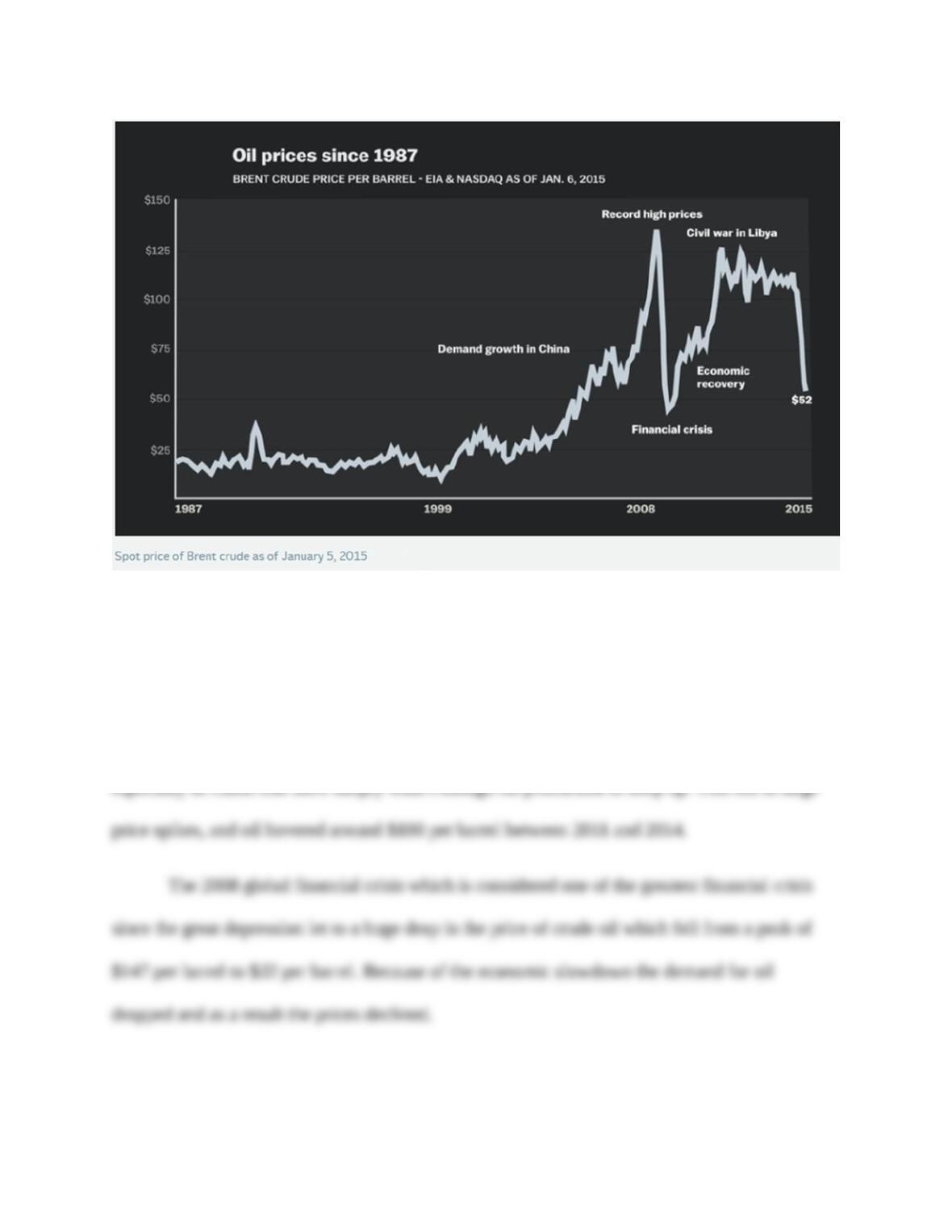
According to EIA between 2000 and 2010 there was a 40% increase in the demand for oil
because of soaring oil consumption in countries like China, India and Saudi Arabia and conflicts
in key oil nations like Iraq. Rising oil consumption reflects rapid economic growth in these
countries during that time. Oil prices were rising sharply because global demand was surging