Crocs: Revolutionizing an Industry’s Supply
Chain Model for Competitive Advantage
Group 4; Case study
Brittney Gaudino, Sanaa Hassou, Nicholas Hohman, and Judith Taffou
Case Study Write-Up Group 4
Brittney Gaudino
Sanaa Hassou
Nick Hohman
Judith Taffou

Case Study Write-Up Group 4
Table of Contents
INTRODUCTION 3
Low Power of Suppliers 3
High Threat of Substitutes 3
Low Power of Customers: 4
Low Intensity of Existing Rivalry: 4
Moderate Threat of New Competitors: 4
The Financial: 5
Crocs’ Problem at Hand: 6
Core Competencies: 6
The Crocs Value Chain 7
Crocs’ Next Move: 9
Reference: 11
Appendix: 12
2
Case Study Write-Up Group 4
Crocs began in 2002 on a sailing trip, as a solution to stinky, slippery boat shoes. The business
grew rapidly, through both organic and acquisitive efforts, going public in early 2006. While
Crocs began as simply a distributor of a novel product invented and manufactured by another
firm, within two years of their inception, they began a journey to develop a supply chain model
unique within the shoe industry. This flexible manufacture and delivery model allowed
customers (retailers) to minimize the risk of excess or undesirable inventory by not requiring
significant pre-booked orders months in advance of the next “shoe season.” This lead time
reduction, as well as the ability to order small quantities of a variety of SKUs (model/color
combinations), lowered the cost of carrying inventory for customers and increased their
willingness to take the risk of carrying these colorful, unique shoes. Crocs continued to tweak its
operations, including strategic partnerships and wholly-owned facilities, as sales grew globally
through marketing efforts and acquisitions. In early 2007, Crocs made its first step into a
product line that was not predominantly resin with the acquisition of Ocean Minded. The
introduction of products that were not manufactured solely from Croslite presented a new
challenge to their historically successful flexible manufacturing and distribution model. Crocs
Management has to determine how to continue their successful operating model with a more
complex product line.
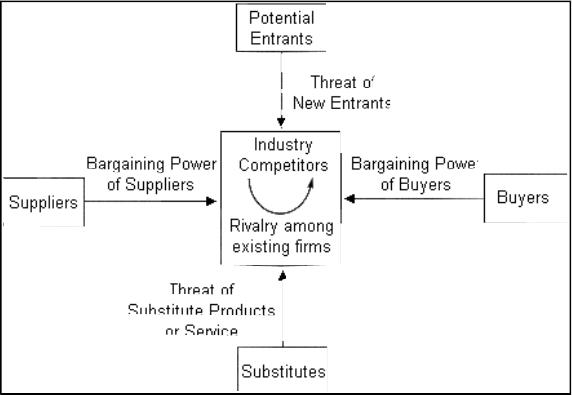
Crocs’ organization and competitive environment can be described using Porter’s Five Forces as
follows:
Low Power of Suppliers: The cost of switching suppliers is relatively low due to
Croc’s ownership of the Croslite “recipe” and tooling required to
manufacturing their products. As they expand into new product lines,
they will need to carefully manage their raw material requirements
and vendor development efforts to maintain minimal supplier
leverage. Crocs uses multiple distribution
partners, which minimizes leverage
of any single supplier. Crocs initial
product was manufactured out of
100% resin, which was compounded by a third party who has a strategic
relationship with Foam Creations, the original manufacturer of Crocs.
Resins are a widely available raw material that is relatively low cost,
which does not allow raw material suppliers to have significant leverage
over the company. While a third party was integral to the foam creation process,
Crocs owned proprietary rights to the creation of Croslite. Expansion into new
products that require fabrics, leather, suede and rivets increases Crocs’ reliance on more
suppliers. If not carefully managed, Crocs could face supply availability and cost issues as they
continue with their flexible manufacturing model, which is unique in the shoe industry.
High Threat of Substitutes: While Crocs’ initial product offering is unique, it is still a shoe and
there are a wide variety of substitutes available to consumers. The availability of substitutes
increases the importance of product positioning, brand recognition and product differentiation for
Crocs. Crocs differentiates itself from other shoes via the closed cell resin used to make their
shoes that is colorful, non-marking, non-skid, comfortable and odor free. Additionally, they
focused on specialized uses, such as boating, other outdoor beach/wet activities, then podiatric
3
Case Study Write-Up Group 4
needs and workplace comfort. The focus on these narrow uses initially helped Croc mitigate the
risk of consumer preference for substitutes.
Low Power of Customers: Consumer trends have a significant impact on Crocs. Crocs are not
inexpensive relative to many of their substitutes, so brand awareness and loyalty is critical to the
company. Crocs’ has both large and small customers (distributors) and they treat these customer
groups differently, focusing on each group’s unique needs. Having a significant number of
diverse customers across the globe minimizes customer leverage.
Low Intensity of Existing Rivalry: The shoe industry is large and global, with lots of companies,
big and small, regional and multi-national. The size of the industry and lack of dominant global
players within the specific product categories Crocs plays in benefits the company. Additionally,
companies enter and exit the shoe market regularly, with varying degrees of success.
Moderate Threat of New Competitors: While the barriers to entry in the shoe business are
relatively low when operating on a small scale, the ability to get product into retailers on a wide
scale requires the capability to not only book significant pre-orders (traditional industry
practice), but also to produce and distribute the products to meet customers’ needs. Establishing a
larger scale operation increases the barrier to entry. Love it or hate it, Crocs has a high level of
brand recognition globally, which is critical to their success and makes it more difficult for others
to compete with them globally. Additionally, Crocs holds intellectual property, acquired through
Foam Creations, for the compounding of their closed cell resin, which makes their product
uniquely non-marking and odor free. They closely protect the tooling used to mold their shoes,