MANAGERIAL ACCOUNTING
ACC 505
COURSEPACK
Chapter 1: MANAGERIAL ACCOUNTING AND THE
1
BUSINESS ENVIRONMENT
This chapter attempts to answer three questions:
1) What is managerial accounting?
2) Why does managerial accounting matter to your career?
3) What skills do managers need to succeed?
Question 1 – What is managerial accounting?
Financial accounting – concerned with reporting financial information to external
parties, such as stockholders. Financial accounting emphasizes the financial
consequences of past activities, objectivity and verifiability, precision, and
companywide performance.
Managerial accounting – concerned with providing information to managers for use
within the organization. Managerial accounting emphasizes decisions affecting the
future, relevance, timeliness, and segment performance.
Segment – a part or activity of an organization about which managers would like
cost, revenue, or profit data.
Managerial accounting helps managers perform three vital activities:
1) Planning
2) Controlling
3) Decision making
Planning – establishing a goal often accompanied by a budget.
Controlling – gathering, evaluating, and responding to feedback
Decision making – perhaps the most basic managerial skill is the ability to make
intelligent, data-driven decisions.
Question 2 – Why does managerial accounting matter to your career?
Business majors – planning, controlling and decision making affect three majors
other than accounting – marketing, operations management, and human resource
management.
Accounting majors – The Institute of Management Accountants (IMA) estimates that
more than 80% of professional accountants in the US work for nonpublic accounting
environments. There is a very high likelihood that your future will involve working for
a nonpublic accounting employer who will expect strong financial accounting skills.
Professional Certification – A Smart Investment – Certified Management
Accountant (CMA) designation is a globally respected credential that will increase
your credibility, upward mobility, and compensation.
Question 3 – What skills do managers need to succeed?
2
An Ethics Perspective – The ethical standards provide sound, practical advice
for management accountants and managers. Most of the rules in the ethical
standards are motivated by a very practical consideration – if these rules were
not generally followed in business, then the economy and all of us would suffer.
Not only is ethical behavior the lubricant for our economy, it is the foundation of
managerial accounting.
The numbers that managers rely on for planning, control, and decision making
are meaningless unless they have been completely, objectively, and honestly
gathered, analyzed and reported.
Strategic Management Skills – Successful managers understand that the plans
they set forth, the variables they seek to control, and the decisions they make are
all influenced by their company’s strategy.
What is a strategy? A game plan for attracting customers.
Enterprise Risk Management Skills – a process used by a company to identify
those risks and develop responses to them that enable it to be reasonably
assured of meeting its goals.
Corporate Social Responsibility Perspective – Corporate social responsibility
(CSR) is a concept whereby organizations consider the needs of all stakeholders
when making decisions. CSR extends beyond legal compliance to include
voluntary actions that satisfy stakeholder expectations.
Companies are responsible for creating strategies that produce financial results
that satisfy stockholders. However, they also have a corporate social
responsibility to serve other stakeholders – such as customers, employees,
suppliers, communities, and environmental and human rights advocates- whose
interest is tied to the company’s performance.
Process Management Skills – continually improve the process that serve
customers – “Improve by 1% everyday” – Zappos
Business process – a series of steps that are followed in order to carry out
some task in a business.
Value chain – major business functions that add value to a company’s products
and services.
Lean Production – a management approach that organizes resources such as
people and machines around the flow of business processes and that only
produces units in response to customers’ orders – just in time production.
Leadership Skills – Organizations are managed by people. Therefore, the
ability to lead is crucial to your success in an organization. You must develop the
following skills:
3
Intrinsic Motivation – A leader is deemed credible if he or she
possesses these skills:
Technical competence
Personal integrity
Strong communication skills
Strong mentoring skills
Strong listening skills
Personal humility
If a leader possesses these traits, then he or she is able to
intrinsically motivate – or motivate from within – others to readily
and energetically channel their efforts towards achieving
organizational goals.
Extrinsic Motivation – motivating employees with external incentives,
such as bonuses, to highlight important goals and to motivate
employees to achieve them.
Cognitive Bias – Leaders need to be aware that all people (including
themselves) possess cognitive biases, or distorted thought processes,
that can adversely affect planning, controlling, and decision making.
Leaders need to eliminate cognitive biases by first, recognizing their
own susceptibility to cognitive biases and second, acknowledge the
presence of cognitive biases in others and introduce techniques to
minimize their adverse consequences.
PRACTICE
4
1. Which of the following is a five step management approach that organizes
resources around the flow of business processes and that pulls units through
these processes in response to customer orders?
a. Theory of constraints
b. Value chain
c. Supply chain management
d. Operational Excellence
e. Lean thinking model
2. Which of the following is a production and inventory control system in which
materials are purchased and units are produced only as needed to meet actual
customer demand?
a. Just-in-time
b. Value chain
c. Supply chain management
d. Work in process
e. Lean thinking model
3. Which of the following is a management approach that coordinates business
processes across companies to better serve end consumers?
a. Just-in-time
b. Value chain
c. Supply chain management
d. Operational Excellence
e. Lean thinking model
4. The business functions that add value to a company’s products and services
such as research & development, product design, manufacturing, marketing,
distribution, and customer services are known as the:
a. Value chain
b. Non-value-added activities
c. Constraint
d. Business process
e. Strategy
5. Anything that prevents an organization or individual from getting more of what it
wants is a:
a. Business process
b. Strategy
c. Staff position
d. Corporate governance
e. Constraint
6. A series of steps that are followed to carry out some task in a business is a:
a. Strategy
b. Product leadership
5
c. Value chain
d. Sarbanes-Oxley Act
e. Business process
7. Which of the following is not a true statement?
a. Just in time is a production system in which units are produced and
materials are purchased only as needed to meet actual customer demand.
b. In a just in time system, the flow of goods is controlled by a push approach
in which partially completed units are “pushed” forward to the next
workstation as soon as work is completed at the prior workstation.
c. Just in time production is a facet of the lean thinking model.
d. All of the above are true statements
8. Which of the following management approaches emphasizes the importance of
management constraints?
a. Just in time
b. Lean thinking
c. Operational excellence
d. Theory of constraints
e. Value chain
9. Staff positions:
a. Are not shown on the organization chart.
b. Are superior in authority to line positions.
c. Are subordinate in authority to line positions.
d. None of these
10. The controller:
a. Occupies a staff position
b. Occupies a line position
c. Has little influence in the decision-making process
d. None of these
6

11. In a decentralized organization, decisions are made:
a. Only by top management
b. Only by managers occupying staff positions
c. At the lowest managerial level possible in the organization
d. None of these
12. After careful planning, Jammu Manufacturing Corporation has decided to switch
to a just-in-time inventory system. At the beginning of this switch, Jammu has 30
units of product in inventory. Jammu has 2,000 labor hours available in the first
month of this switch. These hours could produce 500 units of product. Customer
demand for this first month is 400 units. If just-in-time principles are correctly
followed, how many units should Jammu plan to produce in the first month of the
switch?
a. 370
b. 400
c. 430
d. 470
13. The delegation of decision making to lower levels in an organization is known as:
a. the planning and control cycle.
b. controlling.
c. decentralization.
d. none of these.
SOLUTION
7
1. e
2. a
3. c
4. a
5. e
6. e
7. b
8. d
9. d
10
.
a
11
.
c
12
.
a
13
.
c

Chapter 2: MANAGERIAL ACCOUNTING AND COST
CONCEPTS
Cost Classification
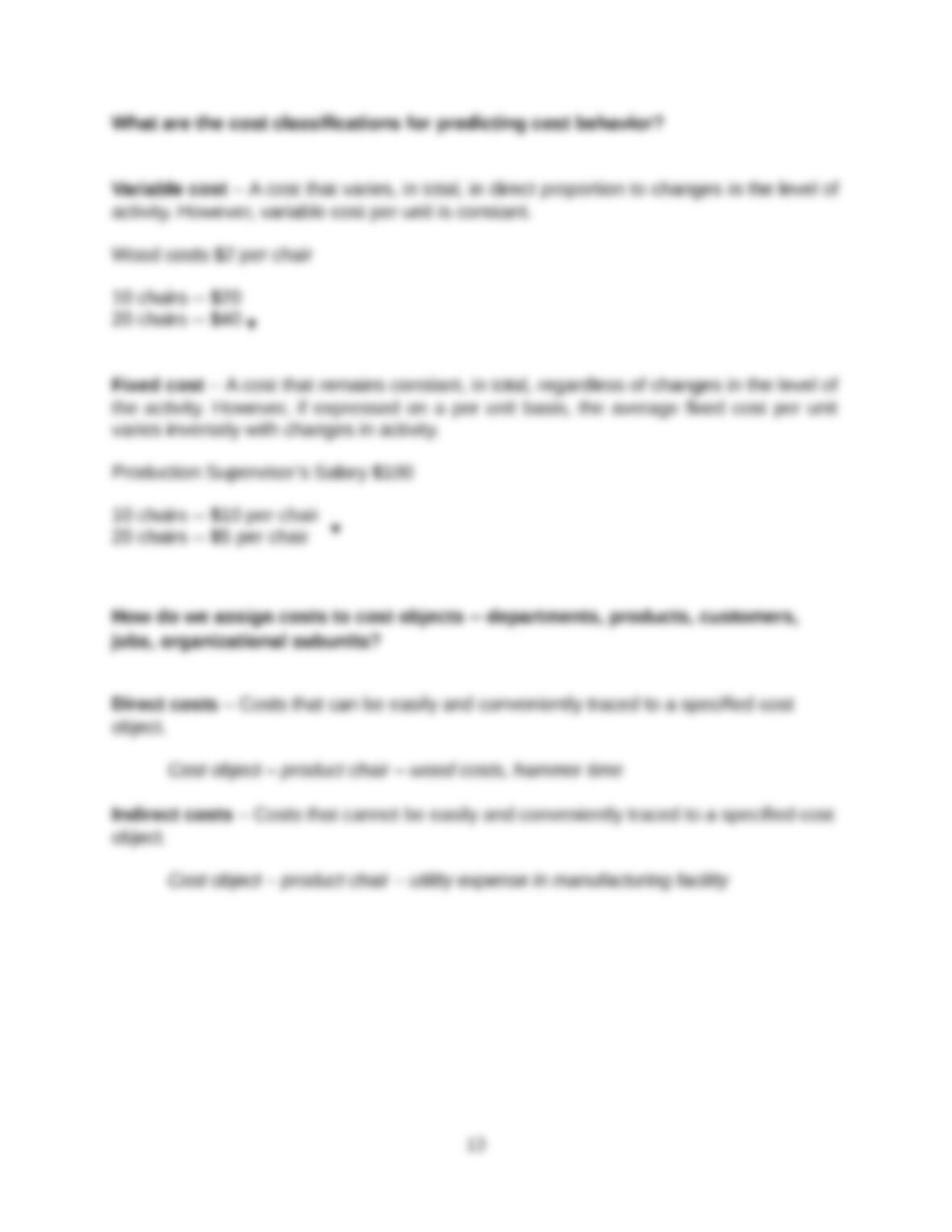
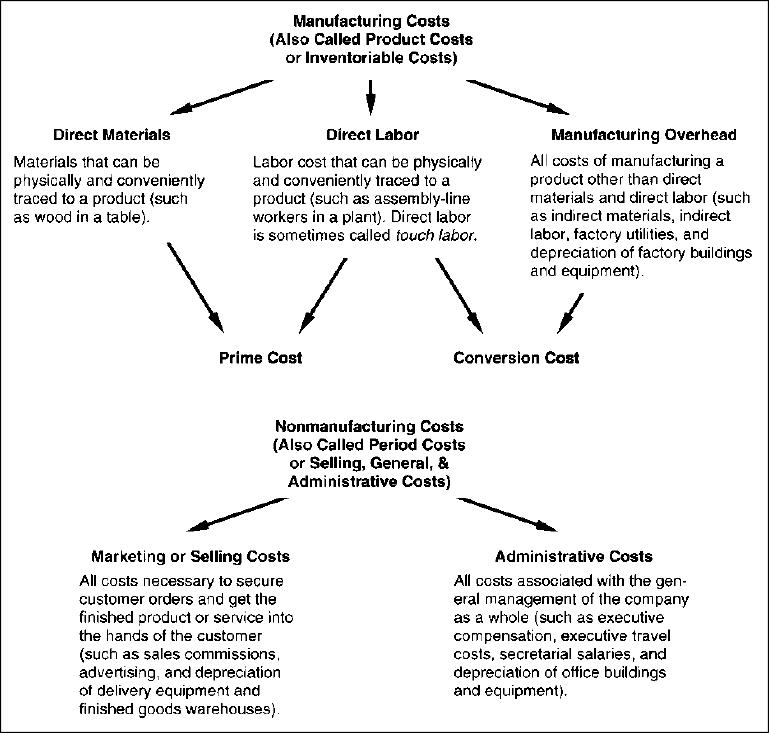
Manufacturing Costs
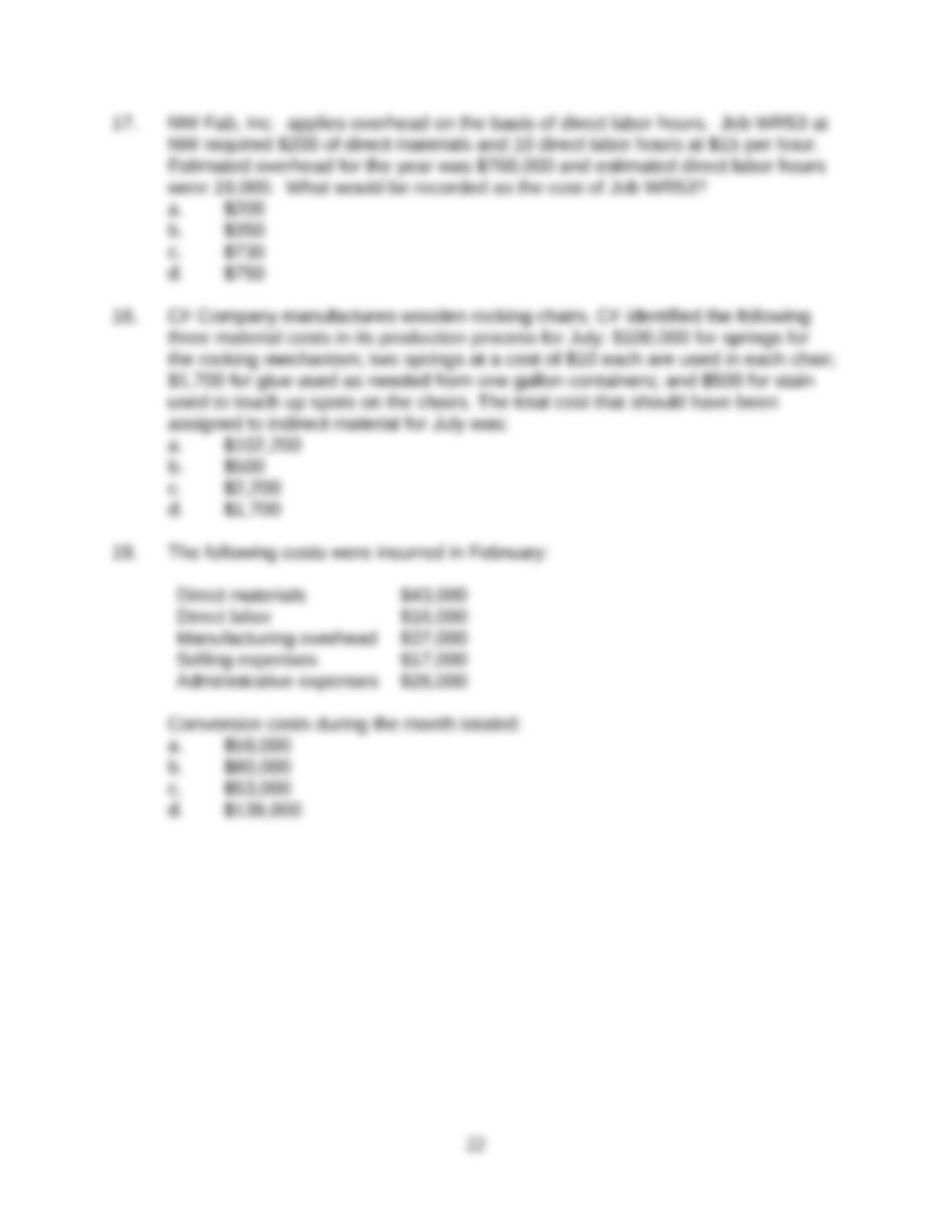
Direct Material— materials that are an integral part of the finished product
Direct Labor— labor that can be easily traced to the product
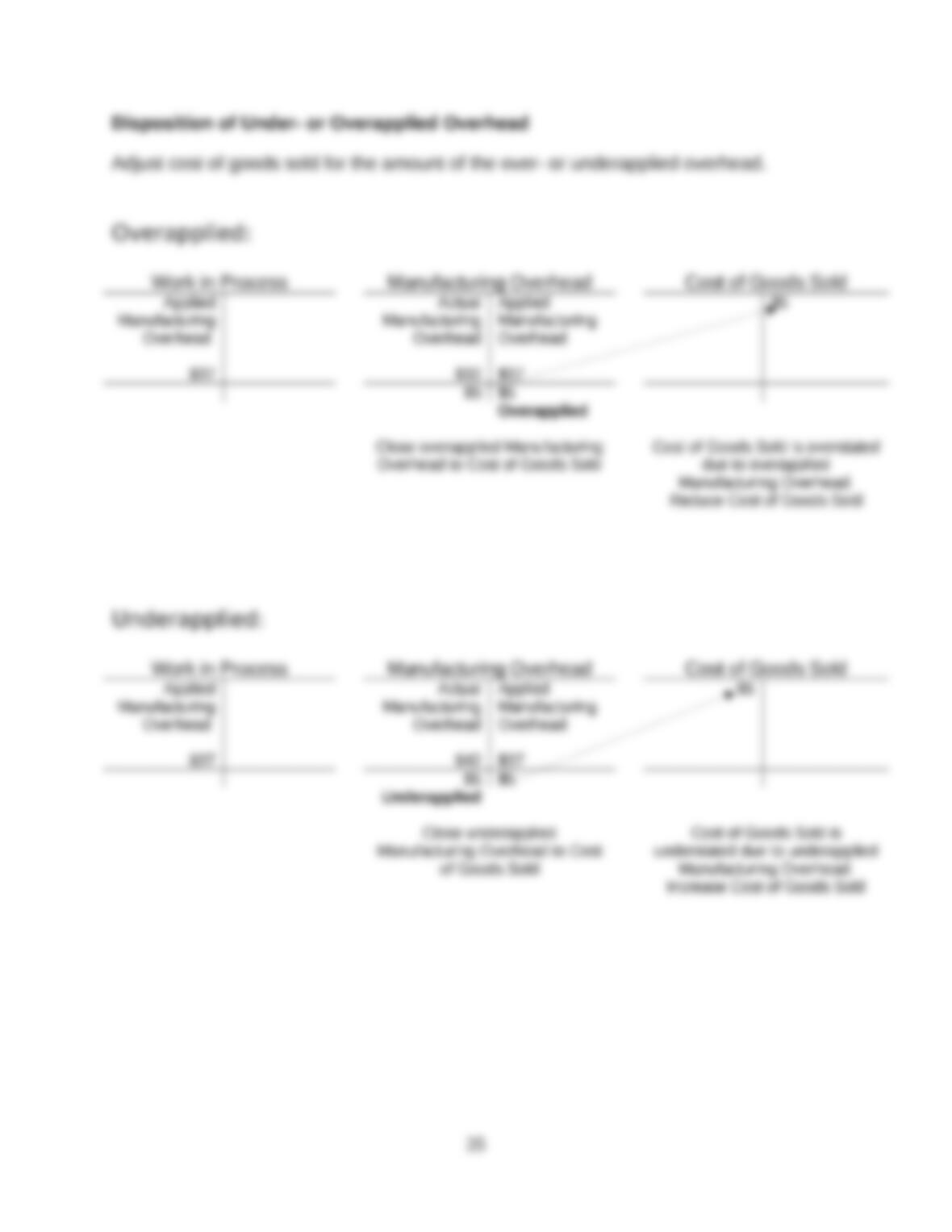
Manufacturing Overhead— all other manufacturing costs
Non-Manufacturing Costs
Divided into Selling and Administrative Costs
Selling and Administrative costs are not related to manufacturing
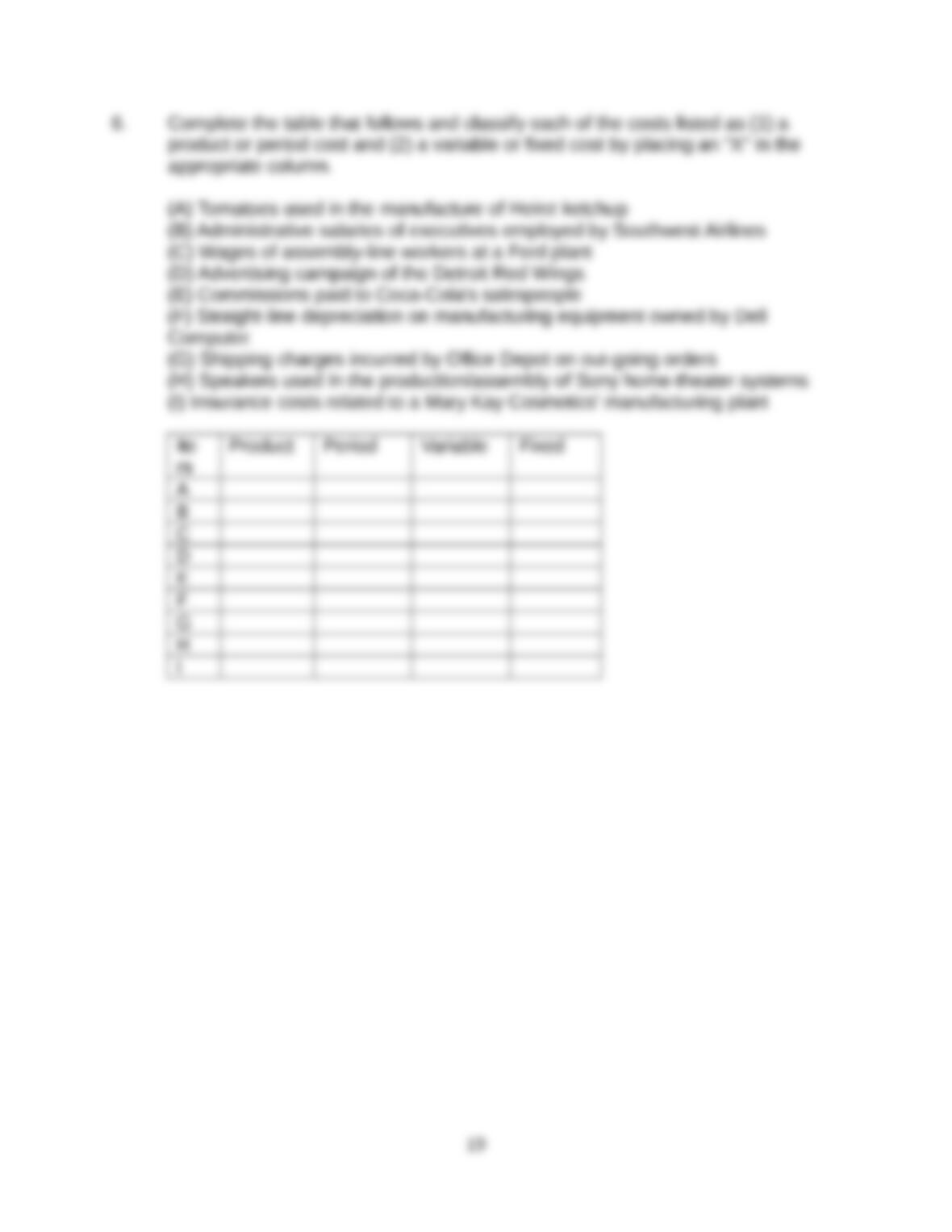
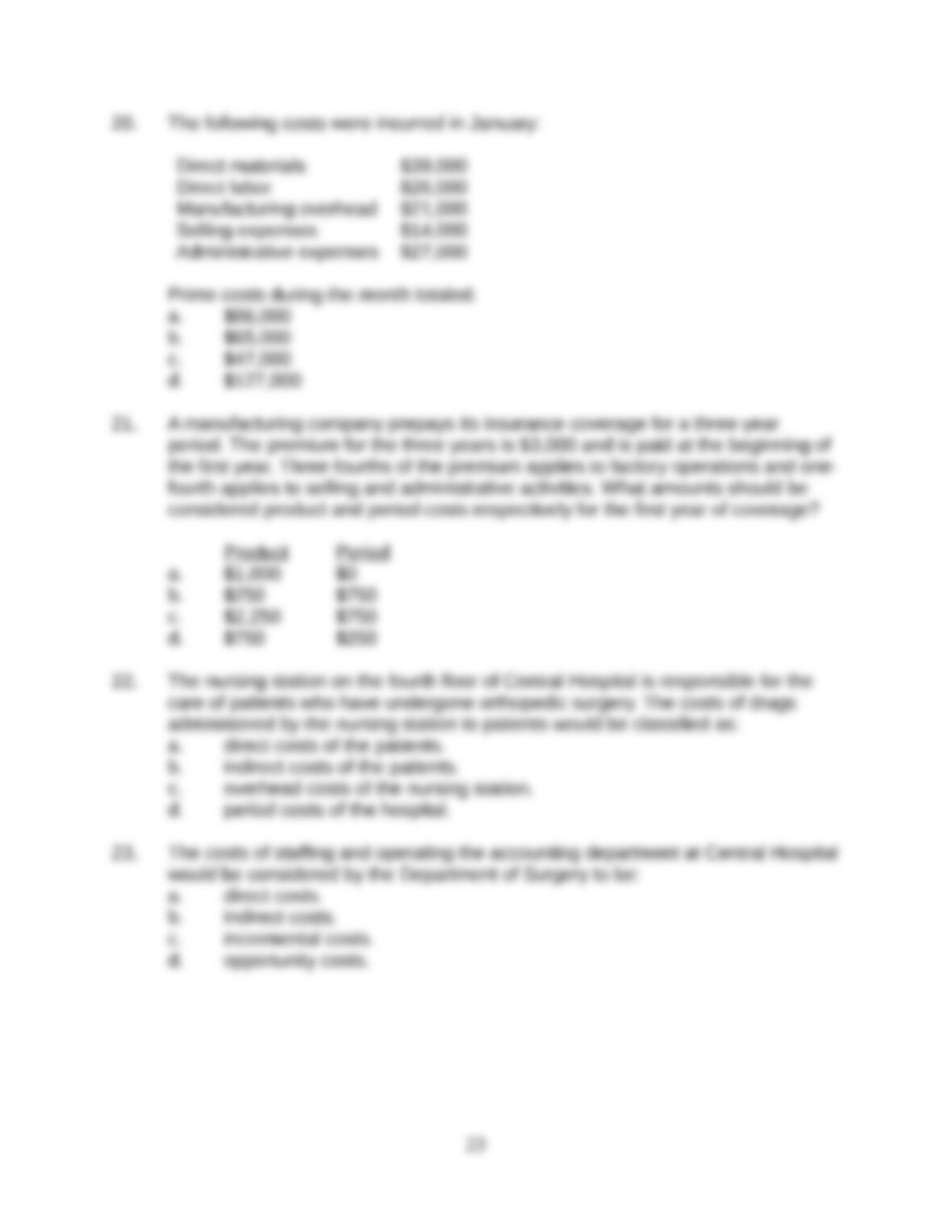
Product vs. Period Costs
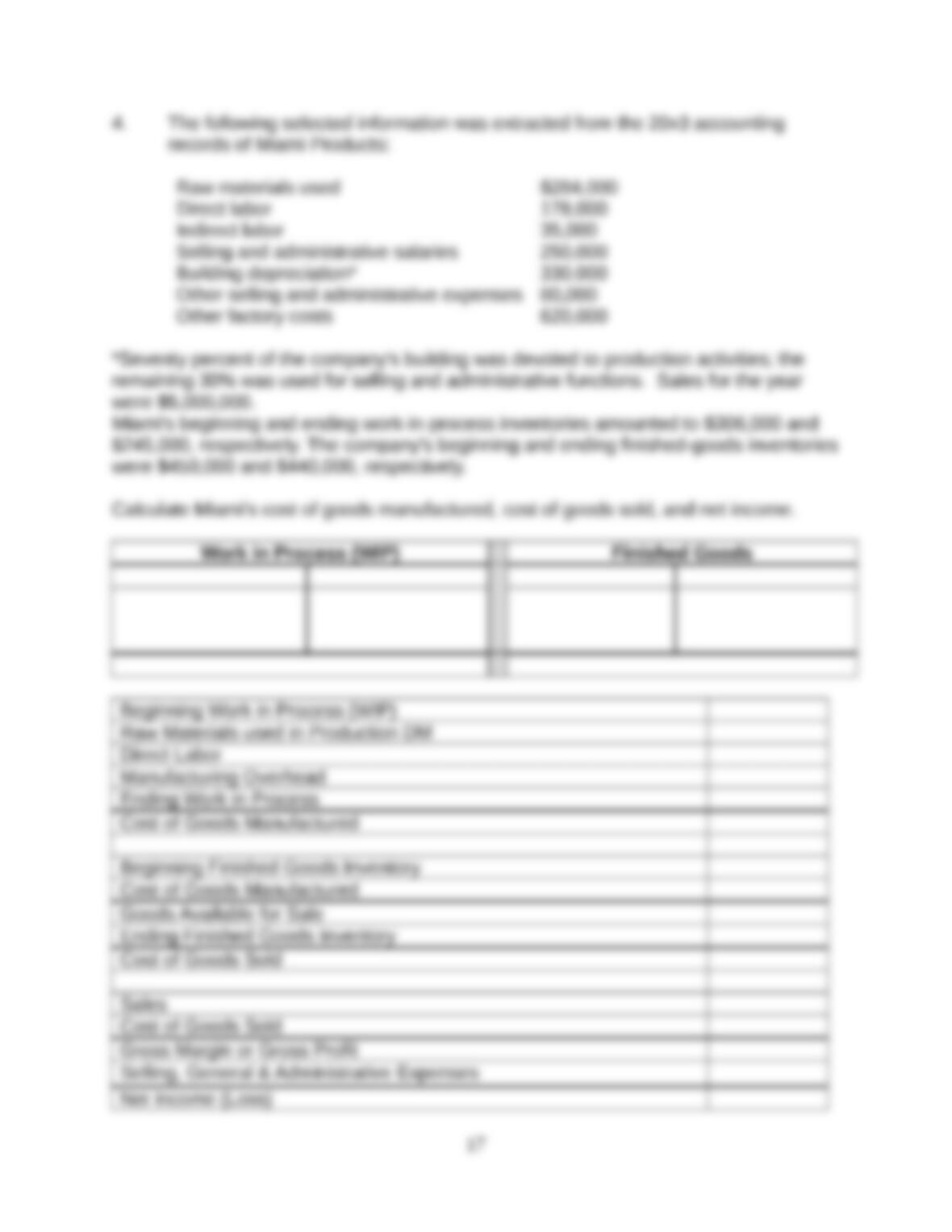
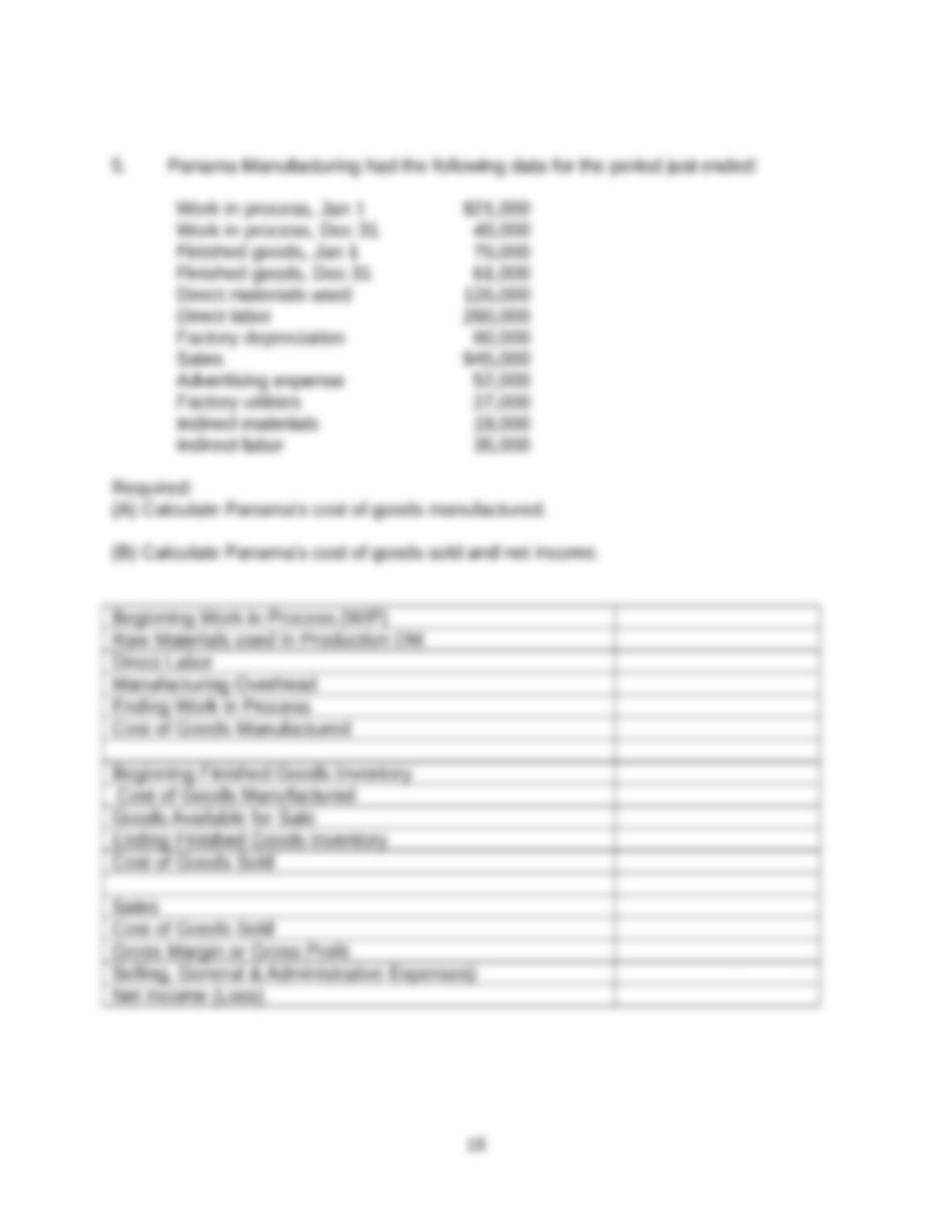
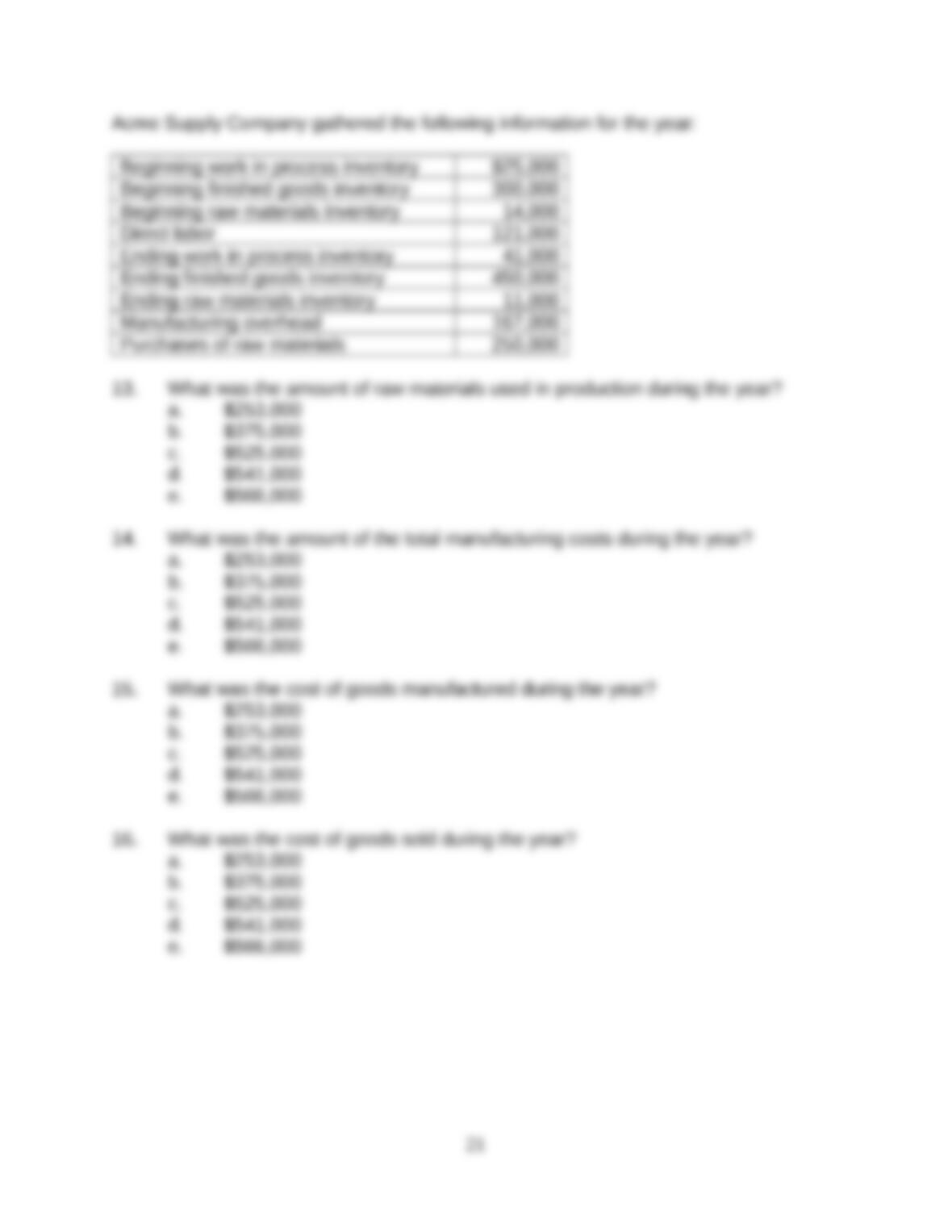
Product costs – all costs of acquiring and making a product. These costs are
inventoried until the goods are sold.
Period costs – all costs that are not product costs (e.g., selling and
administrative). Such costs are not inventoried but are expensed as time
passes.
Prime Cost and Conversion Cost
Prime costs – are the sum of direct materials cost and direct labor costs.
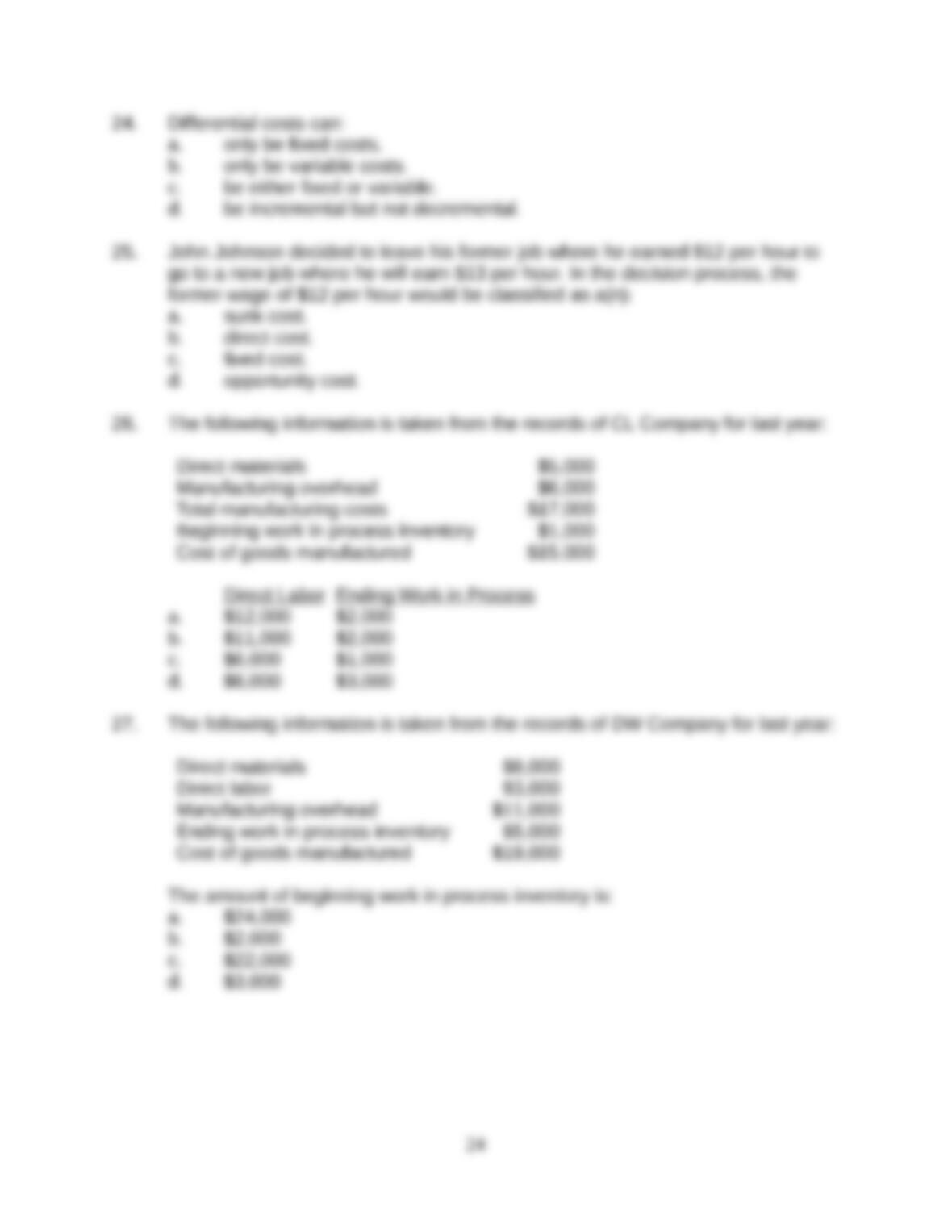
Conversion costs – the sum of direct labor cost and manufacturing overhead
cost.
8
Comparing Merchandising and Manufacturing Activities
1. Merchandising companies purchase finished goods from suppliers for resale
to customers.
2. Manufacturing companies purchase raw materials from suppliers and produce
and sell finished goods to customers.
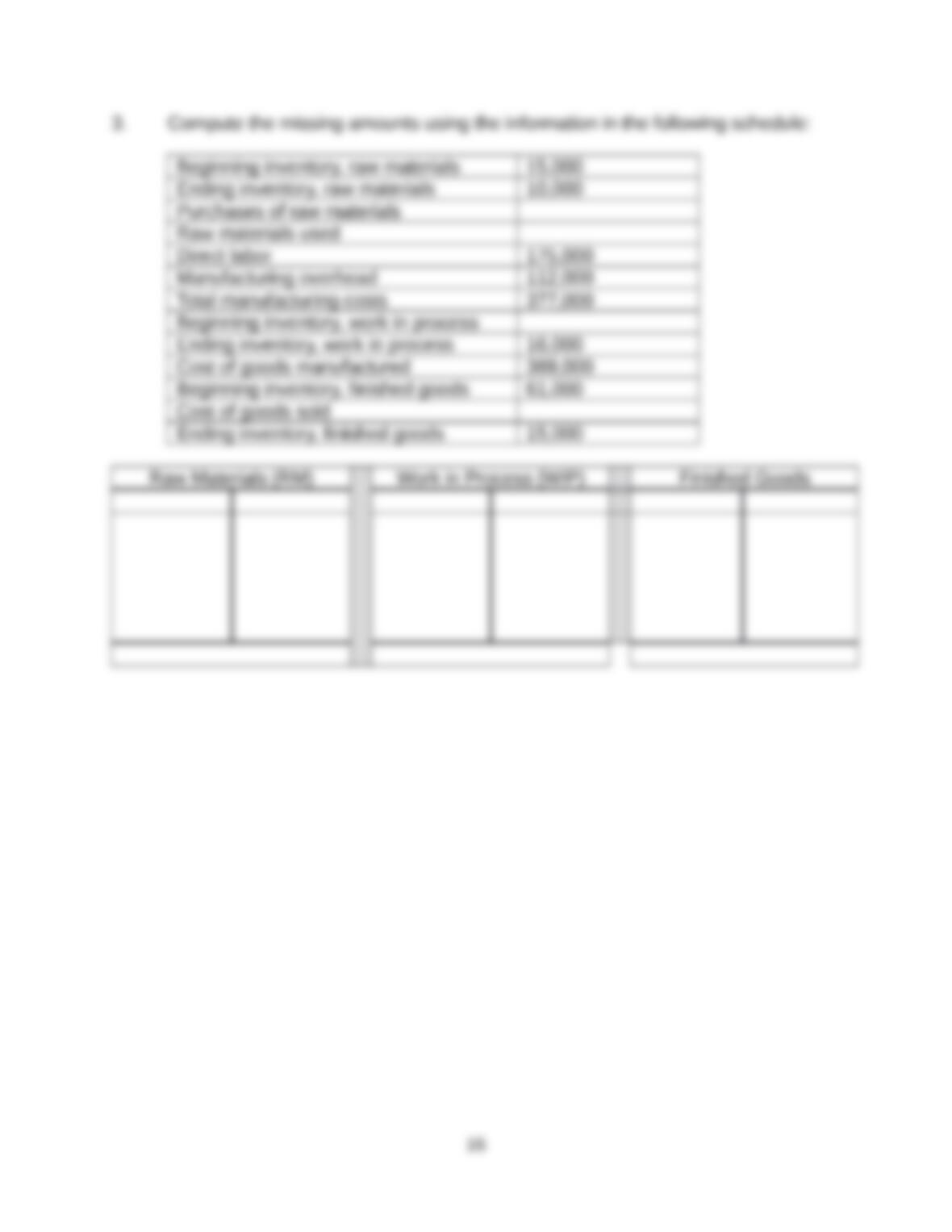
Balance Sheet: Inventory Accounts
1. Raw Material
2. Work in Process
3. Finished Goods
9
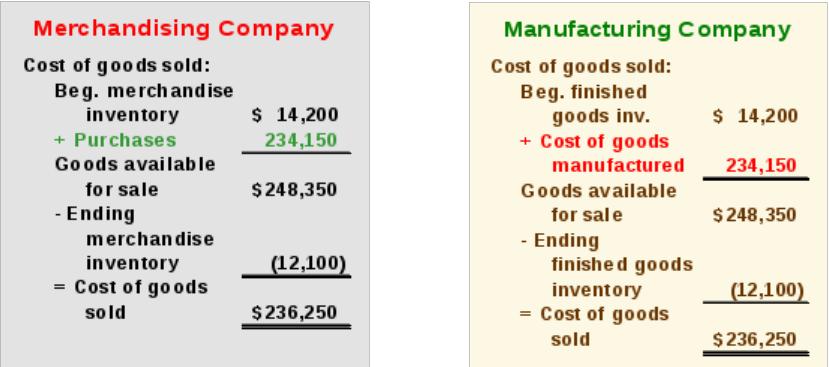
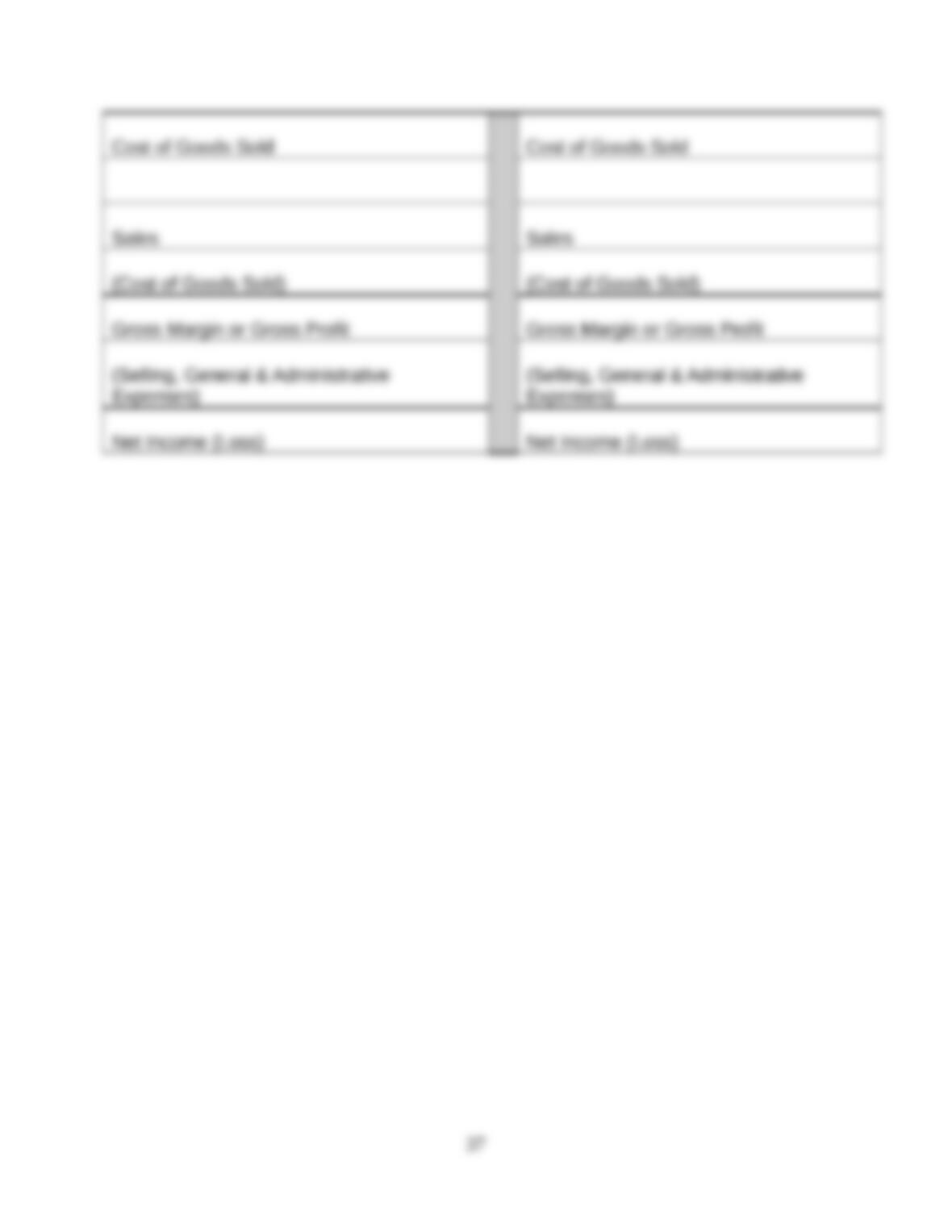
Income Statement: Cost of Goods Manufactured and Cost of Goods Sold
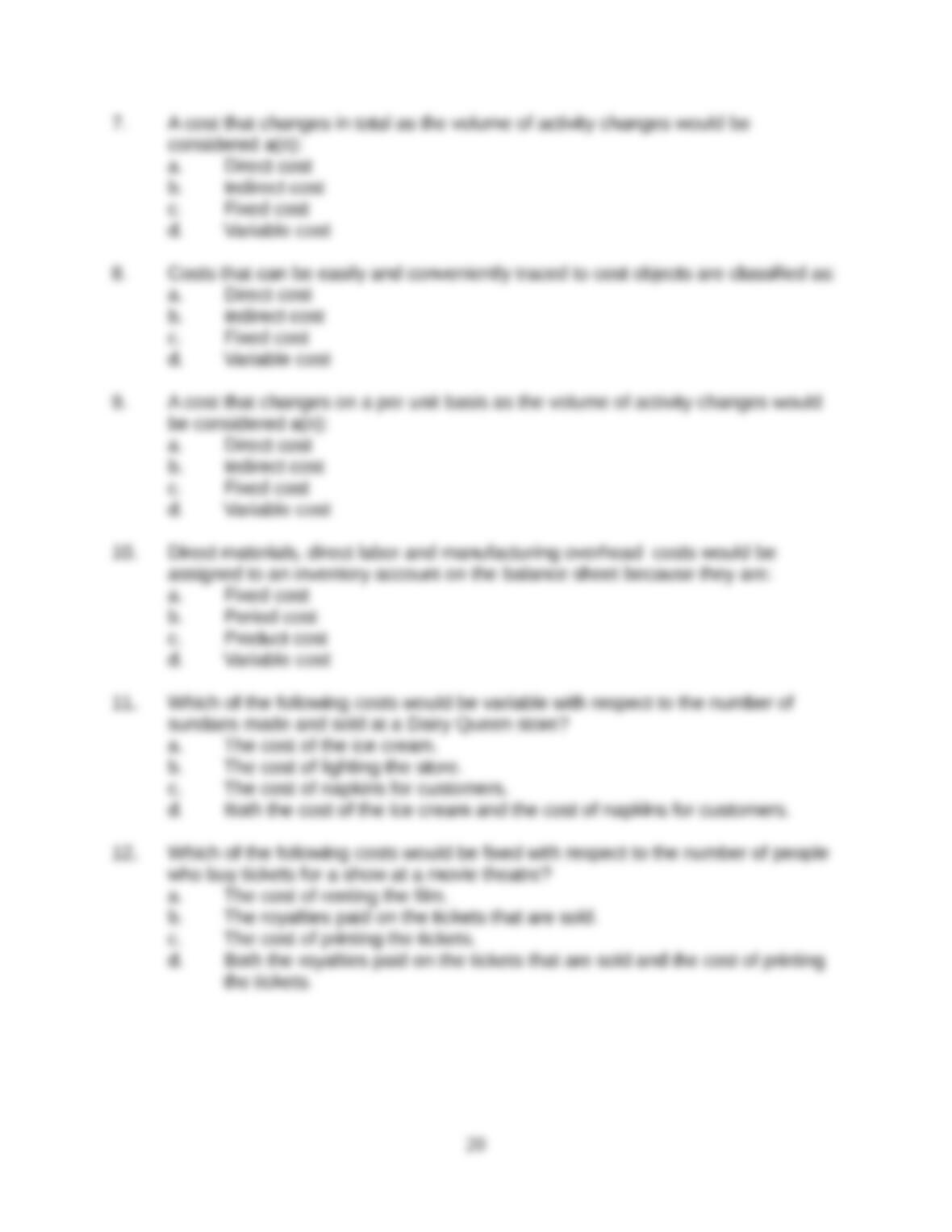
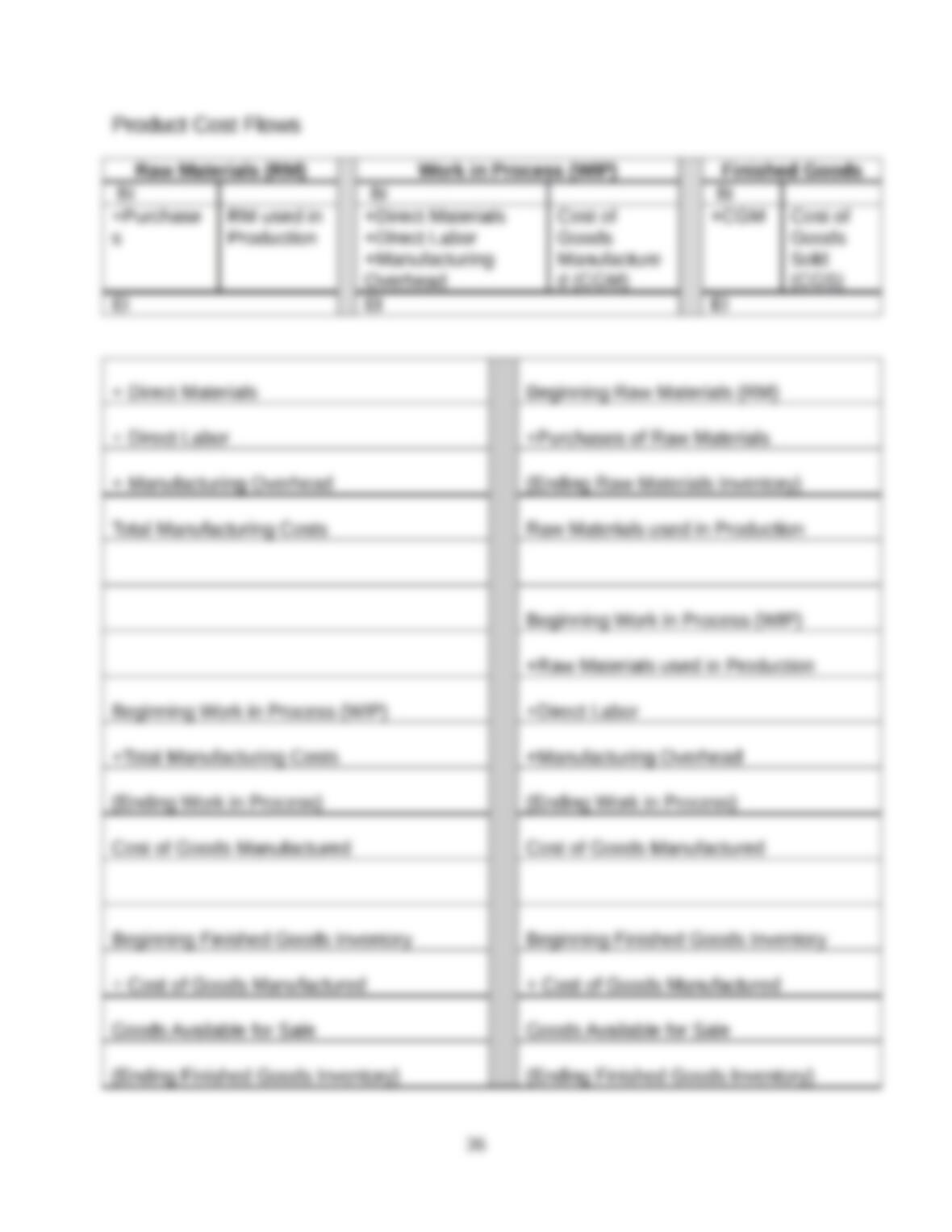
Basic Equation for Inventory Accounts:
Beginnin
g balance +Additions to
inventory =Ending
balance +Withdrawals
from inventory
Beginnin
g balance +Additions to
inventory –Withdrawals
from inventory =Ending
balance
10
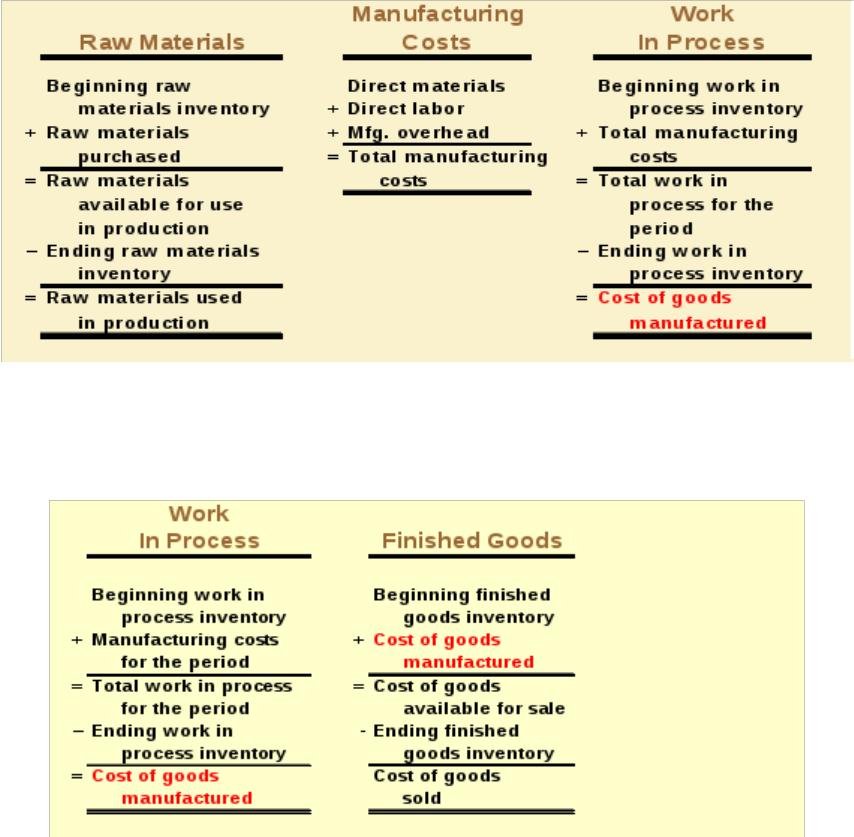
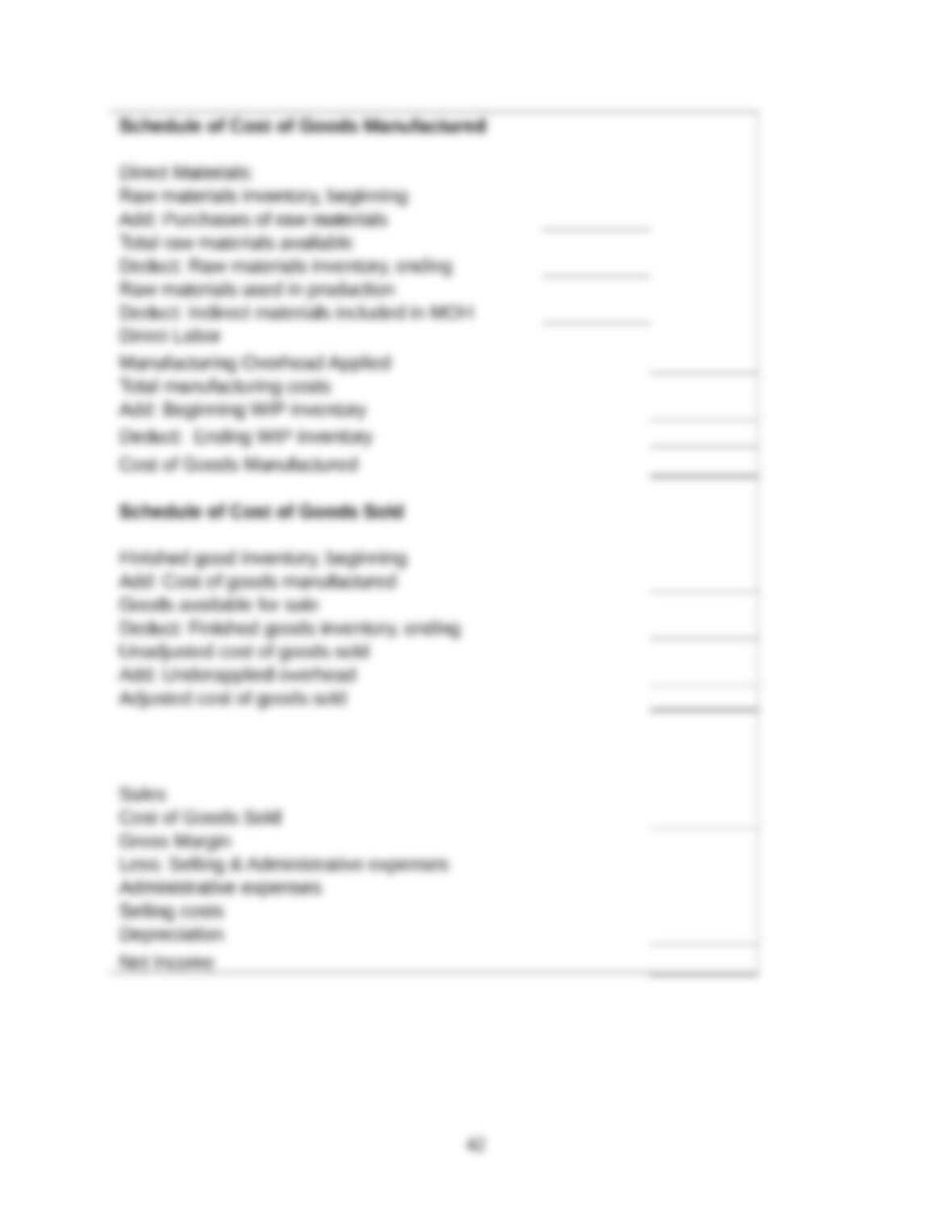
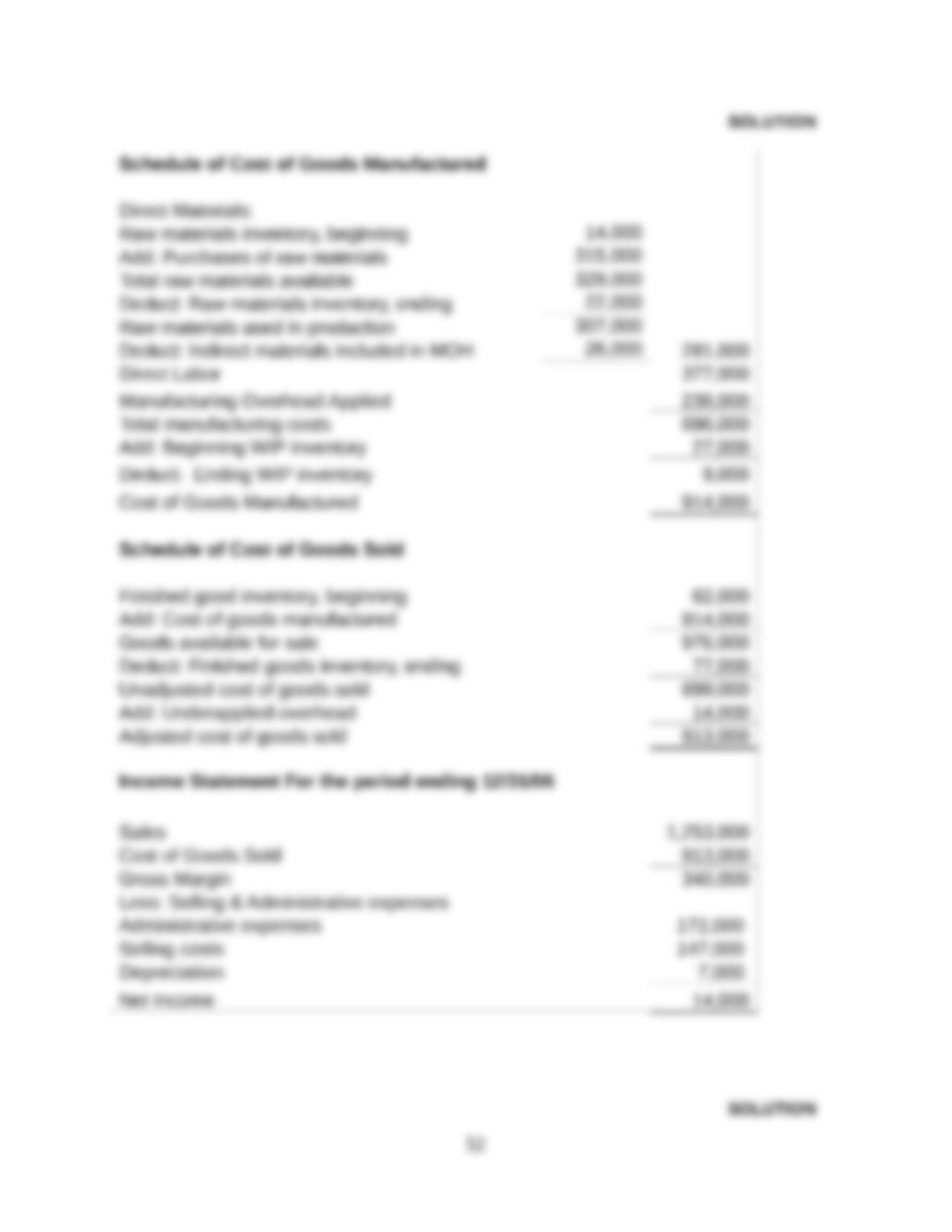
Schedule of Cost of Goods Manufactured
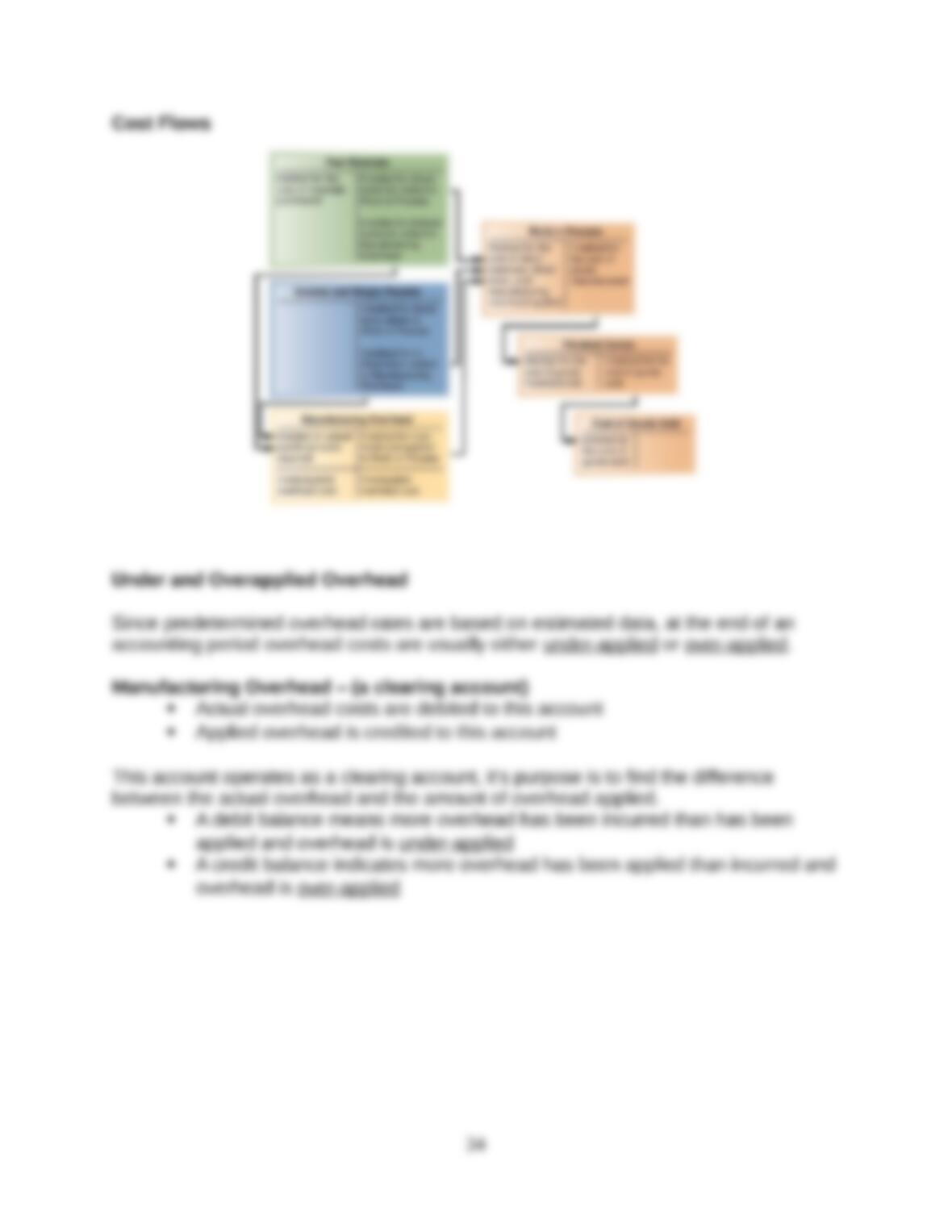
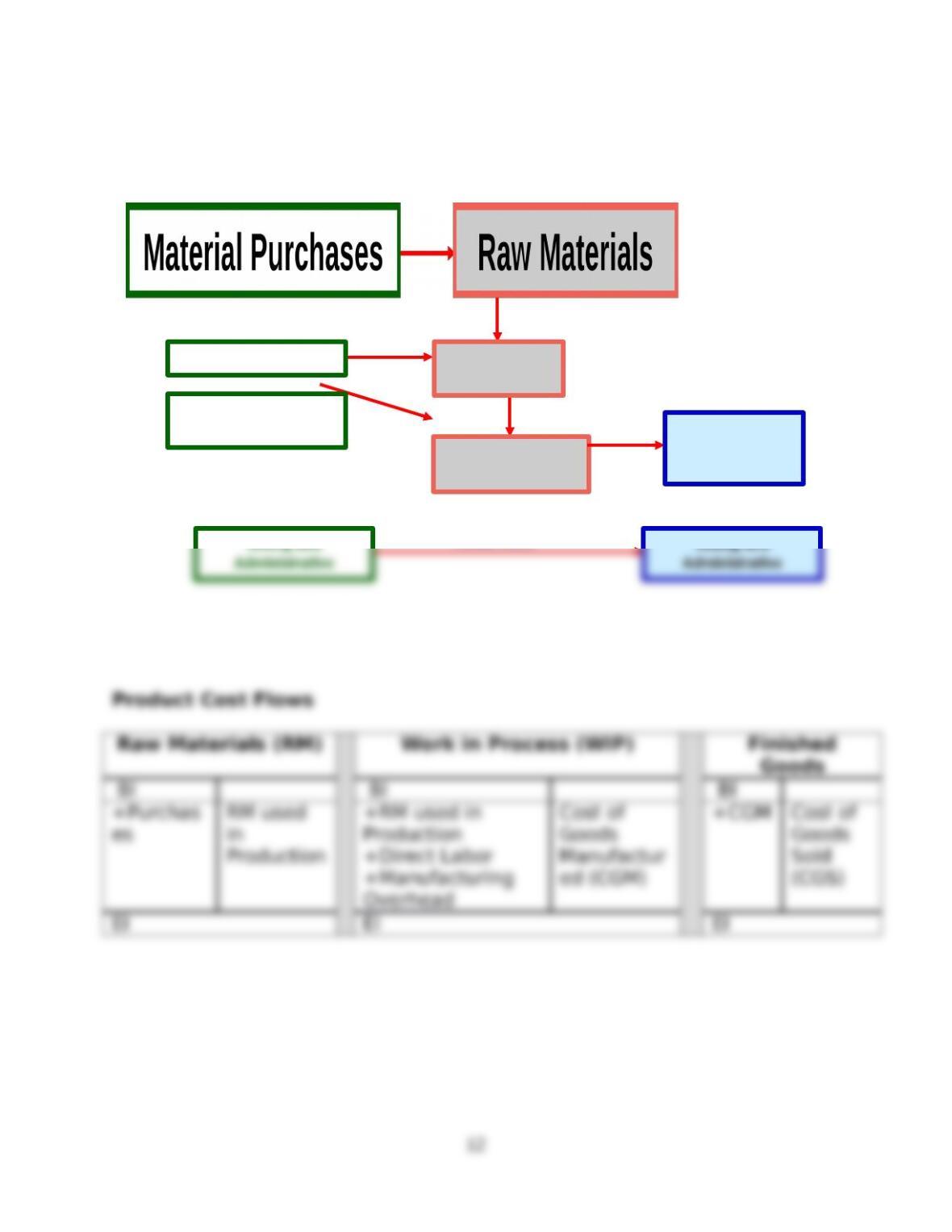
Product Cost Flows
11
Finished
Goods
Cost of
Goods
Sold
Period Costs
Manufacturing
Overhead
Work in
Process
Direct Labor
Income
Statement
Expenses
Manufacturing Cost Flows