ODETTE SCHOOL OF BUSINESS
International Business
BSMM 8310
Instructor: Dr. Jonathan Lee
Xiaohang An (110026256)
Haoting Li (110005342)
Xiangyu Meng (104945126)
Yuting Wei (105024956)
Yucca Yuan (105127297)
Submission Date: 17th July, 2020
Country background
The Kingdom of Norway is a sovereign nation on the Scandinavian peninsula in northern
Europe. It is flanked by Finland and Russia toward the north-east, and the Skagerrak waterway
toward the south, with Denmark on the opposite side. According to Arealstatistics for Norway
(2019), Norway is the second least densely populated country in Europe with a population of
5,312,300. It has a total area of 385,207 square kilometers. In addition, Norway is one of the
flourishing countries from the worldwide economy. It has many opportunities for people to
invest and develop the business industry in Norway. According to TransferWise (2017), around
35,000 new businesses are registered in Norway every year, which will increase continually.
Education level:
The education system in Norway is one of the best in Europe. There are three different
levels in the Norwegian education system, which are primary school, upper secondary school
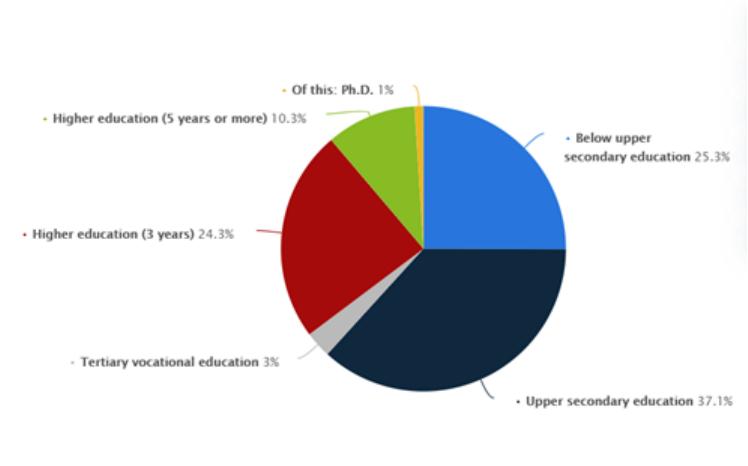
and higher education. According to Statista Research Department (2020), In 2019, 37.1% of
Norwegians had accomplished an upper secondary education. This represents the most common
widely training level in the country. Also, people who have more than 5 years of higher
education experience occupied about 10.3%. Since 2009, the Norwegian’s educational
population has increased. Also, the number of students in higher education level expands on an
annual basis, and in 2009 the students’ number reached 296 thousand.
Income related information:
1
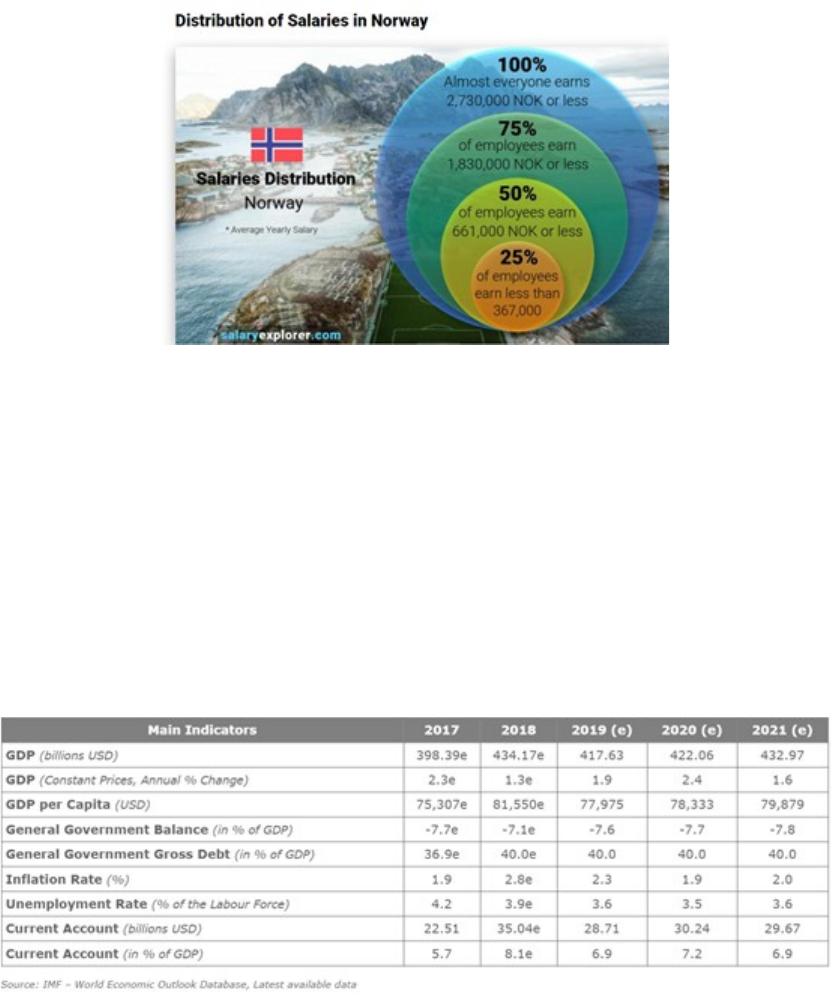
(Salaries Distribution Norway 2019)
Norway is one of the highest average salaries for European capitals. According to salary
explorer, 2019. The average salary is around 612,000 NOK per year. The range is from 155,000
NOK to 2,730,000 NOK. Employees’ salaries in Norway are increased by approximately 9%
every 15 months. Moreover, salaries are quite different from different careers. For example, a
person who works in the accounting and finance area in Norway typically earns around 622,000
NOK per year. In this area, the salaries range is from 255,000 NOK to 1,270,000 NOK. The
highest salary paid in Norway is Healthcare & Alternative Medicine professionals which earns
856,314 NOK annually.
Economic condition:
Norway’s GDP is one of the highest in the world. The scores are also at the top of the
United Nations Development Programme’s Human Development Index ranking. According to
the world economic outlook database (2020), Norway’s GDP reached the peak point at 434.17
billion dollars in 2018. After that, the number suffered some fluctuation reached at 417.63 billion
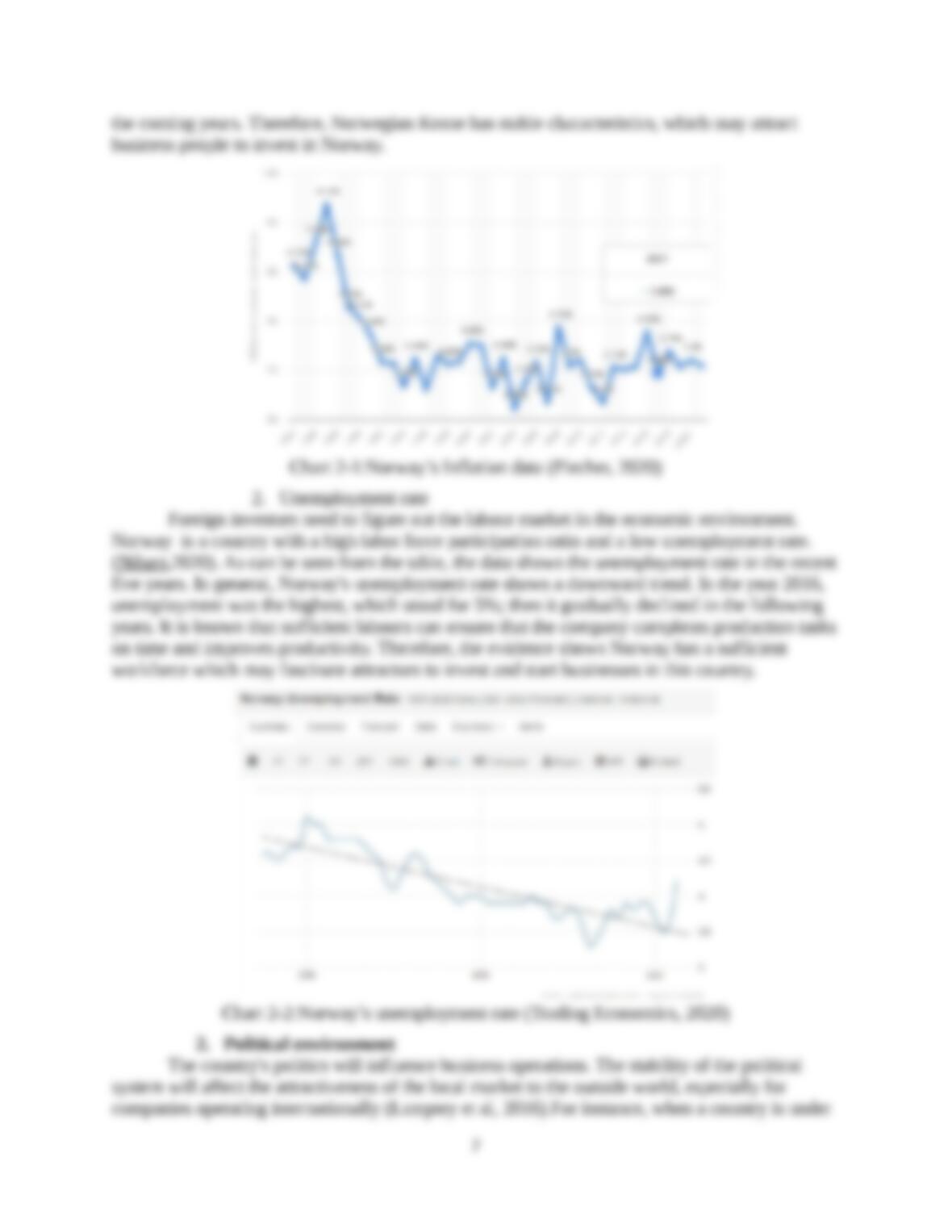
dollars and 422.06 dollars in 2019 to 2020 respectively. In addition, the unemployment rate had
reached a high point to 4.2% in 2017, and was expected to have declined to 3.6% in 2020. The
reason is because COVID-19 pandemic has negatively affected the economy. In addition, the
sectors of Industry have contributed to Norway’s economy. Agriculture accounts for 1.9% of the
GDP and employs 2% of the workforce. For example, fishing is an important activity as Norway
is the world’s second-biggest seafood exporter after China. Agricultural subsidies are very
2
significant. Secondly, Industry employment accounts for one-fifth of the workforce and
represents 32% of GDP. Norway’s economy relies on natural resources and energy sources, such
us, oil, gas, hydraulic energy, forests, and minerals. Oil rents were dominated by Norway’s GDP.
However, it provides less than 4% of GDP as it is well below its peak level in 2000. Finally, over
three-quarters of the population in Norway are working in the service department and accounts
for 56.8% of total Norway’s GDP.
Business political environment:
Norway’s politics are very stable. The structure of Norway’s structure is a parliamentary
representative democratic constitutional monarchy. Also, The Norwegian economy is
characterized by being open and mixed, with a combination of private and public ownership.
Furthermore, Norway has always been open to foreign investments. According to Invest in
Norway (2019), there are about 6000 foreign companies and many additional branch offices in
Norway. Foreign companies created value occupied about 25% in total Norway value-creation
and hired 20% of the employment.
Level of corruption:
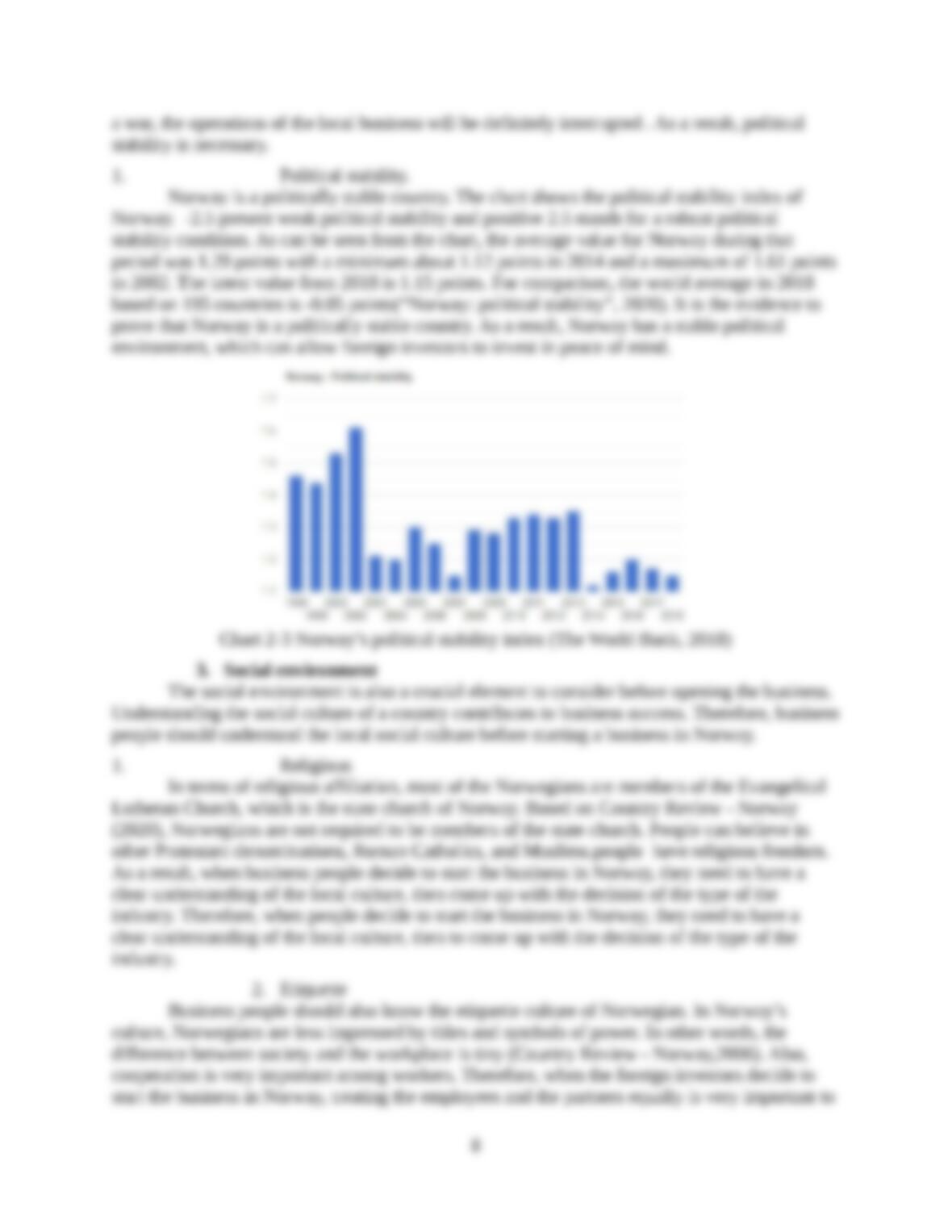
Norway’s corruption level is very low. According to the Corruption Perceptions Index
(2018), Norway is the 7th least corrupt country in the world among the corruption of 180
countries. Corruption in Norway normally happened in the municipal administration, municipal
planning and building departments, and procurement departments.
1. SWOT Analysis of Doing Business in Norway
As a highly developed country in the continent of Europe, Norway is known for its
world-class economic performance on a global scale. According to The World Bank (2019),
Norway retains its position within the top 10 of 190 countries on ease of doing business over
several years and ranks the 25th on starting a business, which precedes the United State of
America by 30 places (“Economy Rankings,” 2019). These statistics show that Norway is an
ideal trading partner for international business on the whole. In order to further exploit both the
internal and external factors exerting impacts on the market environment in Norway, a SWOT
Analysis is conducted as follows.
3
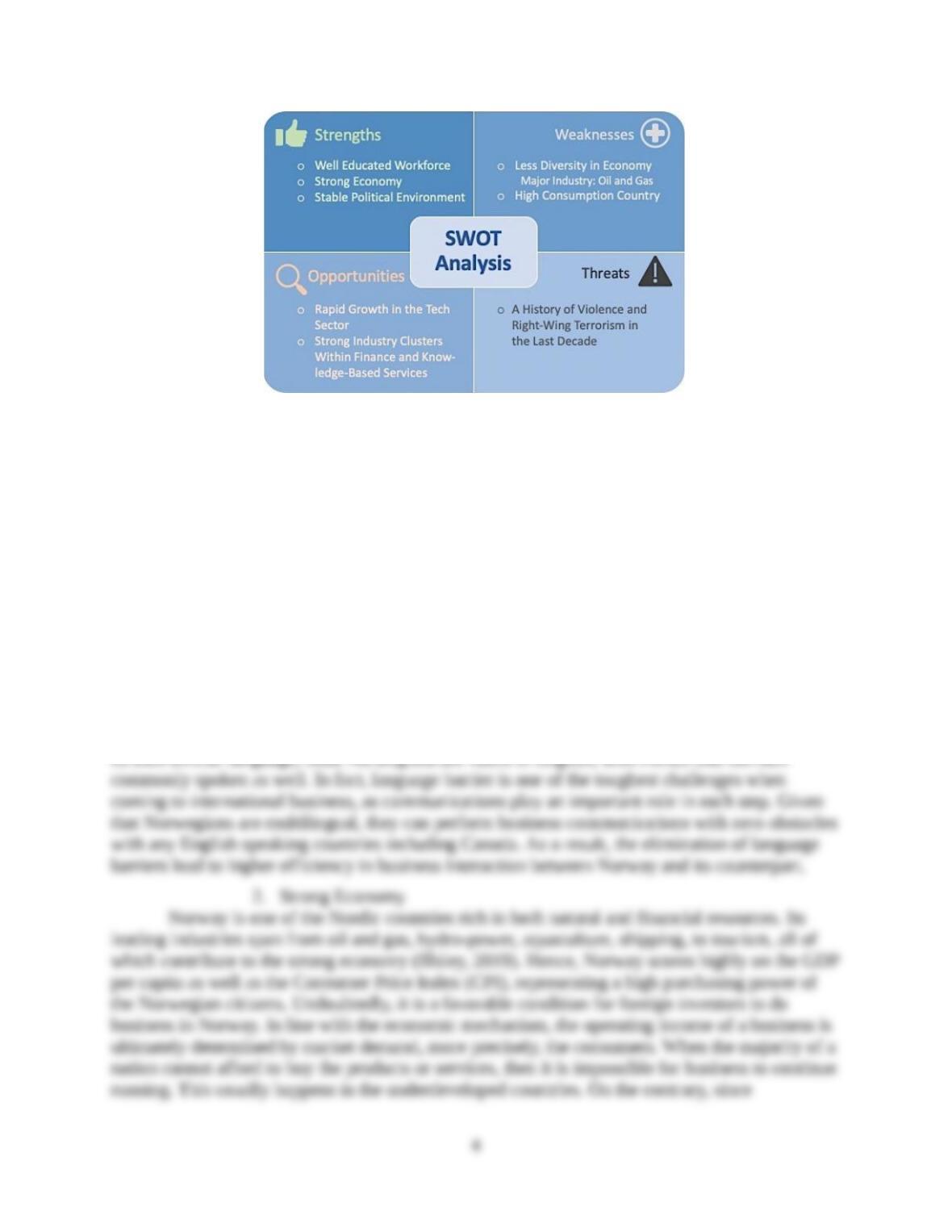
Chart 1-1 SWOT Analysis Matrix
1. Strengths
1. Well-Educated Workforce
In the current century, knowledge and technical skills are always considered as the soft
power of individuals. At an organizational level, capable employees can bring along intangible
assets that have equal worth to the physical capital of an enterprise. By the same token, when
thinking of expanding a business overseas, investors should carefully appraise the local
workforce. Taken this as the standard, Norway appears to be an ideal trade partner. The
aforementioned data displays that approximately 35% of Norwegians fall into the higher
education sector, and this percentage tends to increase (Statista Research Department, 2020).
Therefore, it is viable for foreign investors to approach the well-educated local workforce when
they start a business in Norway. In general, the productivity of workers is directly proportional to
not only their education level but also the revenue generated. Thus, the foreign invested business
entity can expect to benefit from a qualified labour force formed by Nerwegians with advanced
degrees.
Another advantage derived from quality education is the language. Although Norway has