Graded Project
Ice Cream Systems

PROJECT GOAL 1
PROJECT INFORMATION 1
PROJECT INSTRUCTIONS 14
SUBMITTING YOUR PROJECT 26
iii
C o n t e n t s
C o n t e n t s

1
PROJECT GOAL
The goal of this graded project is to create the following
financial statements for Ice Cream Systems (ICS):
■Balance sheet
■Income statement
■Post-closing trial balance
The financial statements must be created in one Word document
(.doc or .docx file). Alternatively, an Excel workbook may be
used (.xls or .xlsx file). A Rich Text Format (.rtf file) may be
used by Mac users. The Word, Excel, or Rich Text Format
file will be uploaded for grading.
PROJECT INFORMATION
Read the following information thoroughly before beginning your
work. This will help you become familiar with the project. Some
students start on the project right away, thinking they will
save time. Those students tend to get stuck and spend more
time working through the project than is necessary. The
material you need to know in order to complete the project
has been covered in the textbook and in the assigned exer-
cises and problems. If you understood the chapters and
completed the assigned homework problems, you should
have no problem with the project.
The project is to be done by hand with a pencil and paper. Use
the blank forms provided. (Make as many copies as needed.)
At the end of the project, you’ll be given instructions for cre-
ating and uploading the financial statements in a Word,
Excel, or Rich Text Format file for grading.
Ice Cream Systems

Note: It’s important to format financial statements properly.
They must follow Generally Accepted Accounting Principles
(GAAP), which create a uniformity of financial statements for
analyzing. This allows for an easier comparison, as all busi-
nesses follow GAAP. Therefore, the financial statements you
create should replicate those in the textbook. Failure to do so
will result in a loss of points.
This project references “debits equaling credits.” This is a
fundamental principle of accounting, and violation of this
principle is not acceptable under any circumstance. If debits
don’t equal credits, it suggests that someone has “cooked
the books” or presented false information. It also allows for
embezzlement. If debits don’t equal credits, the cause may be
a lack of understanding of accounting principles or carelessness
when making journal entries, posting to the general ledger
accounts, or completing the math. Remember that instructors
are available to help you! If your mistakes are careless, go
back over the work slowly until the error is found.
The accounting equation must balance on the balance sheet.
This is another fundamental principle of accounting that can’t
be violated. Unbalanced equations are completely unacceptable.
When the equation doesn’t balance, it’s easily detectable by
someone who knows accounting, and it suggests the num-
bers have been “fudged.” If your debits equal your credits
and you understand which general ledger accounts belong
on which financial statements, then the accounting equation
should balance. It’s really all about understanding the concepts
and applying that understanding.
The following financial statements are provided for ICS:
1. Chart of Accounts
2. Post-Closing Trial Balance
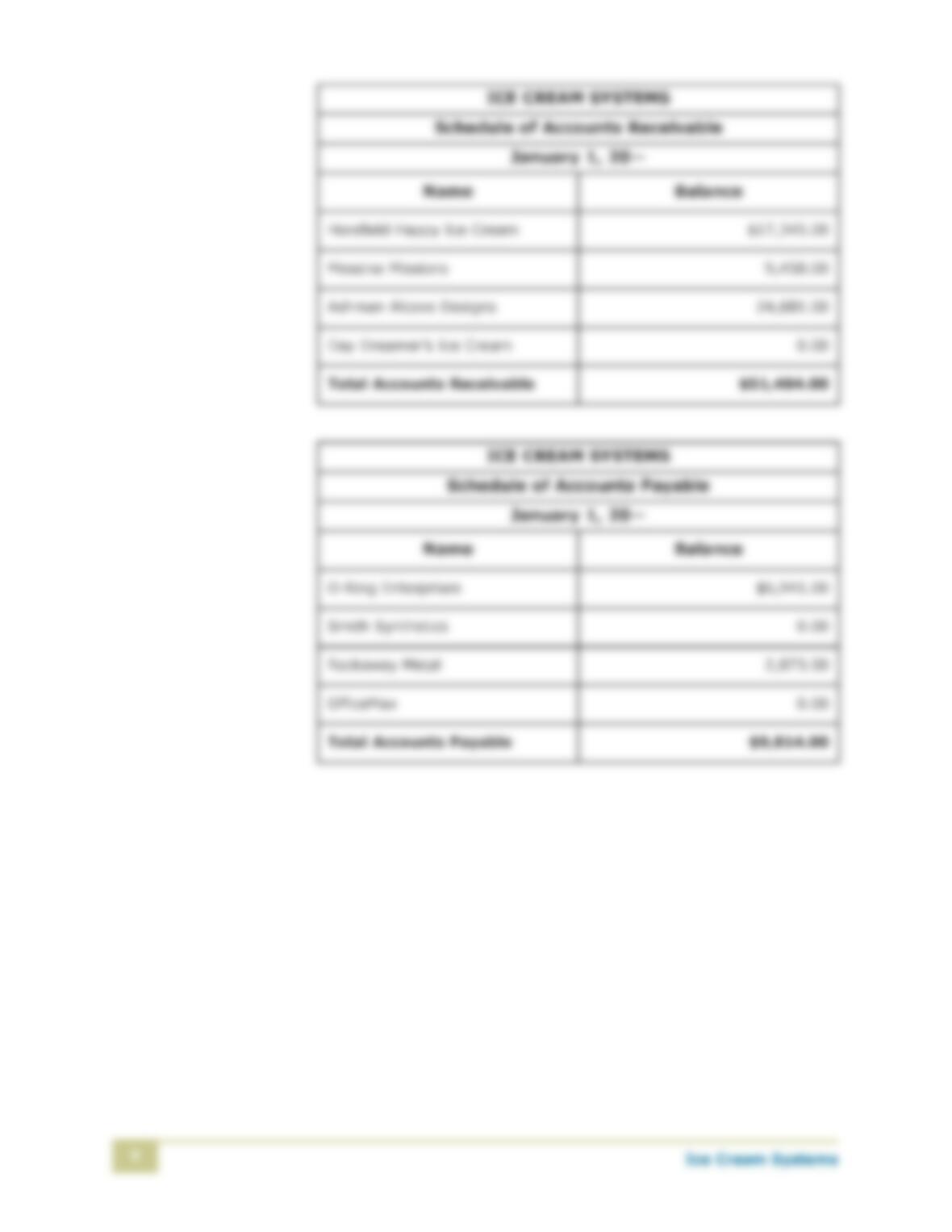
3. Schedule of Accounts Receivable
4. Schedule of Accounts Payable
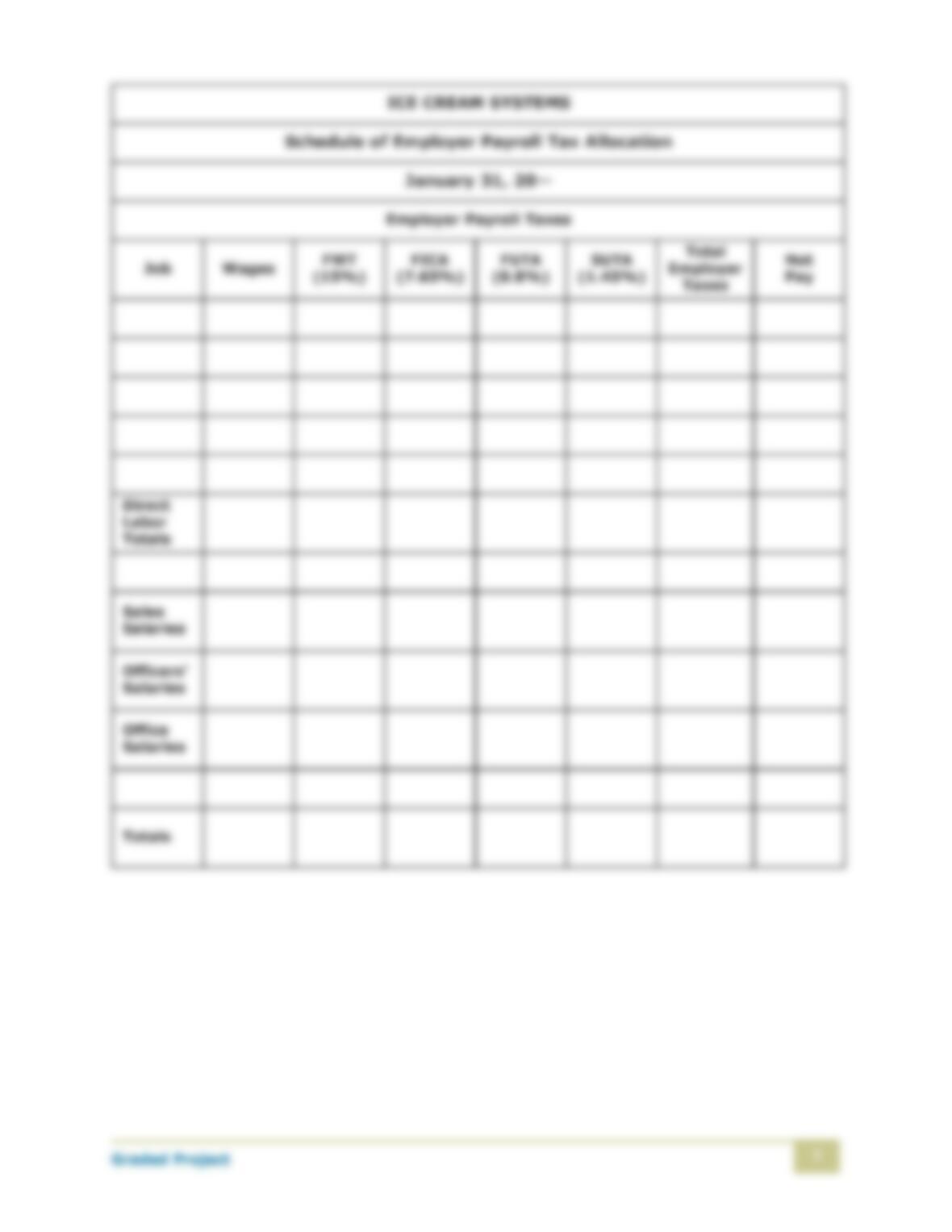
5. Schedule of Employer Payroll Taxes Allocation
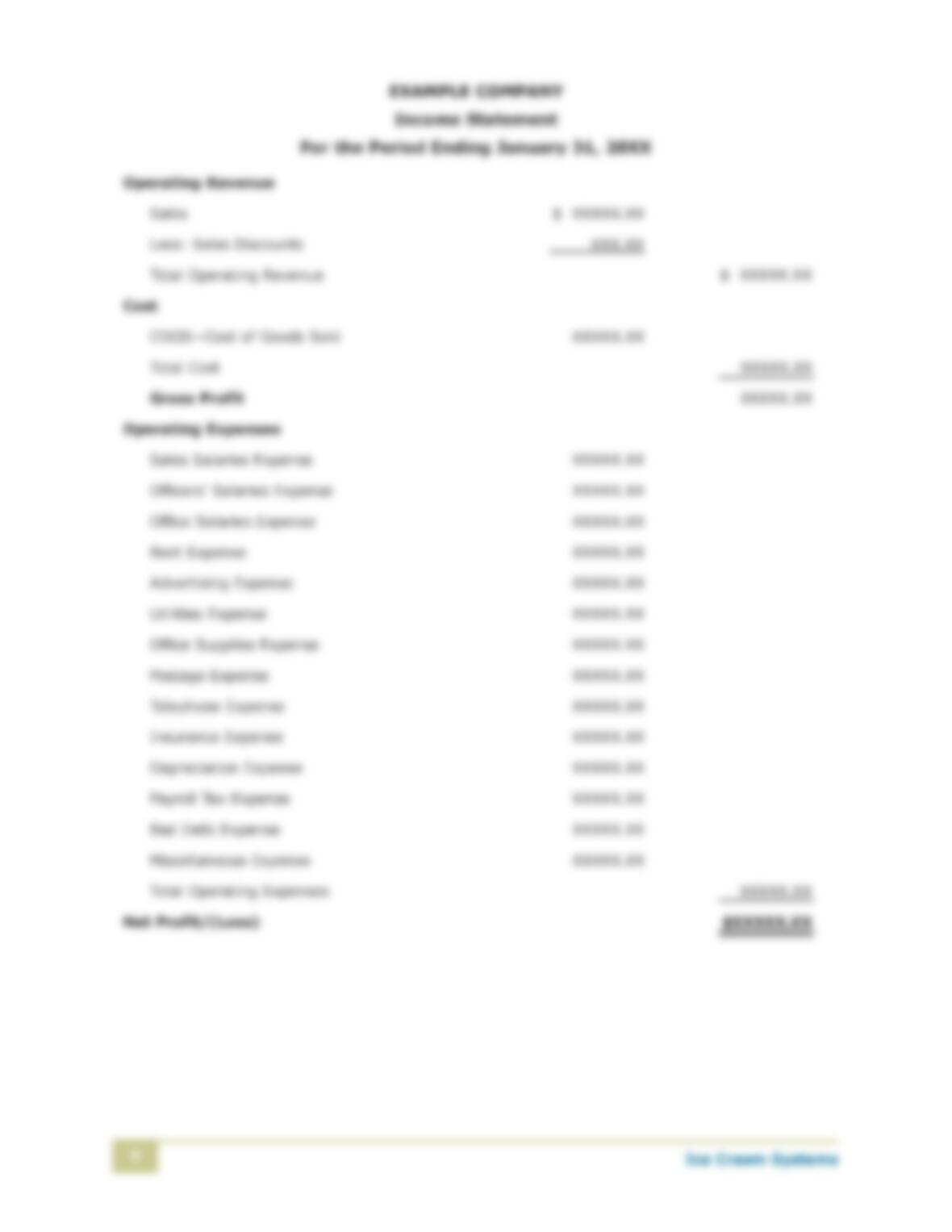
6. Format for the Income Statement
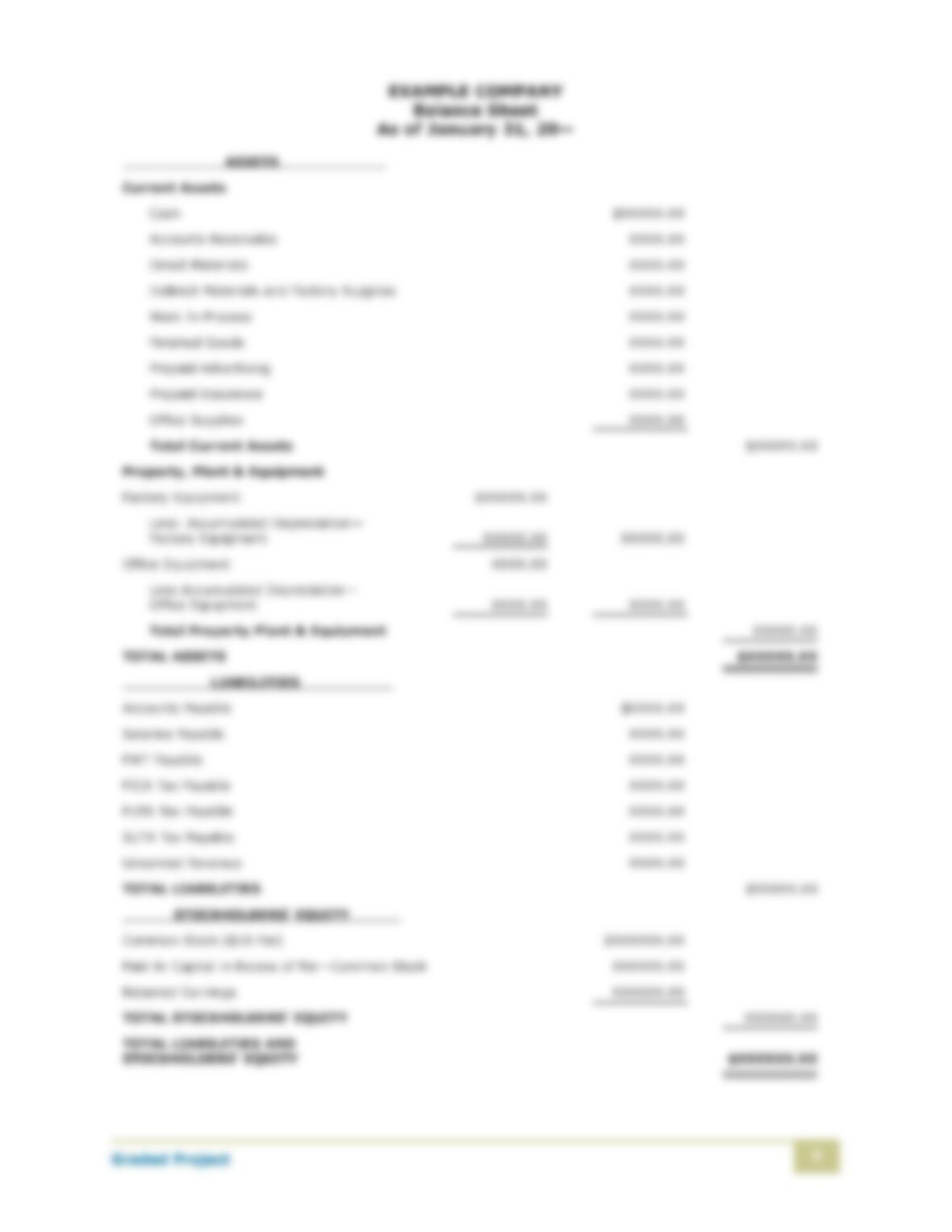
7. Format for the Balance Sheet
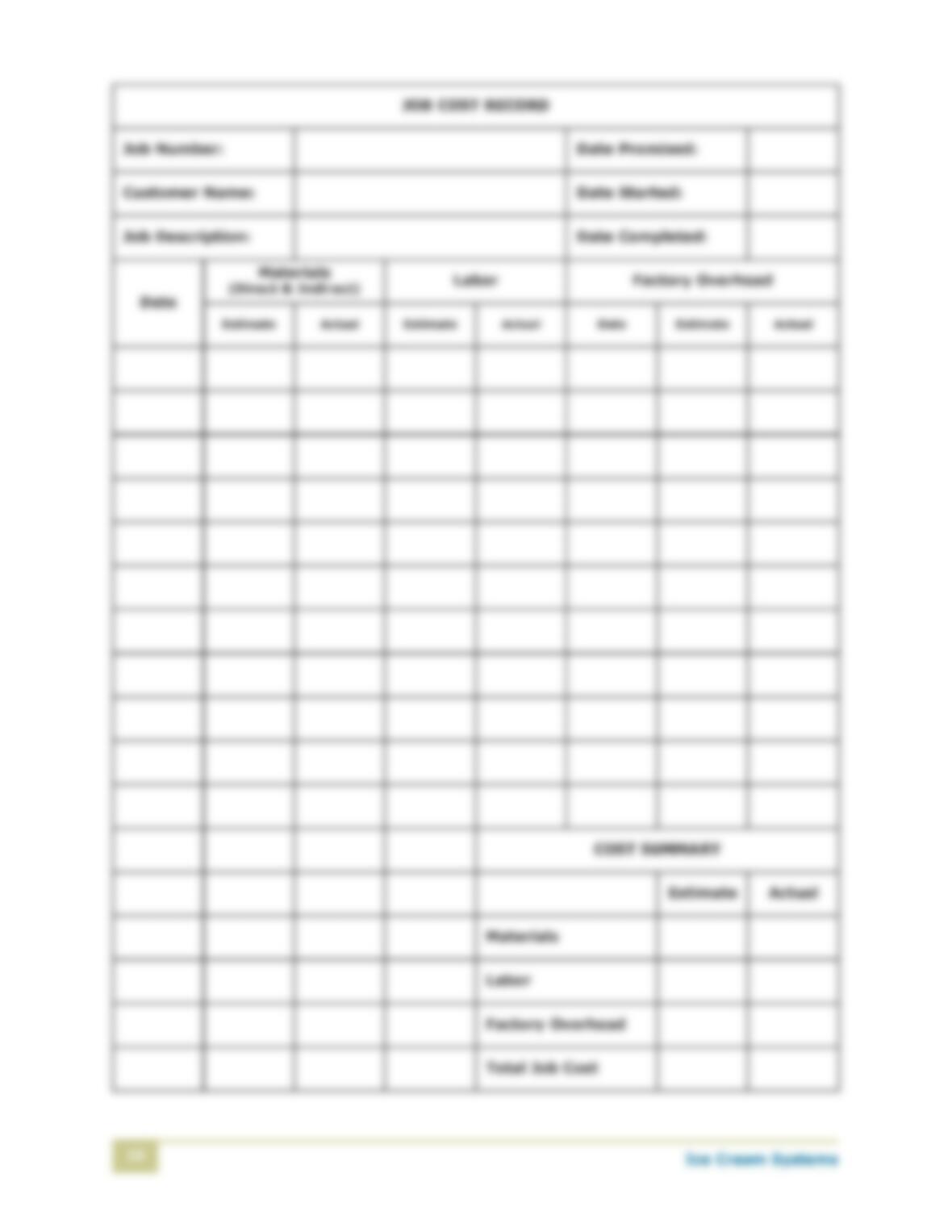
8. Job Cost Record
Ice Cream Systems
2
Graded Project 3
Chart of Accounts
Assets (1000–1999)
Account Number Account Title
1100 Cash
1200 Accounts Receivable
1300 Direct Materials
1350 Indirect Materials and Factory Supplies
1400 Work in Process
1500 Finished Goods
1600 Prepaid Advertising
1650 Prepaid Insurance
1700 Office Supplies
1800 Factory Equipment
1800.1 Accumulated Depreciation—Factory Equipment
1850 Office Equipment
1850.1 Accumulated Depreciation—Office Equipment
Liabilities (2000–2999)
2100 Accounts Payable
2200 Salaries Payable
2300 Federal Withholding Tax (FWT) Payable
2325 FICA Tax Payable
2350 FUTA Tax Payable
2375 SUTA Tax Payable
2500 Unearned Revenue
(Continued)
Ice Cream Systems
4
Owner’s Equity (3000–3999)
3100 Common Stock ($10 Par)
3150 Paid-In Capital in Excess of Par—Common Stock
3700 Retained Earnings
3900 Income Summary
Revenues (4000–4999)
4100 Sales
4200 Sales Discounts
Expenses (5000–5999)
5100 Cost of Goods Sold
5150 Factory Overhead
5200 Sales Salaries Expense
5225 Officers’ Salaries Expense
5250 Office Salaries Expense
5300 Rent Expense
5350 Advertising Expense
5400 Utilities Expense
5450 Office Supplies Expense
5500 Postage Expense
5550 Telephone Expense
5575 Insurance Expense
5600 Depreciation Expense
5700 Payroll Tax Expense
5800 Bad Debt Expense
5900 Miscellaneous Expense
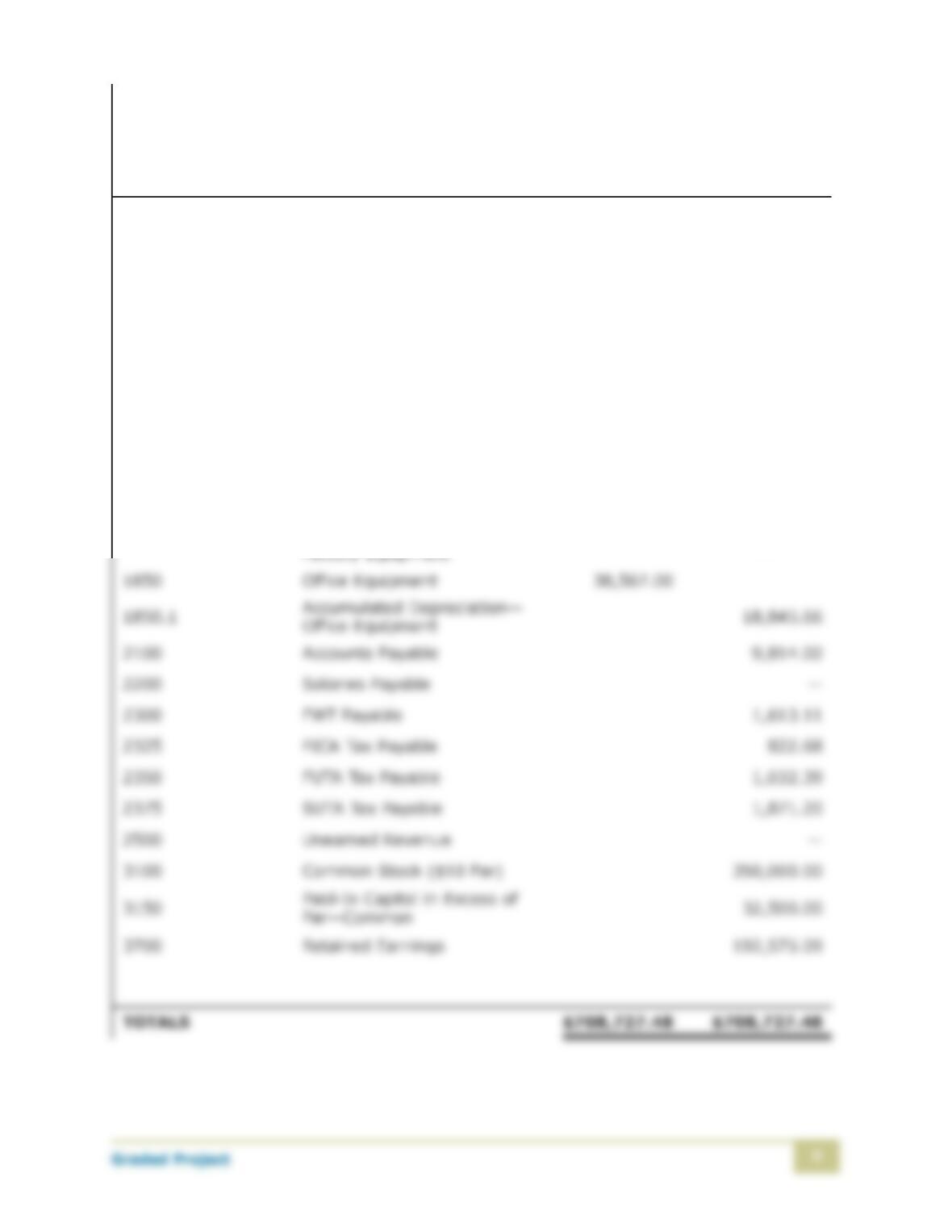
ICE CREAM SYSTEMS
Trial Balance
January 1, 20—
ACCOUNT NO. DESCRIPTION DEBIT CREDIT
1100 Cash $117,964.23
1200 Accounts Receivable 51,484.00
1300 Direct Materials 64,350.00
1350 Indirect Materials &
Factory Supplies 18,772.00
1400 Work in Process 142,695.00
1500 Finished Goods 27,696.00
1600 Prepaid Advertising —
1650 Prepaid Insurance —
1700 Office Supplies 342.25
1800 Factory Equipment 246,857.00
1800.1 Accumulated Depreciation—