Pests and Pest Control Notes
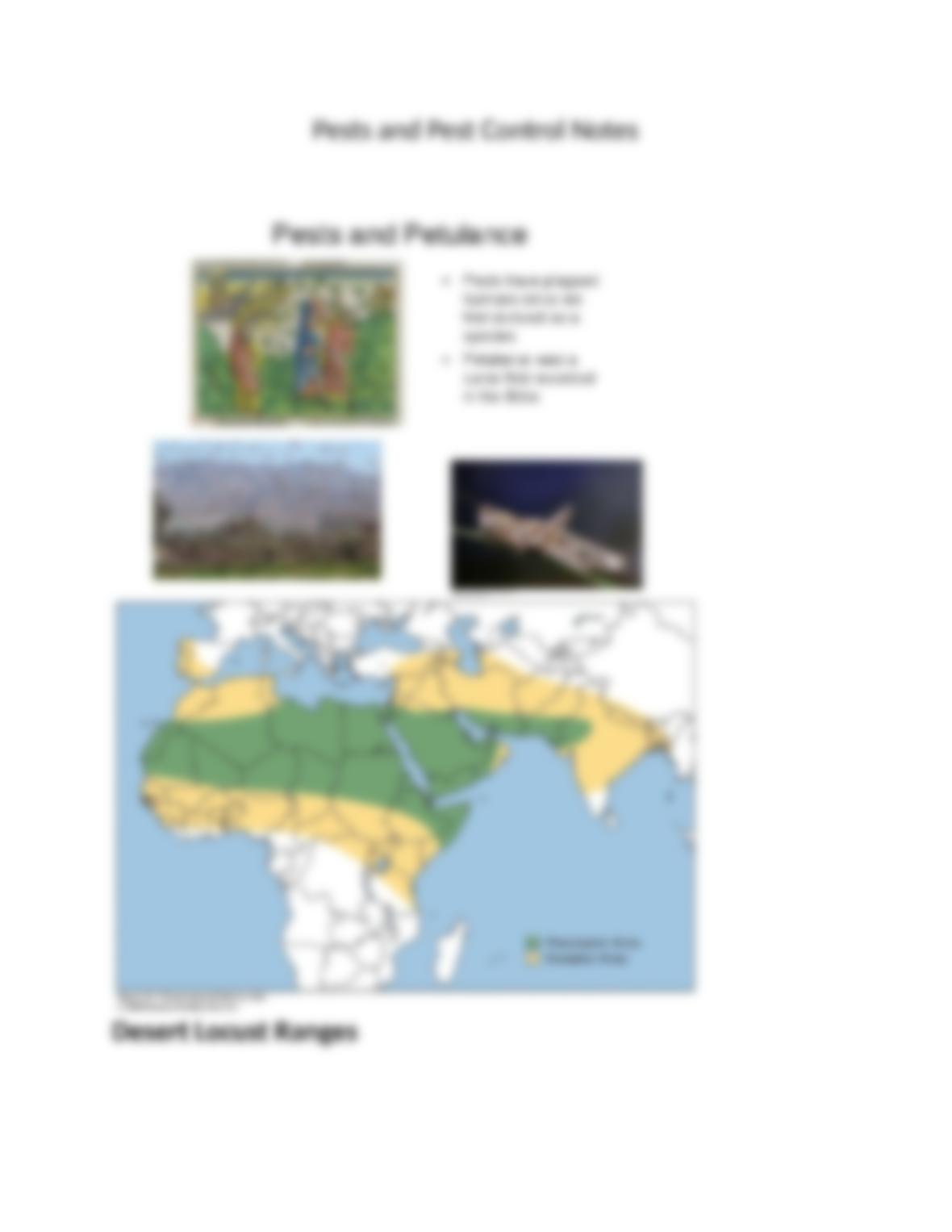
Desert Locust Ranges
The Need for Pest Control: Defining Pests
Any organism that has a negative effect on human health or economics
Any organism that is noxious, destructive, or troublesome
Pest Control Purposes
Protect our food
o37% of agricultural production lost each year to insects, plant
pathogens and weeds
oYearly lost of $122 billion dollars
Protect our health
oMalaria
oSleeping sickness
oEncephalitis
Convenience
oBiting and stinging pests
Pesticides
More Use, Less Effect
In 2002, 5.05 billion tons of pesticides were used
Costing $32 billion
Portion of crops lost in 1950 – 31%
Portion of crops lost today – 37%
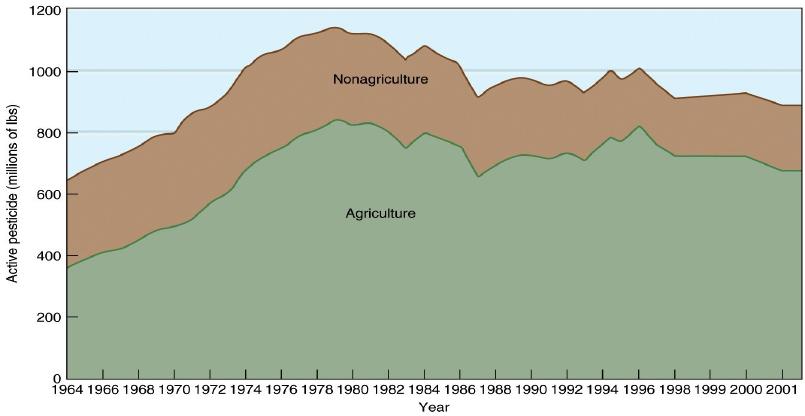
Pesticide Use in the United States
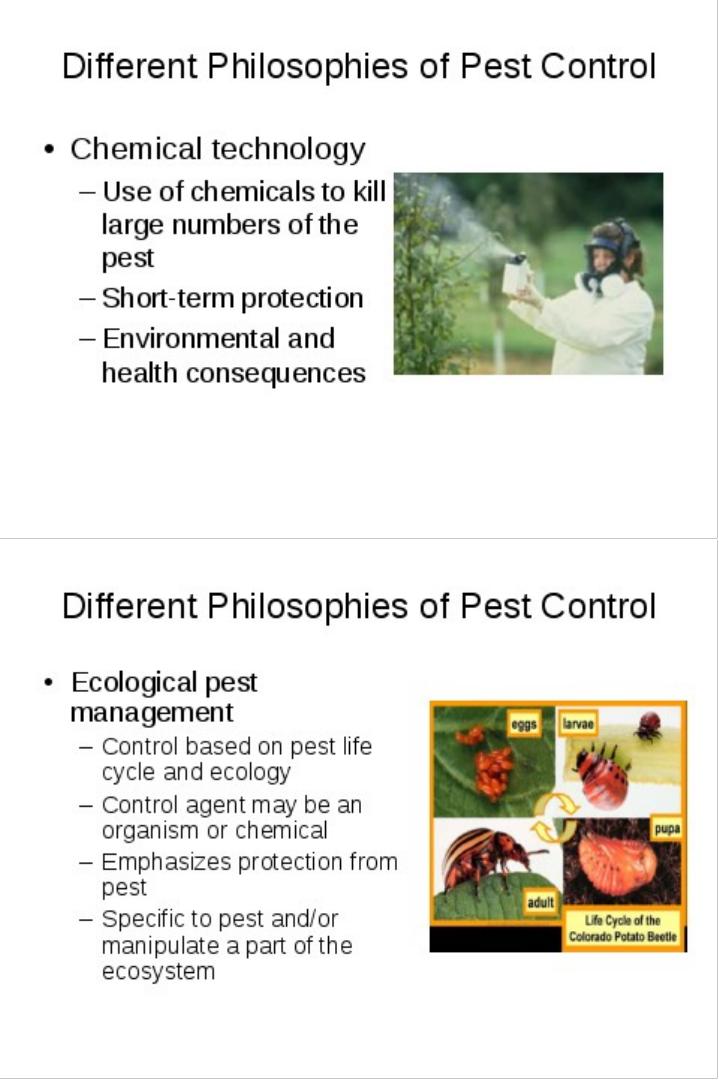
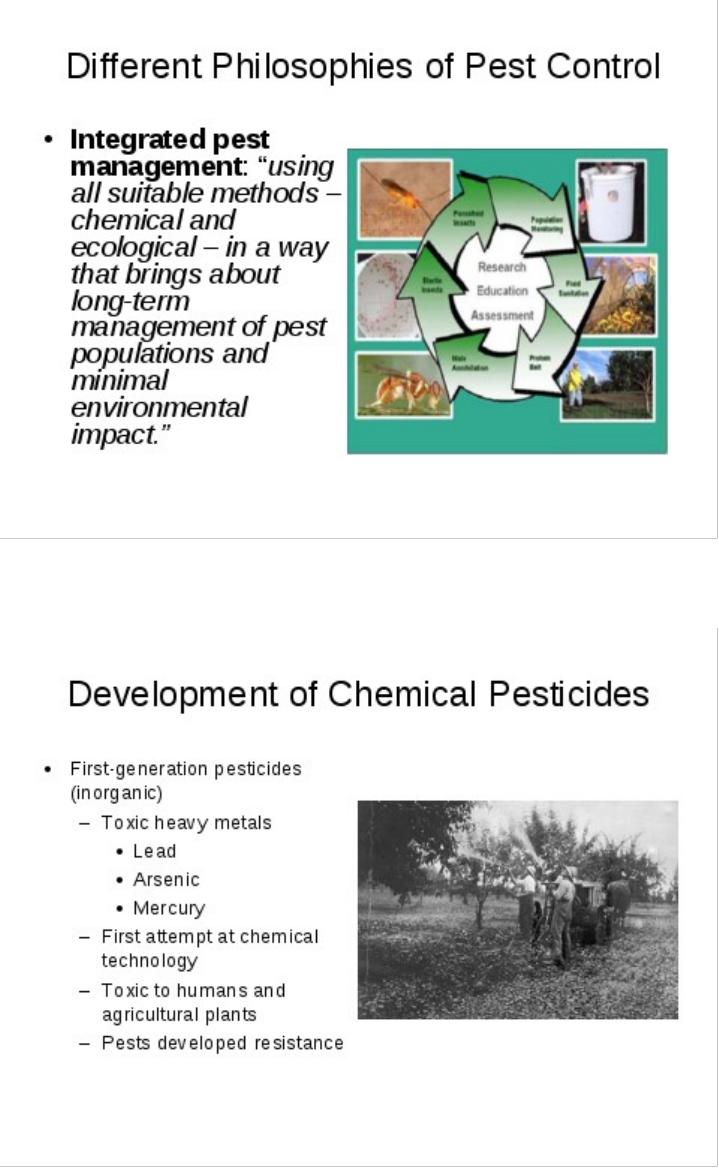
Promises and Problems of the Chemical Approach
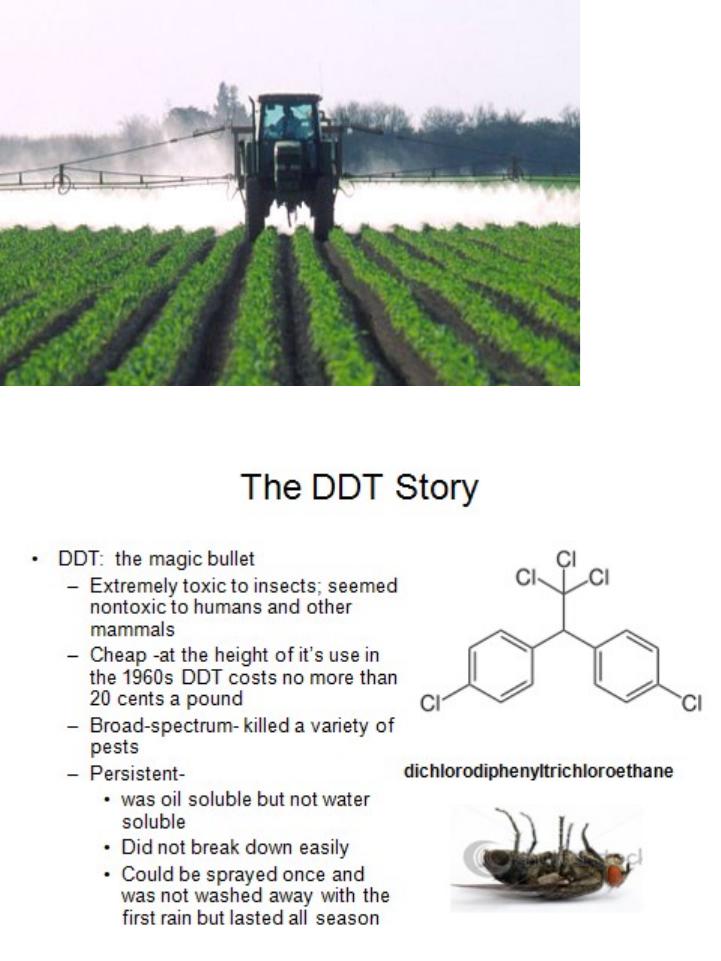
Second-generation pesticides
Used a3er WW II
oOrganic chemical
Less Acutely Toxic to humans and agricultural plants
However,
Long term toxicity
Pests developed resistance
Discovery of DDT
First synthesized by German chemist in 1874
In 1930’s Paul Muller discovered that it was a potent insecticide
During WWII it was used on soldiers and refugees to kill lice
Muller received a Nobel Prize for his discovery
Perhaps the single most important cause of the post WW II Population Explosion
oEffective for disease prevention (typhus fever, malaria)
oExpanded agricultural production
How the Virtues of DDT became it’s Vices
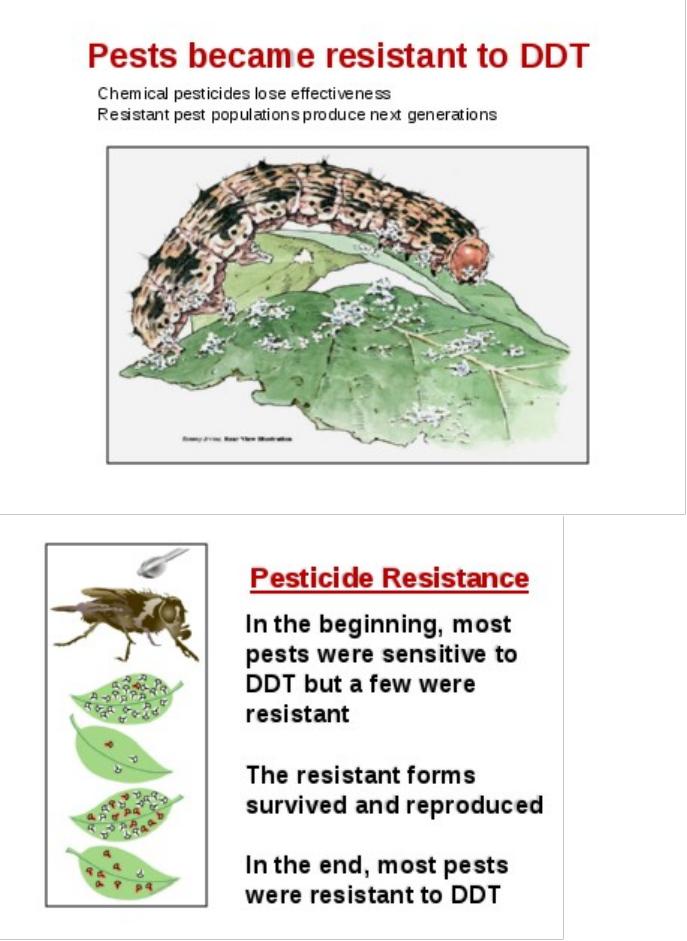
Development of resistance by pests
Resurgences and secondary pest outbreaks
Adverse environmental and human health effects
Resurgence and Secondary Outbreaks
Resurgences: a3er “eliminating” a pest, its population rebounds
in even higher numbers than previous levels.
Secondary outbreaks: outbreaks of species’ populations that were
not previously at pest levels
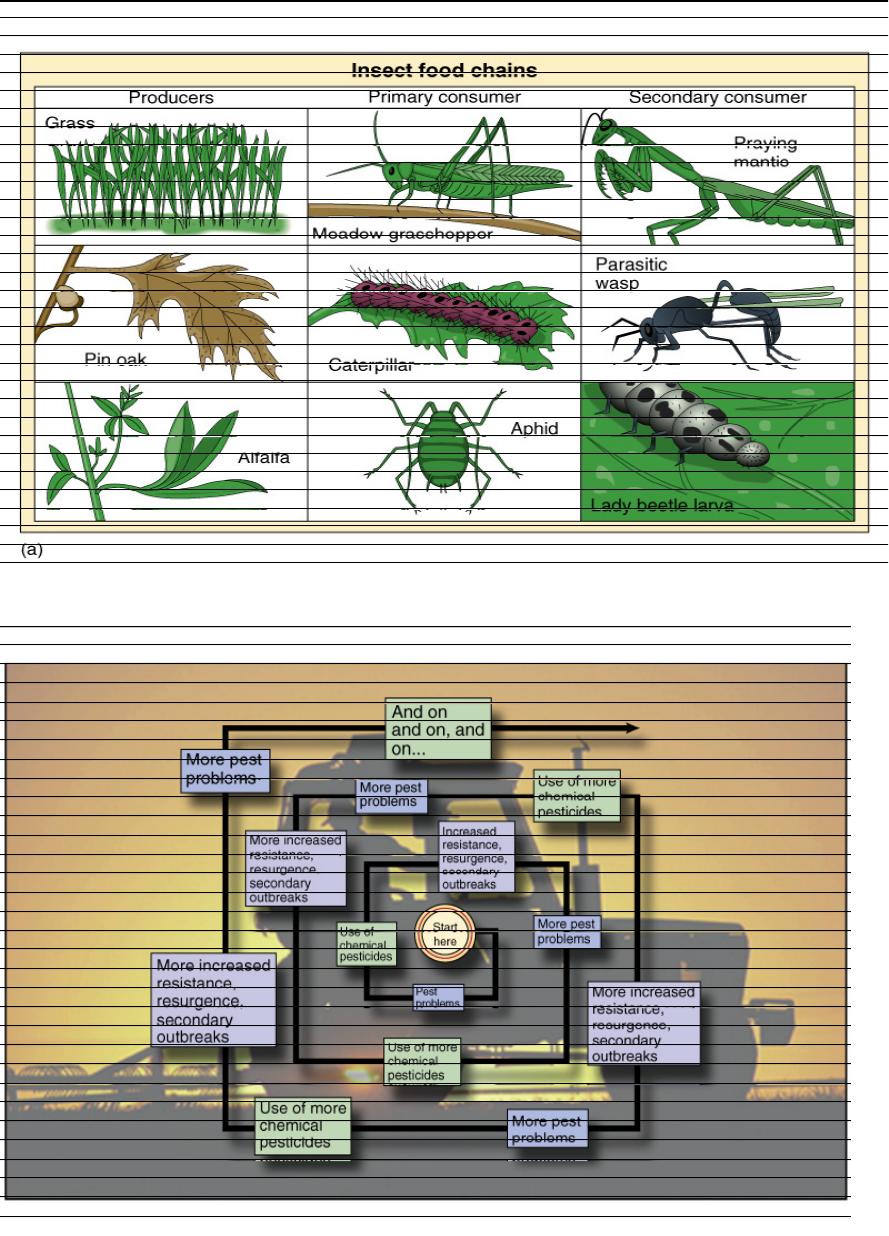
Di)erential reproductive rates of pests and their predators
The Pesticide Treadmill
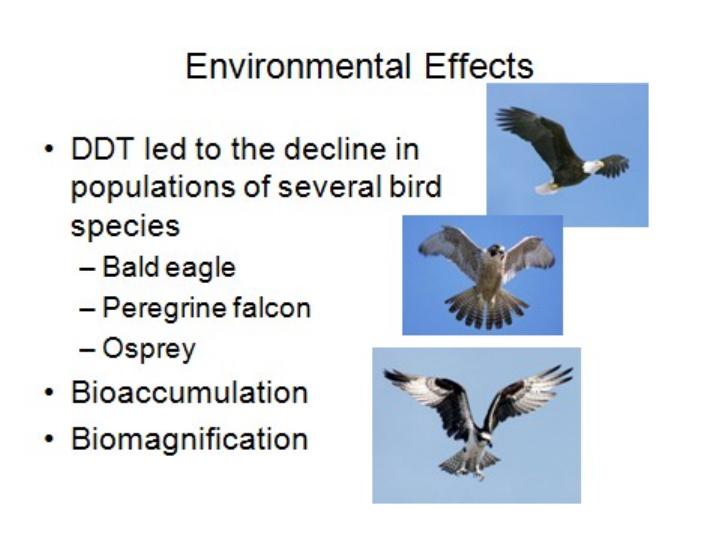
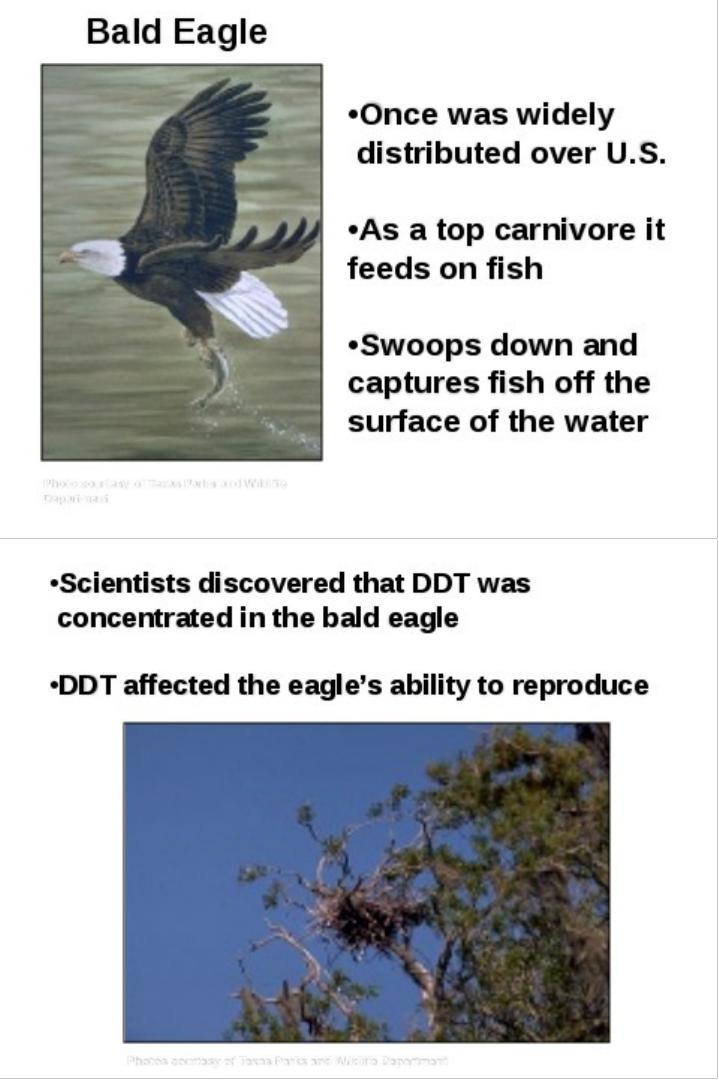
Population of adult eagles declined to 4,000 and the eagle was
listed as “Endangered”
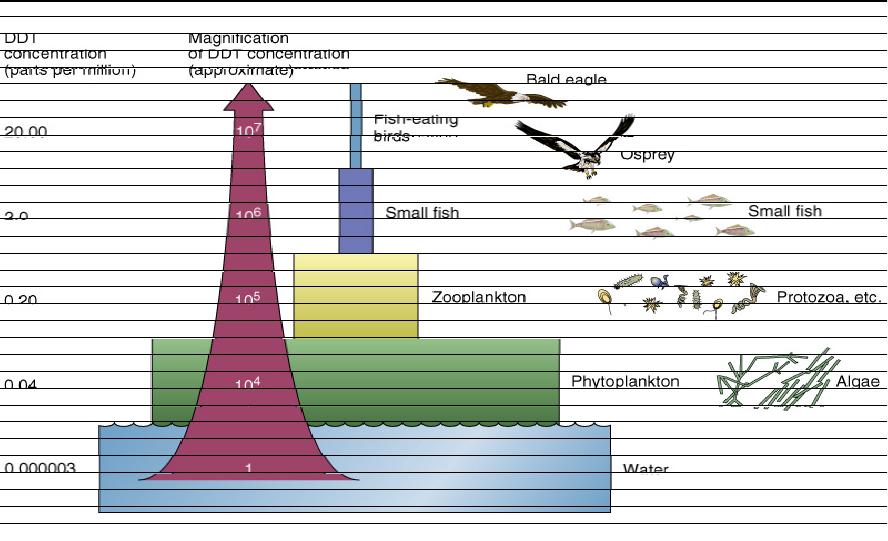
Biomagnification
Silent Spring
Silent Spring (1962) by Rachel Carson documented the effects of the uncontrolled
use of insecticides in the U.S.
If use continued as usual, there might be a spring with no birds
With ominous consequences to humans as well
The debate has not ended
Agricultural and chemical industries say the book was unscientiGc
The book was hailed as a breakthrough in environmental understanding
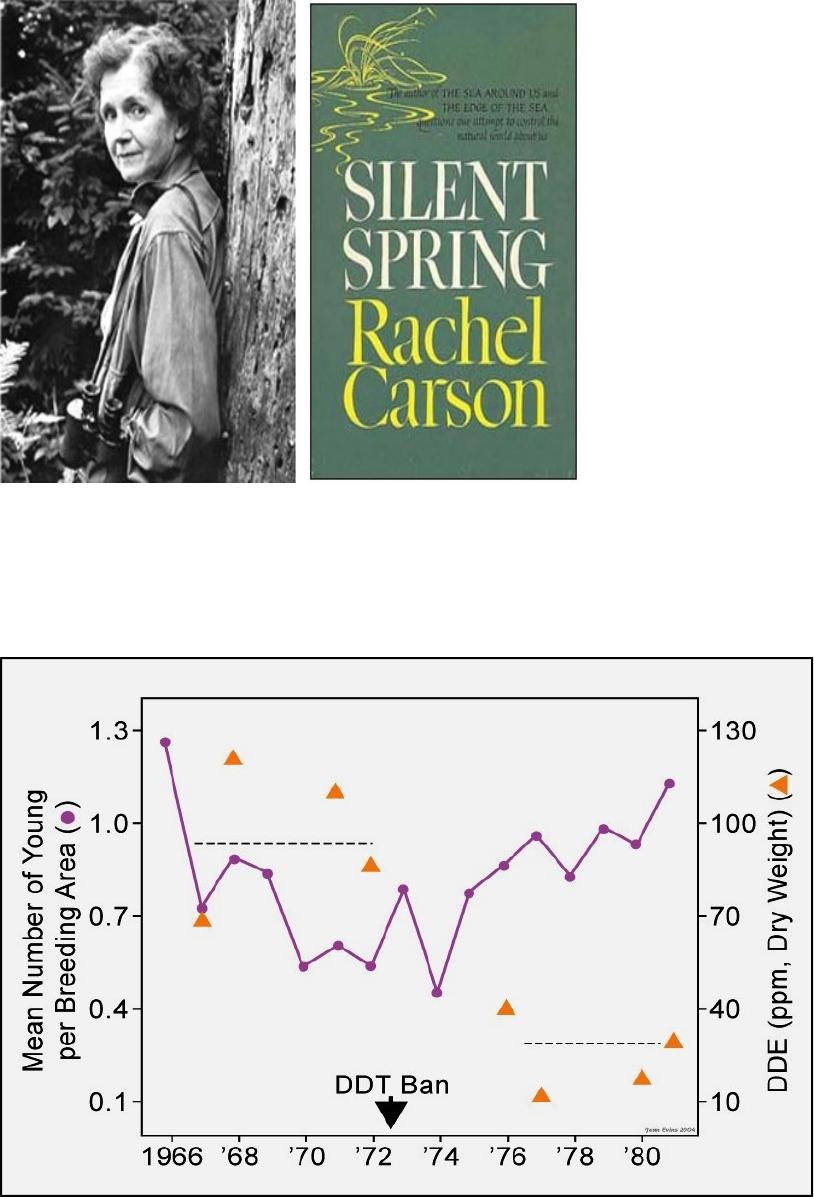
The Environmental Protection Agency (EPA) banned DDT in 1972
Eagle reproduction before and a7er DDT ban
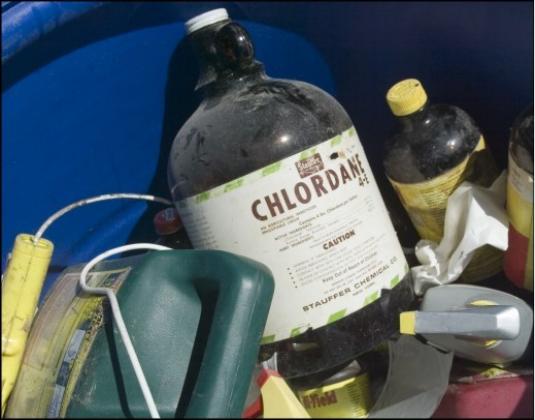
Other Organochloride Pesticides
aldrin
dieldrin
toxaphene
chlordane
heptachlor
All have been banned because of environmental and health effects
Health effect of Chlorinated organic Pesticides
Organochloride pesticides as a class are carcinogenic
Some such as DDT are less carcinogenic than others such as chlordane but
all have the potential to bioaccumulate
Studies have also found a correlation between organochlorine exposure and
neurological damage (several organochlorines are known neurotoxins),
Parkinson’s disease, birth defects, respiratory illness, and abnormal immune
system function.
Some organochloride pesticides mimic the effects of estrogen
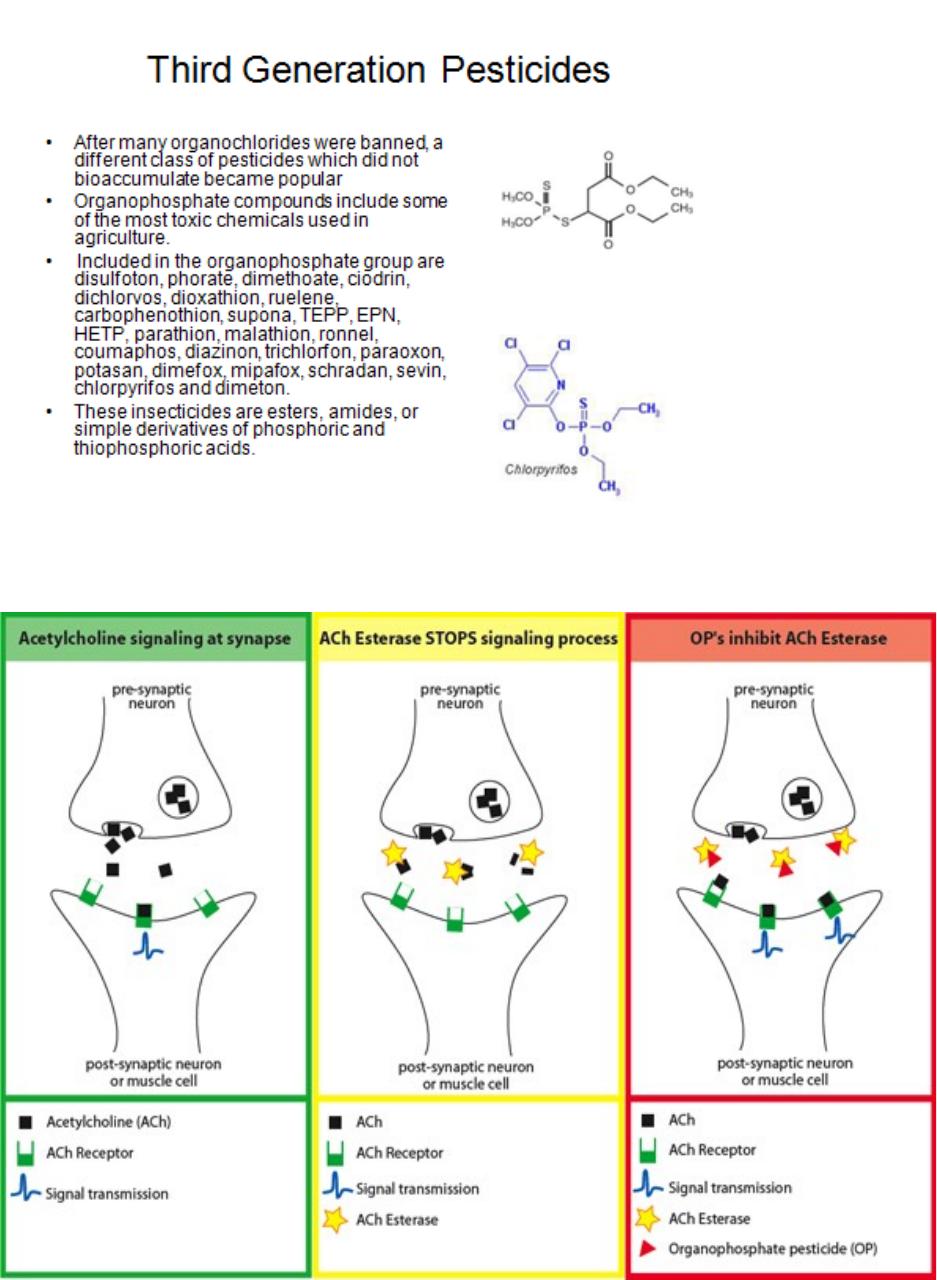
Organophosphate Pesticides are Anti-cholinesterases
hIp://www.youtube.com/watch?v=-gIqZ8IxctE
Human Health effect
They are one of the most common causes of poisoning worldwide, and are