2020
Corporate Payout Policy
MERCY COLLGE FINC450
RUCKER, JOSHUA & TORRES, LUIS
Abstract:
Dividend Policy is among the widely addressed topics in modern financial literature. The
inconclusiveness of the theories on importance of dividend in determining firm’s value has made
it one of the most debatable topics for researchers. In this study, we will be reviewing and
analyze how corporate dividend pay-out decisions are made. We will go over all the factors that
influence firm’s corporate payout decisions. The indecisiveness of the theories on importance of
dividend in deciding firm’s value has been one of the most debatable topics for researchers. We
will also go over the dividend irrelevance theory of We will see which is more beneficial to
companies and which is more beneficial to the investors. Well also investigate how corporate
payout decisions contracts in a time of crisis, much like in 2008 financial crisis and now during
the global pandemic of COVID-19.
Introduction:
Firms utilize different models to choose how to payout dividends and buyback shares
Which and when one should firms use? How much cash should firms give back to their
shareholders? Should firms pay their shareholders through dividends or by repurchasing their
shares?? Is there an optimum payout ratio or range of ratios that maximizes the current worth of
the shares? Which policy is less tax costly? Firms have the answer all these questions and more
which building their policy. Payout and repurchases polices are used by companies have a big
impact on the firm. The policy chosen usually consistent and follows some form of pattern over
time. Money involved in payouts is immense, in 2018 dividend payments totaled $1,390.1 billion
and share buybacks $806.4 billon.
Although payouts cost substantial amount of money that is not just what makes a firm’s
payout policy vital. A company polices conveys with other financial and investment decisions
like investment in real estate, mergers and acquisitions, asset valuing, debt issuing, and as well as
capital budging. The purpose of this study is to review and analyze our observations on
controlling factors that contribute to deciding payout and repurchasing policies. (Michaely,
2003)
Observations:
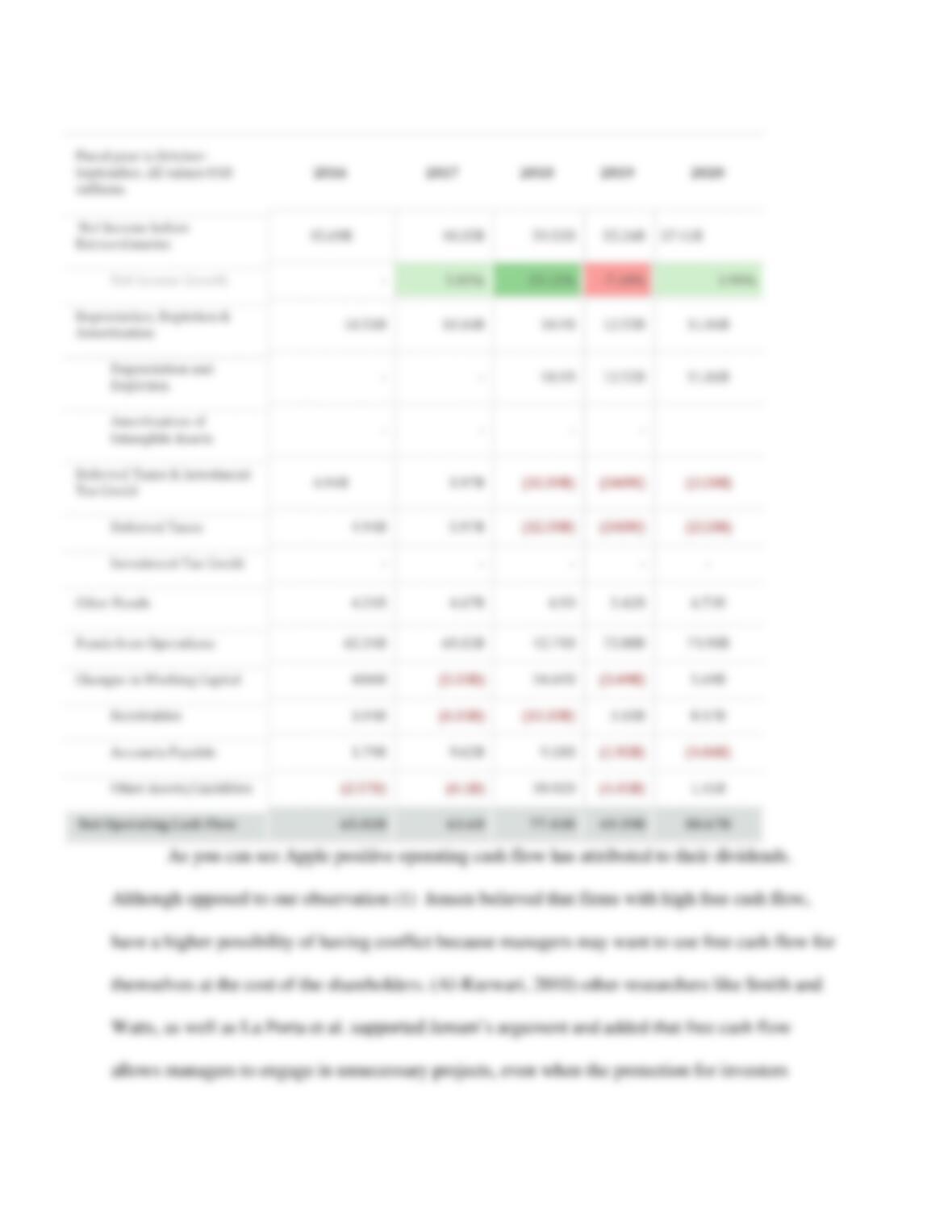
(1) Cash Flow- A company’s free cash flow positively affects the probability of
paying dividends.
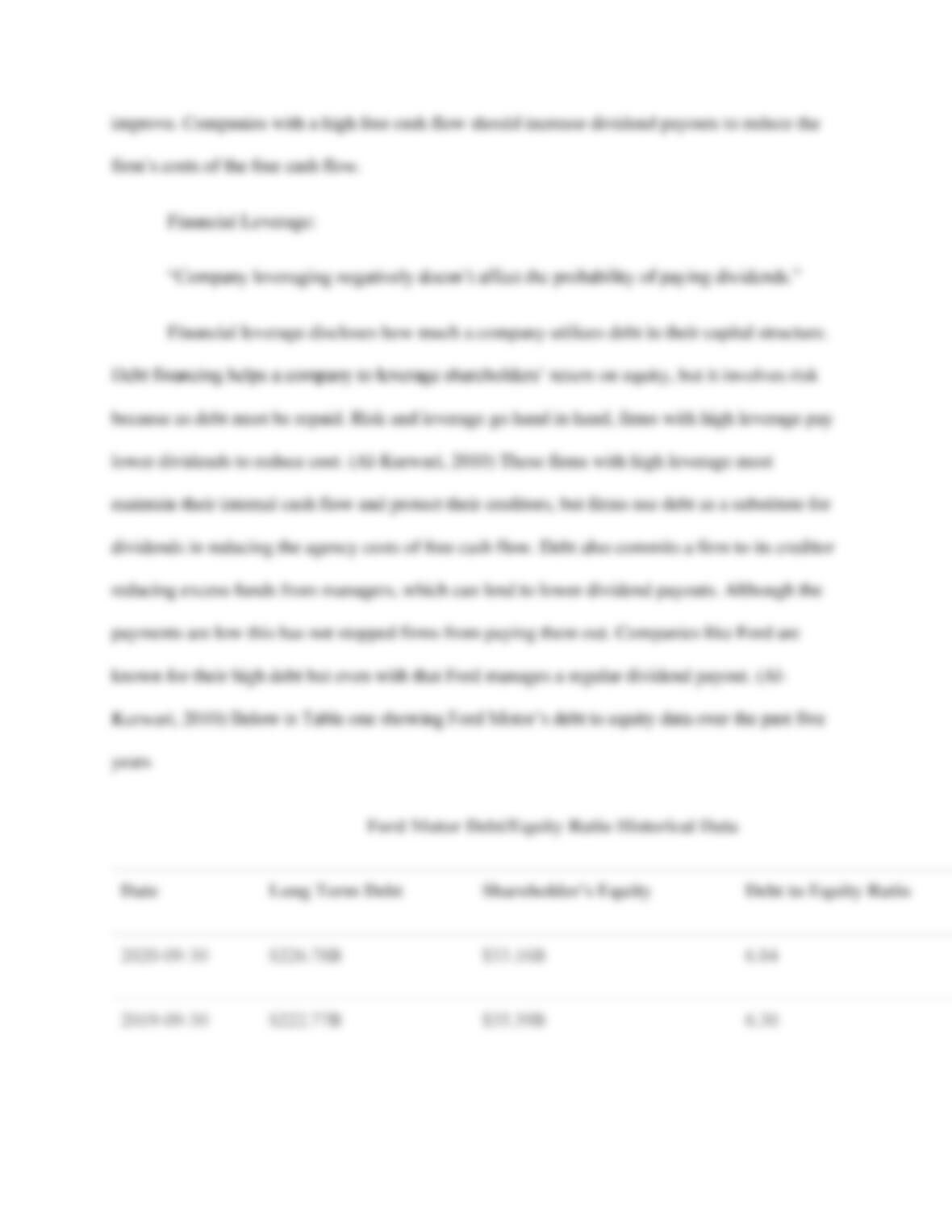
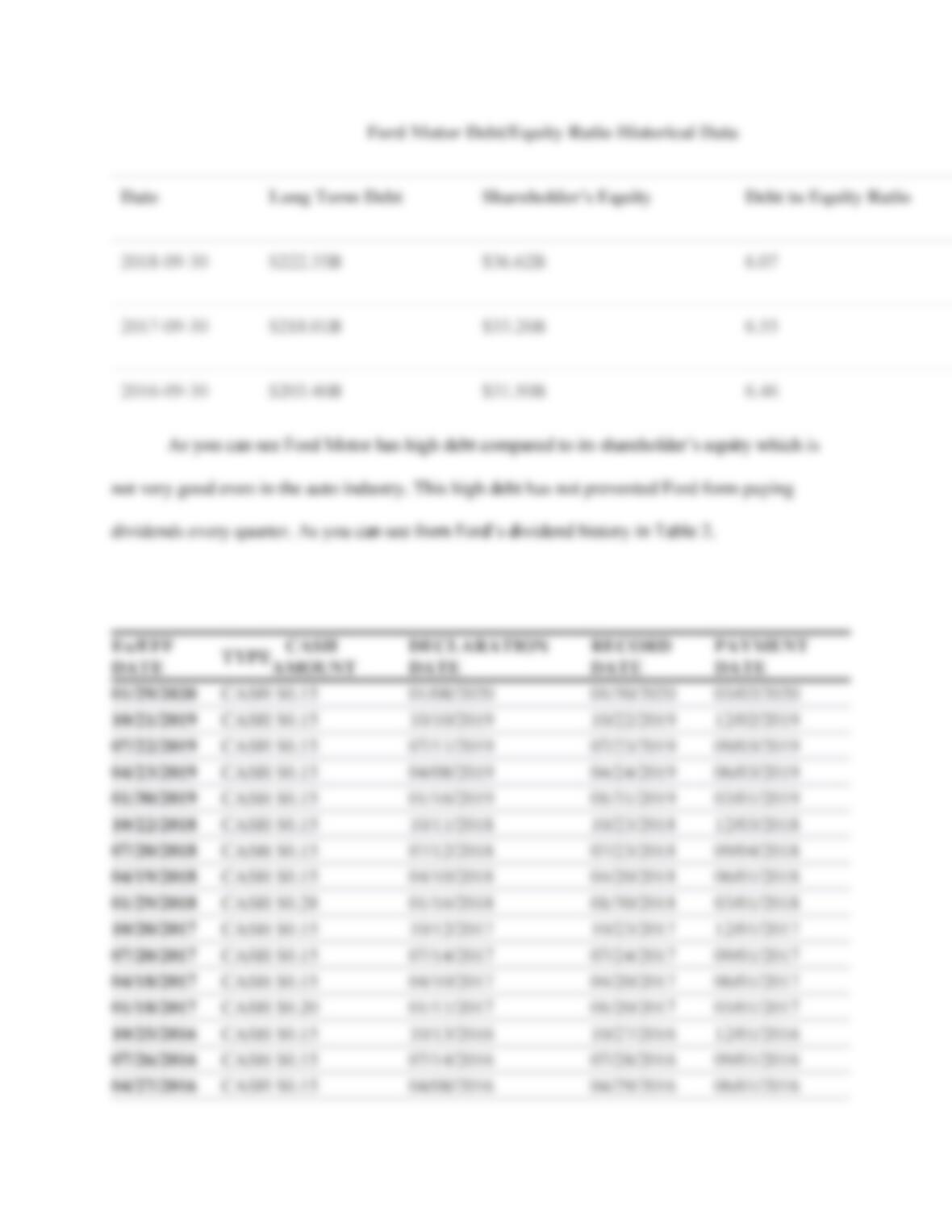
(2) Financial Leverage- Company leveraging negatively does not affect the
probability of paying dividends.
(3) Company Size-Large, established corporations typically pay out a significant
percentage of their earnings in the form of dividends and repurchases.
(4) Taxation- Taxes are not a vital aspect when firms discuss dividend/repurchasing
policies
(5) Market Announcements-The market reacts positively to announcements of
repurchase and dividend increases, and negatively to announcements of dividend
decreases.
(6) Stock buybacks- Over the years stock repurchases have become more volatile
over the years than dividend payouts.
The challenge to financial economists as well as corporations has been to develop a
payout policy framework where firms maximize shareholders’ wealth and investors maximize
utility. In such a framework payout policy would function in a way that is consistent with these
observations and is not rejected by empirical data.
According to dividend irrelevance theory, firm value and shareholder wealth are not related to
the decision of whether a dividend should be paid. This theory was presented by Franco
Modigliani and Merton Miller in 1961. Prior to their theory, most economists believed that the
more dividends a firm paid, the more valuable the firm would look to investors. This theory is
running behind the idea that investors do not care about dividends and capital gains, they believe
earnings. The irrelevance theory indicates that paying out dividends does not increase the
profitability or stock price of a company. (Michaely, 2003) Which accounts for a company’s
investment policy and the prospects is the only thing that is thought when evaluating a company.
This view was drawn from an broadening of the discounted dividends approach to firm
valuation, which says that the value V of the firm at date 0, if the first dividends are paid one
period from now at date 1, is given by the formula: where Dt = the dividends paid by the firm at
the end of period t, and rt = the investors opportunity cost of capital for period t. (Michaely ,
2003)
Types of Dividends
There are 3 types of dividend firms’ payout to their shareholders, a regular dividend, a
stable dividend, irregular dividend, or no dividend. Under the regular dividend a company pay
out dividends every year. Firms with this policy has steady cash flow and earnings. Firms that
pay a stable dividend, dividends are fixed and paid out of a percent of the firms’ profits. The
irregular dividend policy means the firm does not pay its shareholders, expect if it makes an
abnormal profit. Firms that use this policy usually do not have steady cash flow. (CFI, 2019)
Firm that use the no dividend the company does not distribute payouts to its shareholders.
Instead the company keeps the profit and reinvests it back into the company. Companies that do
not give on dividends are usually have higher stock appreciation which is more valuable to
investors than dividend. (CFI, 2019)
Divided Policy Factors
Cash Flow: