84
Copyright © 2019 Pearson Canada Inc.
Chapter 8
Investment Decision Rules
8-1.
NPV = 12,000 / 1.1 – 10,000 = 909.09. So take the investment opportunity!
IRR = 12,000 / 10,000 – 1 = 20%
The cost of capital can increase by up to 10% without changing the decision.
8-2.
9
1/9
1000000 200000 6193
1.2
1000000 1 19.58%
200000
NPV
IRR
Do not take the project. A drop of just 20 – 19.58 = 0.42% in the cost of capital would change the decision.
8-3. Since the plant will take a year to build, it will not generate profit until the second year.
Timeline (amounts in $ millions):
0 1 2 3 4
–100 30 30 30
130
N
PV = 100 = $247.22 million
1.08 0.08
, so make the investment.
Solving for IRR,
130
100 0 r 24.16%
1r r
So, the cost of capital can be underestimated by 16.16% without changing the decision.
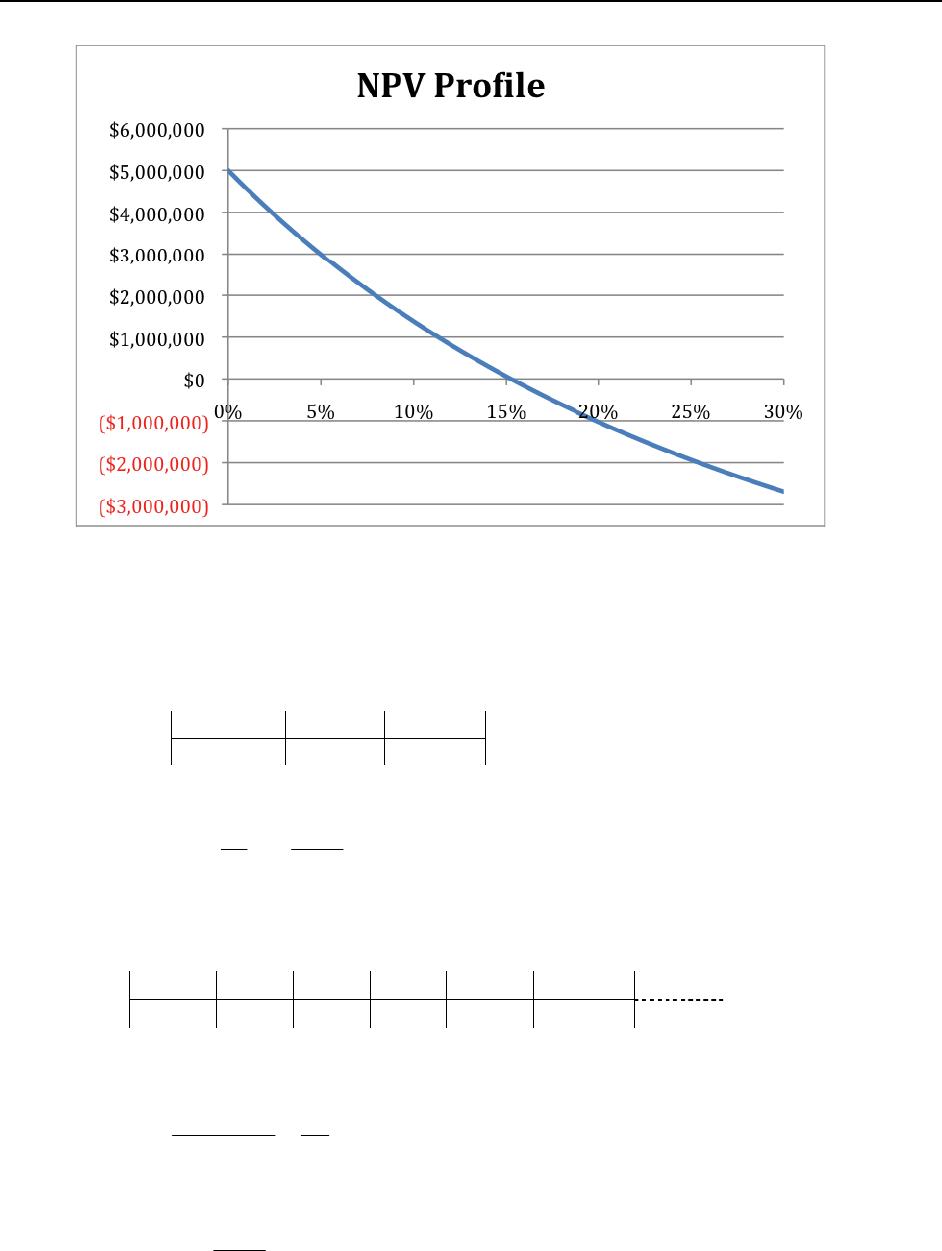
8-4. See the table below for the NPVs given different discount rates:
Rate NPV
0% $5,000,000
5% $2,988,430
10% $1,372,360
15% $56,465
20% ($1,028,164)
25% ($1,932,160)
30% ($2,693,291)
Chapter 8 Investment Decision Rules 85
Copyright © 2019 Pearson Canada Inc.
The project should be accepted as long as the discount rate is below the IRR of 15.238237%.
8-5.
a. Timeline (amounts in $ millions), assuming the publisher paid Mr. Clinton up front:
0 1 2 3
10 –8 –8 –8
3
81
NPV 10 1 $9.895 million
0.1 1.1
b. Timeline:
0 1 2 3 4 5 6
10 –8 –8 –8 5 5(1 – 0.3) 5(1 – 0.3)
2
First calculate the PV of the royalties at year 3. The royalties are a declining perpetuity:
3
55
PV 12.5 million
0.1 0.3 0.4
.
So the value today is
royalties 3
12.5
PV 9.391
1.1
.
Now add this to the NPV from part (a), NPV 9.895 9.391 $503, 381 .
86
Solutions Manual for Berk/DeMarzo/Stangeland
•
Corporate Finance
, 4
th
Canadian Edition
Copyright © 2019 Pearson Canada Inc.
8-6.
Timeline:
0 1 2 3 6 7 16
–200,000 –200,000 –200,000 –200,000 300,000 300,000
a.
66 10
66 10
200,000 1 1 300,000 1
NPV = 1 + 1
rr
1r 1r 1r
200,000 1 1 300,000 1
=1+ 1
0.1 0.1
1.1 1.1 1.1
= $169,482.24
Since NPV > 0, the company should take the project.
b. Setting NPV = 0 and solving for r (using a spreadsheet), the answer is IRR = 12.66%. So, if the
estimate is lowered by more than 2.66%, the decision will change from accept to reject.
c.
66 10
66 10
200,000 1 1 300,000 1
NPV= 1 + 1
rr
1r 1r 1r
200,000 1 1 300,000 1
11
0.14 0.14
1.14 1.14 1.14
$64,815.87
Since NPV < 0, the company should not make the investment.
8-7.
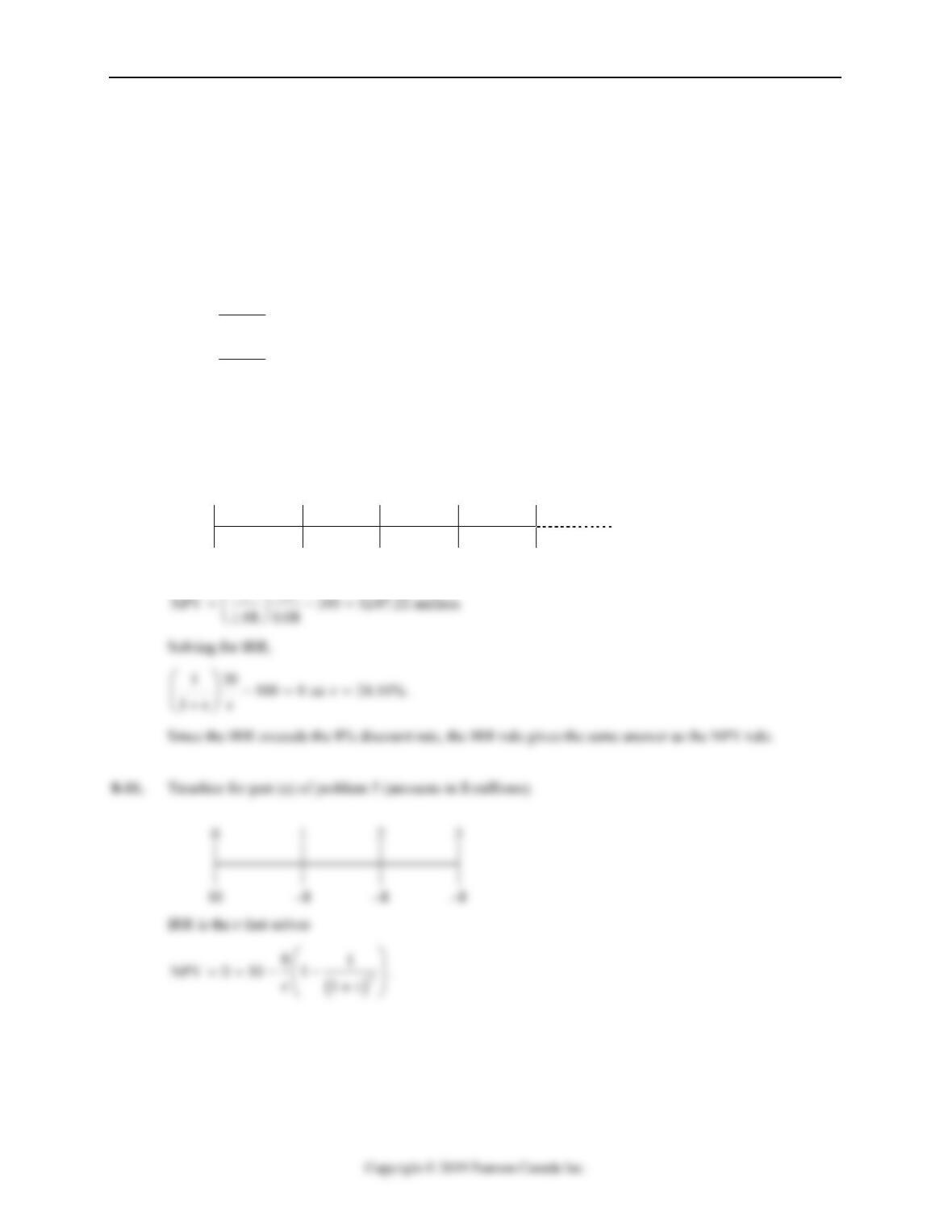
a.
b. The IRR is the point at which the line crosses the
x
-axis. In this case, it falls very close to 13%. Using
Excel, the IRR is 12.724192%.
Chapter 8 Investment Decision Rules 87
c. Yes, the purchase is attractive because the NPV is positive at the discount rate of 12%.
d. The discount rate could be underestimated by 0.724192% before the investment decision would
change.
8-8. IRR = 120,000 / 100,000 – 1 = 20%. You are indifferent to the investment.
8-9.
1/40
40
100000 1 12.2%
1000
100000 1000 986.71
1.25
IRR
NPV
Both rules agree—do not undertake the investment.
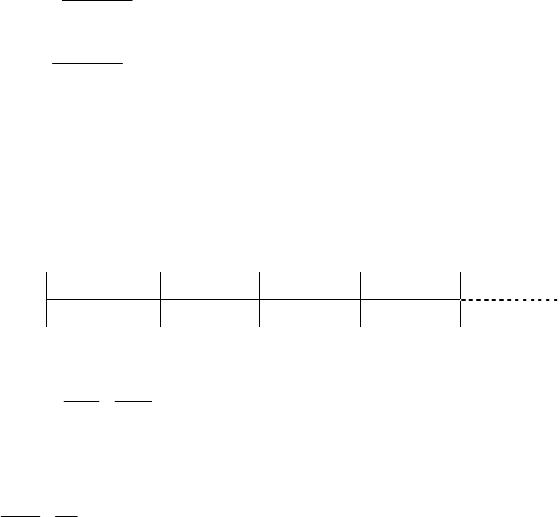
8-10. Timeline (amounts in $ millions):
0 1 2 3 4
–100 30 30 30
130