Lecture 5 – Contract Terms
Definitions and Types
Before a contract is formed, the parties will make various statements in the course of negotiation. since these
statements may form part of the contract, it is important to be able to distinguish between contract terms and other
statements. We must consider so ca-called Puffs, Representations and Terms.
They differ in their legal significance:
Puff = statement that promotes a product in a way that is not intended to be taken to amount to a definite promise
e.g. a boastful statement made in advertising
Representation = is a statement that includes a party to enter into a contract (but does not form part of it)
Term = promise or undertaking that does become part of the contract – a breach of that term can lead to the party
being sued for damages
Parties bound by contract terms
Terms are contained in the offer
When legitimately incorporated into the contract they govern the obligations of the parties
Breaching any term then gives rise to possibility of being sued for damages
Knowing what they are is not always easy!
Can be:
• Express
• Implied (imposed) by statute
• Implied by courts
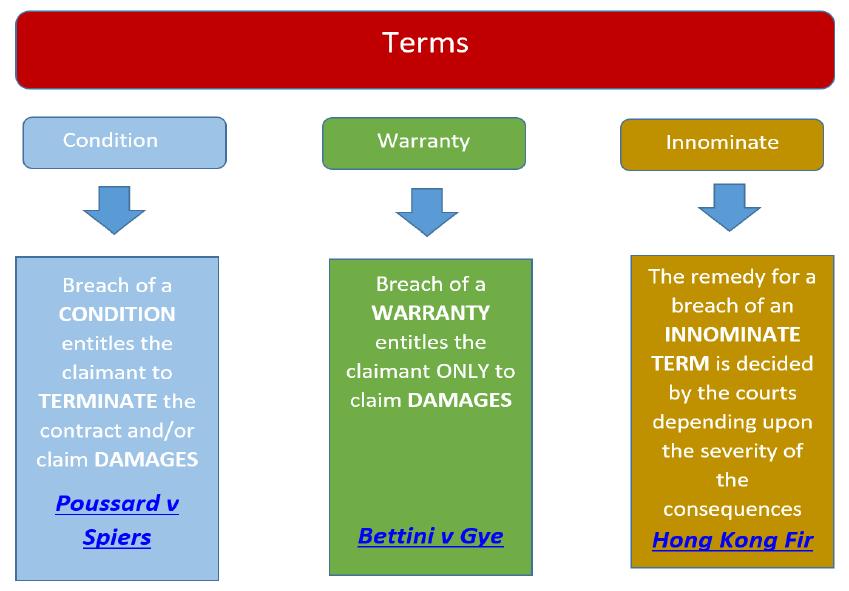
Contract terms: types
Conditions
Major terms – if breached, can terminate contract & sue for damages (e.g. price)
Warranties
Less important terms – if breached, cannot terminate but only sue for damages (cannot get out of a
contract)
Innominate / indeterminate terms
Neither conditions nor warranties
Has the breach deprived the injured party of substantially the whole benefit of the contract?
If YES = condition > can terminate & sue for damages
If NO – warranty > can only sue for damages
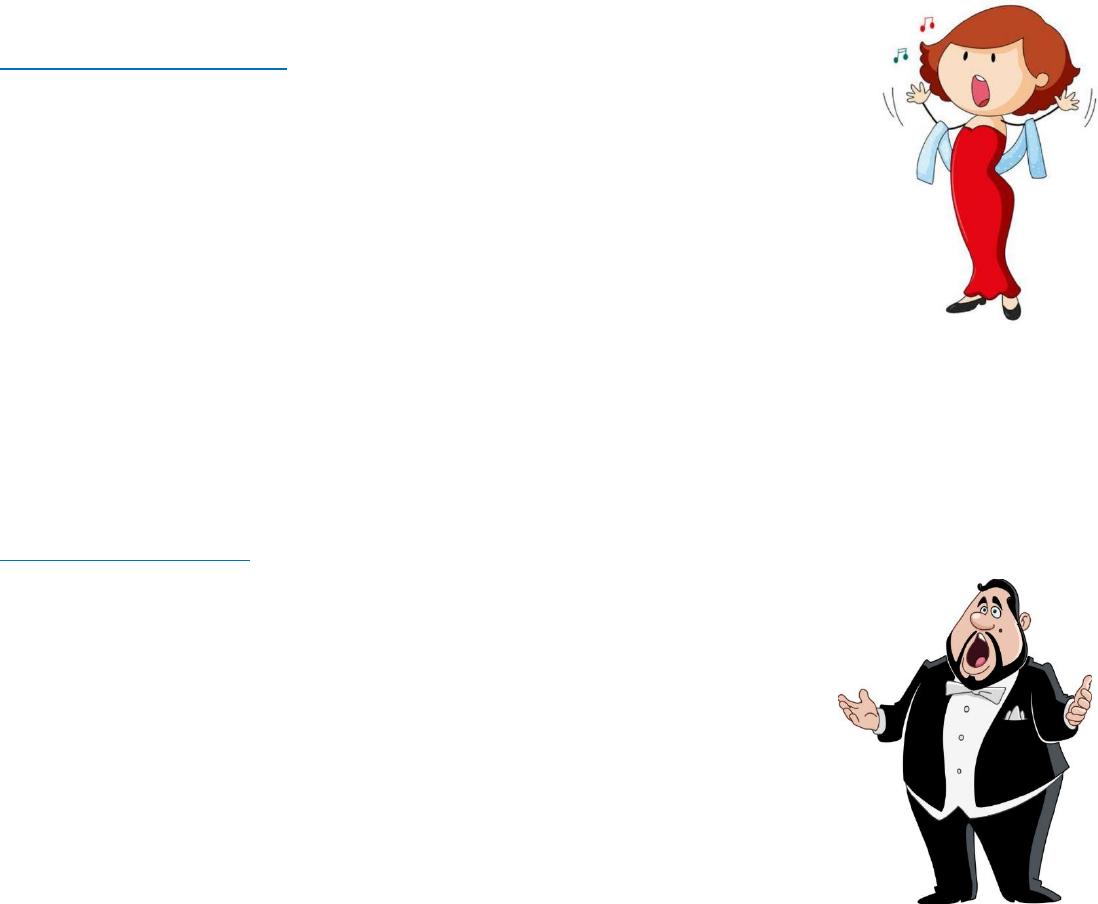
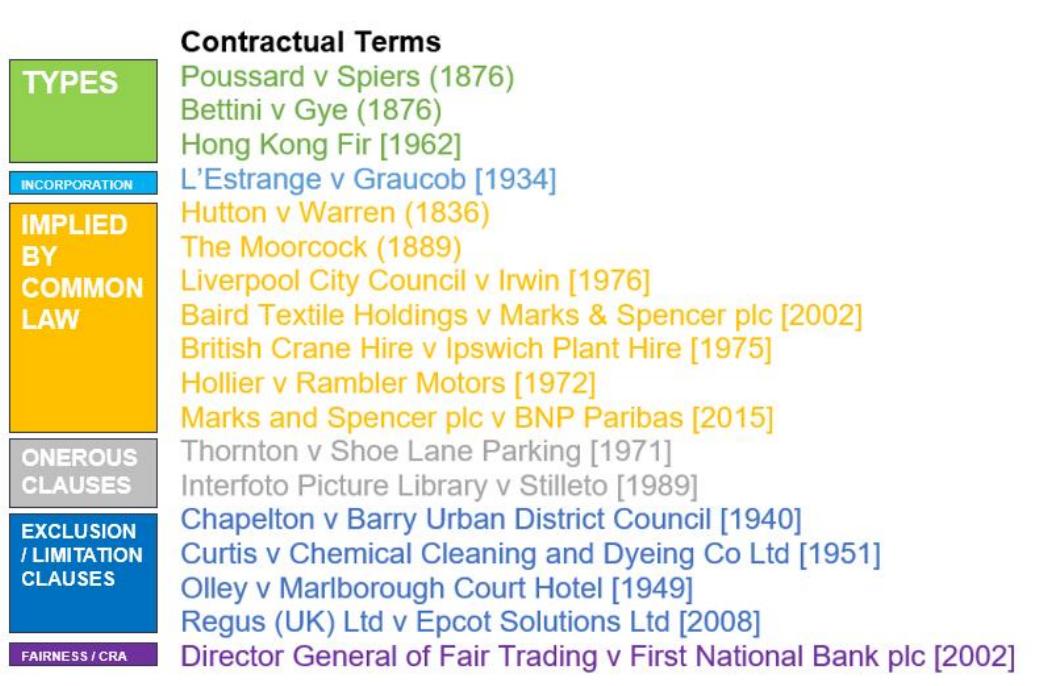
Poussard v Spiers (1876) – Type
Concerning: breach of contract
FACTS
An actress was under contract to appear as the lead in an operetta.
She was taken ill and unable to attend the first performances. Her role was given to her
understudy.
Once recovered, she sued for breach of contract.
PRINCIPLE
The claim by the actress failed. The court held that as the lead performer, she was of critical importance to the
success of the production. This was therefore a condition of the contract which she had breached by failing to attend
the first performances. Therefore, the producers were entitled to repudiate and terminate the contract.
Bettini v Gye (1876) – Types
Concerning: breach of warranty
FACTS
Singer under contract to appear in series of concerts in different theatres
Contract included a term that he should attend rehearsals for six days before the live
performances
Singer did not attend the first three rehearsals
He was replaced. The singer sued for breach of contract.
PRINCIPLE
The claim by the singer was successful. The court held that attendance at rehearsals was peripheral to the main
purpose of the contract. Therefore, the terms were considered to be a warranty which entitled the producer to sue
for damages, but not to reject and terminate the contract by replacing the singer with another
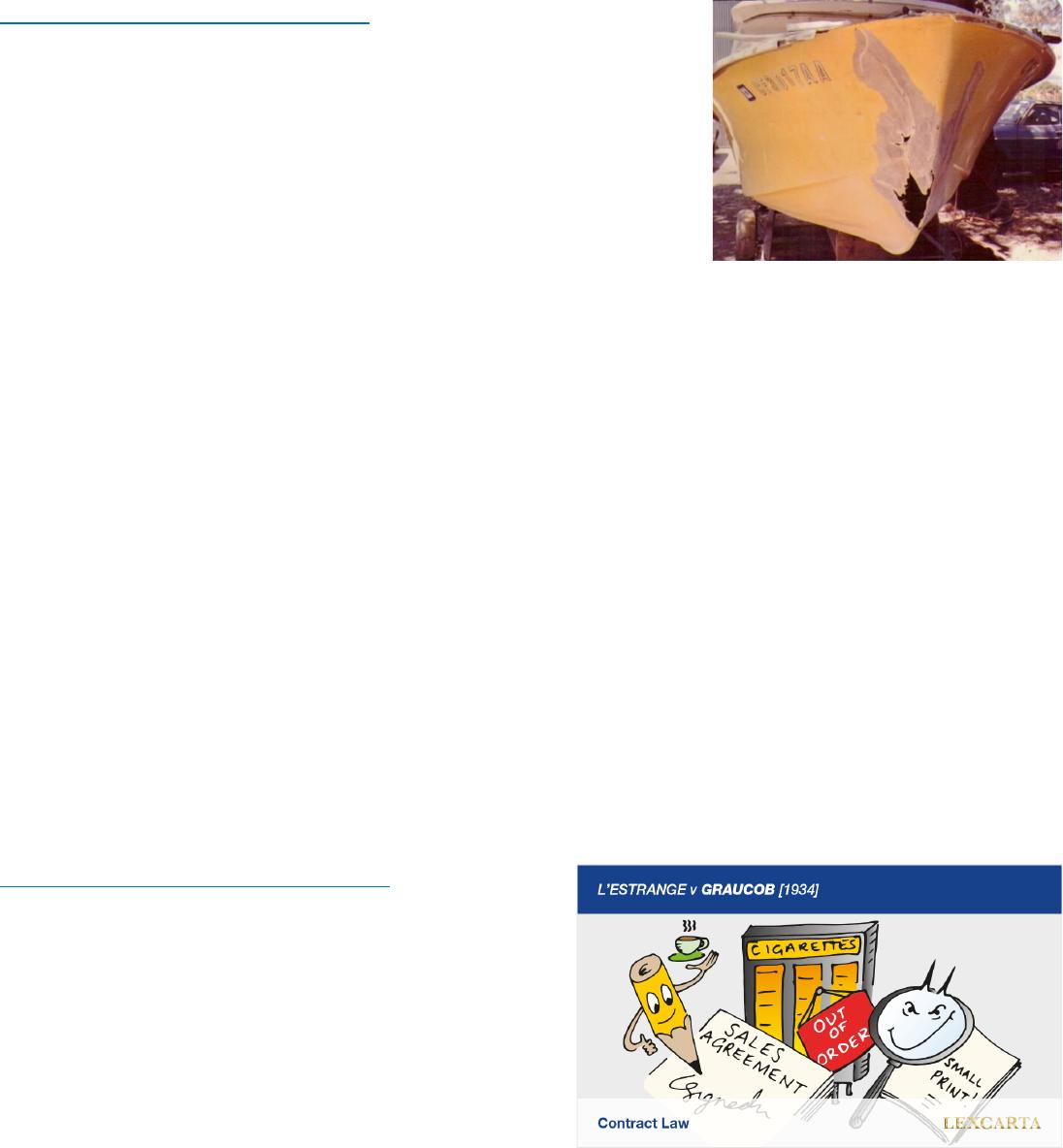
Hong Kong Fir Shipping v Kawasaki [1962]
Concerning: innominate terms
FACTS
Charterparty = contract for a vessel – stated that the ship fishould be fitted in
every way for ordinary cargo service” i.e. sea-worthy
The engines turned out to be old and needed careful maintenance, and there
weren’t enough engine room staff
Charterers wanted to terminate the contract and argued they were entitled to because the need for the vessel to be
seaworthy was a condition (really they wanted to get out of the contract, as had found a better and cheaper
charterparty elsewhere).
DECISION: this was an innominate term where breaches of it could be serious or trivial e.g.
Missing medical supplies (9 bandages instead of 10) – potentially trivial
Hole in hull – serious
Court will decide the outcome of the breach of an innominate term depending on the seriousness of the actual
consequences of the breach
Courts said the consequences of the ship’s engines being old and the fewer engine room staff than expected were
not serious enough to make the term around its sea-worthiness a condition
As such, the breach had not deprived the injured party of substantially the whole benefit of the contract, and they
were entitled to damages but not to terminate
Contract is signed
Where a written agreement is signed, the parties to it are considered to be in agreement with everything it contains
even if they have not read it.
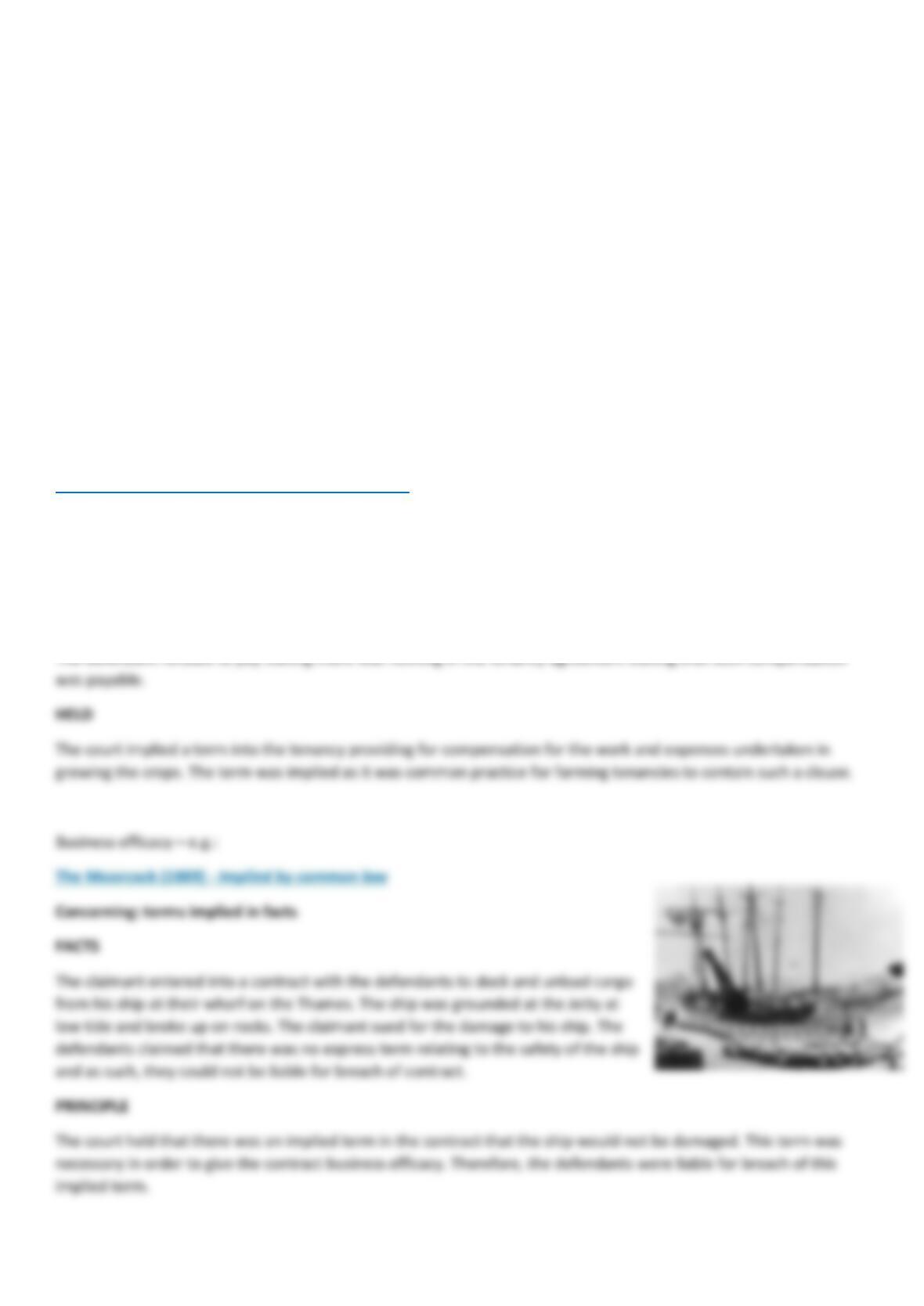
L’Estrange v Graucob [1934] – Incorporation
Concerning: incorporation of terms; signed contract
FACTS:
A café owner signed a sales agreement, which she did not read,
for a cigarette vending machine.
A term, legible but in small print, excluded liability for fault and
any statutory implied terms. When the machine failed to work
the seller refused to refund the café owner.
DECISION:
The terms of the agreement were valid.
PRINCIPLE:
In the absence of misrepresentation or fraud, signature will incorporate terms into a contract irrespective of
whether they are read or understood.
TIP! Such an onerous exclusion clause would now fall foul of UCTA 1977.
Incorporation by being implied by statute
E.g. for business-to-business transactions
Sale of Goods Act 1979
s.13 – goods must fit description
s.14 – satisfactory quality and fit for purpose
E.g. for business-to–consumer transactions
Consumer Rights Act 2015
s.9 / 10 – satisfactory quality and fit for purpose
s.11 – goods must fit description
Incorporation by being implied by the courts
Officious bystander
Customary (‘it’s always done like that around here’) – e.g.
Hutton v Warren (1836) – Implied by common law
FACTS
The claimant was a farmer who had a tenancy on the defendant’s fields. The claimant had planted crops on the fields
and worked the fields to ensure the crops would grow.
Before the field was due to be harvested the tenancy was terminated. The claimant then submitted a bill to the
defendant for the work and cost of seed spent on the field as was customary in farming tenancies.