Consumer Electronics Industry: Tablets Over the next Decade
1. Introduction
A tablet PC is a wireless, portable personal computer with a touch screen interface. The tablet form factor is
typically smaller than a notebook computer but larger than a Smartphone. Bigger and Brainier than a smart
phone but smarter and sleeker than a net book, tablet computers have revolutionized the way in which modern
day consumers experience and fulfill their computing and communication needs.
The credit of pioneering this field and creating the market segment goes to Apple with launch of
i-pad in 2010 and once again proving its capability of a leading innovation driven firm which redefines the
course of overall computer industry as a whole from time to time. Since then the tablet sales have seen
unexpected momentum in terms of growth in sales figures worldwide with apple emerging as the largest
supplier till date as compared to all others. However, Android based tablet PCs are expected to take over
Apple’s share in the coming years. The world has seen aggressive competition among tablet PC manufacturers
after the launch of iPad from Apple. Within five months of the release of iPad, Samsung launched its Samsung
Galaxy Tab to compete with Apple. Since then, the tablet PC manufacturing industry has seen the emergence of
numerous players. Most tablet manufacturers such as Asus, HP, and Lenovo among others released their models
of tablet PCs in quick successions, but none of them could surpass Apple’s share.
2. Industry Dynamics
The “consumer electronics” (CE) category of products includes Smartphone, tablets, computers, televisions,
video game consoles, automotive technology, and many other home products as well as emerging product
categories such as wearable’s and 3D printers. It is a rapidly changing, dynamic industry that is highly
competitive and influenced by technological developments. Manufacturers are under enormous pressure to
bring unique and differentiated products to market. Any successful product quickly attracts copycat products
from competitors, resulting in rapid commoditization and falling prices.
Recently the two prevailing trends have been convergence – combining the functionality of many
products into one – and the shift toward mobile, connected devices such as smart phones and tablets. Rapid
adoption of tablets disrupted and severely cannibalized demand for notebooks, but the decline in demand
appears to have bottomed as tablets still cannot perform all functions of the computer. From a distribution
perspective, online retailing has been a major trend and has become much more prevalent within the industry. If
there is one constant feature of the rapid pace of change across technology, it must be the consistent outstripping
and surpassing of all expectations and expert projections. By 2017, there will be a global social network
audience of 2.55 billion. alongside this surge in habitual social networking use has caused a change in consumer
habits. Mobile devices, tablets, even brand new innovations such as wearable technology are amongst the
drivers that are re-defining how people access products and make purchases. Rapid technological change,
combined with increased production efficiency, has resulted in falling retail prices for industry products, making
them more attractive and affordable for consumers. Over the next five years, improving per capita disposable
income and rising consumer confidence about the convenience and security of online purchases will likely
secure repeat sales. In addition to improving economic conditions, product innovations and new technologies
will further bolster industry growth.
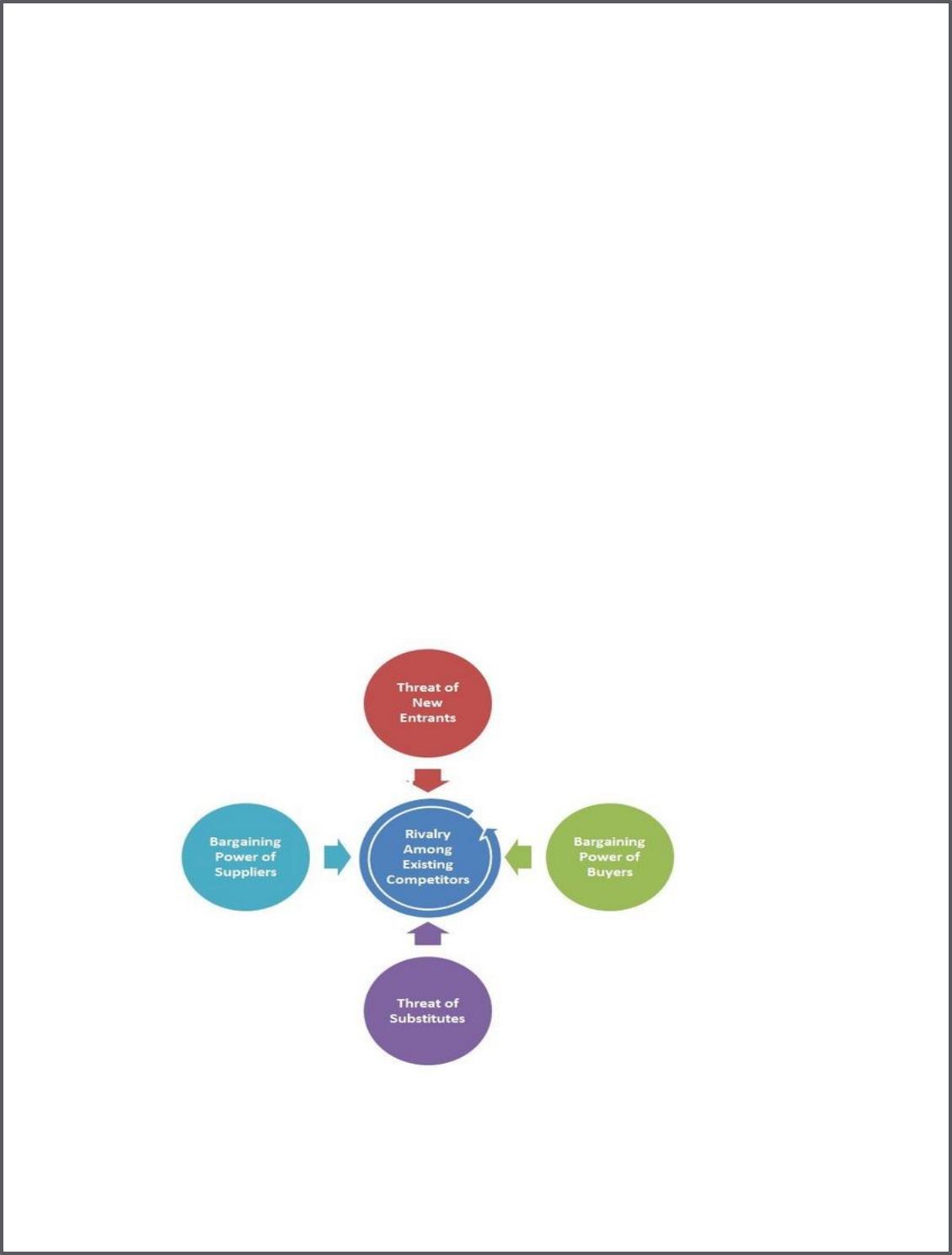
3. Tablet Market Analysis using Porter’s Five Forces Model
Porters Model analyzes an industry with the aim of helping develop a business strategy. The five forces in the
model have been identified to categorize industries as intensely not competitive or competitive. The
categorization helps determine the attractiveness of the market. Industries have many features in which a
companies compete and this features are vital in determining the level of competition the company faces and the
expected profits.
Porter’s Five Forces in Tablet Industry
Threat of New Entrants

Threat of new entrants to the tablet industry is weak. The market is currently dominated by other major
competitors who have nearly the entire market share. This market domination discourages new
companies with potential from entering the market.
Another barrier to entry is that the tablet market requires significant investment in research and
development. The investment will help in developing innovative products, as well as large fixed start-up
costs for customer service, employees and manufacturing. The new entrants into the market will not only
experience high prices, but they will likely acquire less innovative products. This situation arises
because the new entrants do not enjoy equal funding for research and development as the other
established brands. They will have to overcome the customers that are loyal and have trusted the existing
players in the industry for many years. New entrants should focus investments more on marketing and
advertising than the existing brands.
There is the likelihood of new players into the tablet market not faring well as the larger companies are
likely to develop innovative products more rapidly due to their many competitive advantages.
Bargaining Power of Suppliers
Apple has developed an ecosystem to obtain the best possible value and benefit to their customers and
stakeholders.
Moreover, since Apple is the leader technology company which has large demand of raw material there
are a plenty of suppliers which have been registered in order to be the Apple’s suppliers. Then, when
there are more competitive among large number of suppliers, the bargaining power of them will be
decreased.
Apple has a high bargaining power over their suppliers because they are able to outsource much of their
manufacturing and they also have been able to vertically integrate, which means produce some of their
own supplies, which has allowed Apple a great advantage in the competitive market.
Bargaining Power of Buyers
Large business, governments and educational institutions along with household consumer which buy
tablets in large volumes have the power to bargain on price, technology quality and service.
However, buyer’s power is lessened due to high switching costs and also due to the brand loyalty. Thus,
threat of buyer power can be moderated with highly differentiated product.
Apple’s unique features in tablets and sleek contemporary design places it as a lucrative product and
combining it with brand loyalty make it difficult for consumer to choose competitors product.
But despite several ways in which the ipads have been segregated as different customer still views all the
options alike on some parameters of technology and performance and hence the price could be decisive
factor for purchase.
Hence, it can be concluded that buyer power is fairly strong
Rivalry among competitors
The other major players in the tablet industry viz Samsung, Lenovo, amazon are continuously striving to
outpace the sales growth of apple ipads by constantly introducing cost effective and heavily loaded
products in the market.
Infringement on intellectual rights and much famous litigation between Samsung and apple clearly
indicate towards a fierce struggle to grab market share.
While apple used to set rules of the game Samsung is trying hard to change the game altogether with its
hybrid range of tablets along with continuously upgrading hardware and software platforms. Similarly
taking a cue from Samsung other players have also strengthened their position and presence in the