0
EISAKU SATO ESSAY CONTEST–2016
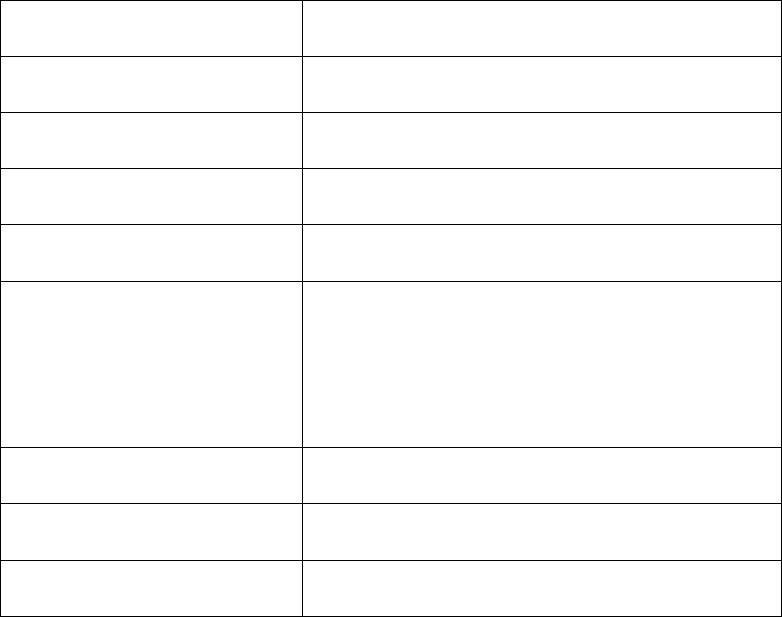
Full Name
SEE HONGWEI
Affiliation
University Science Malaysia
Age
20
Gender
Male
Nationality
Malaysian
Mailing Address
16,Jalan Permata Baru 1,Taman
Permata Baru,14000 Bukit
Mertajam
Email address
Hongwei08066@hotmail.com
Telephone Number
017-5400122
Matric Number
129482

1
Topic: Considering The Multiple and pressing challenges the United Nations
Faces Today, What is the Proper Role of the Secretary-General as Top
International Public Servant?
Discuss the required qualities and discipline of a Secretary-General in view of the
practices and achievements of the successive Secretary-General.
Abstract
The United Nations (UN) is an international organization founded in 24 October
1945 consisting of 51 member states but grew to 193 Member States in year 2014
(Grimsley, 2016) each of them is a member of the General Assembly (United Nation, 2016)
and they pledged themselves to the UN Charter . The United Nation Organisation (UNO)
was designed to save the future generations from the scourge of war by promoting
International peace and security. In today’s world, the presence of the United Nations in
the international arena seems to become more and more controversial as its effectiveness
is being constantly put under discussion, with liberals and realists arguing in favour or
against it, respectively. As the Secretary-General of United Nations (UN), he or she holds
the job of an administrator and organizer of the organization. He is empowered to establish
any systems or departments which seem deemed to help in his administration to enable the
secretariat to function efficiently. Besides running the administration of the organization,
secretary-general’s office also shoulders responsibility for overseeing peacekeeping
missions by appointing the under-secretary in charge of that department, involving some
sixteen operations worldwide as of September 2008. The purposes of United
Nations are to develop friendly relations among nations on the basis of equality and to
achieve international co-operation in solving international problems of an economic, social,
cultural or humanitarian character. Therefore, as a Secretary-General of the United Nation,
the candidate must have strong skill such as administrative and management aspects. In the
conclusion, as a Secretary-General, he must be friendly, no cronyism, equality, no
favouritism to stronger and richer country which was shown above that the Secretary-
General of United Nations does not only help richer country but also country in need.
2
1. Introduction
The United Nations (UN) is an international organization founded in 24
October 1945 consisting of 51 member states but grew to 193 Member States in
year 2014 (Grimsley, 2016) each of them is a member of the General Assembly
(United Nation, 2016). The General Assembly (GA) is the main deliberative, policy
making and representative organ of the United Nation (UN). The General Assembly
(GA) also make decisions on the important question such as admission of members,
peace and security and budgetary matter which need a two-third majority, while
other question are by simple majority and they pledged themselves to the United
Nation Charter . The United Nation Organisation (UNO) was designed to save the
future generations from the scourge of war by promoting International peace and
security.
Basically, there are four purposes of United Nations Charter. The first
purpose is to maintain international peace and security and to take adequate steps
to avert wars. The second purpose is to develop friendly relations among nations
on the basis of equality. Thirdly is to achieve international co-operation in solving
international problems of an economic, social, cultural or humanitarian character.
The last purpose is to be a centre for harmonizing the actions of nations in the
attainment of these common ends (Ghai, 2016).
The principles of the UN are contained in Article 2 of the UN Charter are
the member states are equal, the member states shall fulfill their obligations to the
UN honestly and the member states shall settle their international disputes by
peaceful means.
Next, the member states shall refrain in their international relations from
the threat or use of force against any other state, the member states shall give to the
UN every assistance in any action it takes in accordance with the UN Charter and
the states which are not members of the UN, should also act in accordance with
these principles for the maintenance of international peace and security (Ghai,
2016). The last principle is no member state shall interfere in the internal affairs of
any other state.
When the United Nations was first established, the United Nation Charter
described the Secretary-General broadly as the “chief administrative officer. He
was stipulated to be “equal parts diplomat and advocate, civil servant and Chief
Executive Officer.” Generally, his duty is to performed ceremonial functions on
behalf of the world.
However, in practice, he has become the ‘United Nation’s ‘good officer’