Purposive Communication Ian Saturn V. San Jose, PhD.
6
Communication for Work
Purposes
Oral Communication in the Workplace
Your activity in the company or organization that you will be part of in the future
involves a lot of oral communication. More often than not, your daily tasks require effective
communication. Hence, your good communication skill is important because it helps you and
your company meet desired goals for personal and business productivity. The importance of
oral communication skill at the workplace is evident in various researches conducted among
organization executives, managers, employees and trainees. These researches have revealed
that effective oral communication skill takes the top place among the business skills needed
in the company for its quality performance.
Oral communication skill in business is highly valued. Without exception, everybody
in business needs it to communicate details of information, discuss strategies, map out plans,
close business agreements, work in teams, and deal with managers, employees, business
partners, guests or clients. To improve yourself, you also need communication skill to help
you initiate personal plans, lead project undertakings, and solve pressing problems.
Executives and managers need good communication skills to demonstrate effective
leadership, efficient transaction, quality performance, and excellent productivity.
Successful businesses have gained their good reputation because strong
communication skill is fully recognized and developed among employees. However, some
companies’ need for employees with effective communication skill is all too often unfulfilled.
Some business transactions miss the mark as business people fail to convey proper course of
communication.
Pressing Challenges in Workplace Communication
Communication has always been essential in any business’ growth and development.
As effective communication is needed to be able to operate and become successful, pressing
challenges do interfere and are likely to affect your work and communication in the future.
Business communicators have always encountered communication problems. Some of
these problems are sometimes hard to avoid or deal with. Andrea Campbell, author of Top 10
Team Communication Issues and How to Avoid Them, believe that poor communication skills
create business problems.
Communication For Work Purposes
2
One of these is the team communication issues and problems among people at work.
Common cases being encountered are those with coworkers (1) losing trust with others, (2)
poor cooperation among team members, and sometimes (3) the disapproval or disrespect from
colleagues or immediate superior.
The said problems are considered communication challenges. The terms refer to the
problem when the manager does not provide feedback or coaching. If there is no feedback, it
means there is no communication. Campbell echoed the idea of Leigh Branham, the author
of 7 Hidden Reasons Employees Leave. She said, as quoted, that the root problems of this
issue are managers’ inattention to people they supervise. They provide irregular or
nonexistent feedback. People get criticisms instead of praise. Worse is that feedback is not
valued or valuable at all.
To avoid or solve the issue, Branham suggested (1) improving coaching and feedback
especially among the new recruits; (2) setting up mentoring programs with experienced
employees; and (3) requiring managers to provide feedback.
Top Communication Issues
Campbell identified top ten communication issues that business communicators have
to consider to be able to avoid or solve them.
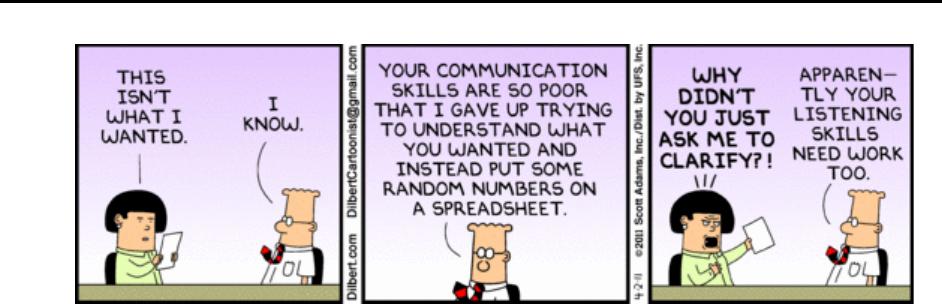
1. Failure to Listen. Ineffective listening is a big problem in communication. Good
communication fails when one doesn’t pay much attention or plan what to say before one
ends his statement. Many distractions affect effective listening. Team members are
distracted by the thoughts bothering his mind. They have short attention span. Other
distractions like noise and other physical barriers present in the environment take toll
resulting to communication failure. To avoid it, speakers have to emphasize the importance
of active listening in the discussion. Also point out that inattentiveness results to different
understanding of the topic being discussed. Speakers also have to maintain eye contact
during the conversation or discussion.
2. Culture Differences. The diversity of backgrounds and cultural customs create
communication issues among team members and leaders. People would just love to stay along
with people of the same background. Hence, leaders face challenges of grouping and team
communication hurdles. To avoid it, try to promote “unity in diversity” wherein team
members have to be assigned to different groups to break the usual grouping.

Communication For Work Purposes
3
3. Locale or Distance to Office. The office location or its distance to its employees or
contributors entails problem in the communication. The company usually resorts to email,
phone or video conferencing. The very low level of interaction in electronic communication
poses a communication barrier. It causes misunderstanding and failures. To solve it,
meetings should be done at the nearest venue and on a regular schedule. Important issues
and solutions can be posted or sent to all for further knowledge and verification.
4. Ego and Attitude. Self-image or ego often affects team’s effort to execute plans. One’s
arrogance causes trouble, and more often, teamwork ends due to one’s defiance. Arrogant
team member could not accept the fact that he contributes to team’s problem. The presence
of conflict is evident when someone displays inequality or bias and doesn’t want to take
responsibility. To solve it, the team leader or manager should promote better understanding
as the group discusses the issue. He has to re-direct the group to be able to meet the goals.
Calmness and tactfulness help reduce tension and friction between or among team members.
5. Authority or Hierarchy Problems. The authority that the team leader or manger
demonstrates more often creates intimidation or gap with team members. They become shy
and hesitant to approach or talk to their manager for authority being shown doesn’t create
friendly atmosphere. To resolve, managers or team leaders should promote harmoniously
relation among the team members. Communicate to the members about the intention of
helping and letting them feel they are important. And they can approach the managers for
consultation or discussion on personal or work-related issues.
6. Poorly Written Communication. The confusion or misunderstanding of in interoffice
business communication is due to poor content of written documents, substandard
organization, fractured grammar, among other flaws in written interoffice materials. To
avoid it, ensure that documents are well-edited and proofread by best editor in the
department. Allow other eyes to check for mistakes in grammar, spelling, punctuations, and
organizations.
7. Gender Bias. The choice of which gender makes a more effective leader in the department
is an issue of gender bias. This gender discrimination creates problem in the organization.
To avoid this, team leaders or managers should ensure that the issue on gender choice is set
aside in tackling issues or taking course of action for the department. Speak about concerns
without engaging in demeaning oneself. Avoid gender-bias language or terms that connote
gender. For example, use chairperson for chairman or chairwoman.
8. Focus or Listening Problems. Inability of employees to focus on the issue is equivalent
to listening problems. The generation gap is often the cause of communication barrier that
affects the achievement of department goals. To help avoid it, leaders or managers have to
initiate mutual understanding regardless of age. Encourage teamwork and unity despite
differences of age, sex, social status, and family background. Understand one’s weaknesses
and capitalize on one’s strength.
9. Inadequate Knowledge. Little knowledge is dangerous. Hence, team performance is
affected due to ineffective education or lack of understanding or other inadequate knowledge
foundation. To resolve it, leaders or managers encourage team members to upgrade
knowledge by pursuing higher degree programs. Include in the annual target plan the

Communication For Work Purposes
4
participation of members to seminar, training or conferences. Promote reading culture in the
department and productive focus group discussion.
10. Cliques, Groups and Friendships. Group membership or group affiliation or exclusive
grouping of team members can sometimes create segregation. To avoid it, promote teamwork
spirit in the department. Conduct team building activities to promote objectivity, teamwork,
cooperation, and unity in diversity.
Communicative Learning Activity 1: Effective Oral Communication Skills
1. Prepare for this game called Paper Fold Exercise. The purpose of this activity is to
determine issues in communication skills such as listening, lack of feedback, or different
contexts/backgrounds, among others. You have to prepare eight ½ sheet of paper as
material for each person. Allot 10 to 15 minutes plus discussion time.
Instructions to participants: This exercise requires listening to and following directions.
As you hear the instructions, perform the task. You may not ask questions. You must close
your eyes.
1) Fold your sheet of paper in half
2) Tear off the upper right corner of the paper
3) Fold your paper in half again
4) Tear off the lower right corner
5) Fold your paper in half
6) Tear off the upper left corner
7) Fold in half a final time
8) Tear off the lower left corner
9) Unfold your paper and hold it up
10) Open your eyes, look at your product and compare it with the other students’ paper.
Debrief: What happened? Does everyone’s paper look the same?
Input: Remember when you communicate with others, they may not receive the message
you sent. Individual perceptions vary. If you were given the same directions, why are
everyone’s products different? People have different contexts. You were not given
feedback…you had to keep your eyes closed and you could not ask questions.
In not more than five sentences, write your thoughts or realization based on your
experience from the game. You may share your answer in class.
__________________________________________________________________________________
__________________________________________________________________________________
__________________________________________________________________________________
__________________________________________________________________________________
__________________________________________________________________________________
__________________________________________________________________________________
__________________________________________________________________________________

Communication For Work Purposes
5
Preparing the Cover/ Application Letter
A few years from now, you will enter the world of professional work. Bur before you
land in any job, one of the first steps that you have to do is prepare a cover or application
letter. When you are applying for a new position, a cover letter is extremely important as
your resumé or curriculum vitae (CV). The purpose of the cover letter is to persuade your
reader to consider reading your resumé. This contains little information of the job which you
are applying, as well as your strongest qualities and qualifications.
Writing a Job Application Letter or a Cover Letter
Preparing A resume’ or a CV and application letters or cover letters are essential parts
of job hunting. A job application letter or a cover letter is like a sales letter in which you sell
your knowledge and competence. It is the most essential part of the application as this is far
more than just a note saying ‘Please find enclosed my CV’. Usually, this is the part of your
application that really sells you to your potential employer. Without a good cover letter, your
résumé is unlikely to be read.
Remember that your application letter is your selling factor. Your main goal is to
market yourself. Think about competition; your judges are your readers. They are
professionals who select and hire you. With hundreds or thousands of applicants, make sure
that your application letter has to standout. Therefore, your application letter and
accompanying resume have to attract professionals’ attention. Your final goal is to get an
interview.
When you are writing the application letter, bear in mind to achieve the four
important tasks:
Catch the reader’s attention purposively.
Tailor it to the company, to the employer, and to the job.
Persuade the reader that you are a qualified applicant for the job.
Request an interview.
After writing the application letter, use the checklist below to make sure your letter
has already met the needed information.
✓ The title of the job, source of your information and the statement of your
objective have to be clear.
✓ There should be a summary of your qualification for the job. This includes work
experience, educational background, and summary of relevant skills such as
leadership skills, skills, organizational skills, and intercultural communication
skills.
✓ Indicate that you enclosed your CV or resumé.
✓ Request for an interview. This includes place and time you will be available and
the contact information such as phone numbers and email addresses.

Communication For Work Purposes
6
✓ Identify the job. Include any information that is not included in your CV or
resumé.
Before submitting your application letter, proofread it carefully. Free it from
grammatical mistakes and organizational inconsistencies. Check also for correct
punctuations, margins, spacing, and right letter format.
General guidelines for the overall structure of your cover letter:
Format your cover letter for post, mail or email. It should consist of one page only.
Include your complete address, email address, phone numbers.
Use the tile of the person when you address him/her in the letter. If you can’t find
a name, write ‘Dear Sir/ Madamme.’
Use standard, easy-to-read font. Make it readable. Times New Roman or Arial is
preferred; it should be no smaller than 11 for readability on screen.
Sample Application Letters
Two sample letters of application from JobStreet.com are presented below. The first letter
(Sample #1) follows the correct format that you should follow when sending out the
application letter in print form. The second letter (Sample #2) shows the tailored format when
submitting your application letter through email.
Communication For Work Purposes
Sample 1 (Print Copy)
22 H Venture St.,
Diliman, Quezon City Philippines
April 17, 2015
Mr. Vincent Chua
Hiring Manager
Bank of the Philippines Islands (BPI)
12/F Ayala Life-FGU Center, Ayala Ave.
Makati City 1226
Dear Mr. Chua,
I am writing to express my interest for the position of Recruitment Assistant in your
esteemed company. Having recently obtained my Bachelor’s Degree in Business
Administration major in Human Resource Development Management (BSBA-HRDM) in the
Polytechnic University of the Philippines (PUP), I wish to bring my knowledge, skills and
commitment to excellence to your company’s innovative environment.