At present, the total student loan debt of the United States is a staggering $1.5 trillion1.
Considering the knowledge that higher education level is strongly correlated with gainful
employment post-graduation, more people are willing to accrue student debt, seeing it as a
temporary issue2. However, due to this, there has been an increase in the number of students
pursuing and graduating with college degrees, contributing to the enormous amount of student
debt3. Ideally, our work force should be able to provide those graduates with jobs that they are
qualified for so that they can pay off their student loans. Otherwise, we are looking at a major
inflation problem. Now, inflation describes the occurrence of a general increase in prices and fall
in the purchasing value of money. There are two primary types of inflation: demand-pull
inflation and cost-push inflation4.
In the context of the increase in
the number of college degrees,
the inflation problem is best
described by the high price of
1 https://www.life-benefits.com/growth-of-student-loan-debt-5-times-faster-than-wages-over-
past-decade/
2 The Association of Public and Land-grant Universities
www.aplu.org/projects-and-financial-aid/publicvalues/employment-earnings.html
3 https://www.life-benefits.com/growth-of-student-loan-debt-5-times-faster-than-wages-over-
past-decade/
4 Campbell R. McConnell, Stanley L. Brue, and Sean M. Flynn, Macroeconomics brief edition
(McGraw-Hill Education, New York, 2019)
1
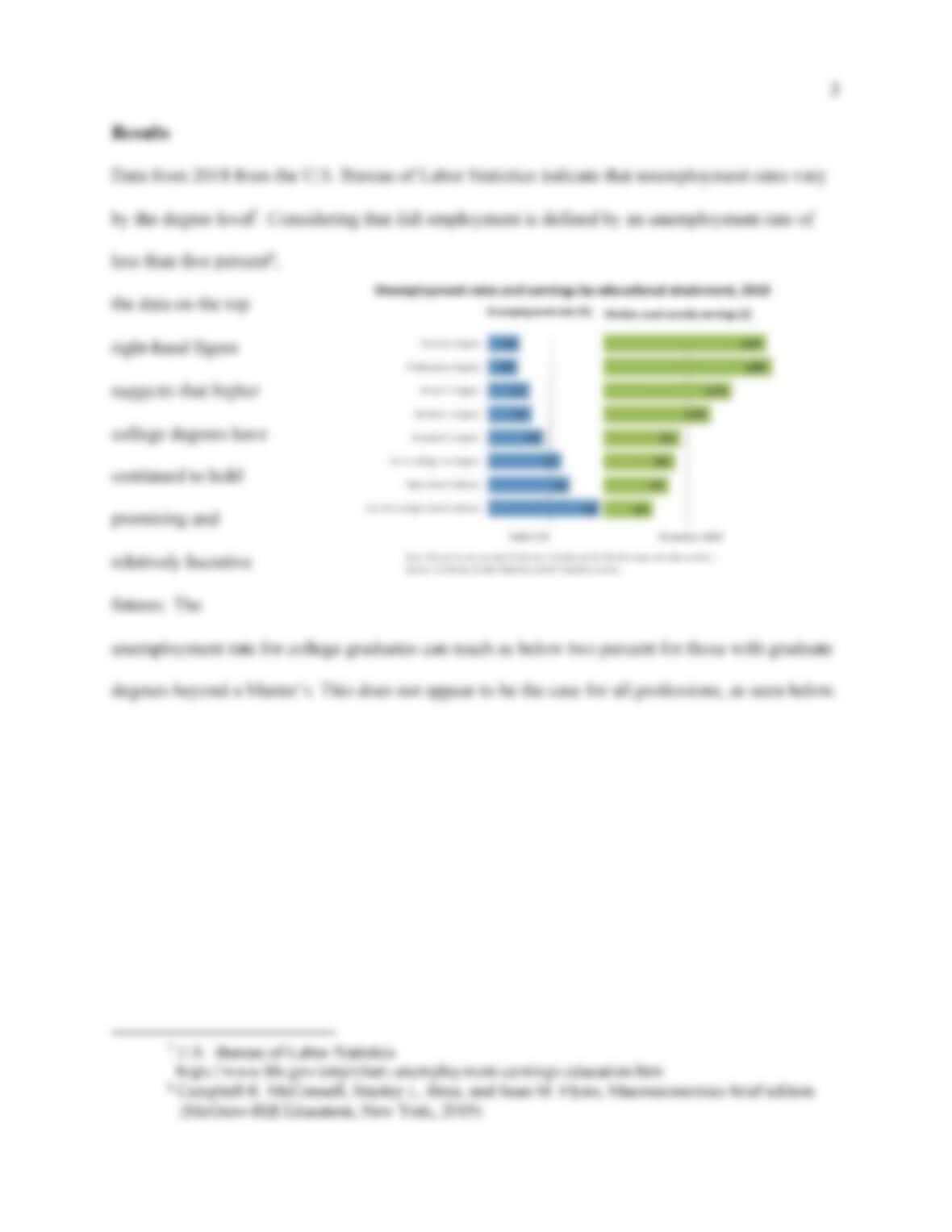
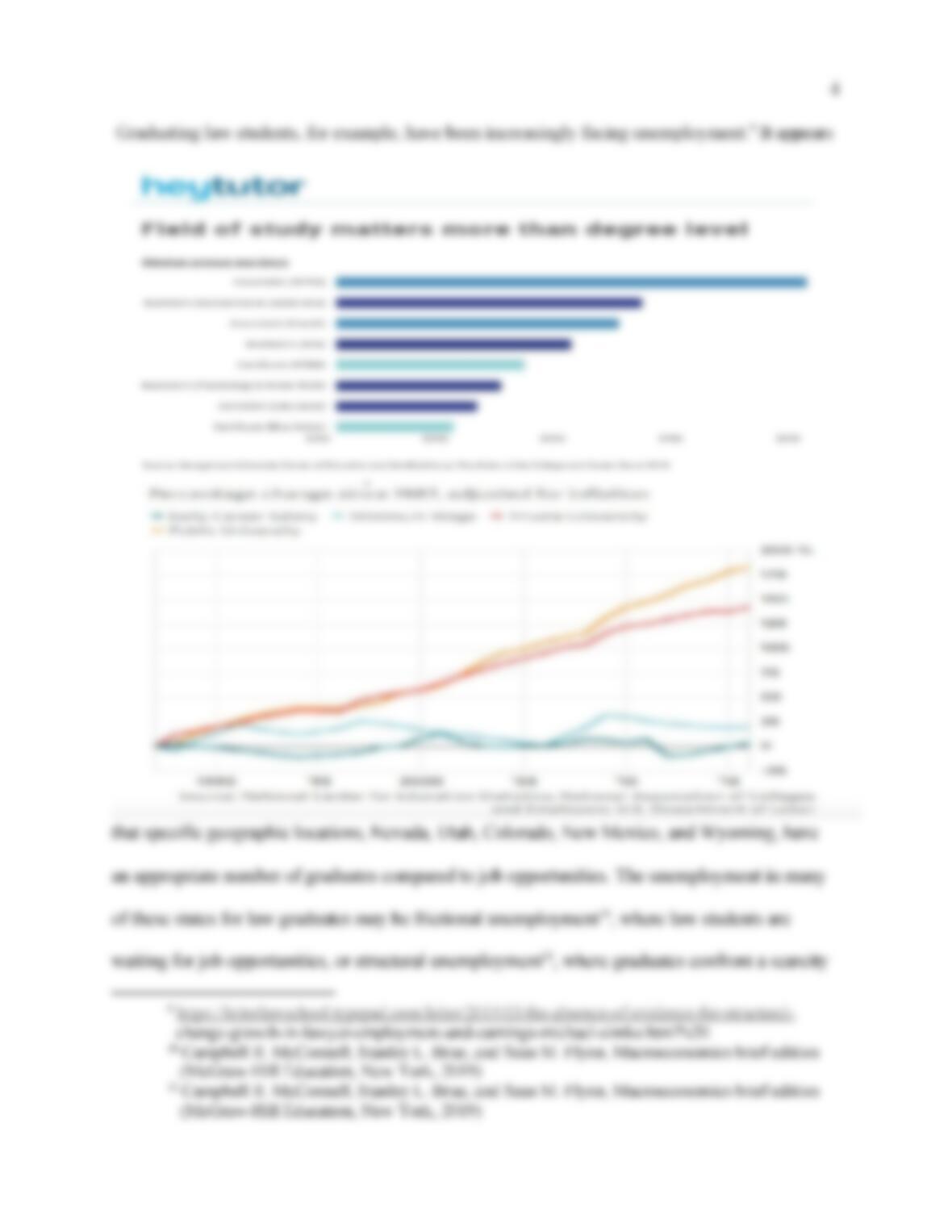
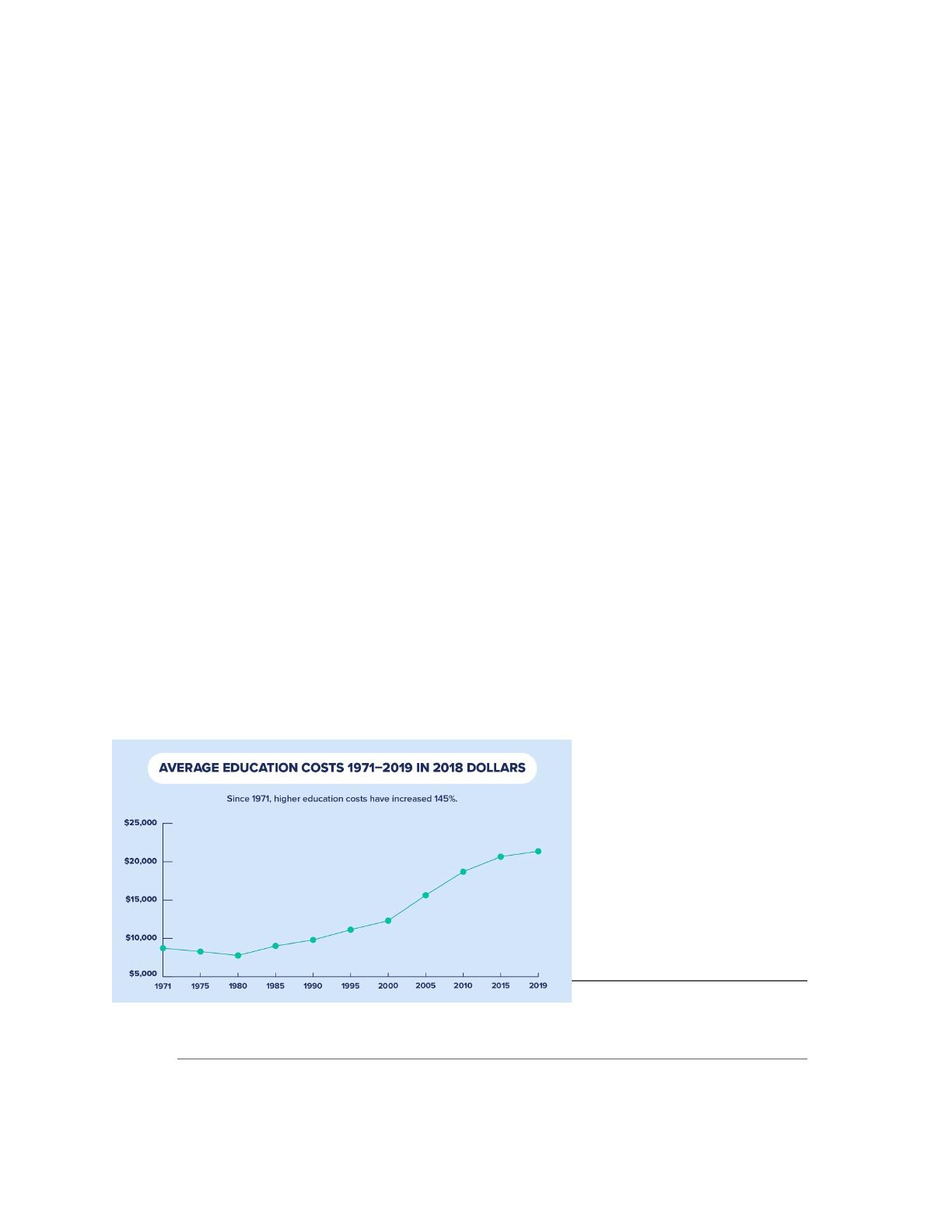
college and the low gainful employment turnout. The figure on the left demonstrates the rising
cost of college over the last five decades5.
Hypothesis
I predict that college tuition inflation will create a great deficit in the number of careers
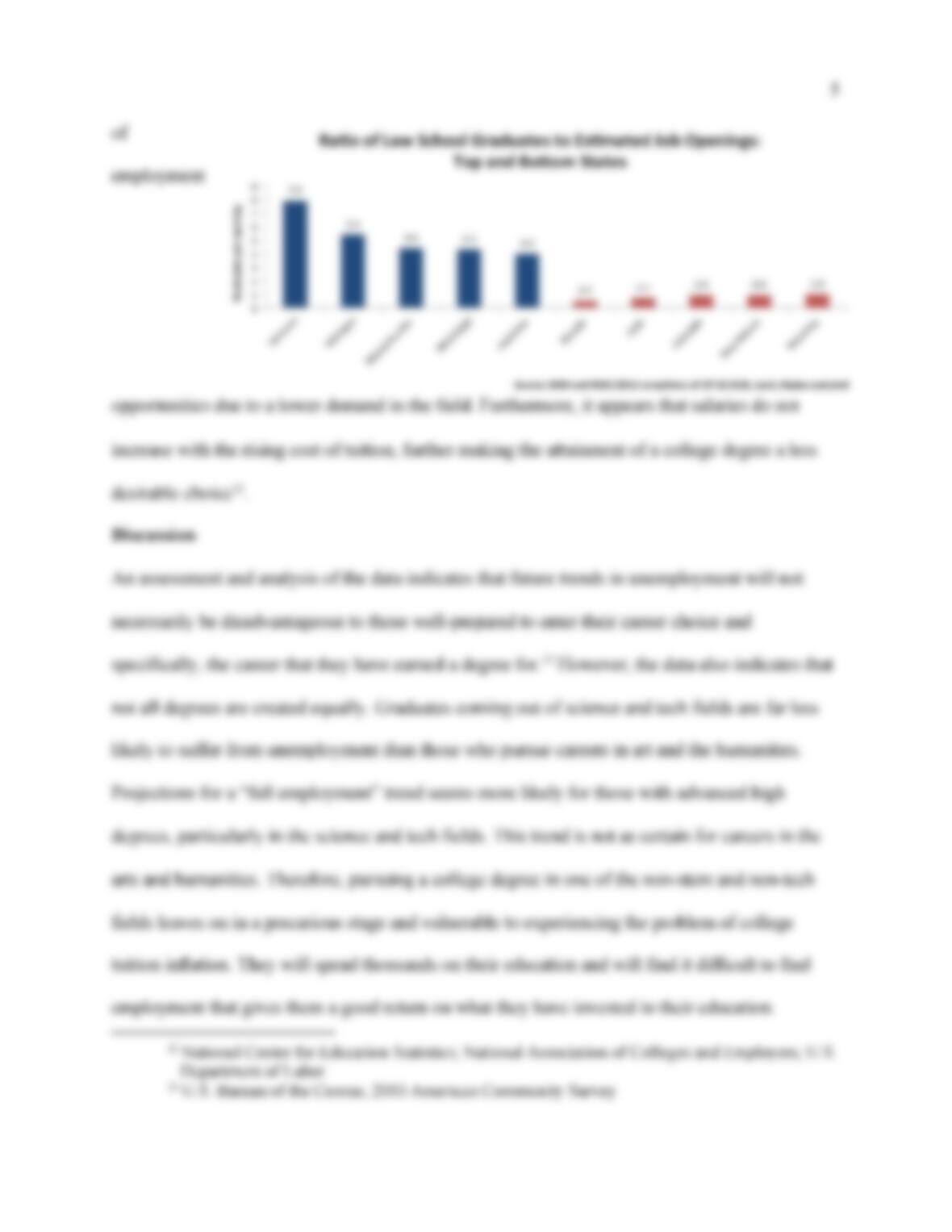
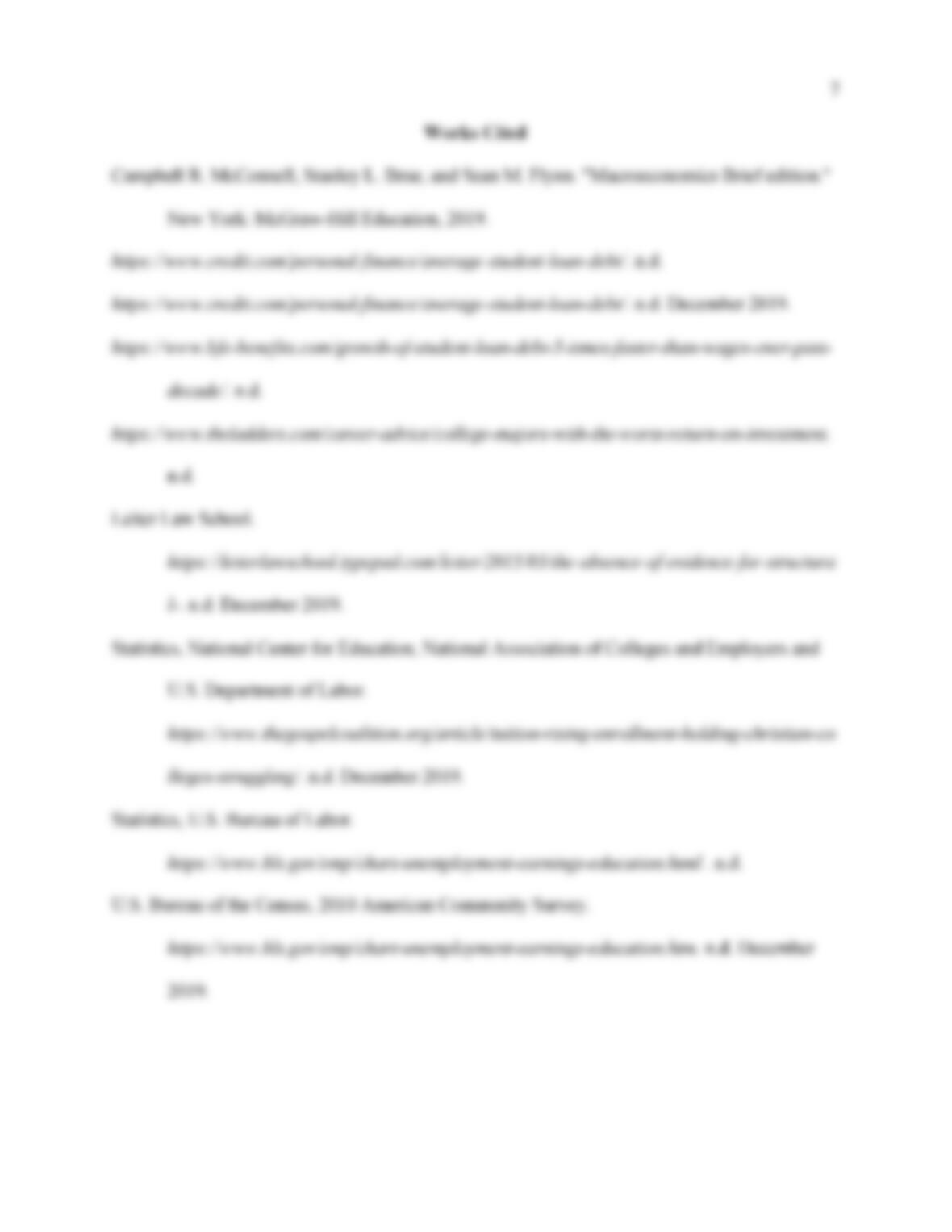
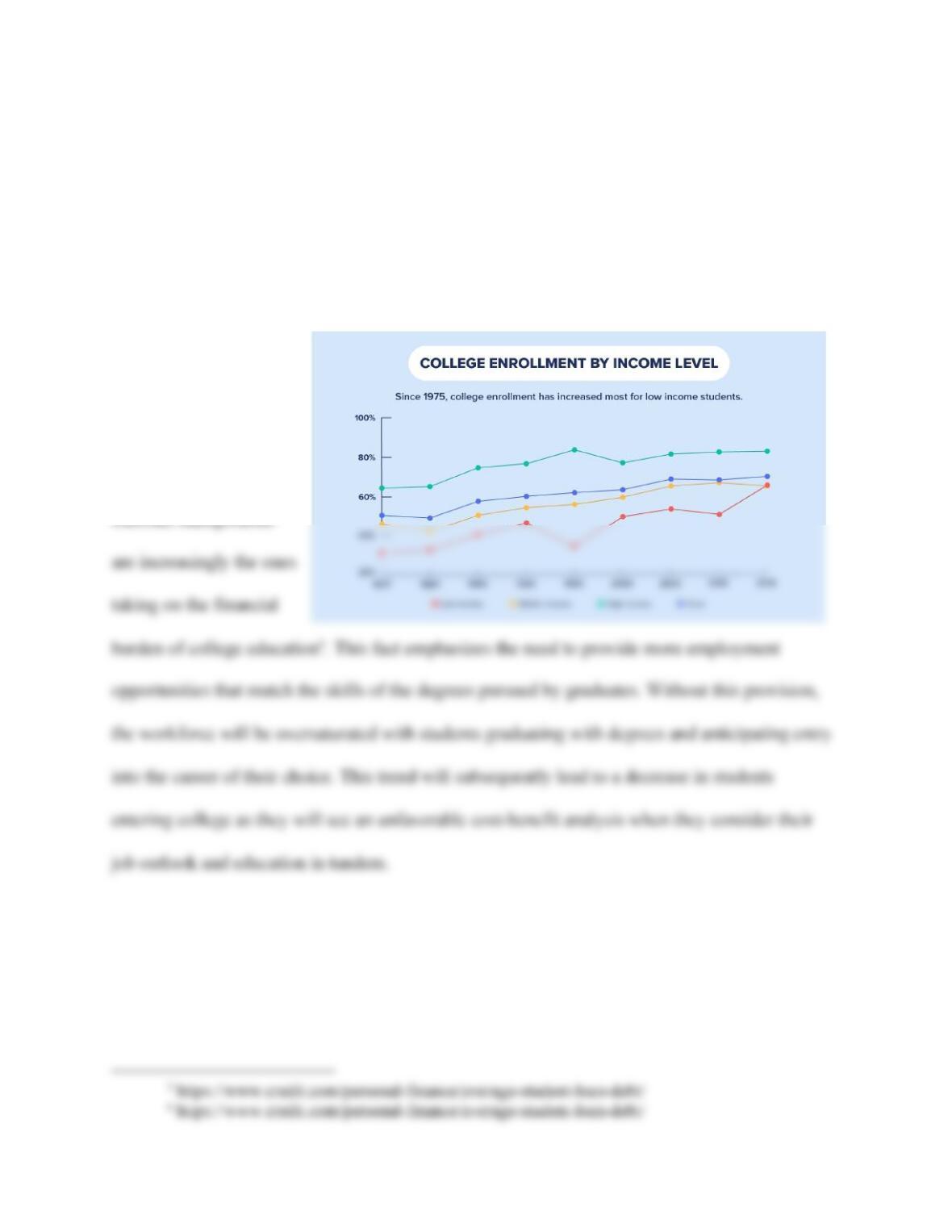
available to graduate and thus, increase unemployment rates. In reference to the figure depicting
trends in college
enrollment by income,
one can see that even
those coming from low
2