PROPERTY OF MEDTECH REVIEW NOTES
DO NOT DISTRIBUTE
Clinical Chemistry
Quality control
TERMS TO REMEMBER:
☻ Quality: a feature/characteristic of a product which meets the expected
criteria of a consumer (customer).
☻ Control: a solution that resembles a ________ that is used for QC purposes only
☻ ________: a colorless solution with known concentration of substances used for
calibration
☻ ________: defined as the ability of a method to measure the analyte of
interest ONLY.
☻ Sensitivity: defined as the ability of a method to measure analytes even at its
____________________
☻ Accuracy: nearness of measured value to that of the ________
☻ ___________: nearness of measured values to each other
☻ Diagnostic specificity: defined as the ability of a method to detect a
population of individuals ______________________
☻ Diagnostic sensitivity: defined as the ability of a method to detect a
population of individuals having the ____________________
☻ Intralab QC (internal QC): control samples are run simultaneously with a
patient to ensure reliability of methods and result
☻ Interlab QC (external QC): laboratories are given samples with unknown
concentrations for them to test and results are compared with other
laboratories thus maintaining “__________” to methods utilized.
☻ ________: average of a set of values (mean = Σx/n)
☻ Median: ____________ of a set of values
☻ Mode: the most frequent among all values/data
☻ Standard Deviation: it is defined as the measure of dispersion of values to that
of the mean
𝑆𝐷 = √𝚺(𝐱−𝐦𝐞𝐚𝐧)2
𝑛−1
☻ Coefficient of variation: mean expression in percentile
𝑪𝑽= 𝑺𝑫
𝒎𝒆𝒂𝒏𝒙 𝟏𝟎𝟎
☻ T-test: this is used to assess if there is a statistical difference between the
________ of 2 groups of data
☻ F-test: this is used to assess if there is a statistical difference between the
________ of 2 groups of data
☻ ____________________: most widely used QC chart
☻ Trend: six or more consecutive values that _____________________ gradually
(will cross the mean) – main cause: __________________
☻ ________: six or more consecutive values that are distributed on one side or
other side of the mean (does NOT cross the mean) – main cause: instrument
calibration is improper
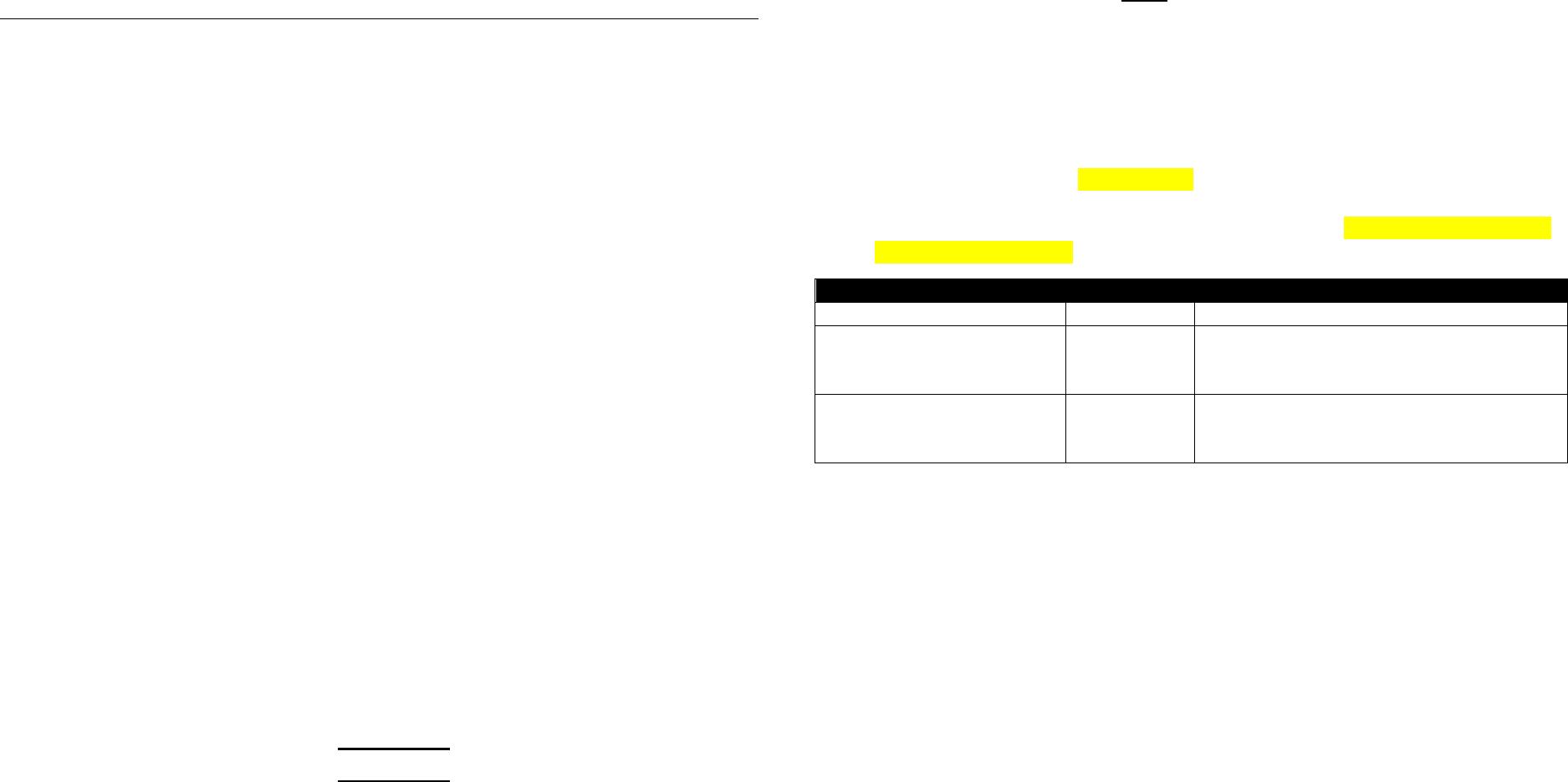
WESTGARD RULES
TYPE OF ERROR
RULES
SOURCES OF ERROR
RANDOM
– Tests for __________
12s (warning
rule), 13s
and R4s
By chance errors: mislabeling, pipetting
error, fluctuations in temperature &
voltage
SYSTEMATIC
– Tests for __________
22s, 41s and
10x
Improper calibration, reagent
deterioration, contaminated solutions,
instability of both samples and solutions
☻ _______________: used to check if there are significant differences between
present set of values to that of past values on the sample of same individual.
☻ Six Sigma: a way of improving product processing to _______________
INSTRUMENTATION
DEFINITION OF TERMS:
☻ Energy: entity that this transmitted by electromagnetic waves
☻ Wavelength: defined as the distance between two successive peaks
☻ Nanometer: unit expression of wavelength
☻ Frequency: number of waves that passes a point of observation per one unit
of time
PROPERTY OF MEDTECH REVIEW NOTES
DO NOT DISTRIBUTE
SPECTROPHOTOMETRY
☻ Measures transmitted light in a colored solution
☻ Measurement is based upon Beer-Lambert-Bouguer Law (Beer’s Law/Beer–
Lambert’s Law)
BEER-LAMBERT LAW
☻ States that concentration of an unknown analyte is directly proportional to
the ____________________ and inversely proportional to ____________________.
✓ Absorbance is proportional to the inverse log of transmittance
A = -logT = log 1/T
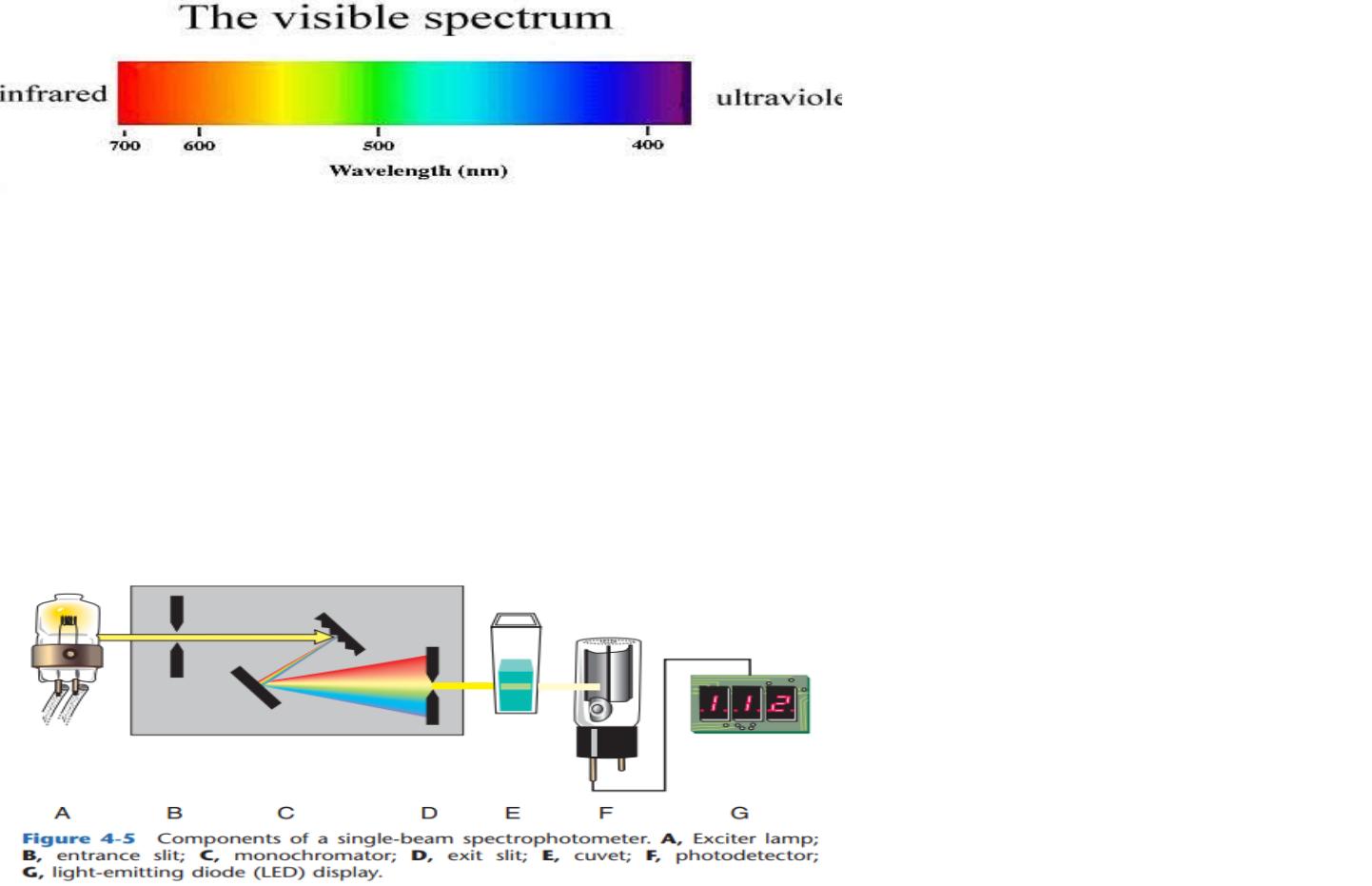
SINGLE-BEAM SPECTROPHOTOMETER
Photo reference: Henry’s Clinical Diagnosis and Management by Laboratory Methods, 22nd edition
DOUBLE-BEAM SPECTROPHOTOMETER
☻ Double- beam in time – 1 photodetector
☻ Double-beam in space – 2 photodetectors (1- sample beam, 2- reference
beam)
PARTS OF SPECTROPHOTOMETER
1. LIGHT SOURCE
✓ Tungsten: for visible and near infrared region
✓ Deuterium: for UV region
2. ENTRANCE SLIT – minimizes the entry of stray light to the monochromator
3. ____________________ – isolates specific wavelength
✓ Prisms: light is _________
✓ ____________________: light is bent; most commonly used
✓ Filters: light enters one side and is reflected on the other side.
4. EXIT SLIT – controls bandpass (total range to which wavelengths are
transmitted)
5. CUVETTE – contains the solution
6. PHOTODETECTOR – aids in the conversion of light transmitted to photoelectric
energy
✓ Barrier layer cell: simplest
✓ Photodiode: has excellent linearity
✓ ____________________: most commonly used
✓ Phototube
7. READ-OUT DEVICE – a monitor that displays the output
ATOMIC ABSORPTION SPECTROPHOTOMETRY
☻ Measures the amount of light that have been absorbed by a ground state
atom
☻ For measurement of unexcitable metals like calcium and magnesium
☻ Hollow-cathode lamp: light source
☻ Atomizer: used for the conversion of ions to atoms
☻ Chopper: used to modulate amount of light from the hollow-cathode lamp
FLAME EMISSION PHOTOMETRY
☻ Flame permits the excitation of the electrons; after which, electrons return to
a ground state thus radiation is emitted.
☻ __________ serves as both light source and cuvette.
☻ Internal standards used: Cesium and Lithium (preferred)
☻ For measurement of excited ions such as sodium (yellow) and potassium
(violet).
☻ Calcium also shows a colored (brick red) flame
PROPERTY OF MEDTECH REVIEW NOTES
DO NOT DISTRIBUTE
FLUOROMETRY
☻ Light is absorbed by atoms at a specific wavelength and is emitted at a
longer wavelength (with lower energy)
☻ Light source: xenon lamp or mercury arc
☻ There are ____________________
✓ Primary monochromator: selects wavelength that is best absorbed by
solution that is to be measured
✓ Secondary monochromator: this prevents the incident light from
striking the detector
☻ Disadvantage: _______________
TURBIDIMETRY
☻ Measures _________________ by molecules
☻ Used for immunoglobulins, immune complexes and complement
NEPHELOMETRY
☻ Measures __________________ by molecules
☻ Used for measuring amount of _________________________
CHROMATOGRAPHY
☻ Separation is based upon differences in characteristics (both physical and
chemical) of substances
☻ Used for amino acid determination, drugs and sugars
POTENTIOMETRY
☻ Measures electric potential
☻ pH electrode – glass electrode
☻ pCO2 electrode
☻ ion – selective electrode
✓ Sodium: glass electrode
✓ Potassium: _______________
✓ Chloride: Tri-N-octyl propyl ammonium chloride decanol
ELECTROPHORESIS
☻ Separation of proteins is aided by an electric current
IONS
POLE
POSITIVE
CATIONS
CATHODE
NEGATIVE
ANIONS
ANODE
☻ pH of buffer: 8.6
☻ support materials:
✓ Agarose gel – separation by electric charges
✓ Cellulose acetate – separation by molecular size
✓ _____________________ – separation by charge and molecular size
ELECTROPHORETIC PATTERN OF CERTAIN CONDITIONS
Alpha1-globulin flat curve
Juvenile cirrhosis
Alpha2-globulin band spike
Beta-gamma bridging
Hepatic cirrhosis
Monoclonal gammopathy (gamma spike)
Polyclonal gammopathy
Rheumatoid arthritis and
malignancy
Small spike in Beta-region
Iron deficiency anemia
CARBOHYDRATES
☻ Composed of carbon, hydrogen and oxygen
☻ Are water soluble
☻ Are important source of energy for the body’s mechanisms
☻ Classifications:
✓ Monosaccharides: Glucose, fructose and galactose
✓ Disaccharides: maltose (glucose + glucose), lactose (galactose +
glucose) and sucrose (fructose + glucose)
✓ Polysaccharides: starch and glycogen
LIST DOWN ALL TYPES OF CHROMATOGRAPHY AND RESEARCH ON ITS PURPOSE/PRINCIPLE
PROPERTY OF MEDTECH REVIEW NOTES
DO NOT DISTRIBUTE
GLUCOSE
☻ Primary sugar found circulating in the body
☻ Carbohydrate metabolism:
✓ Glycolysis: glucose → lactate or pyruvate → energy (↑ glucose)
✓ Glycogenolysis: breakdown of glycogen to glucose (↑ glucose)
✓ Glycogenesis: formation of glycogen from sugars for storage
(↓glucose)
✓ Gluconeogenesis: formation of glucose from non-carbohydrate
sources (↓ glucose)
☻ Hormones for glucose regulation
✓ Hypoglycemic
o Insulin – released by β cells of islet of Langerhans
✓ Hyperglycemic
o Glucagon – released by α cells of islet of Langerhans
o Somatostatin – released by delta cells of islet of Langerhans
o Cortisol
o Epinephrine
o Growth hormone
o Thyroxine
☻ MUST KNOW FOR SPECIMEN FOR GLUCOSE DETERMINATION
✓ FBS should be obtained from an 8-10 hours fasting sample
✓ In terms of glucose levels: __________> __________ but < __________
✓ Glucose is metabolized at:
o Room temperature: _______________
o ___________: 2 mg/dL/hr
✓ Tube of choice: Gray top (anticoagulant: _____________; anti-glycolytic
agent: _____________)
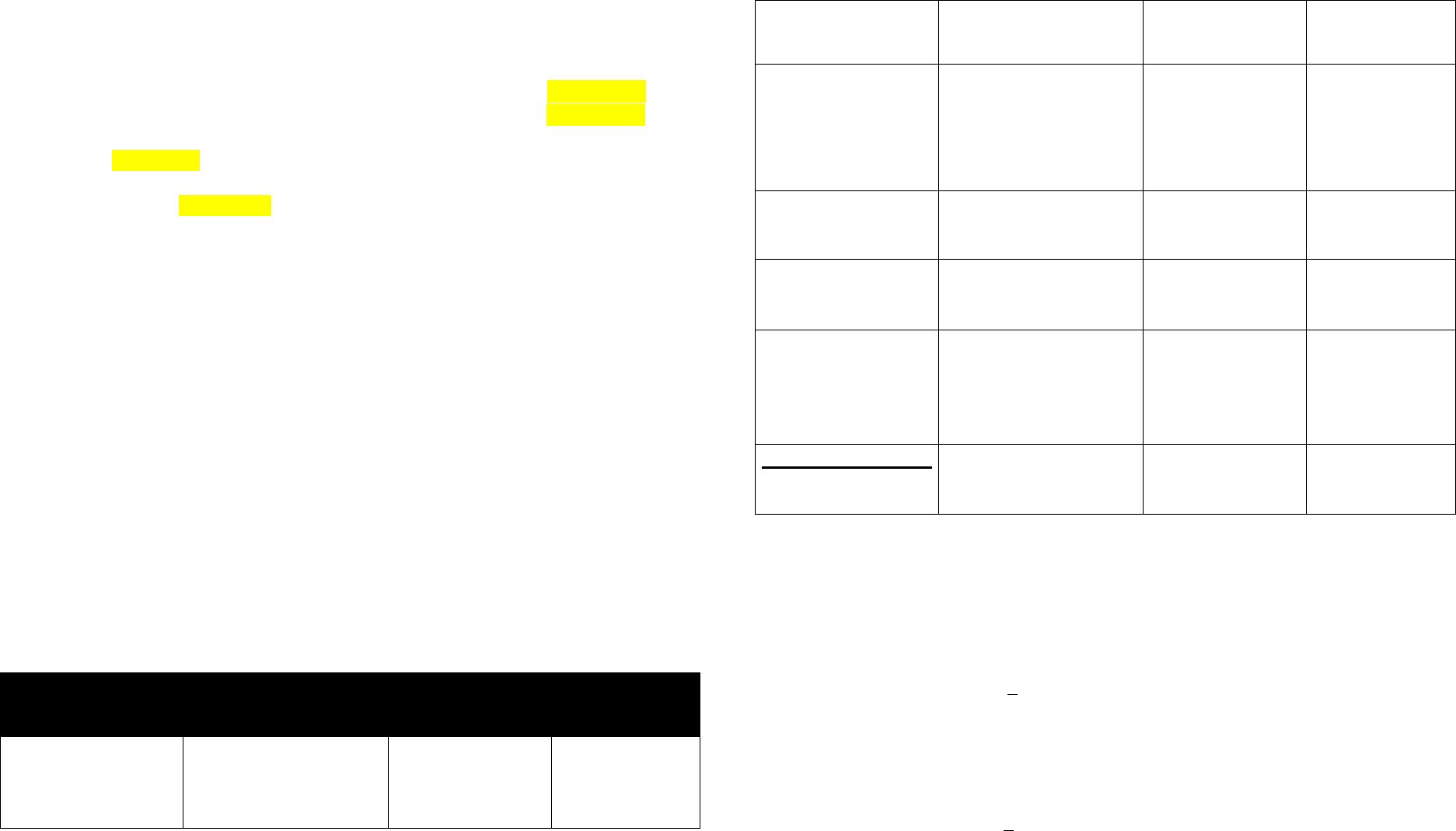
GLUCOSE DETERMINATION
METHOD
PRINCIPLE
REAGENTS
END PRODUCT/
COLOR
REACTION
Folin-Wu
– Modification:
Benedict’s
Test
Copper Reduction
Alk. Copper
reagent
________________
Molybdenum –
BUE
Nelson- Somogyi
Copper Reduction
Alk. Copper
reagent
_________________
Molybdenum –
BLUE
Neocuproine
Copper Reduction
Cuprous ions
Neocuproine
Cuprous-
Neocuproine
Complex –
YELLOW/
YELLOW
ORANGE
Ortho-Toluidine
Dubowski reaction;
Condensation
Method
O-toluidine
Glacial Acetic
Acid
Glycosylamine
– BLUE GREEN
Autoanalyzer
(Hagedorn-Jensen)
Ferricyanide reduction
(Inverse Colorimetry)
K3Fe(CN)6
K3Fe(CN)6-4
Glucose Oxidase
– Saifer
Gernstenfield
– Clarke
electrode
Enzymatic
– Colorimetric
– Polarographic
Glucose Oxidase
Peroxidase
O-dianisidine
Oxidized o-
dianisidine –
ORANGE
BROWN
(Reference Method)
Enzymatic
Hexokinase
G6PD
NADPH+
LABORATORY TESTS
☻ Screening Tests
✓ Fasting Blood Sugar – _______________
o Normal: <100 mg/dL
o Impaired fasting glucose: 100-125 mg/dL
o Diabetic: >126 mg/dL
✓ 2-hours post-prandial – a fasting blood samples is extracted, after
which, patient is given glucose load (75g). After 2 hours, blood glucose
is measured.
o Normal: <140 mg/dL
o Impaired: 140-199 mg/dL
o Diabetic: > 200 mg/dL
PROPERTY OF MEDTECH REVIEW NOTES
☻ Confirmatory Tests
✓ Oral Glucose Tolerance Test – series of glucose testing
o Patient is instructed to consume a __________ CHO diet per day
for __________ prior to procedure
o Patient should be ambulatory
o The patient should be finished within 5 minutes
o Glucose loads: adult (_______), pregnant (100g) and children
(1.75g/kg)
o Normal: <140 mg/dL
o Impaired: 140-199 mg/dL
o Diabetic: > 200 mg/dL
☻ Monitoring Test
✓ __________ – long term monitoring (2-3 months)
o Dependent upon the patients’ RBCs lifespan
o Sample: EDTA whole blood, non-fasting
o For every 1% increase in HbA1c = 35mg/dL change in plasma
glucose!
☻ _______________ – short term monitoring (2-3 weeks)
✓ Levels of albumin affects results
✓ Reversal of symptoms (if glucose is
administered)
GESTATIONAL DM
Due to hormonal imbalance; occurs in pregnant women
GLYCOGEN STORAGE DISEASES
TYPE
DEFECTS
Ia – Von Gierke
II – Pompe
Lysosomal acid alpha glucosidase (GAA) acid maltase
III – Cori-Forbes
Glycogen debranching enzyme
IV – Andersen
Glycogen branching enzyme
V – McArdle
Muscle phosphorylase
VI – Hers
Glycogen phosphorylase
VII – Tarui
Phosphofructokinase
XI – Fanconi-Bickel
Glycogen transporter 2
0
Glycogen synthetase
LIPIDS AND LIPOPROTEINS
Decreased glucose levels
✓ Low blood glucose level (<60 mg/dL)