Introduction
Climate change has become an epidemic that is affecting the entire universe.
Evidence gathered by scientists validate that if the universe continues on this path, the
end of the world could not be too far off. Climate change is any change in the typical or
average weather of a region or city (NASA, 2015). Variations in the average temperature
are normal, but the current variations in our climate are extreme. Many side effects have
come from the climate change phenomenon; some of these include rising sea levels,
droughts and melting ice caps (Washington State, 2016). According to the Department of
Ecology in the state of Washington, rising levels of carbon dioxide and other heat
trapping gases in the atmosphere over a long period of time have slowly warmed the
Earth, causing climate change. Scientists project that these trends will continue and in
the near future could cause certain health threats to humans and to agriculture.
Impact on Agriculture
Extensive research has been conducted around the globe over the past decade
concerning greenhouse gasses and the effects it has on agriculture. Drying and warming
is expected to occur in the mid west, posing a potential threat to the yields (EPA, 2014).
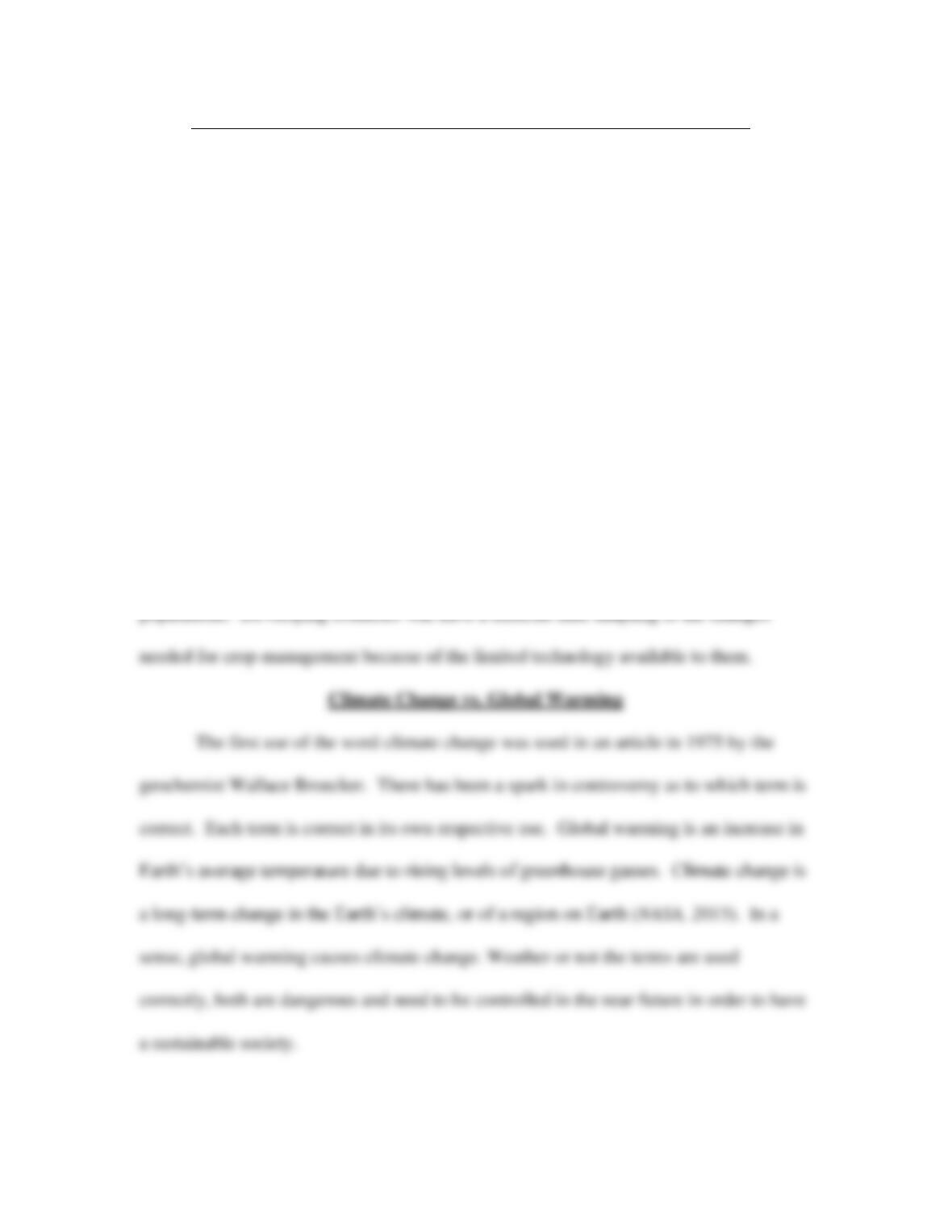
The chart below was released by the American Economic Association and shows what
could potentially happen if the warming and drying cycle continues.
Source: http://citeseerx.ist.psu.edu/viewdoc/download?doi=10.1.1.472.3615&rep=rep1&type=pdf
This graph includes the production functions of agriculture products. These show that
when the temperature increases the production falls. For Example, the Wheat production
curve shows the quantity increases when the temperature is average (point A), and
quantity produced falls when the temperature increases (point C). Eventually, certain
farmland will become unusable and converted into residential areas. This is depicted in
the Retirement Home curve on the graph. Agriculture contributes more than three
hundred billion dollars in revenue and exports each year. Twenty-five percent of the
grains grown in the United States are exported to other countries on the global market
(EPA, 2014). Climate change could cause the food supply to decrease and food security
issues globally. Many countries rely on the U.S. surplus to help support their