China cuts interest rates again – practice commentary
The article discusses the decline in China’s economic growth since 2014 which
led to the cut down of benchmark deposit and loan interest in order to stabilize
economic growth. Economic growth rate measures the change in total output of a
country each year. The decline in economic growth rate is likely due to the decrease in
both Aggregate Demand(AD) and Aggregate Supply(AS). Decrease in deposit and
interest rate tends to increase the components of Aggregate Demand (AD); i.e.
C+I+G+(X-M), hence leading to an economic growth of a country.
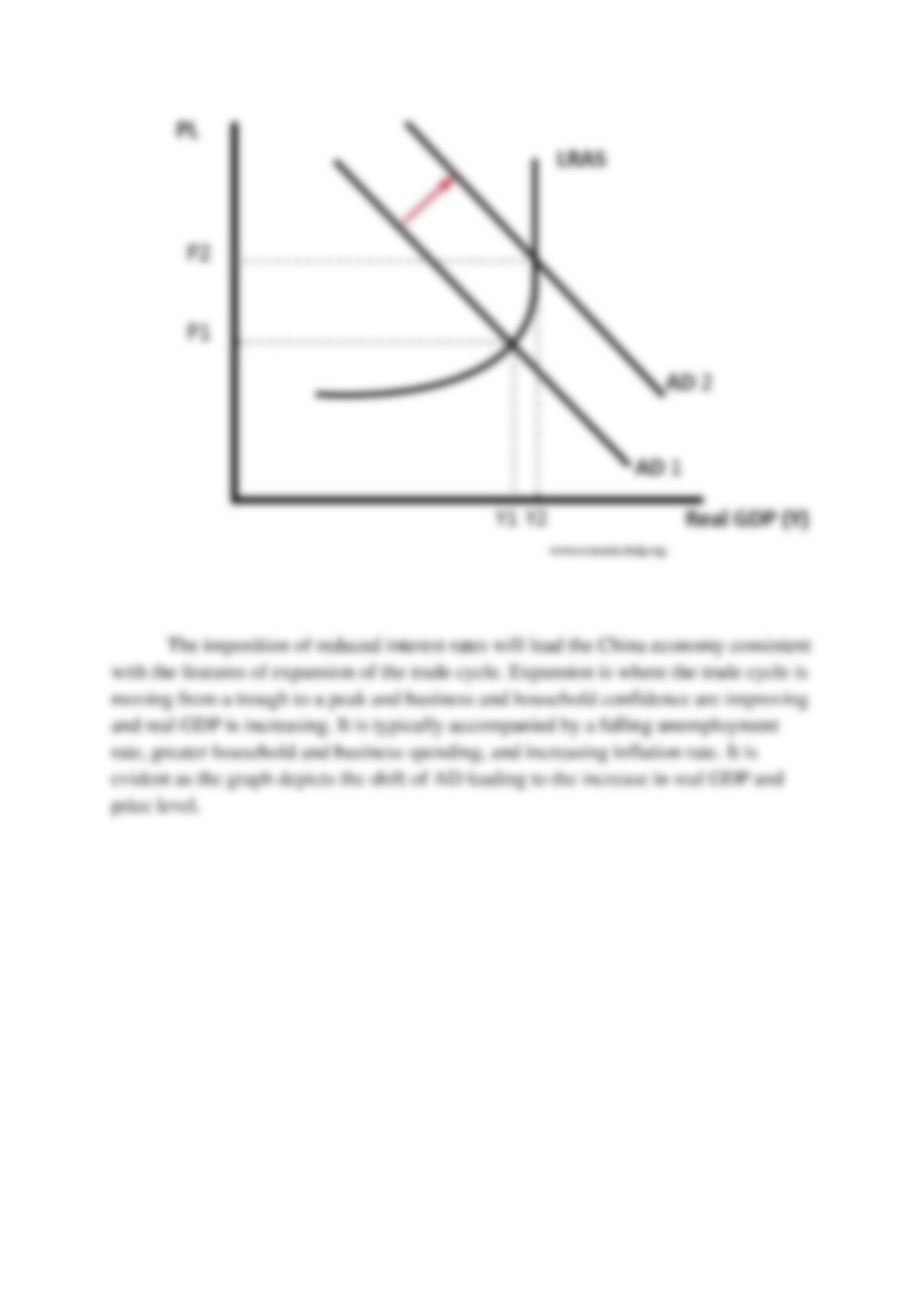
This can be seen by the graph below. The imposition of decrease in benchmark
deposit and loan interest will lower the cost of borrowing which will eventually
increase the consumption(C) due to less financial burden of the consumers. The
investments(I) of the enterprises will also increase due to the decrease in financing
cost thus easing business pressure. Furthermore, the country’s balance of trade; i.e.