1
CHAPTER 16 – CHEMISTRY OF BENZENE: ELECTROPHILIC
AROMATIC SUBSTITUTION
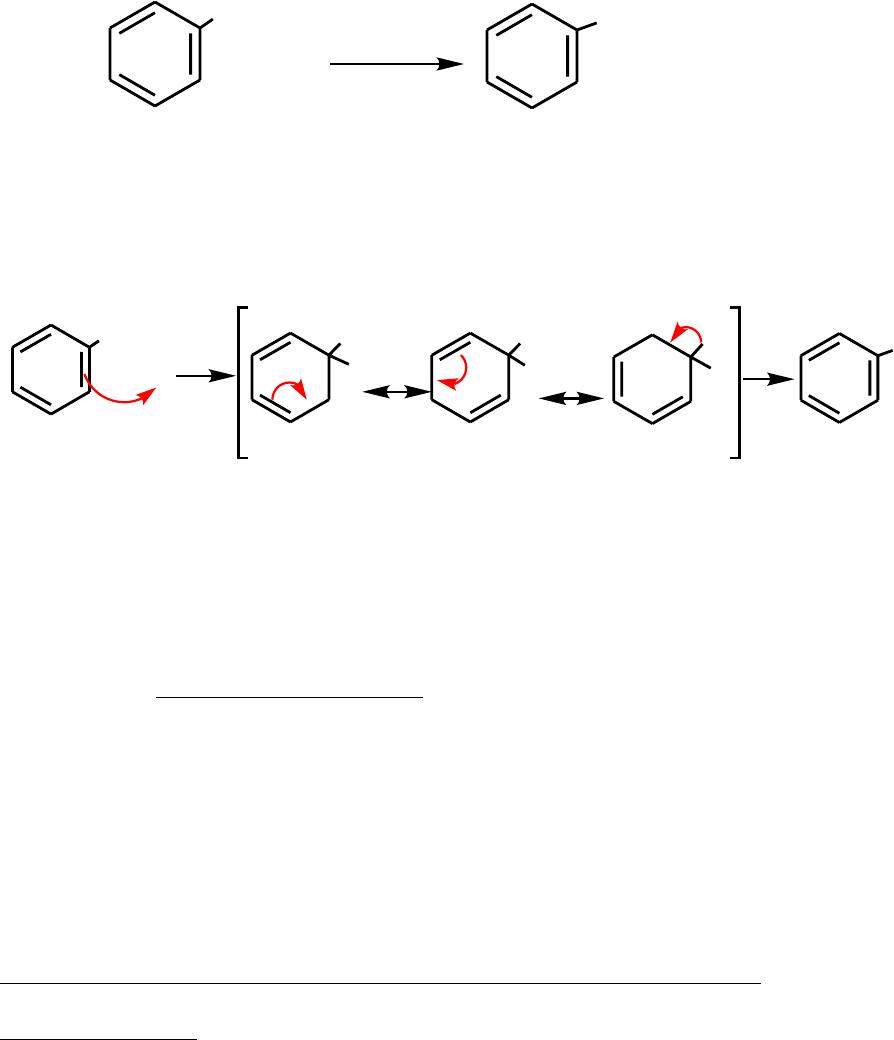
As stated in the previous chapter, benzene and other aromatic rings do not
undergo electrophilic addition reactions of the simple alkenes but rather
undergo electrophilic substitution reactions to preserve the stable aromatic
ring system. The general reaction is:
+ E+E
+ H+
H
In each of the cases we will study, the reaction mechanism is the same – what
is different in each is the attacking electrophile, E+, and the reagents that
produce that electrophile and the subsequent products. The general reaction
mechanism for all electrophilic aromatic substitutions (EAS) is:
E
H
EEE
HHH
Resonance stabilized transition state
+ H+
+ E+
In each of the cases we will study, there will be an overall reaction that
should show starting material (e.g. benzene), the reagents used for that
reaction and the product obtained.
There will also be a mechanism for the particular reaction, which is the same
in all cases except for the attacking electrophile and how it is generated from
the reagents. In writing a mechanism you must show how the E+ is
generated, all resonance forms of the intermediate and the product.
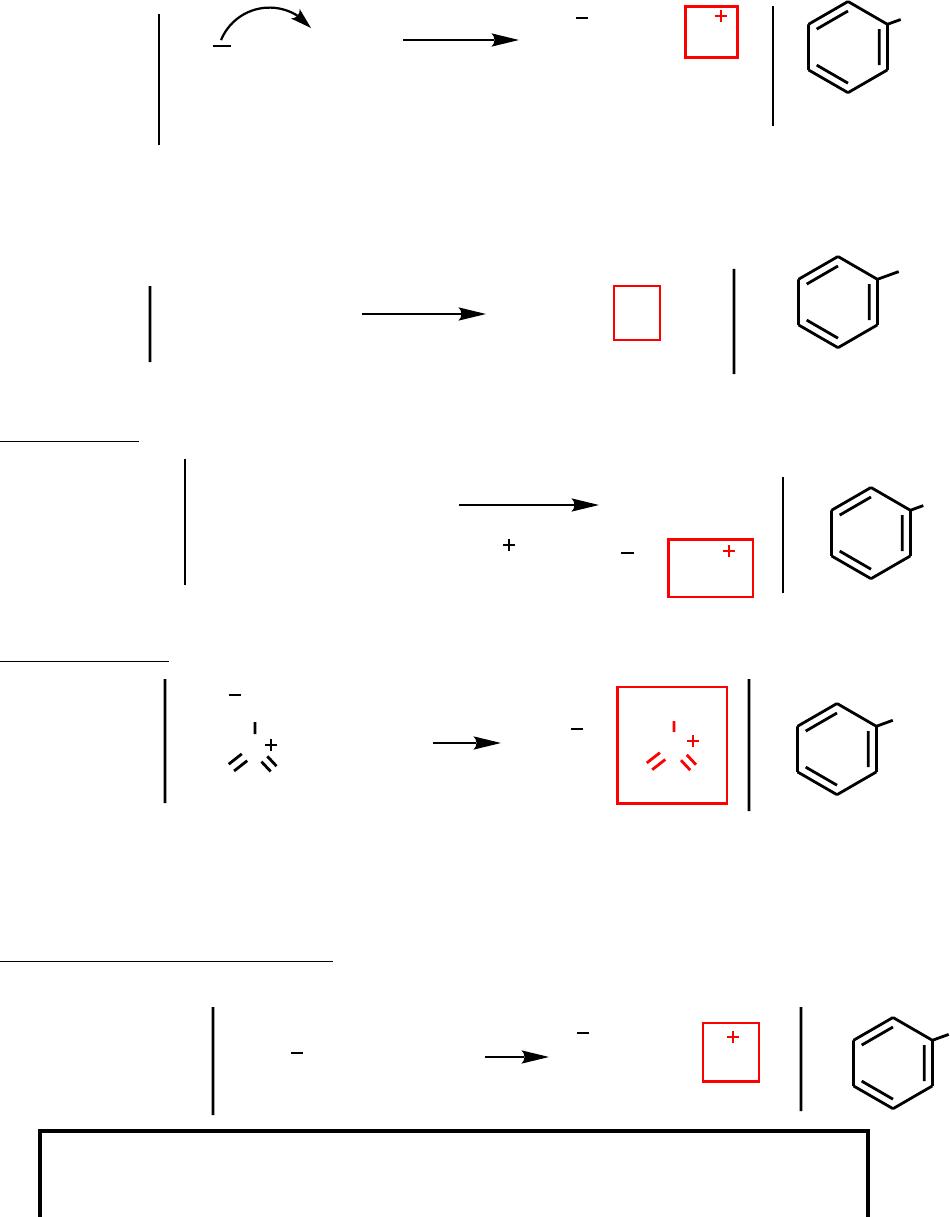
Below is a summary of the five electrophilic substitution reactions covered in
this chapter, showing
Reagents, /Generation of E+, / Product.
1. Halogenation:
2
A. Bromination and Chlorination
XX X
X2/FeX3 FeX3
+
“Polarized halogen”
X = Cl, Br
X3Fe—-Br—-Br
δδ
B. Iodination
I2/CuCl2I2 + 2Cu2+ 2Cu+ + I+
I
2. Nitration
HNO3/H2SO4HOHO2 +2H2SO4
H3O + 2HSO4 + NO2
NO2
3. Sulfonation
SO3/H2SO4S
OO
O+H2SO4S
OO
OH
HSO4+SO3H
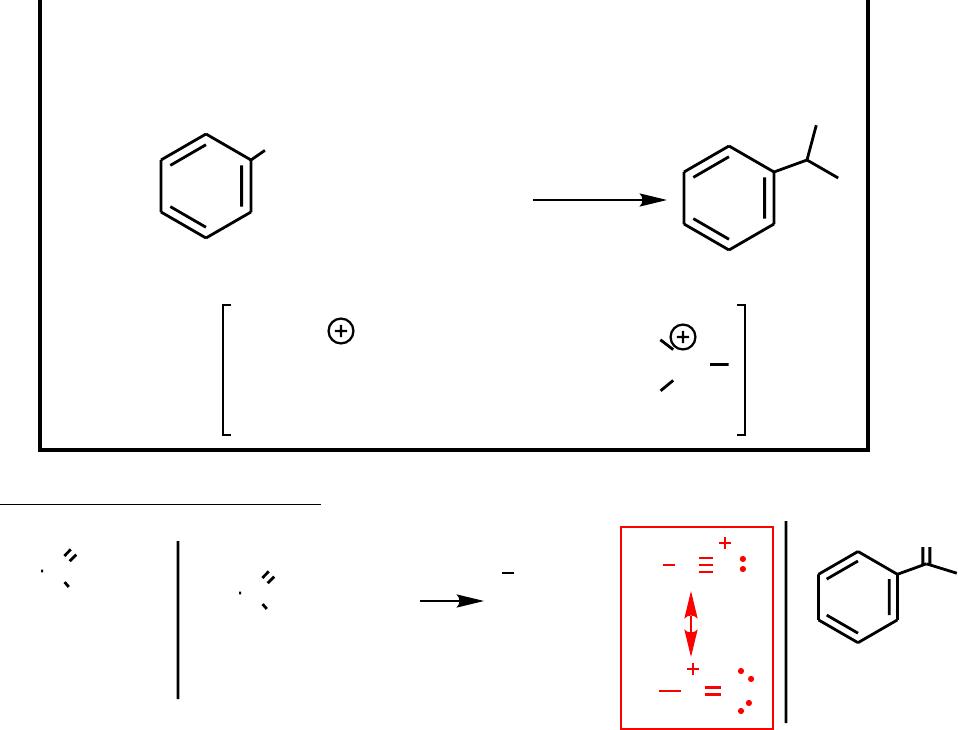
4. Friedel-Crafts Alkylation
RX, AlCl3R X + AlCl3AlCl3X + RR
R = alkyl
When R = methyl or a primary halide, the carbocation does not form as a
separate entity but rather is a polarized complex with the aluminum
tetrahalide anion. Secondary and tertiary carbocations form but
3
remember with any carbocation (except methyl and ethyl)
rearrangement is possible and will occur if a more stable cation can
be formed.
H
+ CH3CH2CH2Cl AlCl3
In the reaction –
CH3CH2CH2– rearranges to H3CCH
H3C
5. Friedel-Crafts Acylation
CO
X
RCO
X
RRCO
RCO
AlCl3+ AlCl3AlCl3X +
O
R
R = alkyl,aryl,
vinyl
Now let’s look at some reactions:
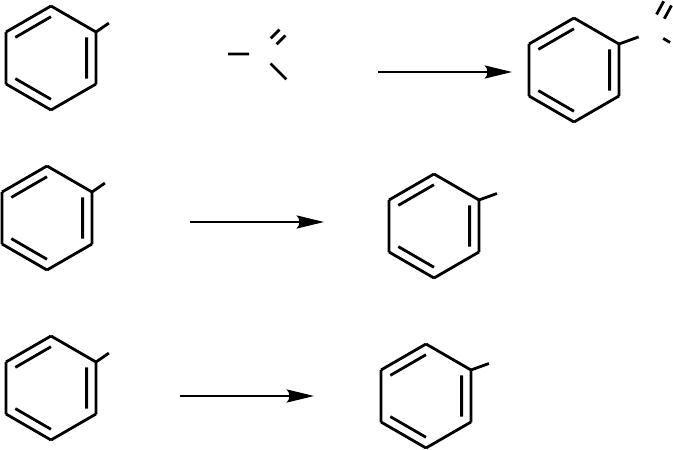
4
C
H
+ AlCl3
O
CH3
NO2
H
Br
H
CO
Cl
H3C
HNO3
H2SO4
Br2
FeBr3
Remember that when asked for a mechanism, you must show generation of
the attacking electrophile, then the attack on the benzene ring showing all
resonance forms of the intermediate and finally the formation of product with
loss of H+. (See beginning of chapter notes).
Show complete mechanism for the nitration of benzene:
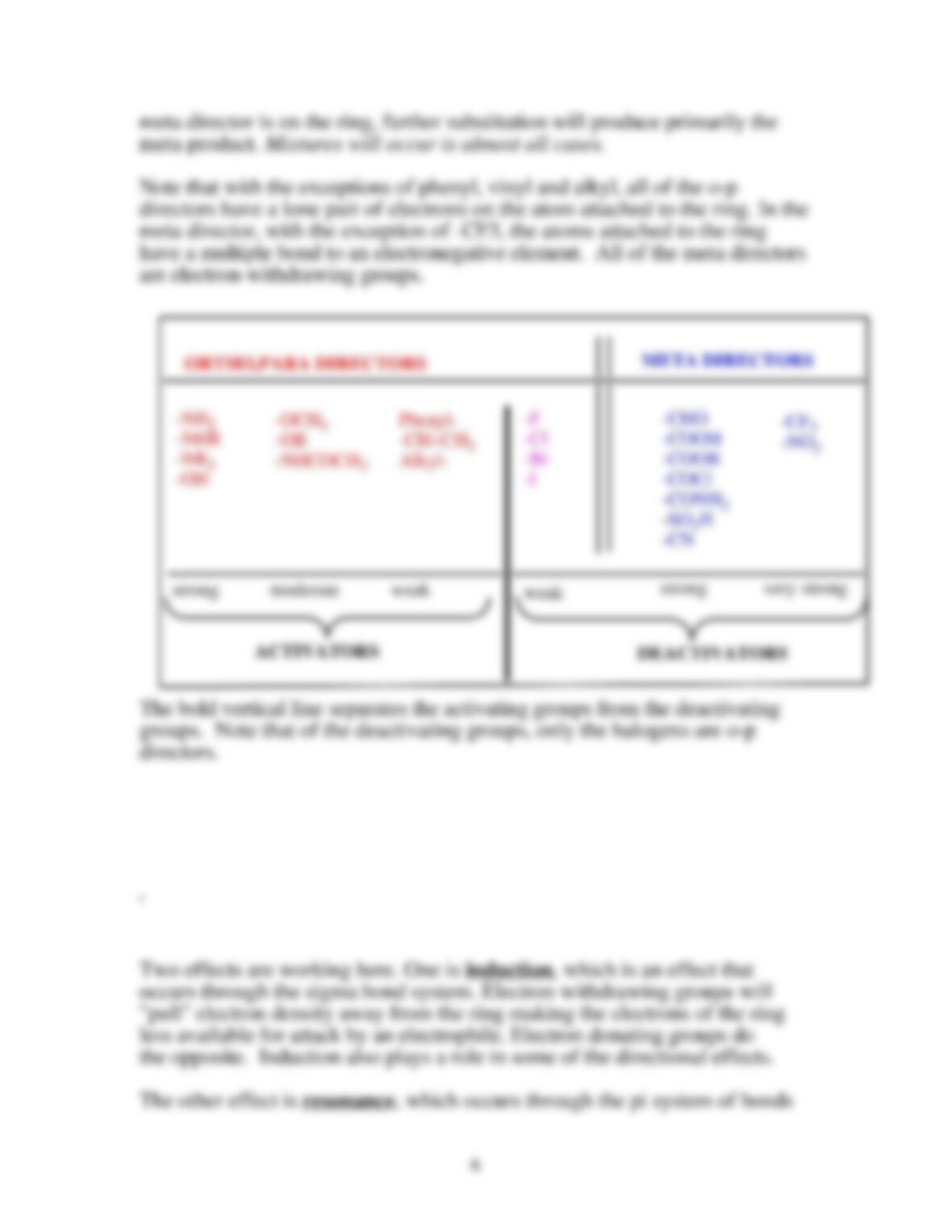
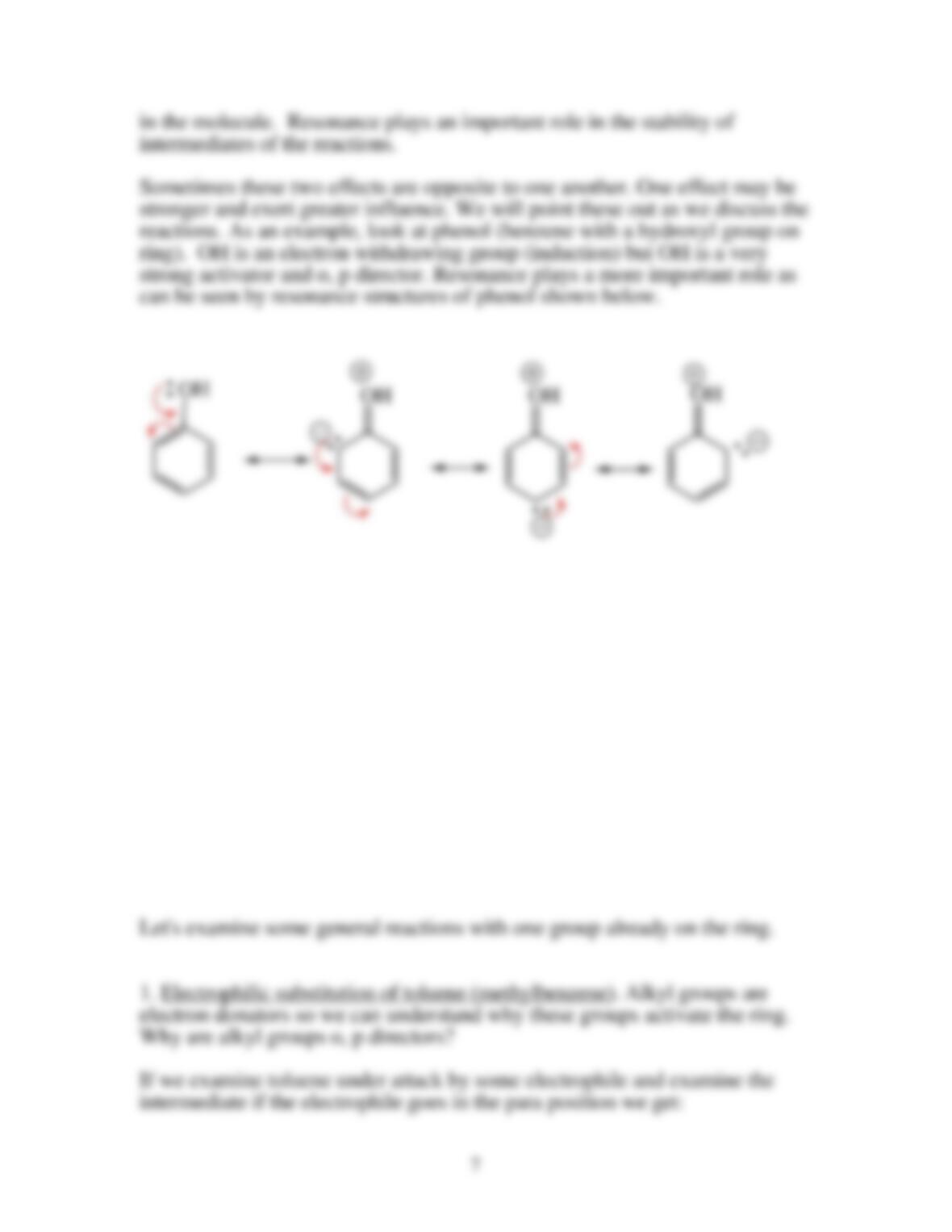
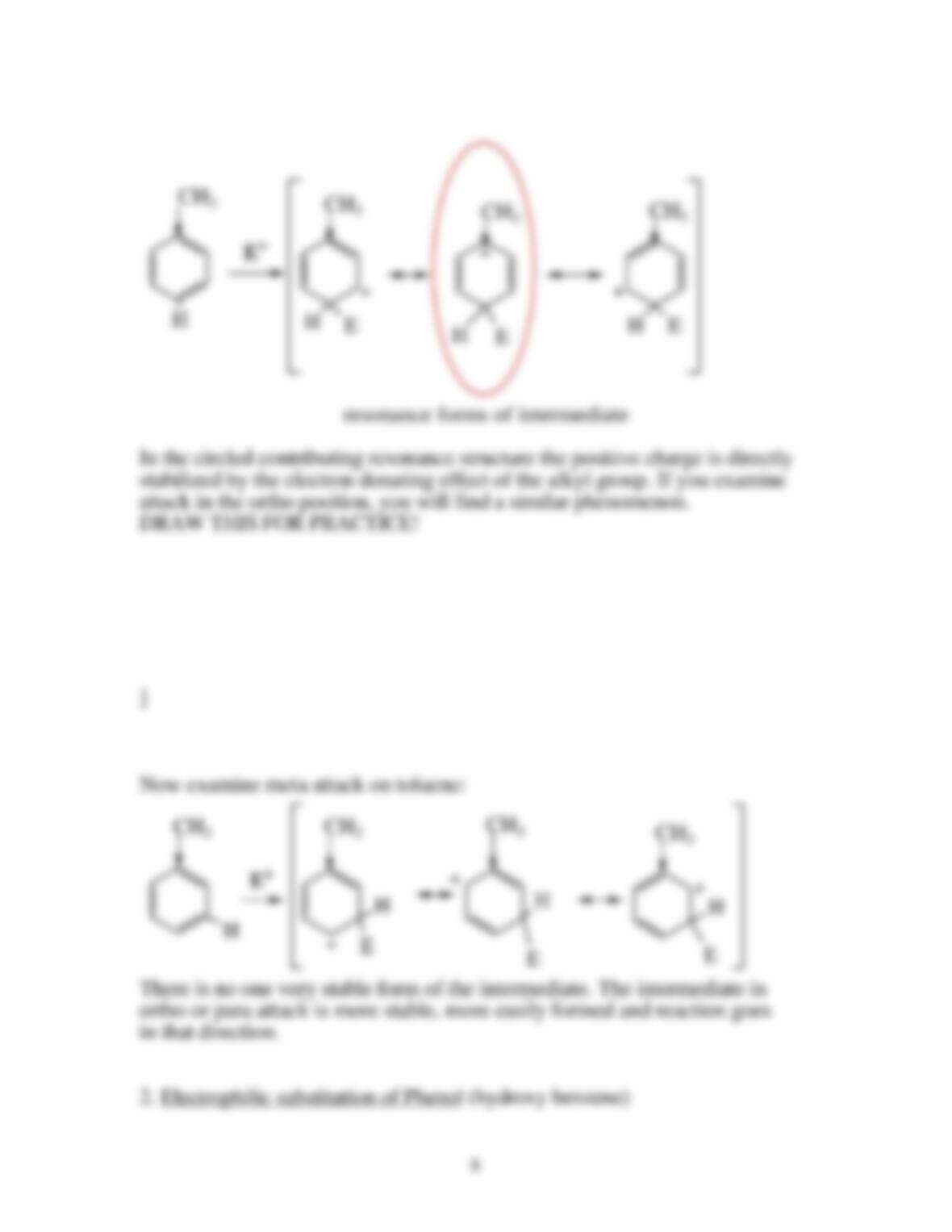
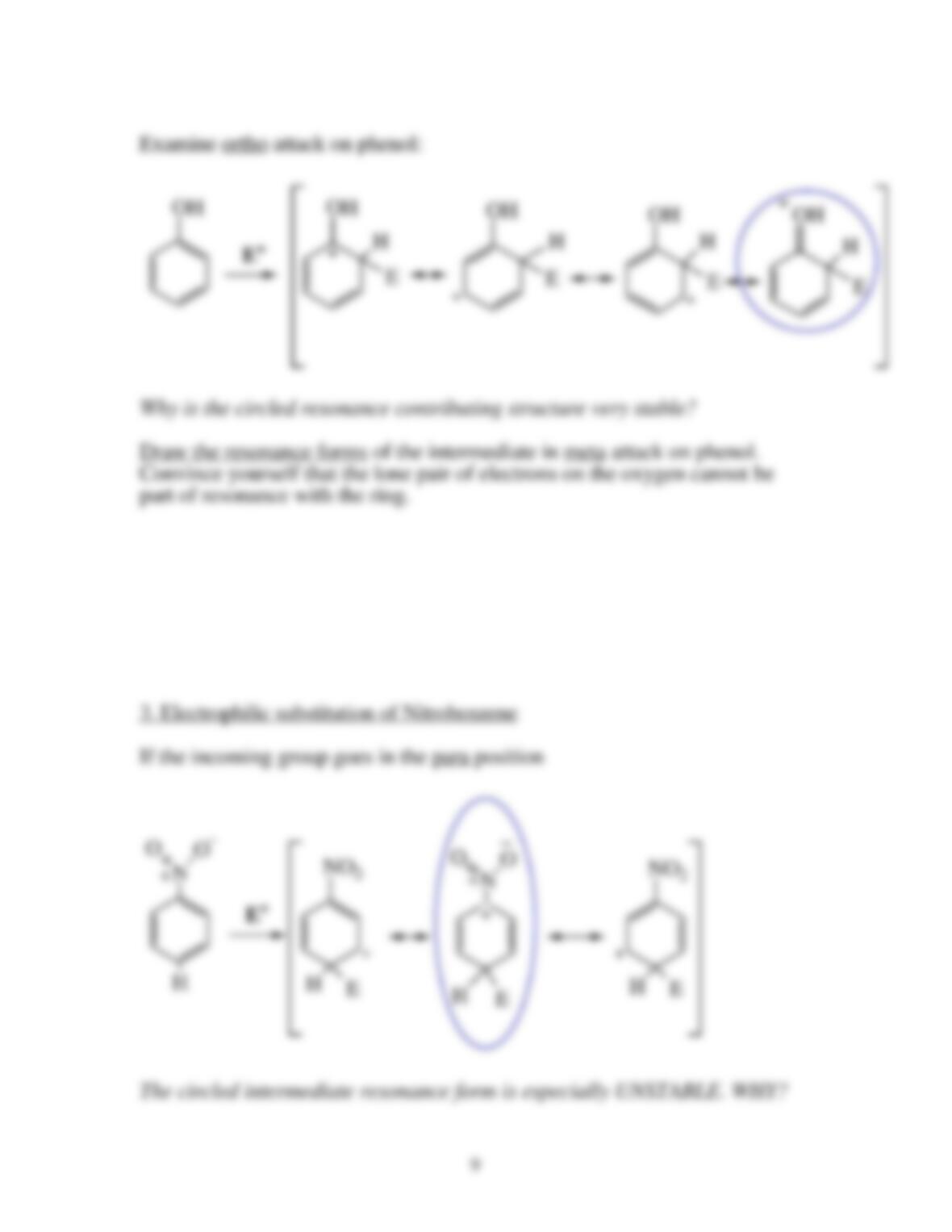
Directional and Activation/deactivating Properties of Ring Substituents
What happens when there is already a substituent on the ring? In which
position, relative to that substituent, will the incoming groups go – ortho,
meta or para????
First group on the ring determines the reactivity of the ring toward further
substitution relative to benzene itself, and also determines the where the
second incoming group will go. These are two separate aspects to consider in
further substitution on the ring.
An activating group makes the ring more reactive than benzene to further
substitution. In some cases the activation is so great that polysubstitution
occurs and cannot be controlled.
A deactivating group makes the ring less reactive than benzene to further
substitution. In some cases the ring is deactivated sufficiently to prevent
certain reactions from occurring.
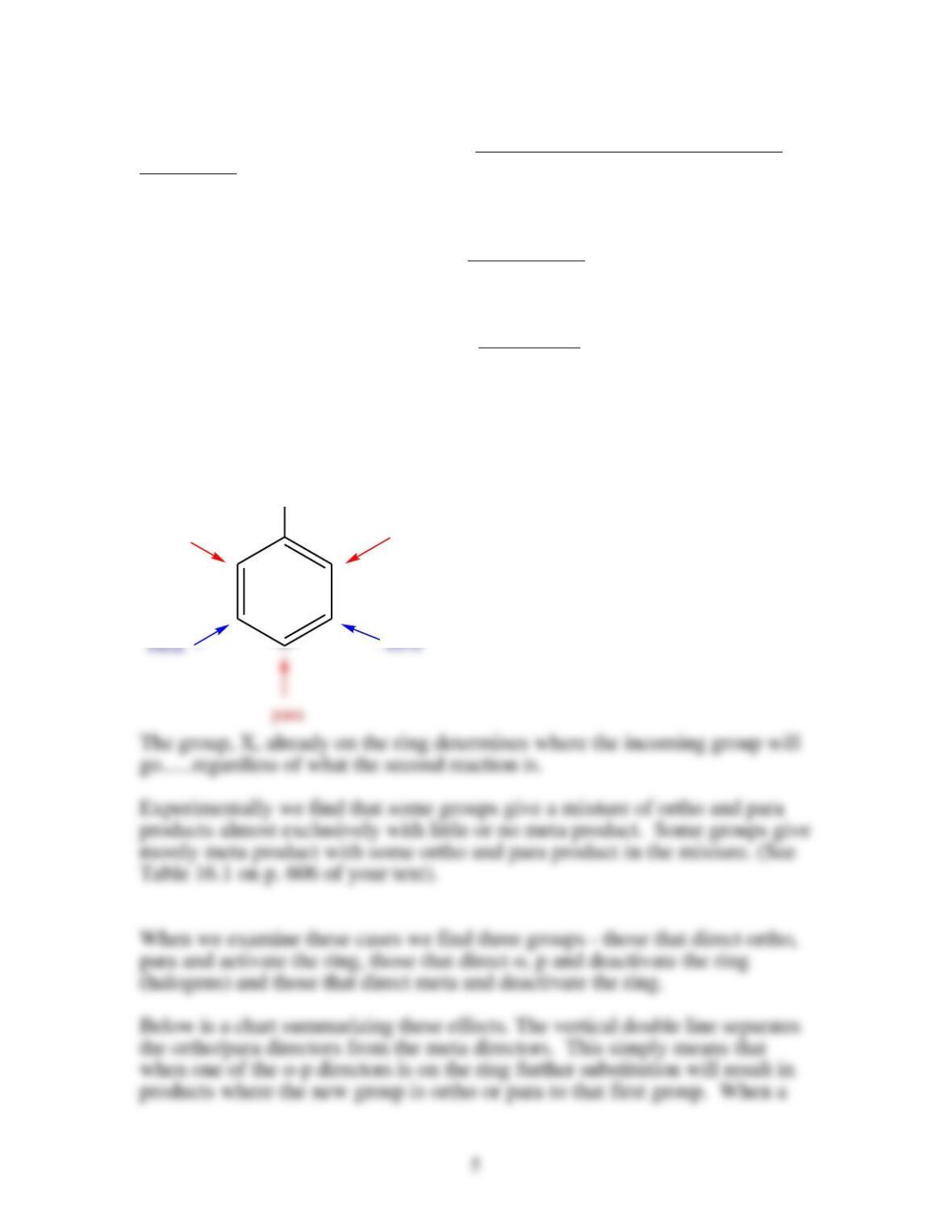
With one group already on the ring, a second substituent can come on the
ring in ortho, meta or para positions.
X
ortho
ortho
There are two ortho positions relative
to group X, two meta positions and
one para position that are available
for subsequent substitution.