Chapter 9 Confidentiality and Privacy Controls
Protecting Confidentiality and Privacy of Sensitive Information
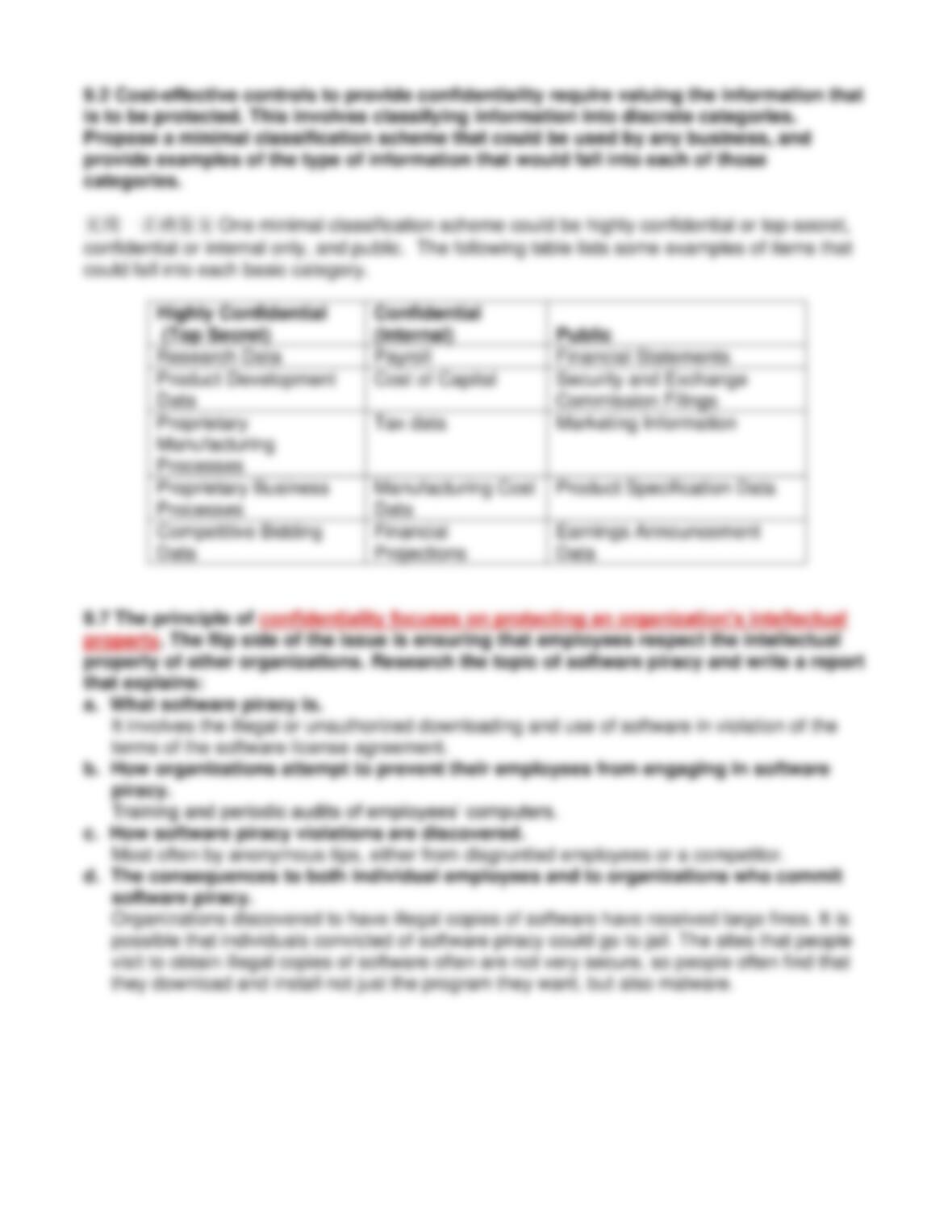
• Identity and classify information to protect
o Where is it located and who has access?
o Classify value of information to organization
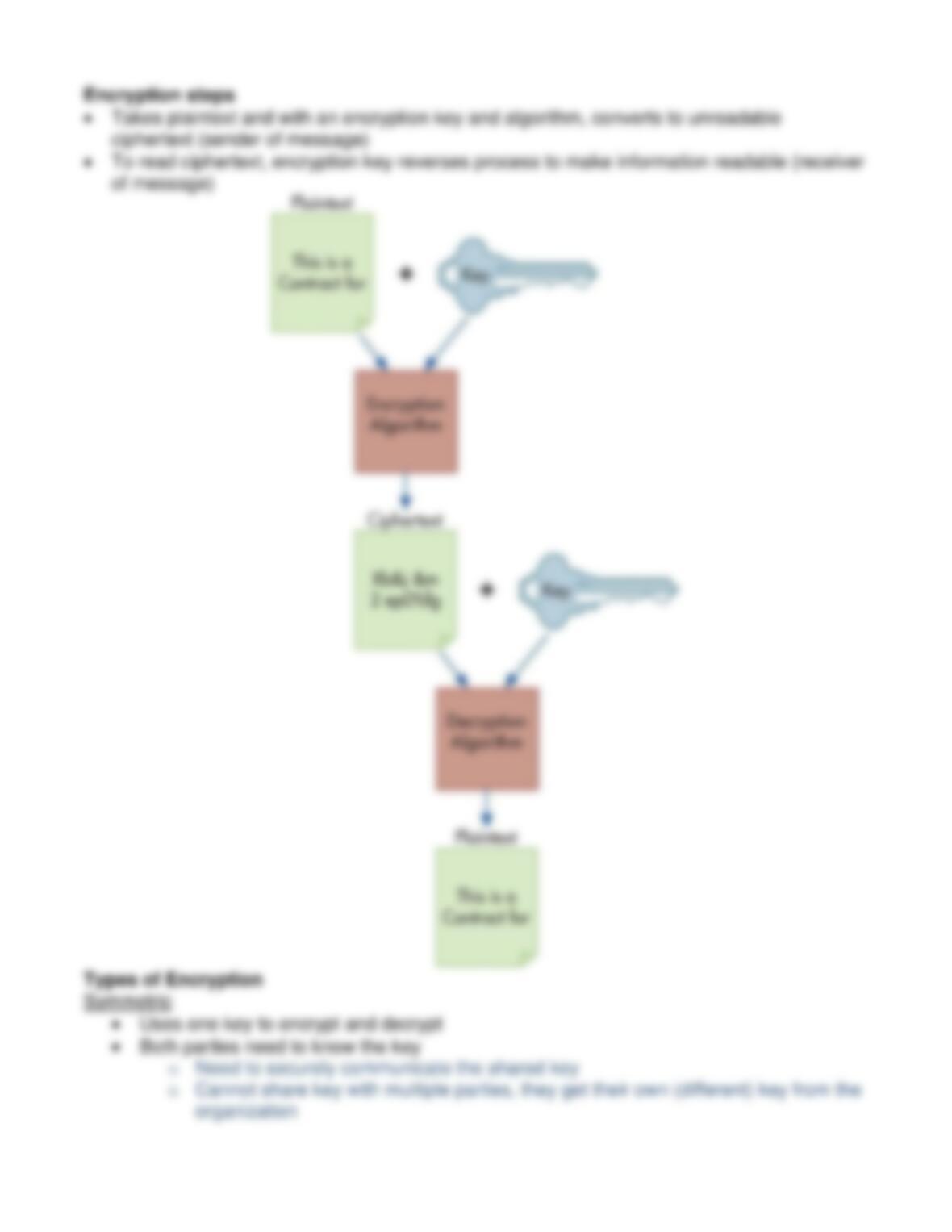
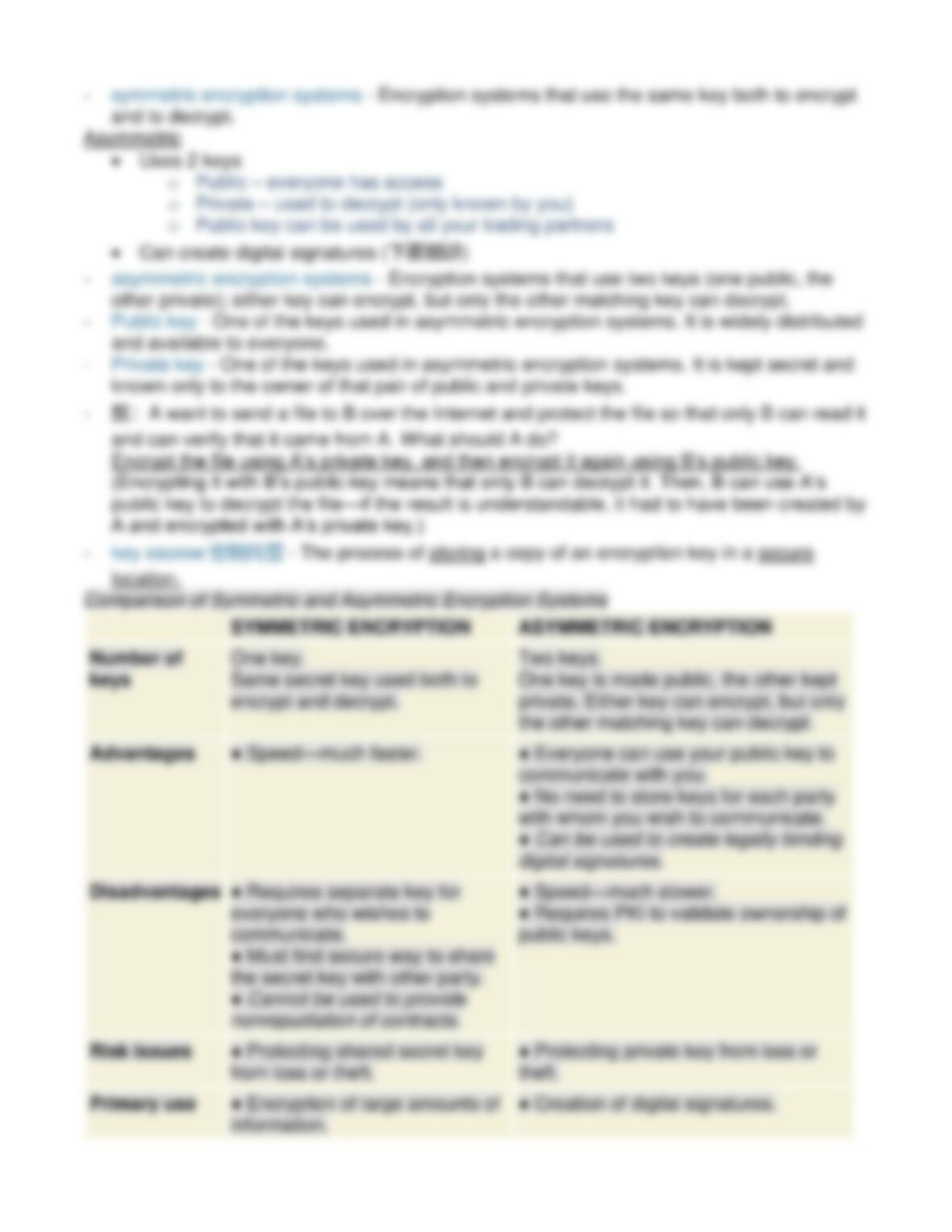
• Encryption (privacy & confidentiality)
o Protect information in transit and in storage
o Encryption is a fundamental control for protecting the privacy of personal
information that organizations collect.
o Encryption is an important and effective tool to protect confidentiality. It is the only
way to protect information in transit over the Internet. It is also a necessary part of
defense-in-depth to protect information stored on websites or in a public cloud.
o Encryption limits firewalls’ ability to filter traffic.
Firewalls cannot apply their rules to encrypted packets.
• Access controls
o Controlling outgoing information (confidentiality)
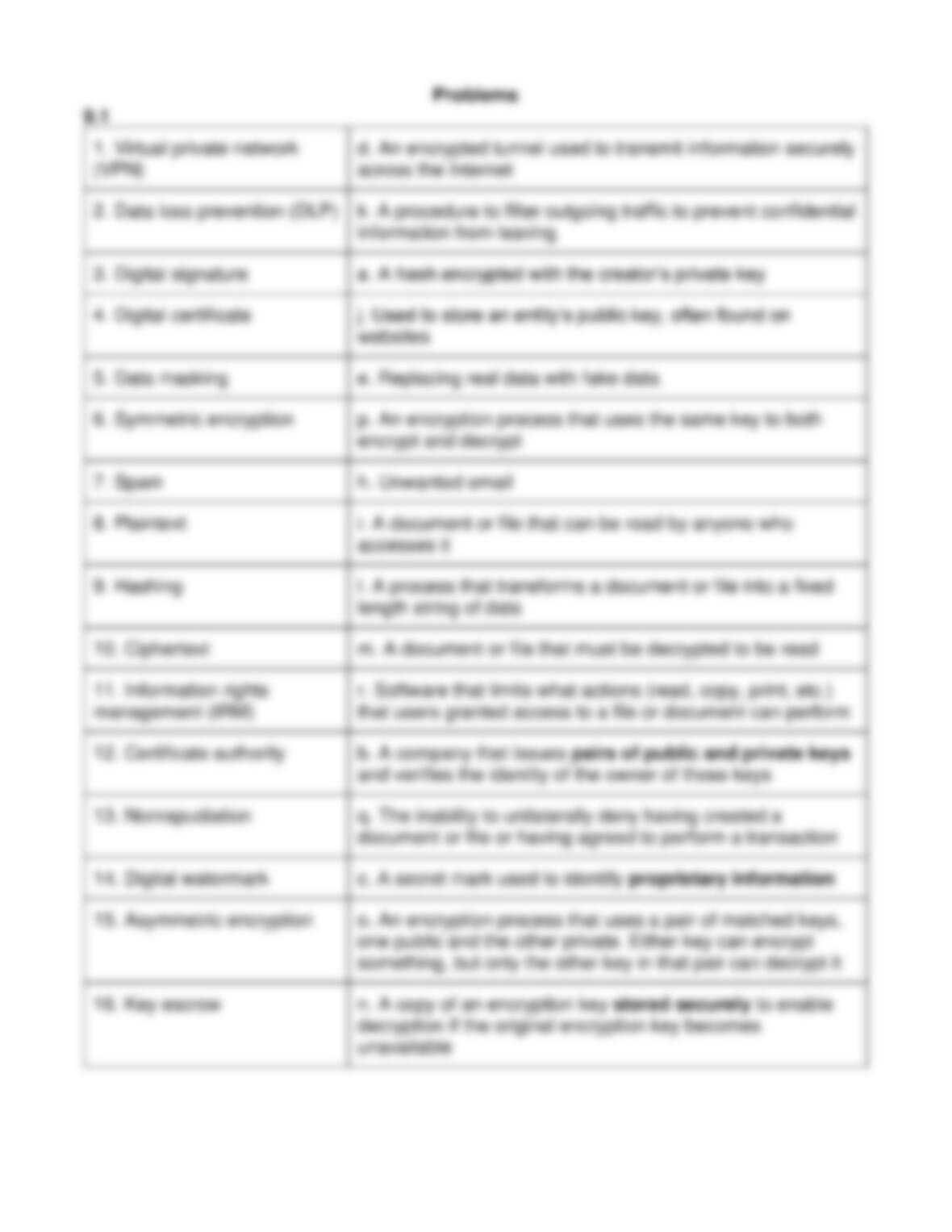
o Digital watermarks (confidentiality)
– Code embedded in documents that enables an organization to identify confidential
information that has been disclosed.
– Identify proprietary data 识别专有数据, but it does not protect privacy 不能保护隐私
数字水印指用信号处理的方法在数字化的多媒体数据中嵌入隐蔽的标记,这种标记通常
是不可见的,只有通过专用的检测器或阅读器才能提取。
o Data masking (privacy)
– A program that protects privacy by replacing personal information with fake values,
but the result is still the same type of data, which can then be used to test program
logic.
– Used to protect the privacy of a customer’s personal information when giving
programmers a realistic data set with which to test a new application
数据屏蔽是为了消除数据所有可识别的特征来实现匿名时仍然可用的功能,而最重要
的目的是为了消除泄漏敏感信息的风险
• Training (privacy & confidentiality)
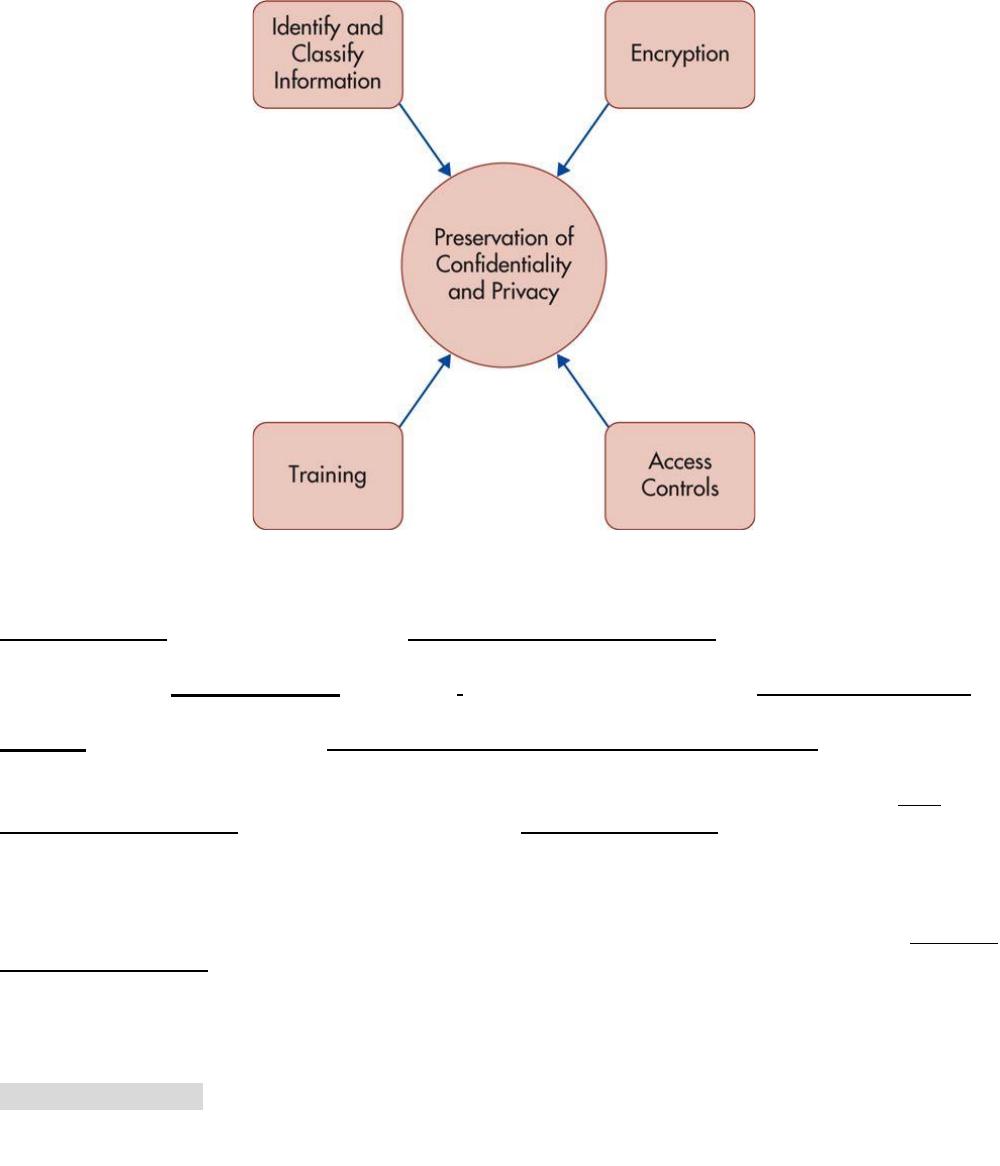
Components of Protecting Confidentiality and Privacy
Confidentiality focuses on protecting merger and acquisition plans.
(sensitive information that should not be made public until the deal is consummated.)
The principle of confidentiality focuses on protecting an organization’s intellectual property.
Privacy focuses on protecting personal information collected from customers
information rights management (IRM) – Software that offers the capability not only to limit
access to specific files or documents, but also to specify the actions (read, copy, print,
download, etc.) that individuals who are granted access to that resource can perform. Some
IRM software even has the capability to limit access privileges to a specific period of time and
to remotely erase protected files.
data loss prevention (DLP) – Software which works like antivirus programs in reverse, blocking
outgoing messages (e-mail, instant messages, etc.) that contain key words or phrases
associated with intellectual property or other sensitive data the organization wants to protect.
– Data loss prevention is designed to protect confidentiality by filtering outgoing messages to
prevent sensitive data from leaving the company.
Privacy Concerns
1. spam – Unsolicited e-mail that contains either advertising or offensive content.
2. identity theft – Assuming someone’s identity, usually for economic gain.
Generally Accepted Privacy Principles
1. Management
o Procedures and policies with assigned responsibility and accountability
2. Notice
o Provide notice of privacy policies and practices prior to collecting data
3. Choice and consent
o Opt-in versus opt-out approaches
o In the United States, the default policy is called opt-out, which allows organizations
to collect personal information about customers unless the customer explicitly
objects. In contrast, the default policy in Europe is opt-in, meaning that organizations
cannot collect personally identifying information unless customers explicitly give
them permission to do so.
4. Collection
o Only collect needed information
cookie – A text file created by a Web site and stored on a visitor’s hard drive. Cookies
store information about who the user is and what the user has done on the site. They
cannot perform any actions.
5. Use and retention
o Use information only for stated business purpose
6. Access
o Customer should be able to review, correct, or delete information collected on them
7. Disclosure to third parties
8. Security
o Protect from loss or unauthorized access
o Relationship between security and privacy: Security is a necessary, but not