BAF 311 Materials and Problems for Chapter 7 Page1
BAF 311 CHAPTER 7
INTEREST RATES AND BOND VALUATION
Materials and Problems
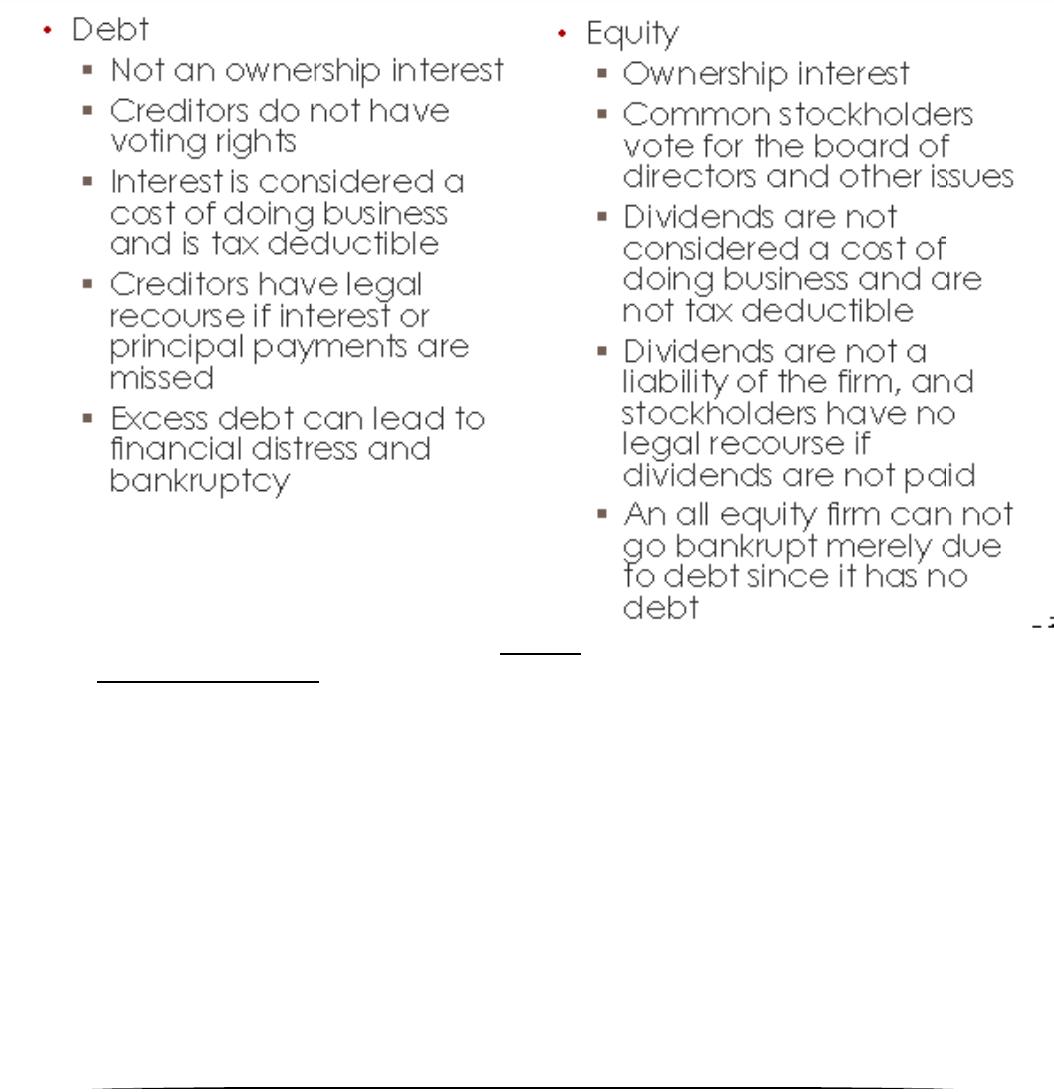
Differences Between Debt and Equity
When a corporation or a government needs to borrow on the long term, it usually does so by selling
(issuing) bonds to investors.
Bond Definitions
A bond is an interest-only loan, meaning that the borrower will pay the interest every period, but none
of the principal will be repaid until the end of the loan.
– Maturity date = loan life ( 10 years , 30 years etc..)
– Coupon rate = interest rate ( % of par) → allow us to estimate the value of coupons that are
paid either semi-annually or annually
– Par value = face value = principal= the amount of money the issuer will pay the holder of the
bond at the maturity date ( 1$, 100$, 1000$ etc.)
BAF 311 Materials and Problems for Chapter 7 Page2
– Selling price ( could be equal or not to par , depending on market interest rate on similar
bonds)
The holder of the bond can sell the bond before maturity date to another investor in financial markets
at a selling price X.
The selling price (bond value) = present value of future cashflows. The bond value fluctuates as time
passes.
Bond value depends on :
– Number of periods remaining until maturity (changes with time)
– Face value and coupon payments ( fixed)
– Market interest rate for bonds with similar features (yield to maturity YTM) (changes with
time)
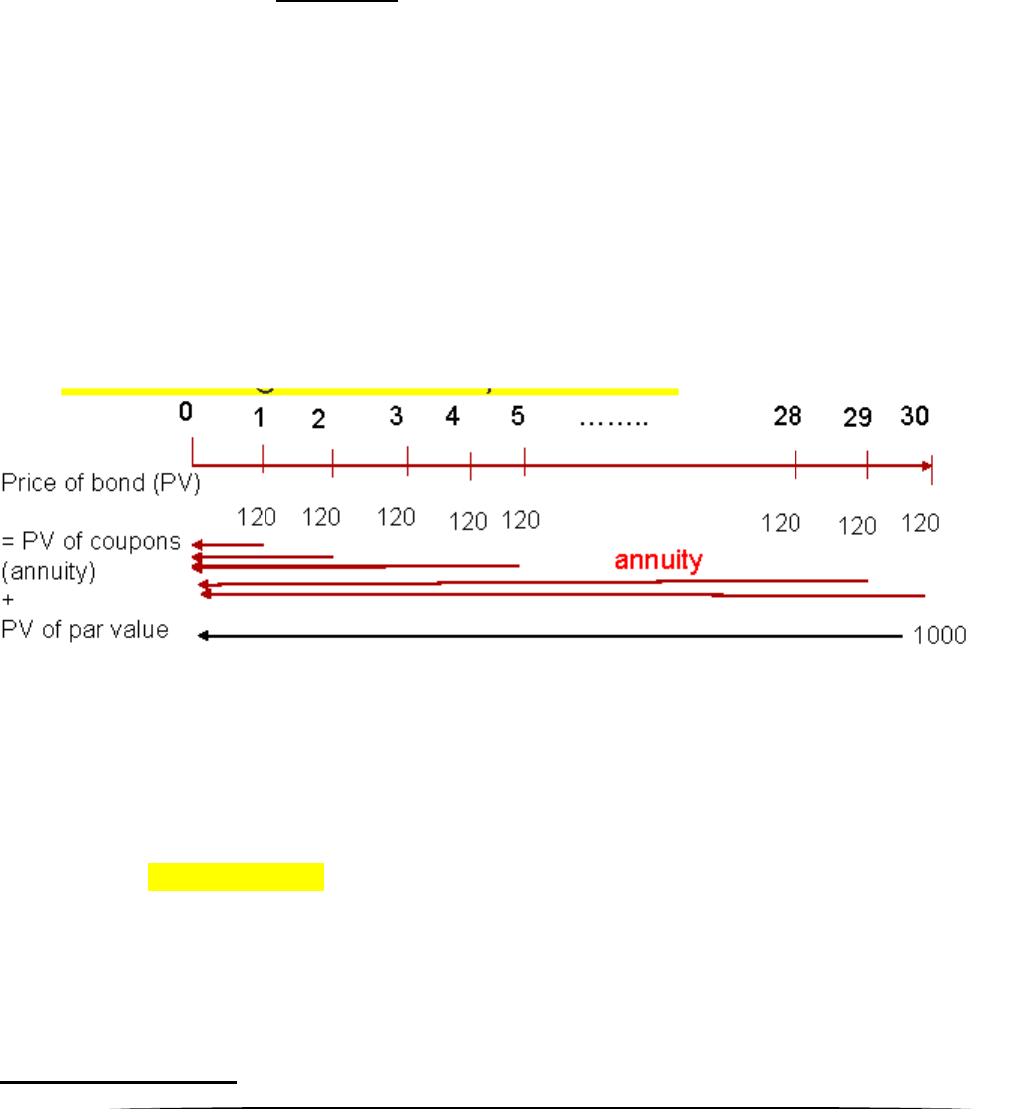
Ex1: Berck corporation wants to borrow money, it will sell bonds for a par value of $1000 for 30 years
with a coupon rate of 12%. Suppose Berck sells bonds to investors in financial markets at a selling
price of 1000$ .
Coupon rate(annual interest rate) 12% OF PAR = 12% of the par value of the bond
✓ Berck will thus pay the investors .12 × $1,000 = $120 in interest every year for 30 years.
✓ At the end of 30 years, Berck will repay the investor the $1,000 par value.
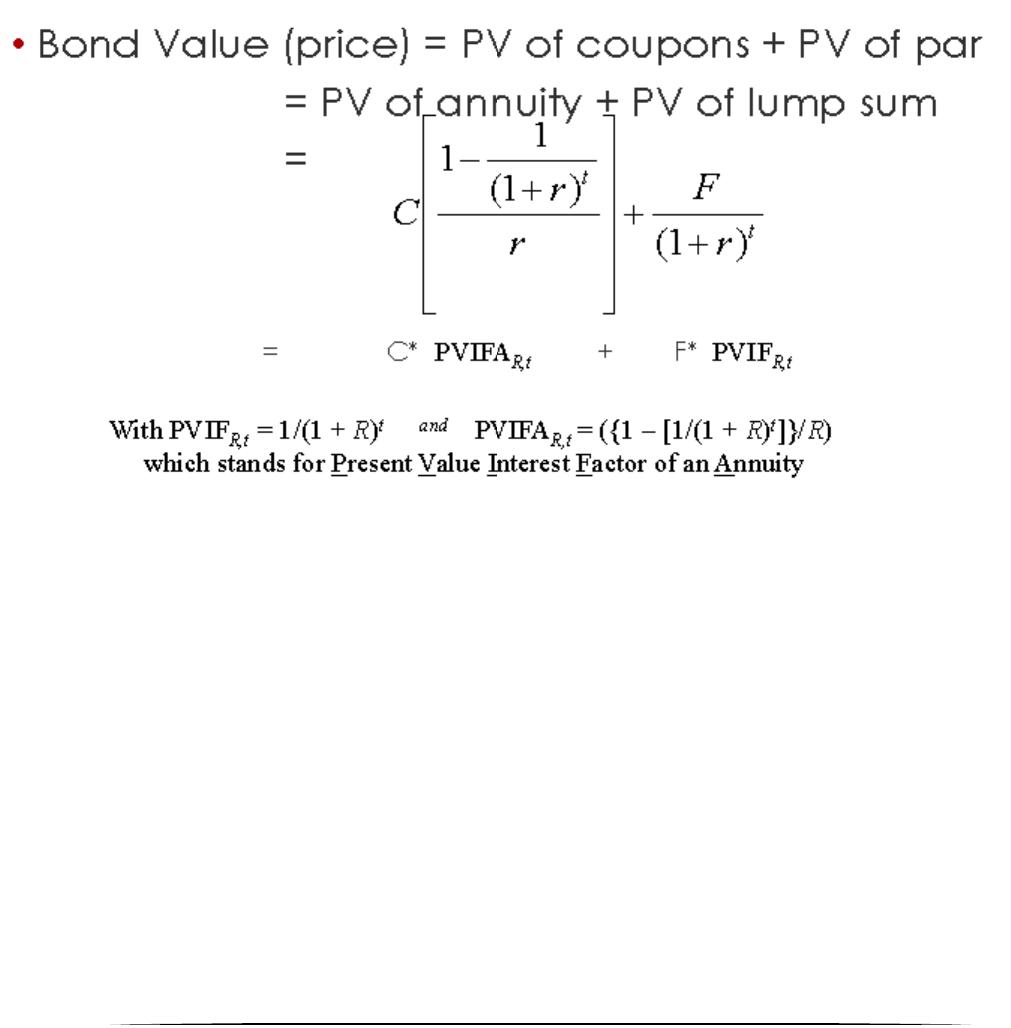
The price of a financial asset is the PV of the future cash flows generated by this asset
Par value = face value= principal amount, it is the amount repaid at maturity, fixed from the beginning
at time of sale = 1000$
Coupon = stated interest payment = 120$
Coupon rate = rate used to estimate the value of the coupon. Coupon rate = annual coupon divided
by face value 120/1000 = 12% , fixed from the beginning at time of sale
Coupon Rate= Coupon PMT/ Face Value
Time to Maturity= The time until the face value is paid in 30 years , maturity date fixed from the
beginning at time of sale
Bond characteristics
BAF 311 Materials and Problems for Chapter 7 Page3
Yield or Yield to maturity = rate of return required in the market for the bond, rate used to estimate
price of bonds, changes with time
Selling price : Known at the time of the sale by discounting future cash flows. Prices change due to
interest rates change in the market. The cash flows from a bond, however, stay the same. As a
result, the value of the bond will fluctuate. When interest rates rise, the present value of the bond’s
remaining cash flows declines, and the bond is worth less than par. When interest rates fall, the bond
is worth more than par.
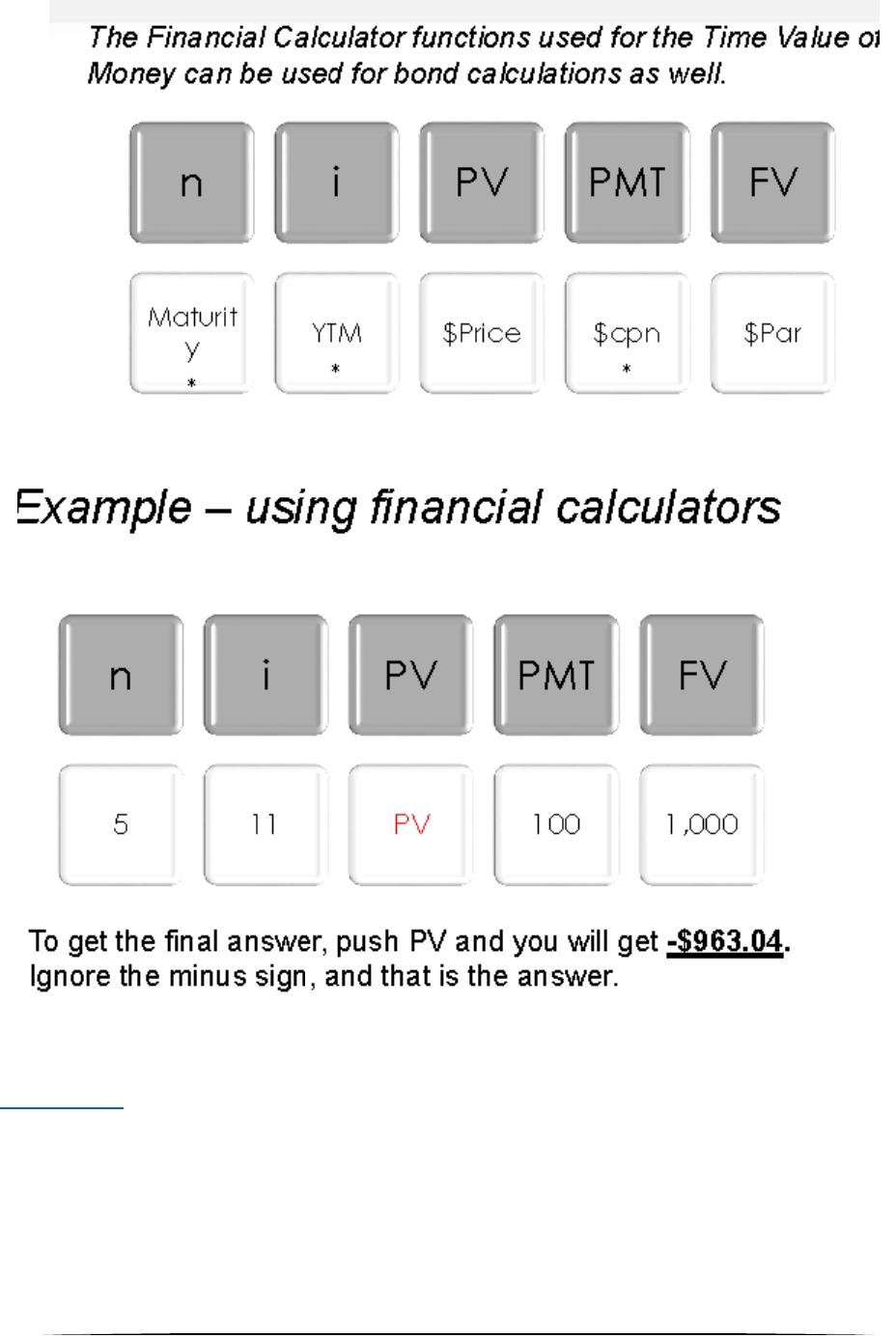
Remember, as with any asset, the value of a bond is simply the present value of its future cash flows.
.
BAF 311 Materials and Problems for Chapter 7 Page4
The coupon rate of a bond as compared to the interest rates in the economy determines whether a
bond will trade at par, below par, or above its par value.
The coupon rate is the interest payments that are made to bondholders. For example, a bond with
par value of $1,000 and a coupon rate of 4% will have annual coupon payments of 4% x $1,000 =
$40. A bond with par value of $100 and a coupon rate of 4% will have annual coupon payments of
4% x $100 = $4. If a 4% coupon bond is issued when interest rates are 4%, the bond will trade at its
par value since both interest and coupon rates are the same.
However, if interest rates rise to 5%, the value of the bond will drop, causing it to trade below its par
value. This is because the bond is paying a lower interest rate to its bondholders compared to the
higher interest rate of 5% that similar-rated bonds will be paying out. The price of a lower-coupon
bond therefore must decline to offer the same 5% yield to investors.
On the other hand, if interest rates in the economy falls to 3%, the value of the bond will rise and trade
above par since the 4% coupon rate is more attractive than 3%.
Regardless of whether a bond is issued at a discount or premium, the issuer will repay the par value
of the bond to the investor at the maturity date. Say, an investor purchases a bond for $950 and
another purchases the same bond for $1,020. On the bond’s maturity date, both of the investors will
be repaid $1,000 par value of the bond.
Ex 2 : alfa Co. issues a bond with 10 years to maturity with annual coupon of $80 (coupon rate= 8%