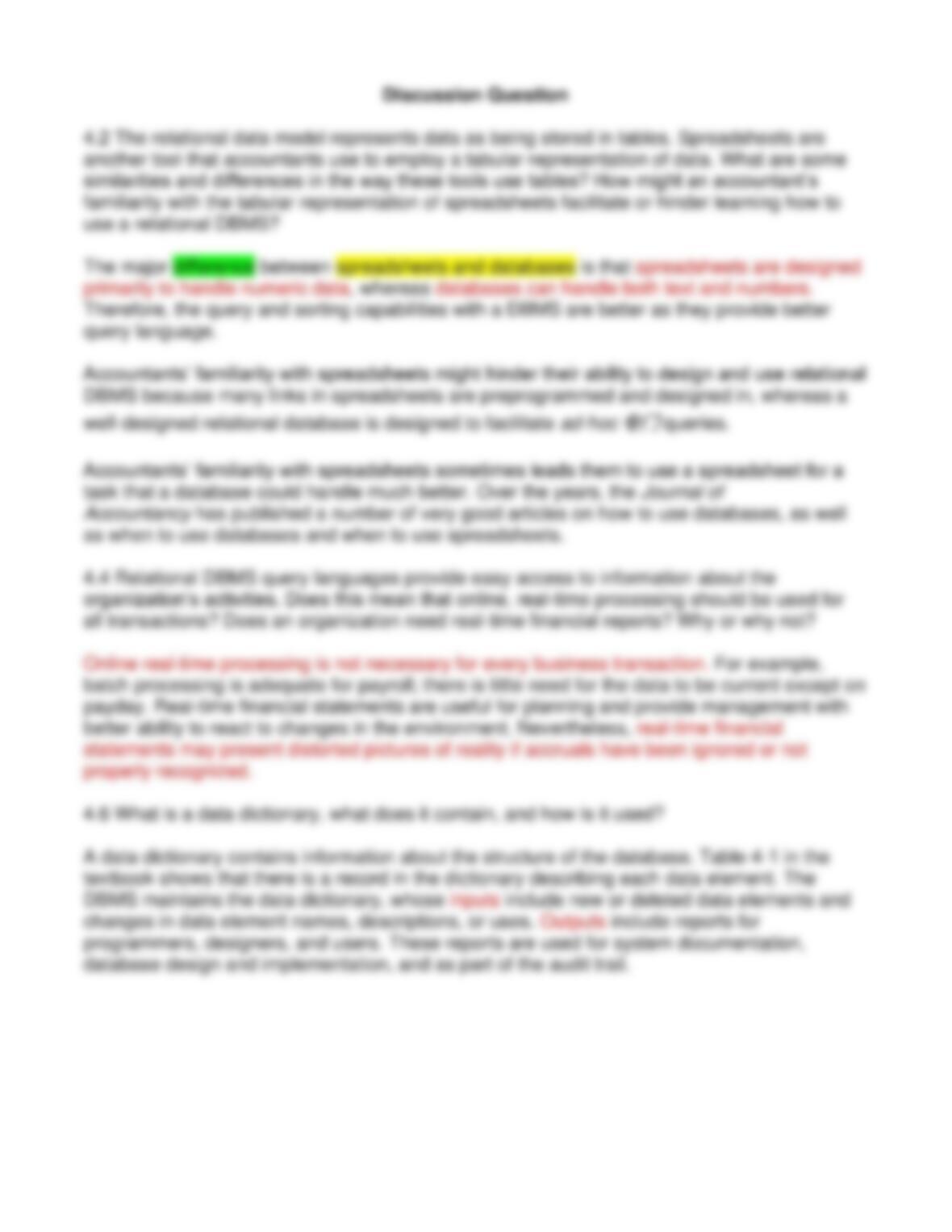
Chapter 4 Relational Databases
What is a Database?
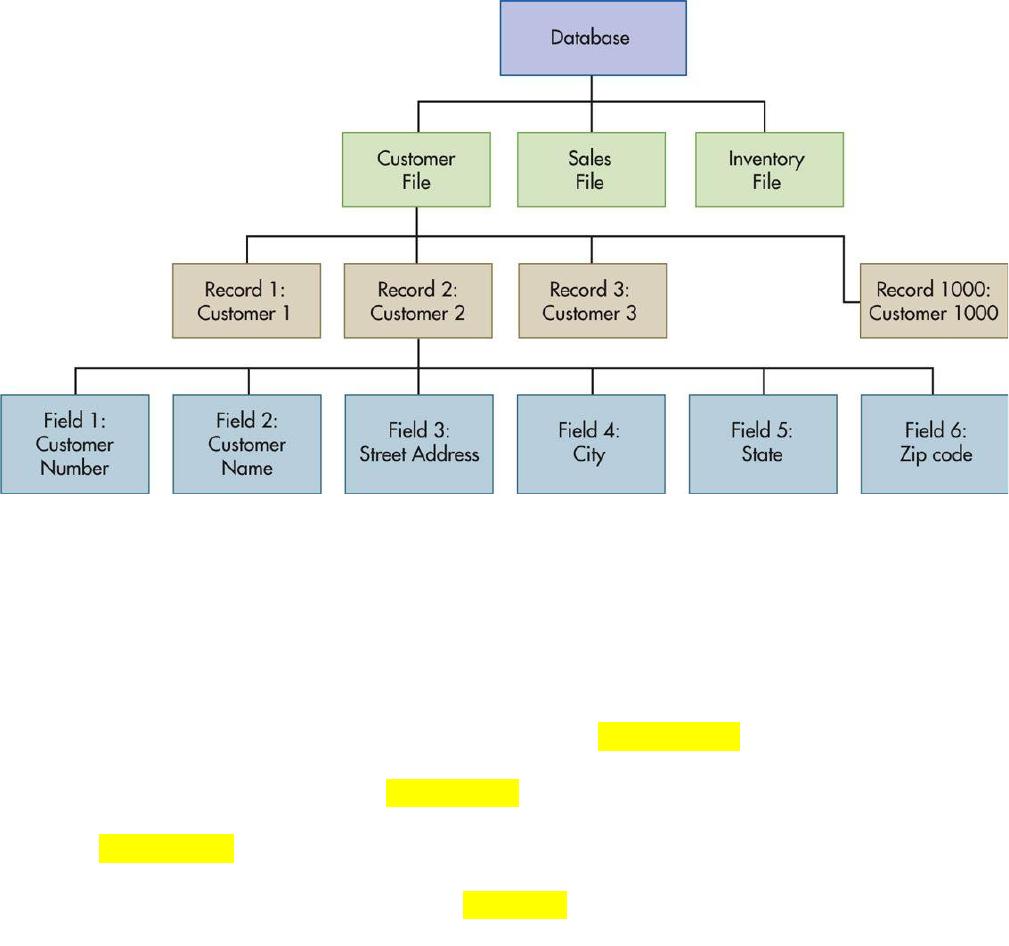
• Efficiently and centrally coordinates information for a related group of files
• A file is a related group of records
• A record is a related group of fields
• A field is a specific attribute of interest for the entity (record)
Advantages of Databases
• Data is integrated and easy to share
• Minimize data redundancy
• Data is independent of the programs that use the data
• Data is easily accessed for reporting and cross-functional analysis
Database users and designers
• Different users of the database information are at an external level of the database. These
users have logical views of the data.
o logical view – How people conceptually organize, view, and understand the
relationships among data items.
• At an internal level of the database is the physical view of the data which is how the data
is actually physically stored in the system
o physical view – The way data are physically arranged and stored in the computer
system.
• Designers of a database need to understand user’s needs and the conceptual level of the
entire database as well as the physical view.
Database design
• To design a database, you need to have a conceptual view of the entire database. The
conceptual view illustrates the different files and relationships between the files.
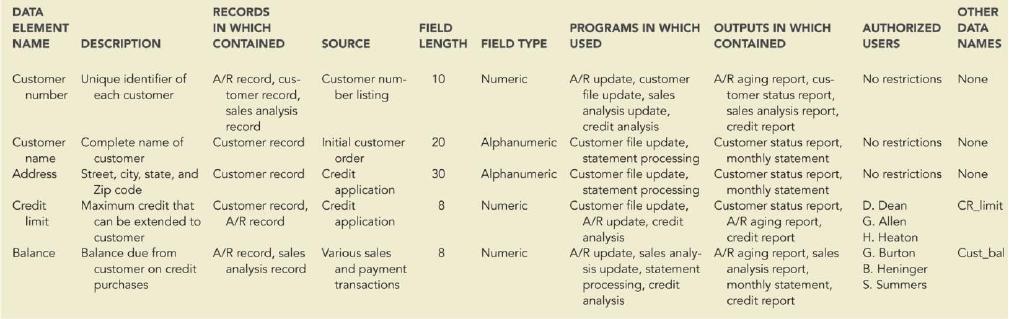
• The data dictionary is a “blueprint” of the structure of the database and includes data
elements, field types, programs that use the data element, output…
DBMS Languages
• Data Definition Language (DDL)
o Builds the data dictionary
o Creates the database
o Describes logical views for each user
o Specifies record or field security constraints
• Data Manipulation Language (DML)
o Changes the content in the database
▪ Creates, updates, insertions, and deletions
• Data Query Language (DQL)